
Why is Alicante worth visiting?
The first reason is its balance. Alicante sits somewhere between a coastal city and a holiday destination.
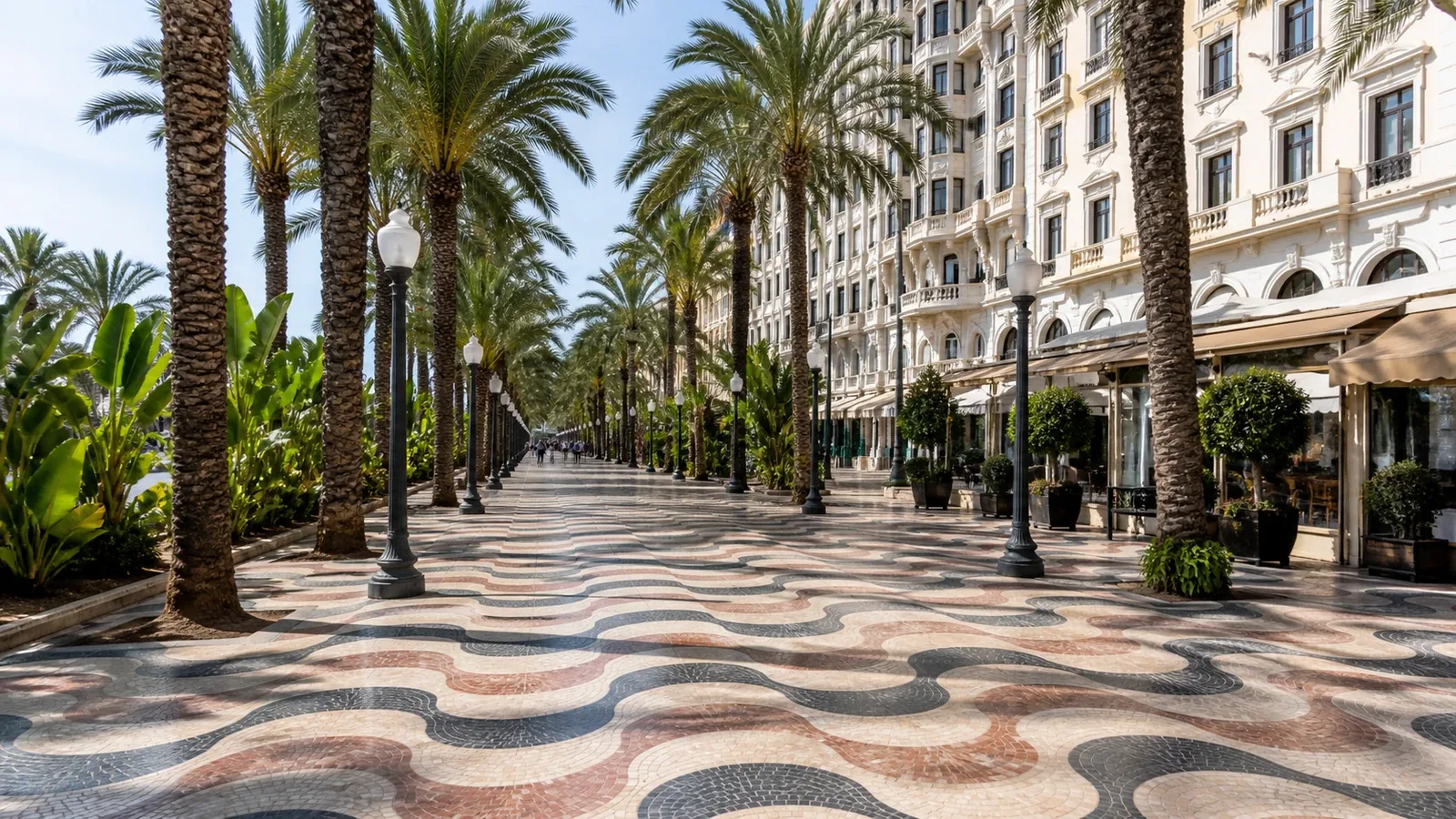
Postiguet Beach lies right next to the city centre, while the port and the Explanada de España are a natural part of any walk through the city. Just a few streets inland, narrow lanes, small squares and pale façades lead towards the Santa Cruz neighbourhood.
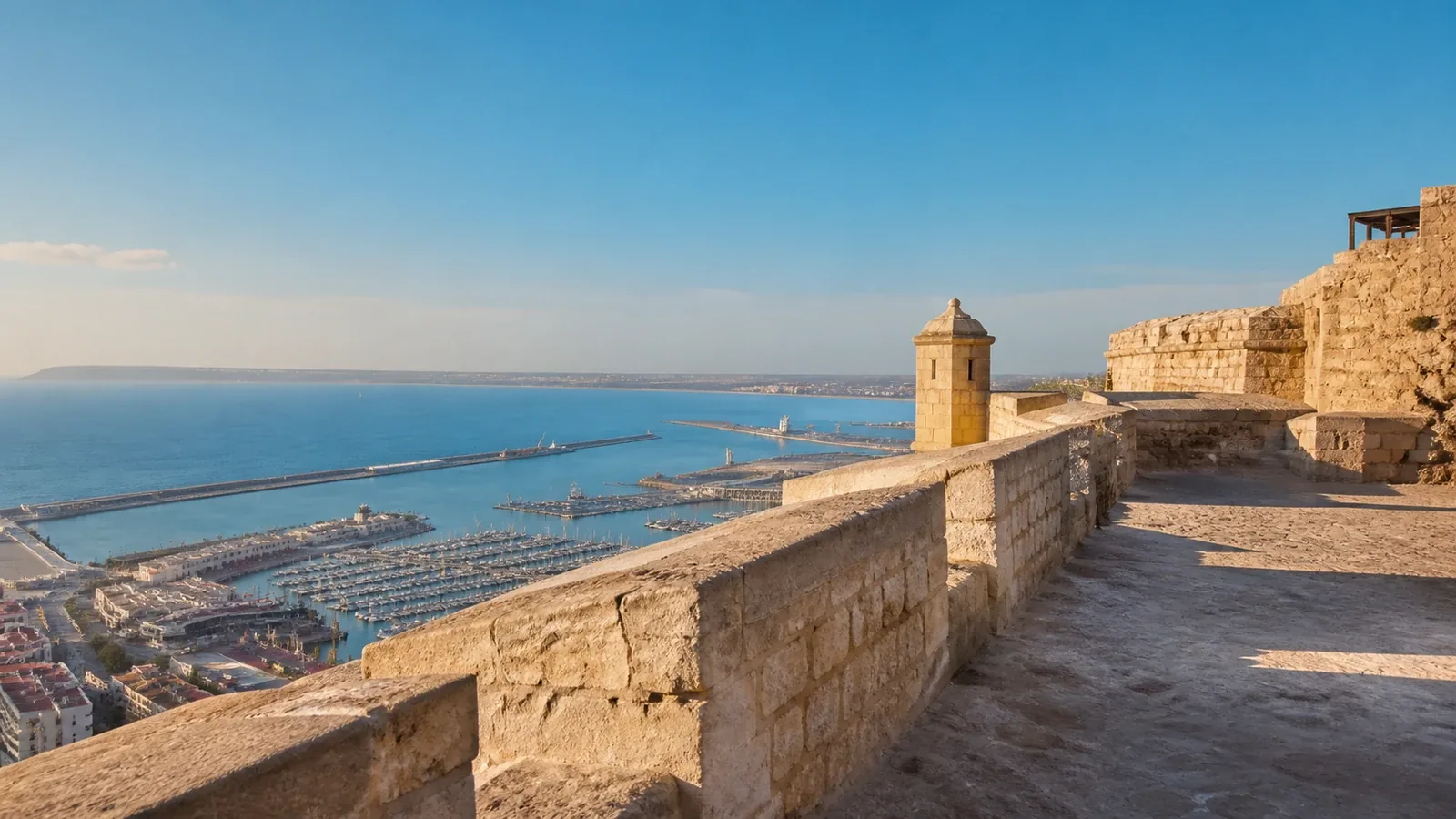
Towering above it all is Santa Bárbara Castle, an almost constant presence during a visit. From its heights, Alicante makes more sense: the curve of the coastline, the harbour, the dry mountains inland and the Mediterranean, whose shade of blue changes with the time of day.
Alicante does not demand a packed itinerary either. Part of its charm lies precisely in leaving some time unplanned.
A long lunch, a sunset stroll or a few hours on the beach are not wasted time here. They are part of the trip.
The best things about visiting Alicante
In Alicante, the sea is not simply somewhere you visit on an excursion from the city. It is part of the city itself.
That makes a major difference to the experience. You can combine a cultural morning with a few hours on the beach without travelling far, which is particularly appealing on a short break.
Beyond Postiguet Beach, travellers with more time can explore other stretches of coastline and use Alicante as a base for discovering different parts of the province.
Some monuments are interesting because of their history; others change the way you understand a destination. Santa Bárbara Castle largely belongs to the second category.
From above, Alicante seems to unfold between rock and sea.
It is worth setting aside enough time to enjoy the views without rushing. On a clear day, the sheer scale of the landscape is one of the images most likely to stay with you long after the trip is over.
Anyone expecting a vast historic centre may be disappointed.
Alicante’s old town is relatively compact. Yet that scale also has advantages: it is pleasant to explore slowly and easy to combine with other parts of the city on the same day.
The Santa Cruz neighbourhood reveals a more intimate side of Alicante, with steep streets, whitewashed houses, flowerpots and quiet corners that contrast with the broad avenues by the sea.
Rice dishes, fish, seafood and Mediterranean ingredients play an important role in the local cuisine.
It is worth moving beyond the assumption that any restaurant on the seafront will automatically offer the best experience. As in many tourist destinations, location and quality do not always go hand in hand.
Looking for restaurants that are also popular with locals and checking the menu before sitting down is usually a more sensible strategy than choosing a place purely for the view.
What kind of traveller is Alicante best suited to?
Alicante works particularly well for a couples’ getaway. There is enough to see, but also plenty of room to slow down: waterfront walks, terraces, beaches and sunsets without the need to plan activities constantly.
Travellers looking for sun and city life are probably one of Alicante’s ideal visitor profiles.
If you do not want to spend your entire holiday inside a resort and would rather alternate between the beach, city streets, markets, restaurants and historic sights, Alicante offers an appealing balance.
The combination of an urban beach, good services and relatively manageable distances can make Alicante convenient for family travel.
That said, the heat at certain times of year and the steepness of some areas may make it wise to adjust your schedule when travelling with young children.
If your main aim is to explore the city itself, a car is not essential. Many of the main sights can be included in walking routes, and public transport is available for longer journeys.
It is a different story if you want to explore the province’s coves, towns and inland areas extensively. In that case, having a car can give you considerably more freedom.
How many days do you need in Alicante?
Two days are enough to see the main sights and get a good first impression.
It is a suitable length for a weekend break, although you will need to be selective and will have less time for the beach or day trips.
Three days allow for a much more relaxed pace.
You can combine the main city attractions with food, the sea and time to wander without constantly checking the clock.
For many travellers, this may be the most balanced length of stay for a first visit focused mainly on the city.
With five days, Alicante also starts to work well as a base.
You can spend part of the trip in the city and use the rest to discover other places along the Costa Blanca and in the inland areas of Alicante province. With this kind of stay, the experience depends much more on your interests and how you plan to get around.
Is Alicante expensive to visit?
Your budget can vary considerably depending on the season, the type of accommodation you choose and how close you stay to the sea.
Alicante should not automatically be considered a cheap destination. During periods of high demand, especially when holidays coincide with good weather, accommodation can account for a significant share of the budget.
However, it is possible to keep costs under control.
Walking around the city, enjoying certain public spaces or spending a few hours by the Mediterranean can make for very enjoyable days without having to pay for one activity after another.
The same applies to food: there are options for different budgets, but the most touristy areas require a little more care if you are looking for good value for money.
What might disappoint you about Alicante
Alicante deserves plenty of praise, but it is also important to arrive with the right expectations.
It is not a city packed with monumental sights on a huge scale. If your absolute priority is major museums, extensive historic districts or an endless succession of landmarks, you will probably find other Spanish destinations better suited to you.
Nor does every part of the coastline feel secluded. Alicante is a tourist city, and some areas can become very busy.
During peak periods, beaches, promenades and popular venues lose some of the calm that characterises the city outside those dates.
And there is another obvious factor: the heat can shape your visit. Walking during the hottest hours of the day can be exhausting, particularly on steep streets or in areas with little shade.
When might Alicante not be worth visiting?
Alicante may not be the best choice for you if you are mainly looking for a city with enough monumental heritage to fill several entire days.
It may also be less suitable if you want secluded beaches right next to the city centre, cool temperatures during a summer holiday, wild undeveloped nature or a cultural scene comparable to Spain’s largest cities.
None of this makes Alicante a worse destination. It simply defines more clearly what the city has to offer.
Mistakes that can make your trip less enjoyable
One of the most common mistakes is reducing Alicante to nothing more than a beach destination. Doing so means missing much of its urban character.
The opposite mistake also exists: filling every hour with sightseeing and forgetting that Alicante is particularly enjoyable when experienced at a slower pace.
It is also worth avoiding automatically choosing a restaurant on the most touristy stretch of the seafront, underestimating the sun and heat, or trying to tackle the steepest parts of the city during the harshest hours of a summer day.
And if you are travelling in high season, leaving accommodation and important activities until the last minute can significantly reduce your options.
Does Alicante change much depending on the time of year?
Yes.
During the warmest months, Alicante is at its liveliest and most beach-oriented, but also at its hottest and busiest. It is a good time for travellers who see swimming and seaside life as central parts of the trip.
Spring and much of autumn can offer a particularly attractive balance for walking, eating outdoors and combining the city with the coast without having to structure the entire day around the beach.
Winter reveals a different side of Alicante: quieter and less focused on beach tourism. For travellers mainly seeking a summer atmosphere, it may feel limited; for those who value walking and discovering the city at a more relaxed pace, it can be very appealing.
So, is Alicante worth visiting?
Yes, but for the right reasons.
Alicante is especially worthwhile for travellers who want to combine the Mediterranean with city life without making the trip unnecessarily complicated. It is convenient for a short break, makes it easy to alternate between historic sights, food and the beach, and has enough characterful corners to be much more than somewhere to simply lay down a towel.
Its greatest strength may not be a single attraction impressive enough to justify the trip on its own.
It is the combination.
The light on the façades. The castle silhouetted against the sky. A lunch that stretches well into the afternoon. Palm trees along the promenade. The salty scent in the air as evening falls. And the chance to put the map away for a while because, in Alicante, some of the best moments begin precisely when you stop trying to make every minute count.
It will not be the right city for everyone.
But for anyone looking for a simple, sun-filled Mediterranean escape with plenty of life beyond the beach, Alicante offers more than enough reasons to stay for a few days.
