
Is Alicante Expensive to Visit?
Generally speaking, Alicante can accommodate a wide range of travel budgets. Someone staying in simple accommodation, walking most places and combining restaurant meals with cheaper food options will have a very different experience from someone looking for a seafront hotel, dining out every day and booking several activities.
The timing of your trip matters in particular. Outside the busiest periods, it is usually easier to find reasonably priced accommodation, while booking late in the height of summer can make your room the most painful item in your budget.
Location also makes a difference. Staying in a central area may cost more, but it can reduce transport expenses and allow you to experience much of the city on foot.
How Much Should You Spend on Accommodation?
Accommodation is usually one of the biggest travel expenses.
Budget travel: hostels, simple rooms, shared apartments and accommodation farther from the most sought-after areas can significantly reduce costs.
The downside is obvious: saving too much on location may mean spending more time and money getting around later.
Mid-range budget: for many couples, a comfortable hotel or well-located apartment offers the best balance. It means being able to walk back after dinner, reach the seafront easily and make better use of a short stay.
Comfortable or premium travel: hotels in the best locations, with Mediterranean views, terraces or higher-end services can increase the budget considerably, especially during the busiest months.
In Alicante, views and proximity to the sea come at a price. It is worth asking yourself how much time you will actually spend in the room before paying the premium.
How Much Does Food Cost in Alicante?
Food is one area where it is relatively easy to control your spending.
There is no need to sit down in tourist restaurants three times a day. Keeping breakfast simple, taking advantage of set menus when available, buying food at markets or eating casually can leave more room in the budget for a good dinner.
And Alicante is certainly worth setting aside time for at least one leisurely meal.
Rice dishes play an important role in Alicante cuisine, but there is one common mistake worth avoiding: choosing a restaurant simply because it has a terrace overlooking the sea. A prime location does not guarantee memorable food.
If your budget is limited, alternating between simple and special meals is a smarter approach. One excellent meal may leave a stronger impression than several mediocre ones chosen simply because they are on the waterfront.
How Much Should You Budget for Activities?
One of Alicante’s advantages is that you do not have to keep paying to enjoy it.
Walking along the Explanada de España, exploring the city centre, discovering Santa Cruz, looking out over the Mediterranean or spending a few hours on the beach can easily fill much of a day without costing very much.
Your budget starts to rise when you add excursions, water sports, nightlife, guided tours or trips outside the city.
This is where prioritising pays off. Trying to squeeze too many activities into a few days does not just cost more: it can also turn a Mediterranean holiday into a race against the clock.
Budget for 3 Days in Alicante
A three-day break can remain relatively affordable because the main urban areas are easy to combine and there is no need to fill the itinerary with paid activities.
To save money without diminishing the experience: book accommodation in advance; choose a location that allows you to walk; combine restaurant meals with simpler food options; make the most of beaches, promenades and neighbourhoods; choose one or two paid experiences that genuinely interest you; and keep a small amount aside for unexpected expenses.
On a short trip, paying a little more for a good location may actually make more sense than choosing much cheaper accommodation far from the centre.
Budget for 5 Days
Five days allow you to travel at a different pace.
There is enough time to alternate inexpensive days with an excursion, a special meal or a different kind of experience. It is also easier to spend time on beaches and in neighbourhoods without feeling that every hour has to be filled with sightseeing.
The danger is the cumulative effect: coffees, ice creams, taxis, drinks, snacks and other small expenses may seem insignificant on their own, but after five days they can account for a substantial part of the budget.

Budget for One Week
Over seven days, accommodation and food become even more important.
For a longer stay, it may make sense to look for an apartment or accommodation where you can prepare simple breakfasts and meals. That does not mean giving up local cuisine, but rather avoiding restaurants simply because you have no alternative.
A week also gives you time to explore beyond the city centre. In that case, you will need to factor in transport, possible excursions and, only when the itinerary genuinely calls for it, car rental.
Do You Need to Rent a Car?
For exploring Alicante itself, usually not.
Much of the urban experience can be enjoyed on foot and supplemented with public transport. Renting a vehicle only to leave it parked for much of the trip can add rental fees, fuel and parking costs without offering a proportional benefit.
The situation changes if Alicante is your base for exploring other parts of the province. In that case, a car can provide greater freedom, especially if your itinerary includes places that are less convenient to reach by public transport.
How to Visit Alicante on a Budget Without Ruining the Experience
Saving money wisely does not mean always choosing the cheapest option.
It means spending where it genuinely improves the trip.
Accommodation that is central enough may be worth more than a better room in an inconvenient location. One excellent meal may justify several simple lunches. An excursion you genuinely want to take makes more sense than three activities booked simply to fill the schedule.
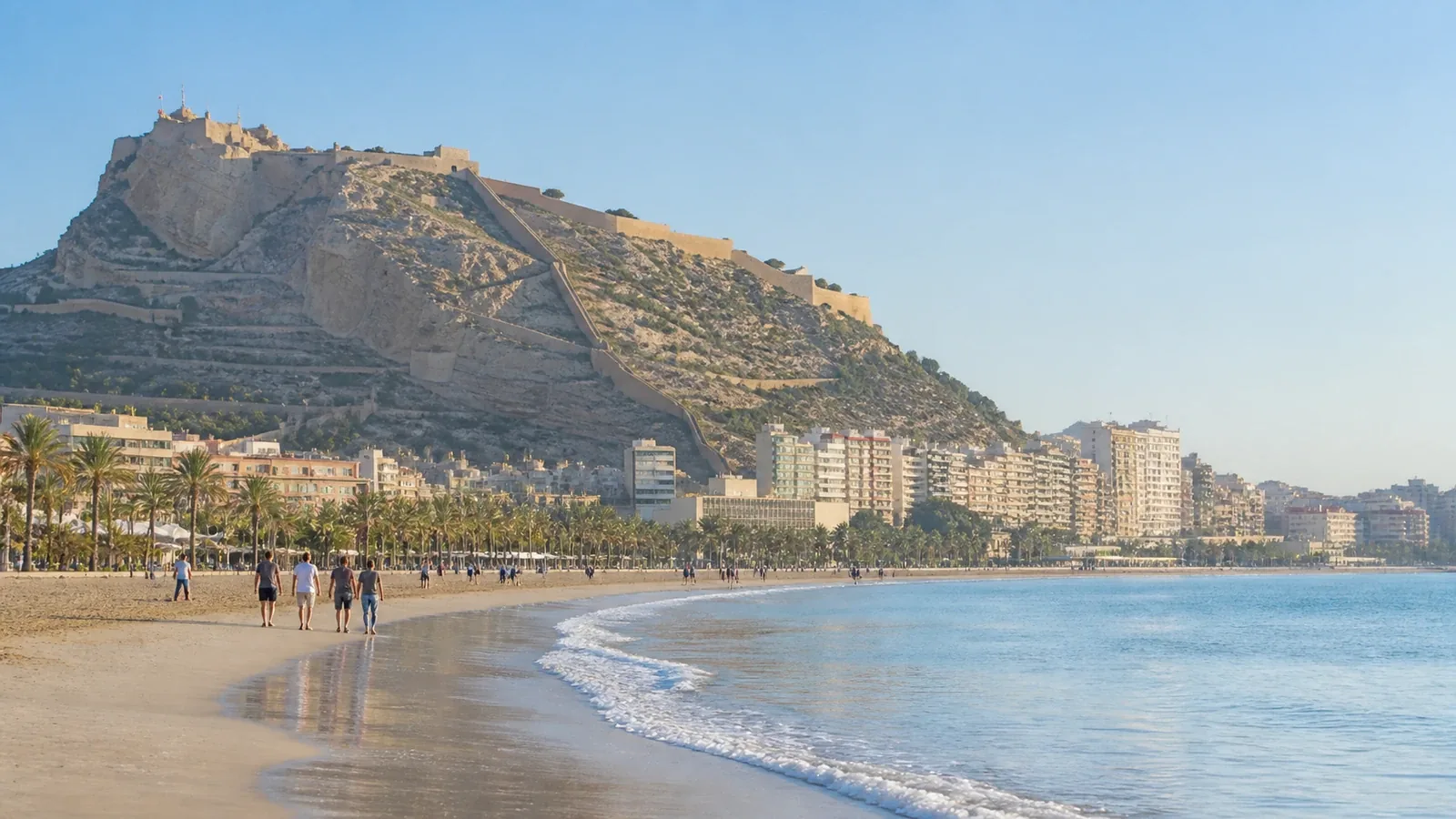
And some of the images you are most likely to remember from Alicante are free: sunlight on the façades, palm trees silhouetted against the sky, the castle towering over the city and that Mediterranean blue appearing at the end of so many streets.
Expenses People Often Forget
When planning your budget, it is worth leaving room for smaller costs: transfers to and from the airport, public transport, parking if you use a car, drinks, nightlife, shopping and possible accommodation surcharges.
There is also something less tangible to consider: the season.
Travelling during highly sought-after dates and booking late can completely transform a budget that initially seemed reasonable.
Who Is Alicante a Good Budget Destination For?
Alicante works particularly well for travellers who enjoy walking, spending time by the sea, eating well without needing sophisticated restaurants every day and combining sightseeing with unstructured time.
It may be less economical for anyone wanting beachfront accommodation in peak season, a car for the entire stay, tourist restaurants every day and numerous organised activities.
The city makes it possible to spend very little, but it also provides plenty of opportunities to spend a great deal.
So, How Much Money Should You Take to Alicante?
There is no single honest figure that works for every traveller. The cost depends too heavily on the season, accommodation, length of stay, eating habits and chosen activities.
A more reliable way to calculate it is to divide your budget into accommodation + food + transport + activities + personal expenses, then add a buffer for unexpected costs.
Alicante has one major advantage for travellers trying to control their spending: many of its best experiences do not depend on buying a ticket. The sea does not charge you to look at the horizon, and the streets of the old town do not require a reservation.
The real art of saving money is knowing what deserves your money and what simply deserves your time.
The structure prioritises useful, original content focused on the reader’s real intent, avoiding changing figures or keyword stuffing, in line with the SEO recommendations provided. The editorial approach also maintains the need to balance attractions, costs and drawbacks.
