 Activity on TourBookGo
Auckland hop on hop off bus: price, routes and booking
Explore with the Auckland hop on hop off bus: one-day tickets from €29, multilingual audio commentary, free WiFi and free cancellation up to 24 hours.
Getting around Auckland is easier once you understand its geography. The city centre is manageable on foot, but Auckland spreads across bays, hills, residential neighbourhoods and inlets, so public transport, ferries and walking all have a role to play. The good news is that you do not need to rent a car for your entire trip.
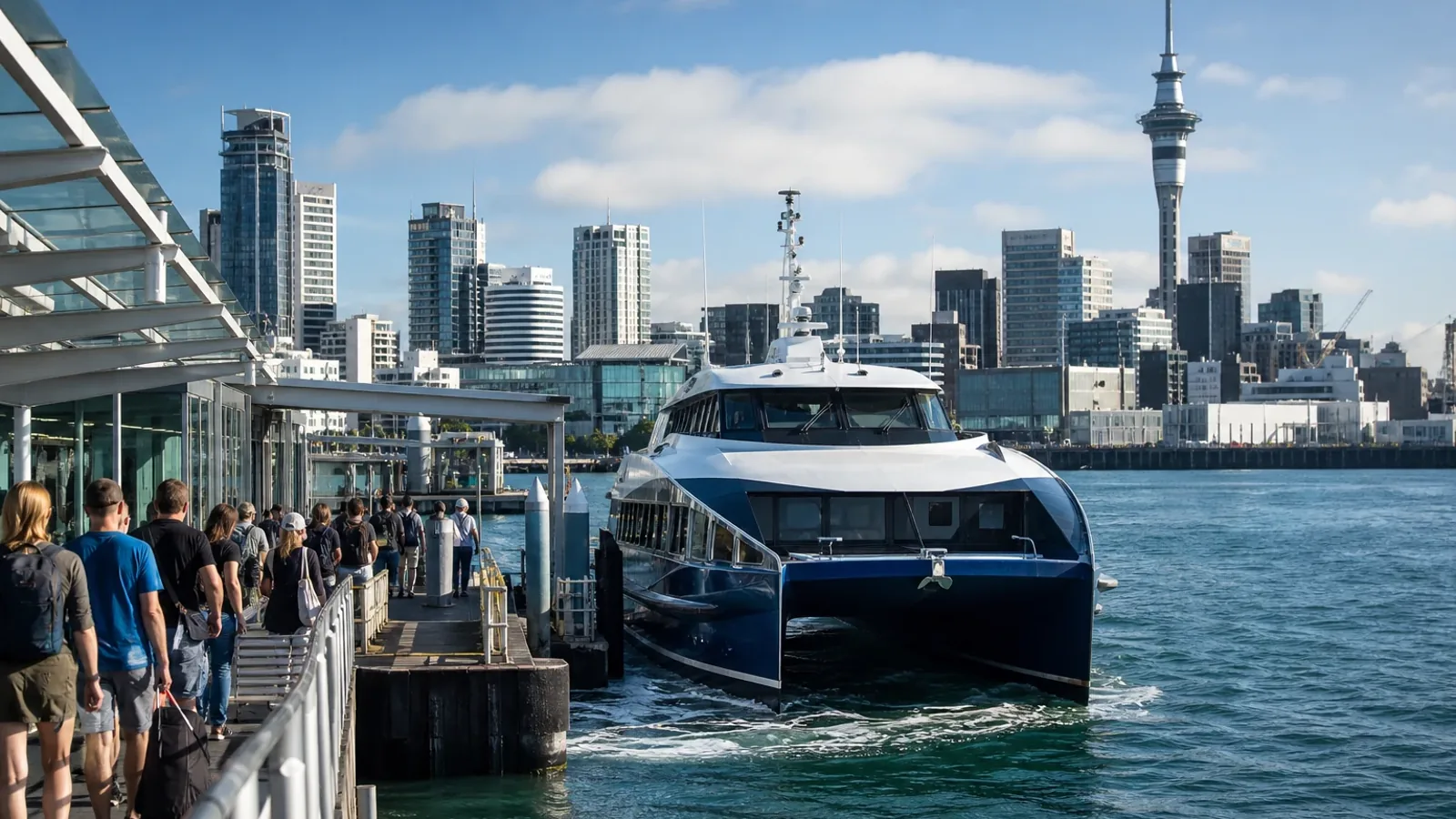
The most practical approach to getting around Auckland is to combine different modes of transport: walk around the city centre, use buses and trains to reach other neighbourhoods, take ferries when crossing the water is the logical choice, and save the car for beaches, rural areas and more remote landscapes.
Compare locations and options to find a base that suits your trip. Booking.com confirms current availability and pricing.
Find accommodation on BookingFor a first visit focused on the CBD, Viaduct Harbour, Wynyard Quarter, Ponsonby, Newmarket, Devonport and the main urban neighbourhoods, renting a car in Auckland usually brings more hassle than freedom. The city has an integrated network of buses, trains and ferries, while Auckland Transport provides a journey planner for comparing routes, timetables and connections.
Auckland Transport
Driving also means dealing with parking and traffic in precisely the areas where getting around without a car is often more enjoyable. If your accommodation is well connected, keeping a car for your entire stay is rarely necessary.
The calculation changes when your itinerary includes the west coast beaches, rural areas or places well beyond the main public transport network. For these trips, a car gives you far more flexibility and makes it easier to combine several destinations in one day. A balanced approach is to explore Auckland without a vehicle first and rent one only for the days when it genuinely improves the journey.
Auckland public transport brings buses, trains and ferries together within the Auckland Transport network. One of the most useful options for visitors is the ability to pay directly with a contactless bank card or compatible device, alongside the traditional AT HOP card. Make sure you use the same card or device when tapping on and off so the system can calculate your journey correctly.
Auckland Transport
Cash is not accepted on buses. If you are staying for only a few days, paying directly by card or phone can be particularly convenient, while the AT HOP card may still be worthwhile for certain fares, discounts or travel patterns.
Auckland Transport
It is also worth checking AT Mobile/Journey Planner before travelling. Auckland's geography means that some distances that look short on a map can require transfers or detours around stretches of coastline, and the planner helps you compare routes, departure times and estimated journey costs.
Auckland Transport
Auckland buses will probably be the form of transport you use most if you want to explore beyond the city centre. The network reaches neighbourhoods not served by rail and connects residential districts, shopping areas and coastal locations.
The main drawback is Auckland's geography itself: distances can be greater than they appear, and traffic can affect journey times. Rather than stringing together too many far-flung neighbourhoods in one day, Auckland is more enjoyable when you group your sightseeing by area.
For exploring the CBD in the morning and spending the afternoon in another neighbourhood, the bus works well. If you cross half the city several times in a single day, it quickly becomes much less convenient.
Auckland trains are particularly useful for reaching different parts of the south, east and west of the city. For anyone travelling in 2026, there is also an important change that can reshape how easy it is to travel through central Auckland.
The City Rail Link will begin carrying passengers on 13 September 2026. Until then, Waitematā is the only railway station located right in the city centre. Once the new link opens, Te Waihorotiu, Karanga-a-Hape and Maungawhau stations will enter service, and the rail network will run through the city centre rather than terminating there.
Auckland Transport
For visitors arriving after that date, trains will become considerably more useful for travelling through the heart of Auckland. Auckland Transport will also adjust routes, timetables and bus connections around the opening, so checking the Journey Planner shortly before each trip is a sensible habit.
Auckland Transport
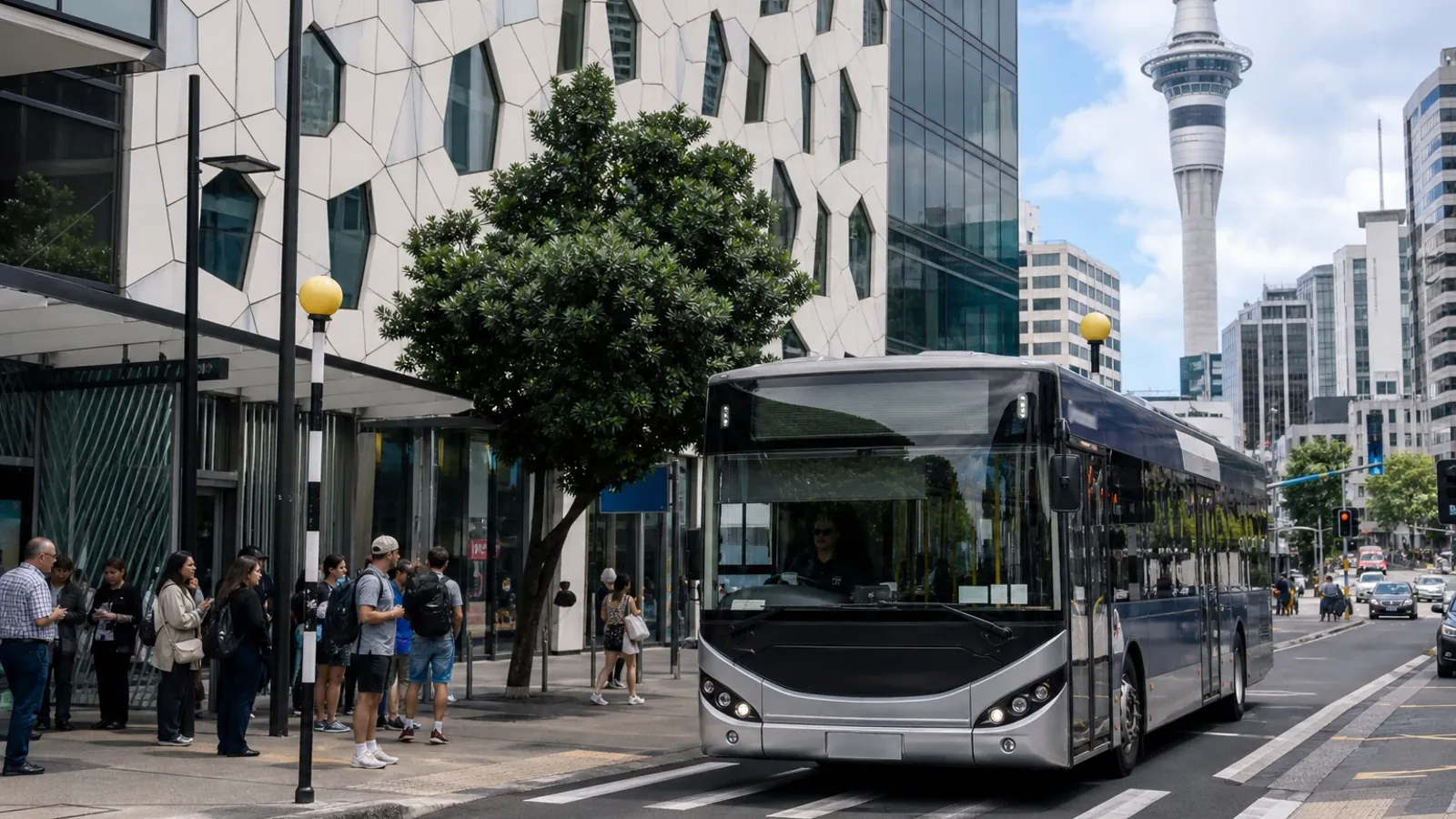
Few ways of getting around Auckland are as enjoyable as crossing the harbour by ferry.
Auckland ferries connect the city centre with several coastal locations and islands in the gulf. They are not simply a tourist attraction: on some routes, ferries are a genuine part of everyday transport and can also be the most natural way to make the journey.
Auckland Transport
Devonport is around 12 minutes by ferry from Downtown, making it one of the easiest outings to enjoy without a car. Waiheke Island is around 40 minutes away by ferry, although its services and ticketing systems have their own particularities.
Auckland Transport
It is worth checking the operator before travelling. Contactless payment works on most Auckland ferries, but there are exceptions, including certain commercial services to Waiheke.
Auckland Transport
The ferry offers something beyond convenience, too. From the water, Auckland's hills, central skyline and constant relationship with the sea come into view in a way that is much harder to appreciate from the road.
The city centre, yes. All of Auckland, no.
The area around Queen Street, Commercial Bay, Britomart/Waitematā, Viaduct Harbour and Wynyard Quarter is ideal for walking. Exploring on foot also makes it easier to notice the transition between commercial buildings, old waterfront warehouses, restaurants and wharves.
Auckland is hilly, however, and many of its most interesting neighbourhoods are spread fairly far apart. Trying to connect every area on foot can turn an enjoyable day into an unnecessary succession of kilometres.
The simplest approach is usually the best: walk within each neighbourhood, then use buses, trains or ferries to move between them.
If you are wondering how to get from Auckland Airport to the city centre by public transport, Auckland Airport does not currently have its own railway station. The network-integrated option is AirportLink, a bus connecting the terminals with Puhinui Station; from there, you can continue by train to other parts of Auckland. AirportLink runs every day, with frequent services throughout much of the day.
Auckland Transport
There are also direct commercial buses to the city centre, along with taxis, shuttles and rideshare services. With light luggage, public transport is a perfectly reasonable choice; after a long flight, when travelling with family or carrying several suitcases, paying for a direct connection can make the arrival considerably easier.
AIAL | Traveller
For most travellers, the best strategy for getting around Auckland is not to rent a car from day one. Stay somewhere well connected, explore the city centre on foot and use buses, trains and ferries for urban sightseeing. Save a rental car for days when you want to reach more distant places where public transport would restrict the itinerary too much.
Auckland does not have the walkability of a compact European city, nor a rail network that reaches every corner. Its appeal lies in the combination: land and water, urban neighbourhoods and coastal escapes, public transport and the open road.
Understanding that geography before you start travelling helps you avoid one of Auckland's most common mistakes: underestimating distances and packing too much transit into a single day. Moving a little more slowly here does not mean seeing less; it often means enjoying each part of the city much more.
Discover Auckland through three hand-picked experiences combining city life, coastal landscapes, local culture and well-organized day trips.
Activity on TourBookGoExplore with the Auckland hop on hop off bus: one-day tickets from €29, multilingual audio commentary, free WiFi and free cancellation up to 24 hours.
 Activity on TourBookGo
Enjoy a Waiheke Island wine tour from Auckland with return ferry tickets, private transport, a two-course lunch, olive oil tasting and local wine tastings.
 Activity on TourBookGo
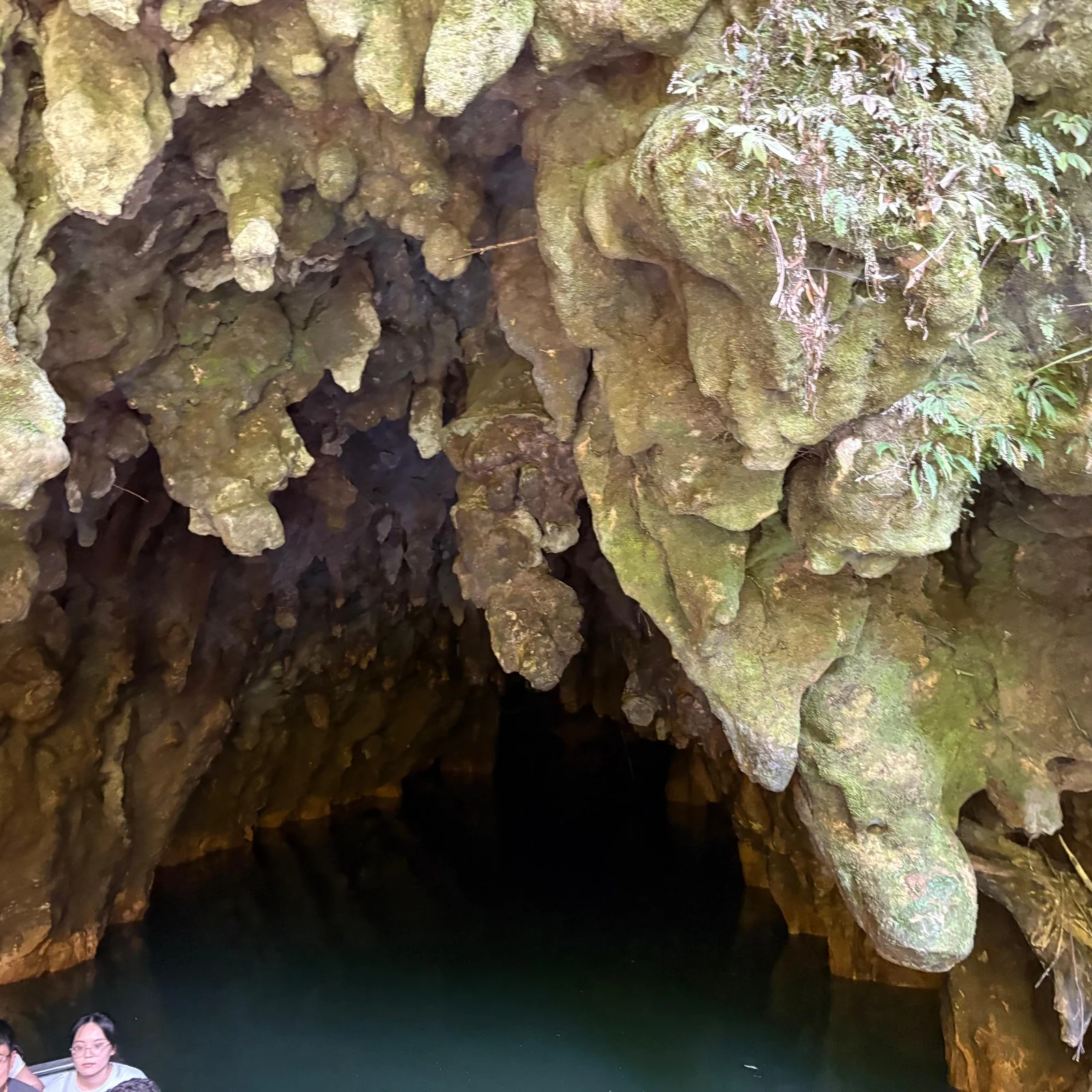
Around 7 hours from Auckland to the Waitomo Glowworm Caves with transport, English-speaking guide, admission and boat ride. From €142 per person.