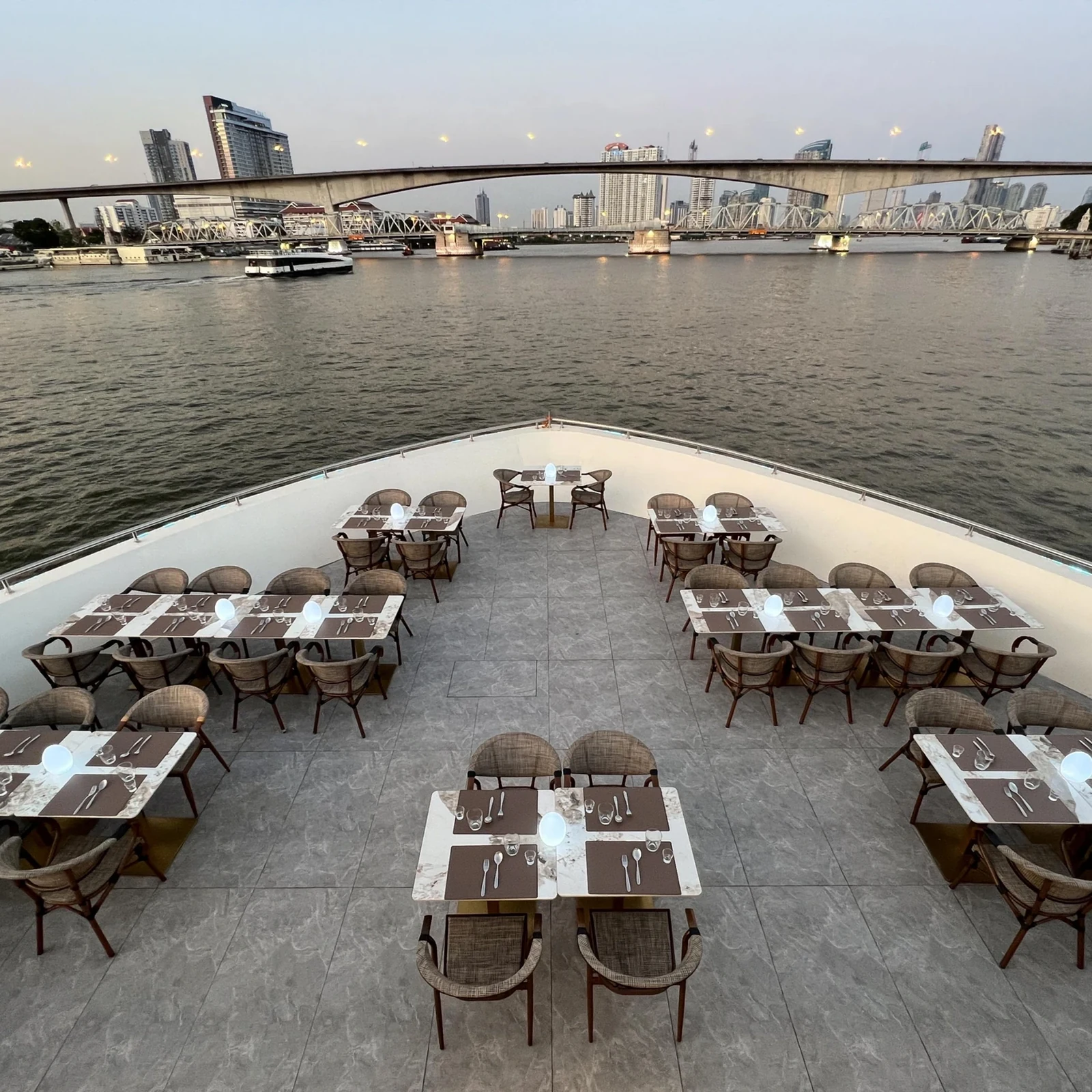
 Activity on TourBookGo
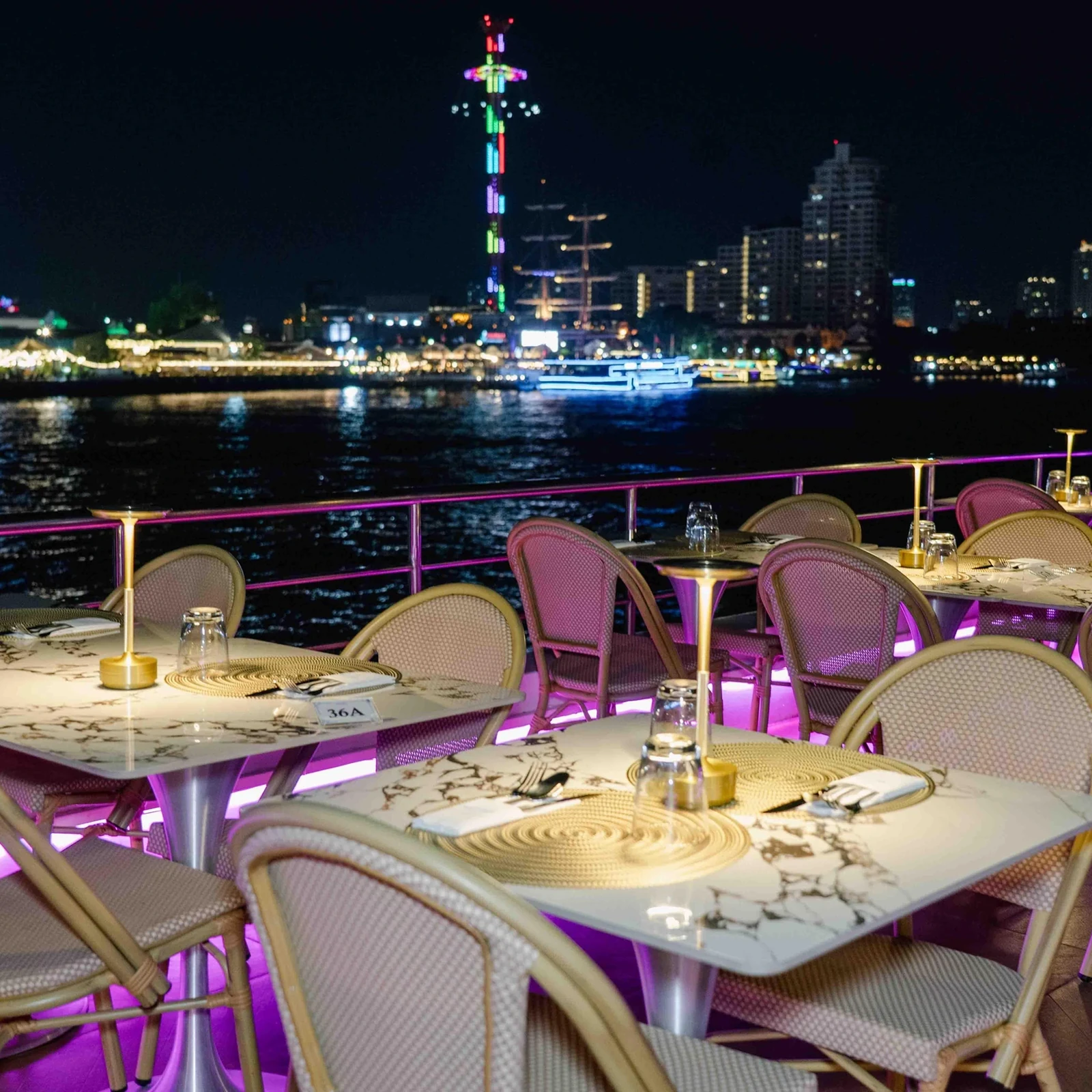
The Planet Dinner Cruise Bangkok with Chao Phraya night views
Book The Planet Dinner Cruise Bangkok with buffet dining, live music, Chao Phraya night views and free cancellation up to 24 hours before.
The best time to visit Bangkok depends on the heat you can handle, the rain you can accept and the kind of trip you picture between temples, markets and the Chao Phraya River.
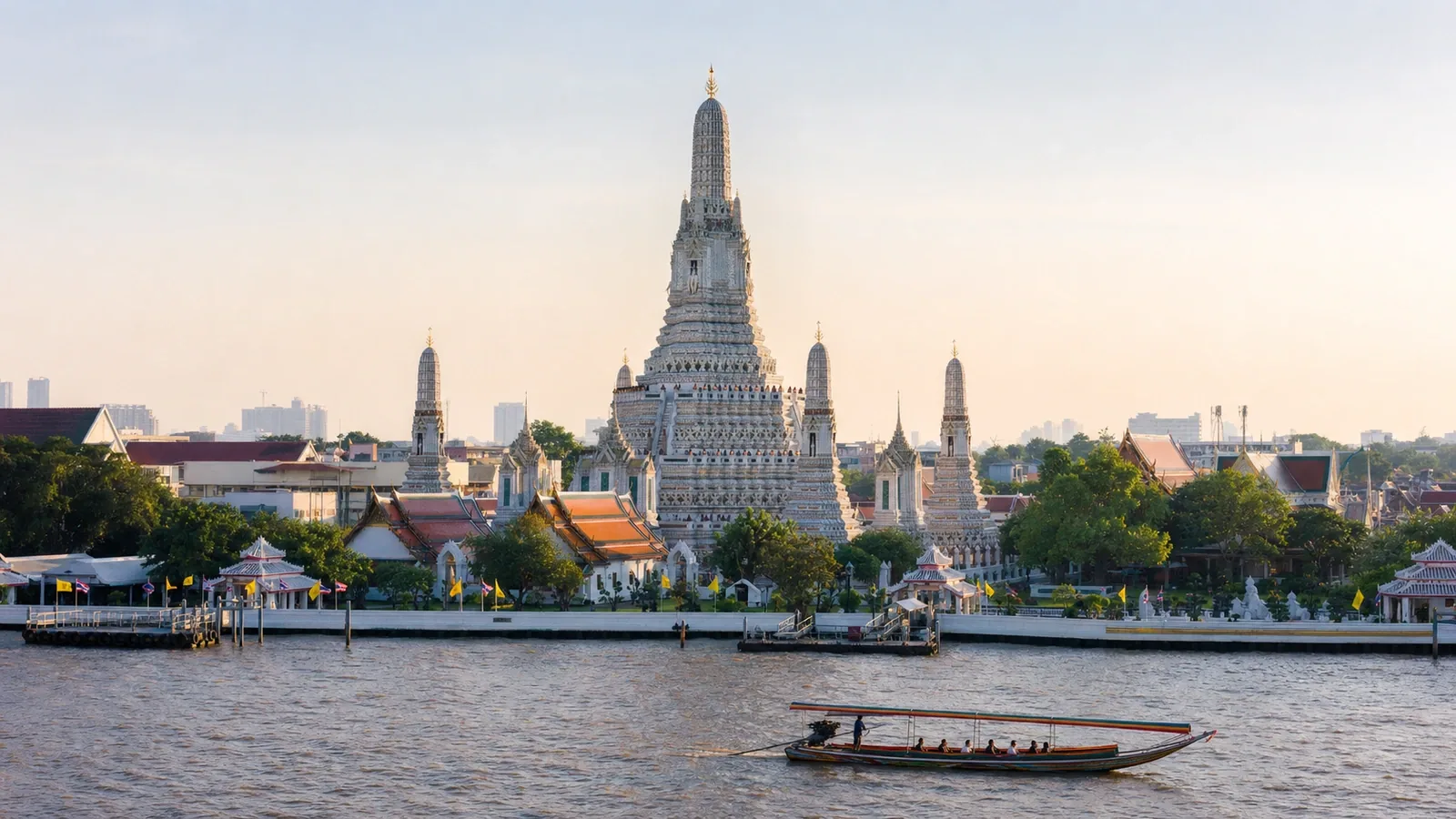
The best time to visit Bangkok cannot be understood by looking at a calendar alone. The city has a humid, electric, sometimes suffocating rhythm: golden temples under a white-hot sun, steaming food stalls at dusk, dense avenues, boats crossing the Chao Phraya, and shopping malls that double as climate shelters. Choosing the right time to travel will not make Bangkok an easy city, but it can make it much kinder. The clearest answer is this: the best time to visit Bangkok is usually from November to February, when the heat eases slightly, rainfall is lower, and walking around temples, markets, and historic neighborhoods feels more manageable. Even so, this is also the most popular season, with more travelers and generally higher prices.
Compare locations and options to find a base that suits your trip. Booking.com confirms current availability and pricing.
Find accommodation on BookingBangkok is easier to understand by seasons than by isolated months. The city moves between a drier, more comfortable season, a period of intense heat and a rainy season that does not usually ruin a trip, but does demand flexibility.
To decide when to visit Bangkok, think about three real factors: weather, prices and the rhythm of the city. Visiting temples early in January is not the same as crossing markets after a September downpour or joining Songkran in the middle of April.
These are the best months for a first trip to Bangkok. The air can still feel heavy, because Bangkok rarely feels cool in the European sense of the word, but mornings are more bearable and long visits to the Grand Palace, Wat Pho, or Wat Arun are less exhausting.
It is an ideal time for travelers who want to walk, combine temples with markets, take nearby excursions, and enjoy riverside terraces without feeling defeated by the city from the first hour of the day. It also brings a particularly pleasant atmosphere at dusk: the light turns golden, boats drift by slowly, and night markets have a less sticky energy.
The less romantic side: there will be more tourism. Around the Grand Palace, Khao San Road, Siam, or the main Chao Phraya piers, Bangkok can feel crowded. It is worth booking accommodation in advance and starting major visits early.
The hot season usually runs from mid-February to mid-May, and April stands out as one of the most demanding periods in terms of temperature. If you are looking for the best month to visit Bangkok comfortably, April is rarely the easiest choice.
Still, this season has its own character: bright skies, dense afternoons and a city that never seems to lower the volume.
Traveling during these months is not a mistake, but it does require knowing what you are getting into. Bangkok can become scorching: the asphalt radiates heat, short walks feel longer than they are, and the humidity can make even a brief visit feel like a small expedition. It is better to organize the day in two parts: temples and outdoor sights very early; shopping malls, cafés, museums, or rest during the central hours; markets and nightlife in the late afternoon.
April has a special appeal because of Songkran in Bangkok, the Thai New Year, celebrated with major water festivals and events around mid-April. It is a lively, chaotic, memorable experience, but it should not be imagined as a peaceful postcard scene: there are crowds, wet streets, complicated traffic, and plenty of intensity.
If you travel in April, choose a hotel with a good location, a pool or proper rest areas, and avoid filling your itinerary with outdoor sights during the hottest hours.
March, April, and May may suit travelers who tolerate heat well, want a more intense version of the city, wish to experience Songkran, or prioritize hotels with a pool, a good location, and air conditioning. It is not the best choice for older travelers, families with small children, or anyone hoping to walk for hours.
The Bangkok rainy season generally falls between mid-May and mid-October. This does not mean constant rain all day, but it does mean heavy downpours, loaded skies, high humidity, and occasional complications when getting around.
Rain often arrives with force and then reveals another side of the city: shining pavements, neon reflections, the smell of street food and beautiful light over the river.
The advantage is that Bangkok becomes a little more negotiable. There may be better accommodation deals, less tourist pressure in some places, and beautiful light after the rain. Markets remain lively, street food does not disappear, and the city keeps its pulse.
The downside is clear: plans need to be flexible. A rigid itinerary packed with outdoor visits can become frustrating. During the rainy season, it is best to stay near the BTS or MRT, bring shoes that can handle puddles, always have an indoor backup plan, and avoid leaving important activities until the last day.
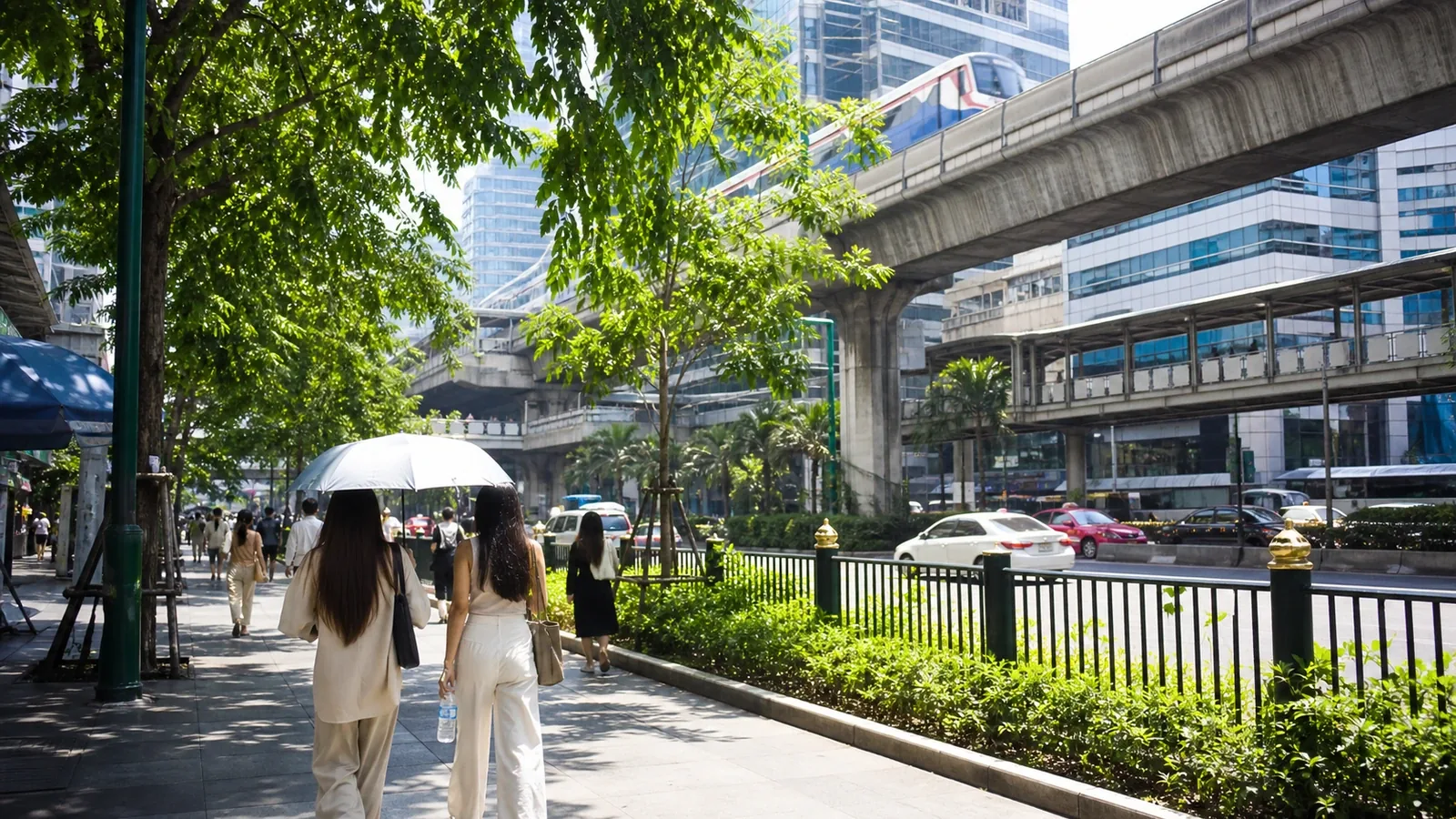
December and January usually offer the most pleasant balance between dry weather, slightly milder temperatures, and a vibrant urban atmosphere. They are very good months for a first trip, although they are also among the most in demand.
November can be magnificent: the rains begin to retreat, the sky changes, and the city takes on a gentler atmosphere. In addition, the Loy Krathong festival is usually held around the full moon of the twelfth lunar month, normally in November, with celebrations linked to water and light.
If you are visiting Bangkok from November to February, book reasonably early, especially if you want a well-located hotel near the river, Sukhumvit, Siam or areas connected by BTS and MRT.
February is a good alternative if you are looking for weather that is still fairly dry, although it may start to feel hotter and, in some years, air quality can be a factor to watch.
Bangkok is not measured only by rain and temperature. During certain periods, especially in the dry months, PM2.5 pollution can affect the experience, particularly for sensitive travelers.
Between January and April, Bangkok air quality can be more irregular. That does not mean you need to cancel a trip, but it is worth checking levels before spending long hours walking or planning outdoor excursions.
This does not mean those months should always be avoided, but it is worth checking air quality before and during the trip, especially when traveling with children, asthma, or respiratory conditions.
For a first trip, I would choose November, December, January, or February. Bangkok is more enjoyable when the weather allows for a certain slowness: sitting by the river, crossing by boat without rushing, wandering through Chinatown as the neon lights come on.
To save money or travel with more flexibility, I would look at June, July, or September, accepting rain and changing plans. For a festive, extreme version of Bangkok, April has real force, but it also demands energy and patience.
Anyone dreaming of an orderly, cool, silent city should perhaps think twice. Bangkok is beautiful, yes, but also noisy, humid, intense, and at times exhausting. Its charm lies precisely in that mixture: incense and gasoline, gold and cables, ripe mango and storm, spirituality and traffic.
The best time to visit Bangkok is from November to February, with a special preference for December and January if climatic comfort is the priority. November is a very attractive option because of the seasonal transition and cultural atmosphere. April can be fascinating because of Songkran, but tough because of the heat. The rainy season does not necessarily ruin the trip, although it calls for flexibility, good accommodation, and an attitude less obsessed with sticking to schedules.
Bangkok rewards those who adapt more than those who try to control it. Choosing the right date helps, but the real key is to accept its rhythm: go out early, rest when the heat presses down, and let the city reveal itself best at dusk, when the river darkens and the aroma of woks begins to fill the night.
Choose experiences in Bangkok that suit your travel season, the weather and the pace you want for each day.
Activity on TourBookGoBook The Planet Dinner Cruise Bangkok with buffet dining, live music, Chao Phraya night views and free cancellation up to 24 hours before.
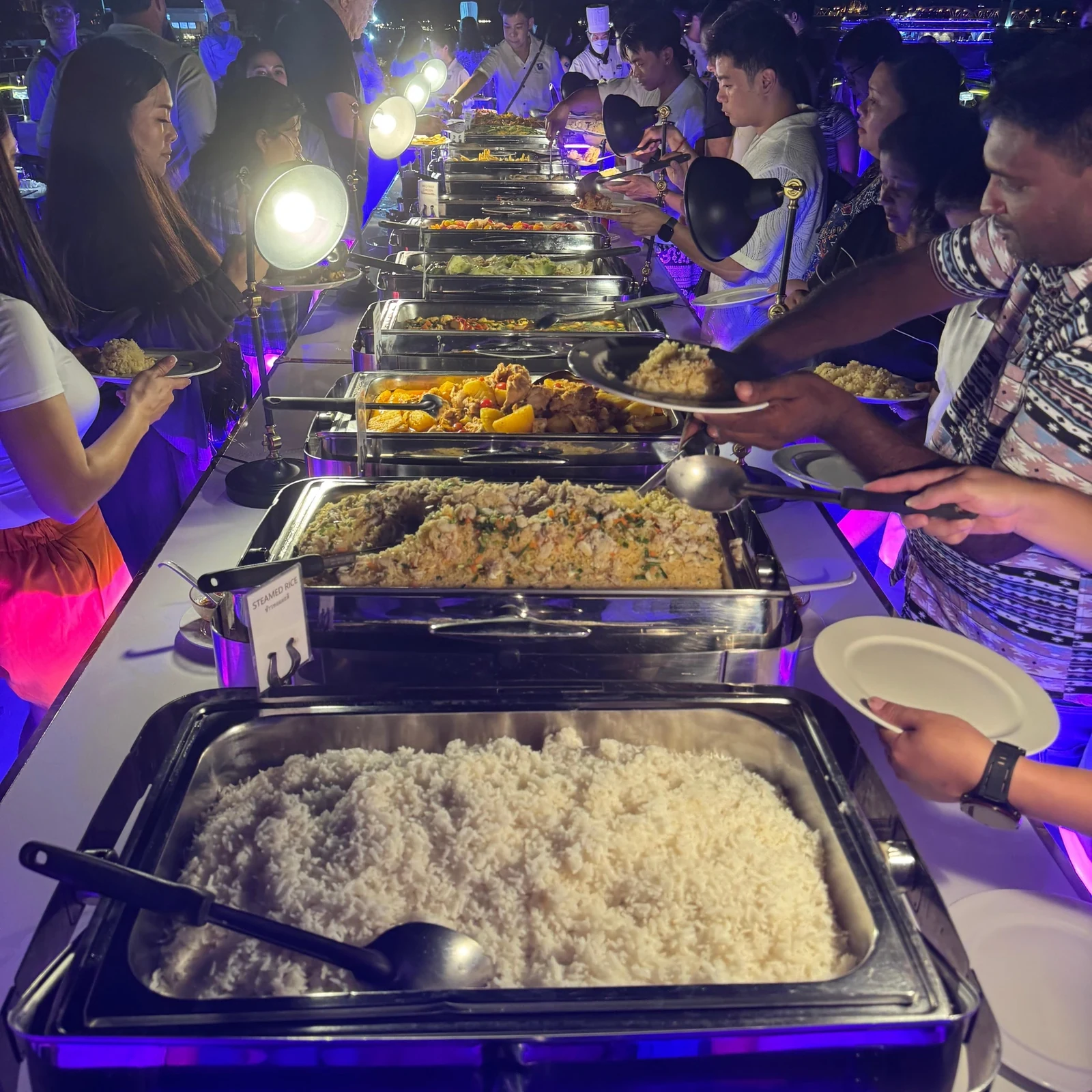 Activity on TourBookGo
Book the White Orchid Chao Phraya dinner cruise Bangkok with buffet, free-flow beer, live music and night river views. See price, times and availability.
 Activity on TourBookGo
Book the Chao Phraya dinner cruise from ICONSIAM: 2.5 hours through Bangkok by night with buffet, soft drinks, live music and onboard shows.