

Book an Ayutthaya day trip from Bangkok with guide, transport, historic temple entry tickets and a stop at the Ayothaya Floating Market.
View experienceBangkok safety for tourists: what to expect
In general, Bangkok is safe for tourists. It is a major travel capital, used to welcoming visitors from all over the world. In the most visited areas — Sukhumvit, Silom, Siam, Riverside, the area around the Grand Palace, Wat Pho, and the best-known markets — you can usually expect constant movement, available transport, open businesses, and other travelers nearby.
The main risk for visitors is not usually violence, but petty scams, inflated prices, confusing transport, careless handling of bags or phones, traffic, and a few uncomfortable situations in nightlife areas. So the aim is not to travel in fear, but to travel with your eyes open.
What can go wrong in Bangkok
Bangkok is tiring. That is a form of insecurity many people do not take into account. The heat, humidity, uneven pavements, pedestrian bridges, traffic jams, and distances between neighborhoods can turn a badly planned day into a small battle.
Common scams in Bangkok often follow a simple pattern: someone overly friendly tells you that a temple is closed, that there is a special promotion today, that they know a wonderful shop, or that they can take you by tuk-tuk for a suspiciously low price. You do not need to distrust everyone; you simply should not hand over your decisions to strangers who appear just when you look lost.
It is also wise to keep an eye on phones and bags in markets, stations, crowded areas, and busy streets. Bangkok does not call for panic, but it does punish naivety.
If someone tells you that a temple or monument is closed, check it yourself before accepting an alternative.
Safe areas in Bangkok and places for extra care
Khao San Road can be fun if you are looking for a backpacker atmosphere, bars, and noise late into the night, but it is not the calmest or most polished side of Bangkok. Nana, Soi Cowboy, and some nightlife areas have lights, music, and an intense after-dark scene, but also more commercial pressure, alcohol, and potentially uncomfortable situations.
In nightlife venues, safety is not only about the neighborhood, but also about the place itself: visible exits, a reasonable crowd level, a controlled atmosphere, and a well-maintained feel. This does not mean Bangkok nightlife is dangerous, but it does suggest choosing venues carefully, avoiding overcrowded enclosed spaces, and keeping an eye on drinks, bags, and companions.
Political demonstrations, when they occur, should be avoided even if they appear peaceful. In a large city, a gathering can disrupt traffic, block access, or become tense before a traveler fully understands the context.
In nightlife areas, choose venues with visible exits and avoid overcrowded enclosed spaces.
Bangkok solo travel safety for women
Bangkok can be a good city for women traveling alone, especially if they stay in well-connected areas, use reliable transport, and avoid walking back late at night along deserted streets. In central neighborhoods, the feeling is usually more one of chaos than threat.
Even so, it is sensible to be cautious with unexpected invitations, unsolicited taxis, drinks left unattended, and people who insist too much. At night, BTS, MRT, ride-hailing apps, or official taxis are better options than walking long distances along poorly lit streets.
Families, children, and older travelers
Bangkok can work for families, but it is not always easy. Children may enjoy the river boats, air-conditioned shopping malls, selected markets, and temples visited at a relaxed pace. But the heat, distances, and traffic can quickly become exhausting.
For older travelers or people with reduced mobility, the city can be challenging: narrow pavements, stairs, elevated stations, and entrances that are not always accessible. In that case, staying close to the BTS or by the river can make a major difference.
Safe transport in Bangkok: the real challenge
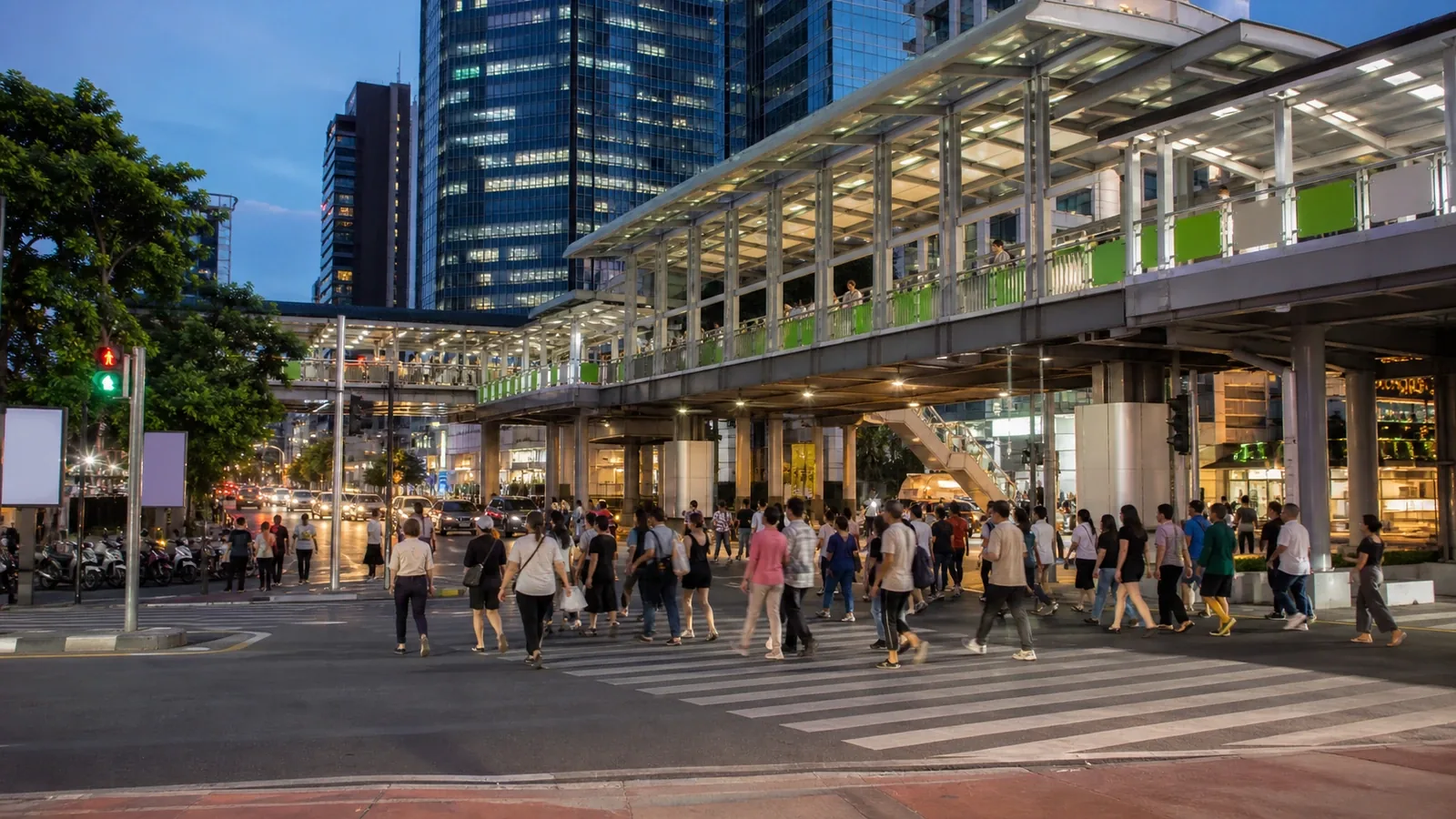
Bangkok’s traffic is one of its greatest practical hazards. Crossing streets requires patience; you should not assume vehicles will stop as they might in Europe. Motorbikes appear from unexpected angles, and traffic jams can disrupt any plan.
The BTS Skytrain and MRT are clean, straightforward, and generally safe options. Boats on the Chao Phraya are useful and beautiful, though they can be confusing during peak hours. Tuk-tuks have charm, but they are not always the most comfortable or economical way to get around. Before getting in, agree on the fare or choose alternatives with clear pricing.
For a calmer journey, prioritize the BTS, MRT, clear boat routes, official taxis, or ride-hailing apps.
Areas to avoid outside Bangkok
Most of the strongest international travel warnings do not focus on Bangkok, but on specific parts of the country, especially certain border areas or southern provinces. Before leaving the usual tourist routes, it is worth checking official advice and understanding whether any specific recommendation applies to the area you plan to visit.
For an urban trip focused on Bangkok, Ayutthaya, Chiang Mai, well-known islands, or standard tourist routes, this should not be confused with a general alarm. Still, it is worth checking official advisories before heading toward border areas.
Common mistakes to avoid
The first mistake is trying to see everything in two days. Bangkok is not enjoyable when rushed under the sun. It is better to combine temples in the morning, a midday break, and neighborhoods or markets around sunset.
The second is accepting “offers” from strangers around temples and monuments. If someone tells you a place is closed, check it yourself.
The third is staying too far away just to save a little money. In Bangkok, a poor location is paid for in time, taxis, traffic, and fatigue.
The fourth is underestimating the weather. During the rainy season, a storm can empty a street in minutes; in the hot season, walking too much can be a bad idea.
Who is Bangkok worth it for?
Bangkok is very much worth it for curious travelers, lovers of food, photography, urban contrasts, temples, markets, and cities that cannot be understood at first glance. It is an imperfect, excessive, fascinating capital, and at times an exhausting one.
It may not be the best choice for anyone looking for silence, order, immediate beaches, or an easy, polished getaway. Bangkok does not always soothe you; sometimes it pushes you. But once you accept its contradictions, it can offer some of the most intense days of a trip through Asia.
Verdict: is Bangkok safe to visit?
Yes, Bangkok is reasonably safe for most tourists who use common sense. It is not a city where you should completely let your guard down, but neither is it one you need to explore in fear. Its safety depends greatly on how you travel: where you stay, how you get around, how much you drink, which areas you choose at night, and how you react to offers that seem too convenient.
Bangkok is best enjoyed with a mix of openness and caution: alert eyes, flexible plans, well-chosen transport, and enough humility to accept that the city is always one step ahead.