

Visit Sachsenhausen and Potsdam from Berlin on a 9.5-hour guided day trip with private transport, a professional guide and free time in Potsdam.
View experienceBerlin Safety for Tourists: Where to Be More Careful
There is no need to avoid Berlin or walk around in fear, but it is worth learning how to read the city. Kottbusser Tor, Görlitzer Park, Leopoldplatz, Alexanderplatz, and some nightlife areas such as Warschauer Brücke can feel very different during the day than in the early hours of the morning.
By day, they can be part of a normal itinerary; at night, with alcohol, fatigue, or few people around, they call for more caution and a clearer route.
Berlin Police classify some spaces as “crime-burdened places” and point to different issues depending on the area: drug dealing in places such as Görlitzer Park/Wrangelkiez or Kottbusser Tor, more group-related violent offences around Alexanderplatz, and other local dynamics depending on the neighborhood.
There is no need to avoid these places by default, but it is worth changing how you move depending on the hour, the atmosphere, and how many people are around.
Berlin Public Transport Safety: Convenient, Useful, and Generally Safe
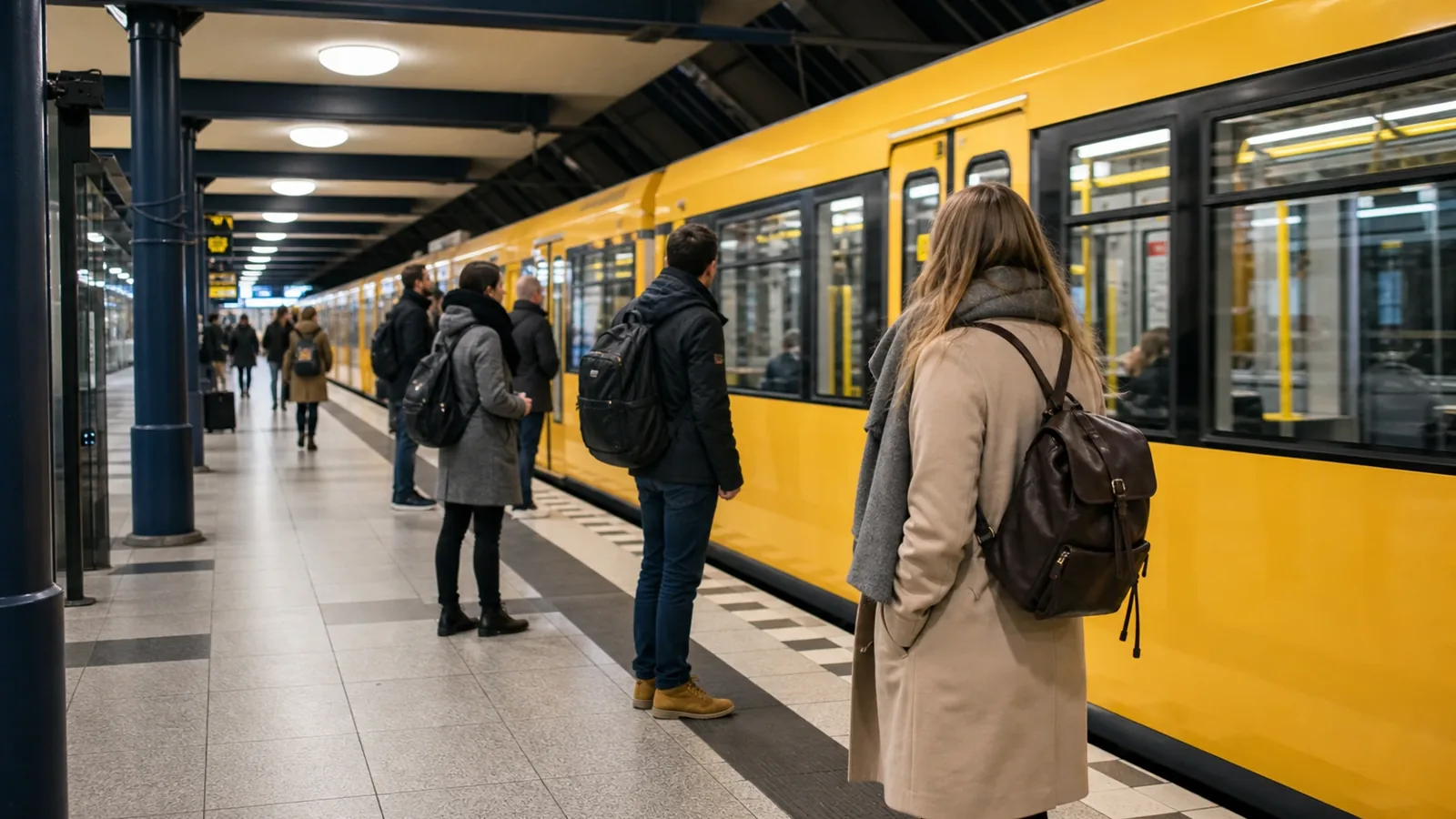
The U-Bahn, trams, buses, and urban trains are among the best ways to get around Berlin. For travelers, they are usually safe, practical, and easier than relying on taxis for every journey.
The most common risk is not assault, but losing a wallet, phone, or open backpack on platforms, in crowded carriages, and in large stations.
Since 2025, weapon and knife ban zones have been introduced in places such as Görlitzer Park, Kottbusser Tor, and Leopoldplatz, and measures have also been expanded to public transport and its facilities, with the aim of increasing safety in crowded spaces.
On public transport, the main risk for travelers is usually carelessness with a wallet, phone, or backpack.
Pickpockets and Petty Scams: The Most Realistic Problem
Travelers should worry more about carelessness than danger. Berlin does not require paranoia, but it does reward good habits: keeping your phone secure, not leaving your backpack hanging on the back of a chair, closing zippers on the metro, and being wary of sudden interruptions, odd bumps, or people trying to distract you.
Pickpockets in Berlin tend to look for moments of low attention, especially around visitor-heavy places, large stations, terraces, markets, and crowded carriages.
Berlin does not require paranoia, but it does reward good habits: secure phone, closed zippers, and attention to sudden distractions.
Is Berlin Safe at Night?
Yes, with some caveats. Berlin at night can be fascinating: yellow lights over the Spree, hidden bars, music, long streets, and a rare sense of freedom.
But it is also a vast city, with lonely stations, intoxicated people, and neighborhoods where the atmosphere becomes less welcoming after a certain hour.
The sensible approach is to stick to well-lit streets, avoid empty parks in the early hours, not accept drinks from strangers, keep alcohol consumption under control, and use a taxi or public transport if a walk feels too long or confusing.
At night, it is better to choose well-lit streets, clear routes, and public transport or a taxi when a walk feels too long or confusing.
Women Traveling Alone and Families
For women traveling alone, Berlin is usually a manageable city: there is plenty of street life, frequent public transport, and an urban culture quite used to personal independence.
Even so, at night it is worth applying the same caution as in any large capital: letting someone know when you are heading back, choosing well-connected accommodation, and avoiding isolated routes after leaving bars or clubs.
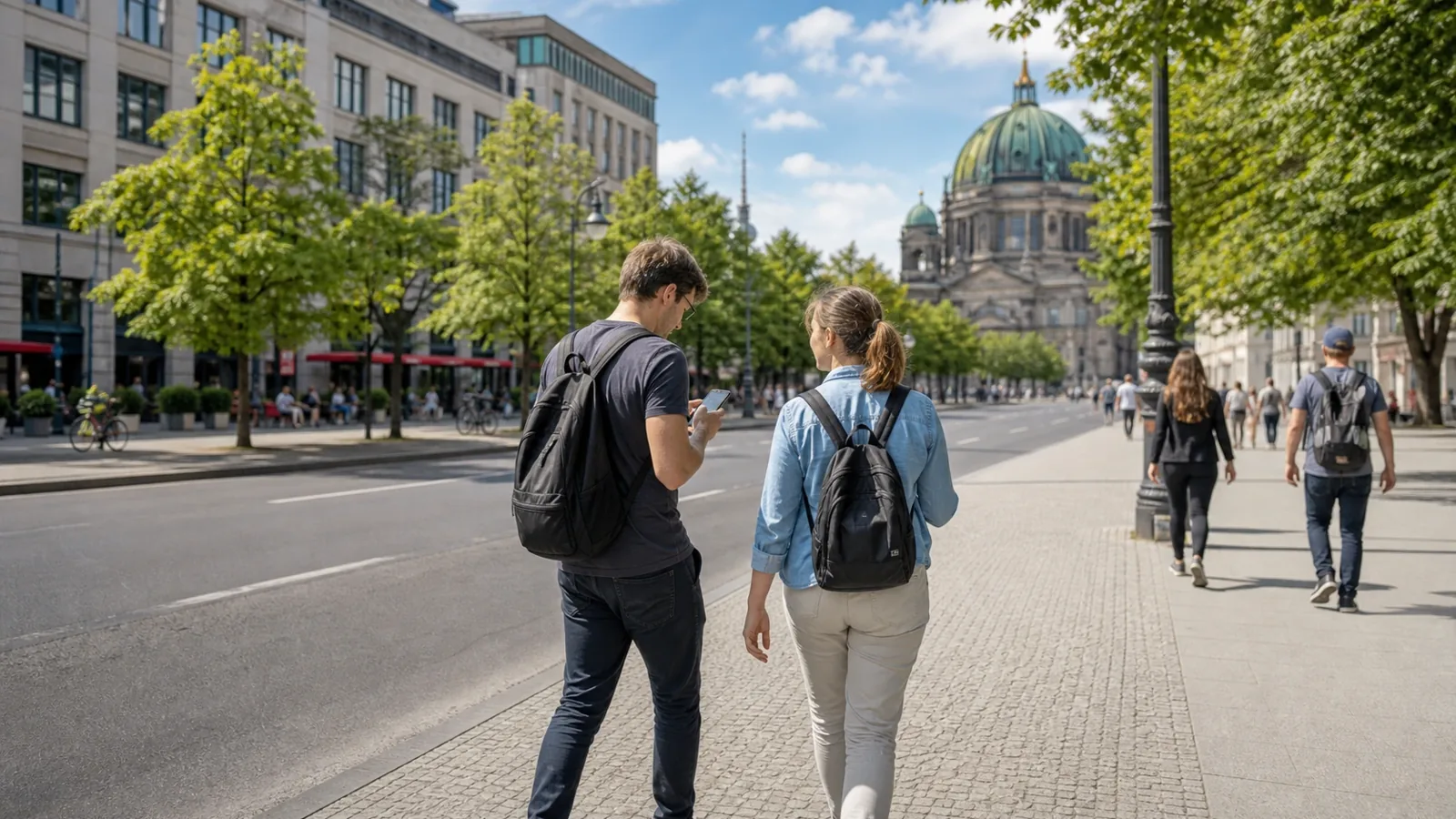
For families, the city is safe along the main tourist routes: Museum Island, Tiergarten by day, Unter den Linden, the Reichstag, Potsdamer Platz, and quieter areas of Prenzlauer Berg and Charlottenburg.
What may feel uncomfortable is not so much insecurity as the raw visual side of certain neighborhoods: graffiti, drinking in the street, agitated people, or stations with a rough atmosphere.
For a first visit, well-connected accommodation makes late-night returns much easier and calmer.
Demonstrations, Events, and Seasons
Berlin is a political city. Demonstrations are frequent and, although many are peaceful, they can affect routes, transport, and the atmosphere in some areas.
Authorities recommend avoiding protest areas and following local media or transport alerts when major demonstrations are planned.
The season also changes the feeling of safety. In summer, there is more life in parks, on terraces, and in the streets, but also more crowds and more opportunities for pickpockets.
In winter, it gets dark early; the city can feel colder, emptier, and harsher, especially away from the center or in less lively stations.
Demonstrations and the season can change routes, transport, and the feeling of safety in the city.
Mistakes Worth Avoiding
The first mistake is thinking Berlin is dangerous. It is not, for most sensible travelers.
The second is thinking that, because it is Germany, everything works with flawless security. Berlin has a more chaotic, nocturnal, and alternative personality than other German cities.
It is also wise not to book accommodation based on price alone. A poorly connected hotel or apartment can make every late-night return long and tiring.
For a first visit, areas such as Mitte, Prenzlauer Berg, Charlottenburg, well-located parts of Friedrichshain, or specific areas of Kreuzberg often work better than cheap accommodation on impractical outskirts.
It is wise not to book accommodation based on price alone: poor connections can make every late-night return long and tiring.
Verdict: Is Berlin Safe to Visit?
Berlin is worth it for travelers who accept a real city: cultured, intense, free, sometimes rough, and not always beautiful in the classical sense.
It is safe for a city break, for solo travel, for couples, or for families, as long as you behave with the normal awareness expected in a big city.
It is not the best choice for anyone looking for a flawless, quiet, orderly capital on every corner. Berlin has beauty, but it does not always present it in a polished way.
Its safety is better understood like this: not as the total absence of discomfort, but as a city where you can travel calmly if you know how to look, choose your areas well, and do not confuse freedom with carelessness.
Berlin is safe to visit calmly if you know how to read the city, choose your areas well, and do not confuse freedom with carelessness.