What to do in Berlin: essential plans, neighbourhoods, museums and experiences that are genuinely worth it
What to do in Berlin is not answered by a quick checklist. The city is best understood through its layers: imperial, divided, alternative, cultural and everyday.
If you are wondering what to do in Berlin, start with one clear idea: the city does not reveal itself all at once. It is not an easy postcard city, nor one with obedient beauty. It is large, sometimes rough-edged, ever-changing, creative, wounded and luminous in its own way. There are monumental avenues, Soviet-era blocks, neighbourhood cafés, markets scented with Turkish bread, silent memorials, clubs where the night seems never to end and parks where Berliners live summer as though it were a civil right.
The best way to enjoy Berlin is not to chase every monument, but to understand its layers: the imperial city, the divided city, the alternative city, the cultural city and the everyday city.
Start in Mitte for some of Berlin’s most recognisable historical symbols.
Choose museums carefully: Berlin rewards selection more than accumulation.
Leave time for neighbourhoods such as Kreuzberg, Neukölln and Friedrichshain, where the city is understood from the street.
Booking.com
Accommodation in Berlin
Compare locations and options to find a base that suits your trip. Booking.com confirms current availability and pricing.
What to do in Berlin on a first visit: start in Mitte
For a first visit, Mitte brings together some of the must-see places in Berlin: the Brandenburg Gate, the Reichstag, Unter den Linden, Museum Island, Berlin Cathedral and the area around the Humboldt Forum are among the city’s major tourist landmarks.
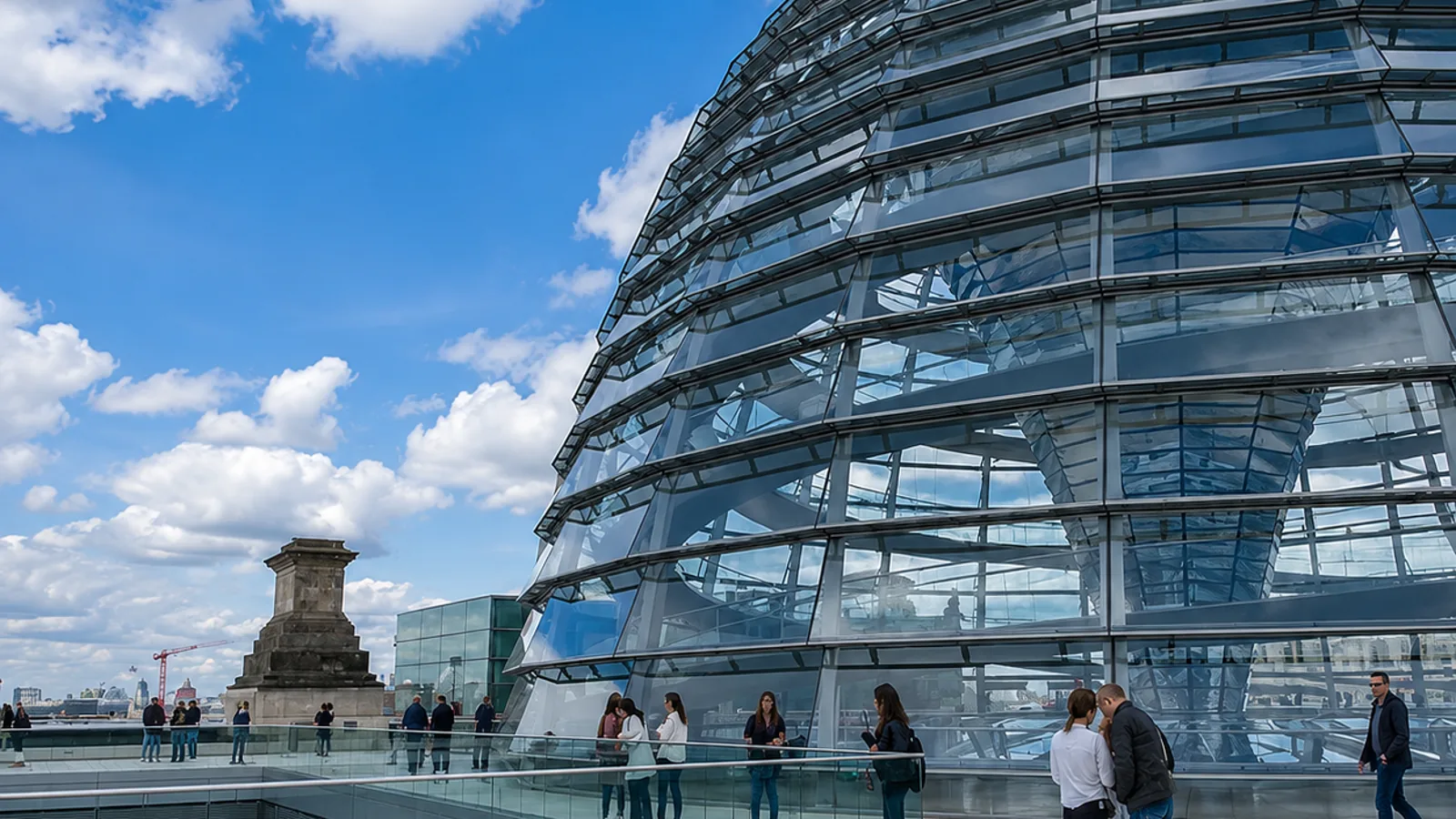
It is best explored on foot, without turning it into a mechanical checklist. The Brandenburg Gate is moving more for what it represents than for its size. The Reichstag, with its glass dome, lets you look out over the city from above, although visits require prior registration and may depend on availability or conditions on the day.
Very close by, the Holocaust Memorial demands a different pace. It is not a place for quick photos or careless poses. Berlin has that uncomfortable and necessary ability to make travellers lower their voices.
The Reichstag requires prior registration, and visits may depend on availability or conditions on the day.
Museum Island: Berlin museums to choose without rushing
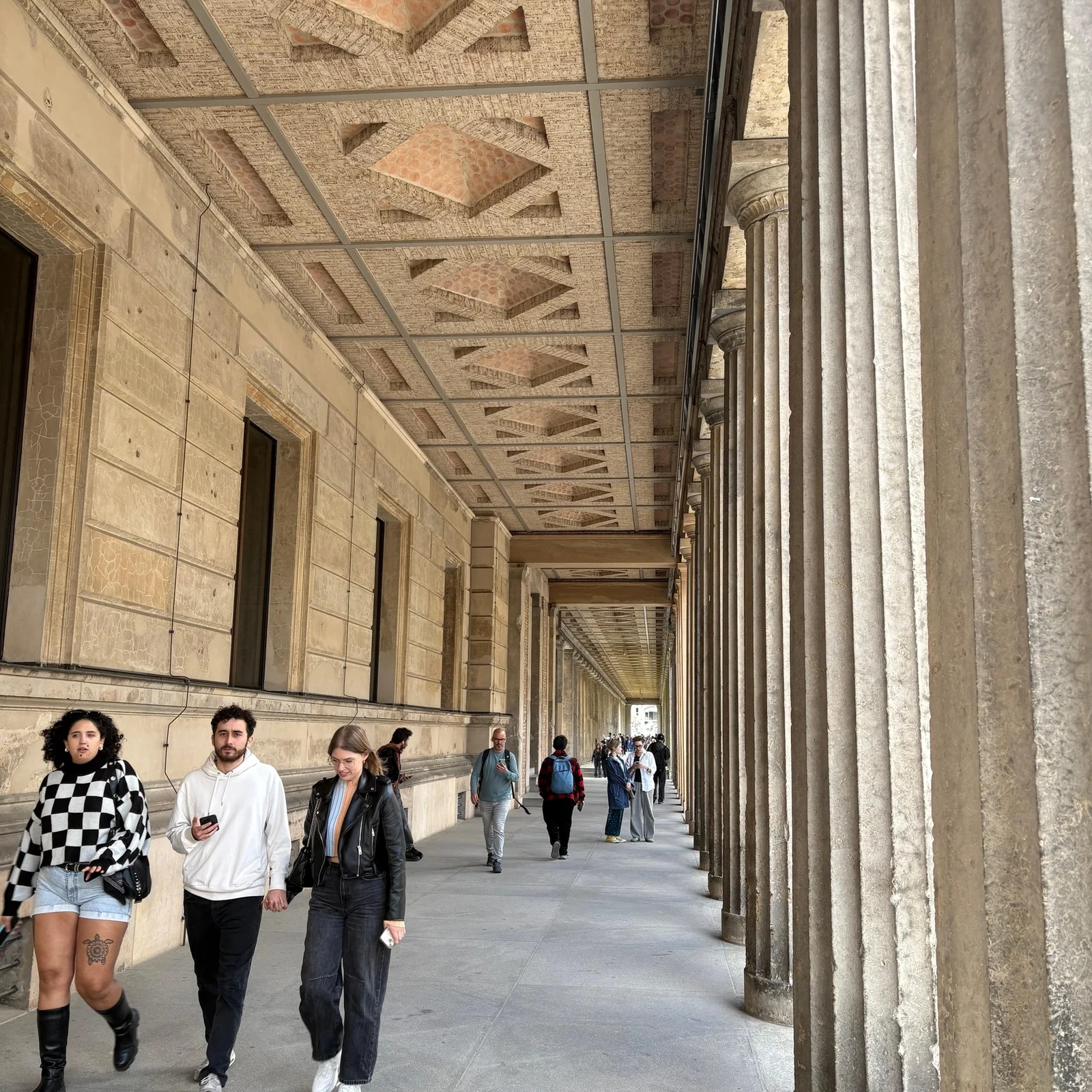
Museum Island is one of Europe’s great cultural ensembles: it brings together five museums on the Spreeinsel and forms part of Berlin’s monumental heart.
That said, trying to see everything in one morning is not a good idea. It is better to choose according to your interests: ancient art, archaeology, painting, sculpture or architecture. You should also bear in mind that the Pergamonmuseum is closed for renovation until 4 June 2027; as an alternative, the exhibition “Pergamonmuseum. Das Panorama” offers a way to experience part of that world while the museum remains closed.
It is an excellent plan for cold or rainy days, but it can be tiring for those who do not enjoy long museum visits. Berlin rewards selection more than accumulation.
The Pergamonmuseum is closed for renovation until 4 June 2027.
East Side Gallery and Friedrichshain: the Wall turned into a painted wound
The East Side Gallery in Berlin stretches for more than 1.3 kilometres along the Spree and occupies one of the best-known remaining sections of the Berlin Wall. After the fall of the Wall, 118 artists from 21 countries contributed to its paintings, which today function as both an open-air gallery and a piece of urban memory.
It is worth walking along it slowly, but also with realistic expectations: there is traffic, tourists, scooters, noise and heavily photographed spots. It is not a silent sanctuary. Its power lies precisely in that contrast between historical memory and contemporary life.
Afterwards, cross towards Friedrichshain or walk to Oberbaumbrücke. For a more local version of Berlin, continue towards RAW-Gelände, Boxhagener Platz or the cafés and bars of the neighbourhood. It is an area with youthful energy, but also one that is increasingly touristy and expensive.
Kreuzberg and Neukölln: Berlin neighbourhoods with real street life
Kreuzberg is not visited as though you were entering a museum. You walk it. You smell it. You listen to it. There are Turkish restaurants, tiny bars, quiet canals, graffiti-covered façades, bookshops, markets and a social mix that explains present-day Berlin far better than some of its monumental avenues.
The Landwehrkanal is one of the most pleasant walks in good weather, especially around Maybachufer. Neukölln, for its part, has an intense food and nightlife scene, although not every corner feels equally comfortable for a first encounter. The honest recommendation: go with curiosity, but do not romanticise the “alternative”. Berlin can also be dirty, scattered and somewhat blunt.
Go with curiosity, but do not romanticise the “alternative”: Berlin can also be dirty, scattered and somewhat blunt.
Tempelhofer Feld: the former airport where Berlin breathes
Tempelhofer Feld is one of the city’s most distinctive open spaces: a former airport turned huge urban park, free from motorised traffic, where people cycle, skate, picnic, walk their dogs or simply look at the sky.
In spring and summer, it can be one of the best free things to do in Berlin. In winter, with wind and grey skies, it can feel too vast and exposed. It is not a place of delicate beauty, but of spatial freedom: endless runways, grass, kites, bicycles and that very Berlin feeling that the city still leaves room to breathe.
What to do in Berlin when it rains
Berlin knows how to live with bad weather. In addition to Museum Island, you can take refuge in galleries, covered markets, cafés, bookshops, the German Historical Museum, the Jewish Museum, the Futurium or temporary exhibitions. VisitBerlin also recommends museums, theatres and indoor family activities for rainy days.
The key is not to fight the weather. A rainy day in Berlin can be perfect for understanding its cultural depth, provided you have not planned only parks, viewpoints and long walks.
Free or almost free things to do in Berlin
Berlin does not have to be an expensive city if you enjoy it from the street. You can visit the Brandenburg Gate, the Holocaust Memorial, Unter den Linden, the East Side Gallery, Tempelhofer Feld, the courtyards of Hackesche Höfe, neighbourhood markets and many parks without spending much.
What you should avoid is too much improvisation in high season: some visits, such as the Reichstag dome or certain popular museums, require booking or work better with advance planning.
In high season, the Reichstag dome and certain popular museums work better with advance planning.
Berlin with kids
With children, Berlin works better than it may seem. There are large parks, interactive museums, green spaces, useful public transport and indoor plans for rainy days. Tempelhofer Feld is especially convenient for running around, cycling or spending an afternoon without the pressure of “seeing monuments”.
What is less advisable is overloading the trip with too much difficult history in a short space of time. The Wall, the memorials and the museums about Nazism or the Cold War can be valuable, but they should be adapted to children’s age and sensitivity.
Berlin as a couple
Berlin is not romantic in the classic sense. It does not have the softness of Paris or the stage-set beauty of Venice. Its charm for couples lies elsewhere: walking beside the Spree at sunset, having dinner in a small Kreuzberg restaurant, going up to a viewpoint, getting lost in an exhibition, listening to jazz, drinking wine in a discreet bar or spending a slow morning in Prenzlauer Berg.
For couples looking for a polished, photogenic and comfortable city, Berlin may disappoint. For those who enjoy culture, conversation, history and neighbourhoods with character, it can be a very powerful city.
Berlin nightlife: intense, famous and not always easy
Berlin’s nightlife has a worldwide reputation, but it is not limited to the big clubs. There are neighbourhood bars, concert venues, summer terraces, electronic music clubs, queer spaces, modern beer halls and places where the music matters more than the décor.
The common mistake is to assume that everything will be accessible, friendly and simple. Some clubs have unpredictable door policies, distances are long and the night can stretch on. If you are not interested in electronic music or alternative scenes, Berlin still offers good nightlife, but you may be better off focusing on bars, concerts or restaurants rather than legendary clubs.
Some clubs have unpredictable door policies, and distances across the city can be long.
Day trips from Berlin
The easiest and most pleasant day trip is Potsdam, with Sanssouci, gardens, palaces and a more elegant, slower rhythm than Berlin. Sanssouci operates with opening times and limited entry slots, so it is advisable to book in advance if you want to visit the palace.
Another possible outing is the Sachsenhausen Memorial, north of Berlin. It is a difficult, sober and necessary visit for travellers interested in historical memory, but it should not be treated as just another tourist excursion. The memorial provides visitor information, audio guides and guided tours.
Sanssouci operates with opening times and limited entry slots, so it is advisable to book in advance.
What can disappoint about Berlin
Berlin is not always beautiful. Some areas are grey, distances are long, winter can be harsh, certain tourist spots are overcrowded and the city may feel less like a “fairy-tale Germany” than some people imagine. Its appeal does not lie in perfection, but in intensity.
It is worth it for travellers seeking history, culture, urban art, museums, nightlife, lively neighbourhoods and a city with real contradictions. It may not be the best choice for those looking for classical beauty, rest, pleasant weather or an easy postcard trip.
Final advice for enjoying Berlin
Do not try to master Berlin. Choose two or three areas per day, leave room to wander without a plan and accept that part of its charm lies in what remains unfinished. Berlin does not always seduce at first sight, but once you understand its blend of memory, freedom, scars and everyday life, it leaves an impression that is hard to replace.
Choose two or three areas per day and leave room to wander without a plan.
C
DiscoverCars
Car rental
Compare prices and book your rental car at the best price.
Book your Berlin Museum Island multiple museum entry ticket and visit the Altes Museum, Neues Museum, Bode Museum and more with skip-the-ticket-office access.
From €24 per personThe ticket is valid for 1 day. It is best to start early if you want to make the most of it.
 Activity on TourBookGo