 Activity on TourBookGo
Full-day private Busan tour to the city’s essential highlights
Book a full-day private Busan tour to Haedong Yonggungsa, Cheongsapo, Gamcheon and Jagalchi, with private transport for up to four people.
Looking for the best things to do in Busan? South Korea’s second-largest city stretches between mountains, beaches, ports and hillside neighbourhoods, as though each district belonged to a different city.
Some of the best things to do in Busan are exploring its beaches, markets and neighbourhoods, each with a distinct atmosphere. Haeundae is defined by glass and skyscrapers; Jagalchi by the smell of fish and salt; in Gamcheon, houses cling to the slopes; and in Gwangalli, the illuminated bridge seems to float above the sea. Its main drawback is precisely its size. The attractions are spread out, and trying to see everything in one day means spending far too much time in transit. Busan deserves at least two or three days, organised by area. Korea’s own tourism authorities acknowledge that a single day is not enough to take in its beaches, markets, landscapes and historic neighbourhoods. VISITKOREA – Imagine Your Korea
Compare locations and options to find a base that suits your trip. Booking.com confirms current availability and pricing.
Find accommodation on BookingHaeundae is Busan’s best-known image: a long urban beach surrounded by hotels, restaurants and glass towers. It is neither secluded nor particularly intimate, but it offers a good sense of the city’s relationship with the sea.
Rather than limiting yourself to a walk on the sand, continue towards the Dongbaek Peninsula. The coastal path offers views of the skyline, Marine City and Gwangandaegyo Bridge. At sunrise, the atmosphere is peaceful; on summer weekends, it can become very crowded.
Haeundae works well for travellers looking for convenience, cafés and urban life beside the water. It may disappoint anyone expecting a wild or silent bay.
Cheongsapo has retained a slower pace, with small seafood restaurants, lighthouses and open views of the sea. From here, you can follow part of the former coastal railway or take one of the panoramic rides at Haeundae Blueline Park.
The experience is highly photogenic, especially along the elevated sections above the cliffs, but it is also extremely popular. On public holidays and during peak periods, it is wise to book in advance and avoid building your entire itinerary around a single time slot. The official east-coast route combines Haeundae, Dalmaji, Cheongsapo and Haedong Yonggungsa Temple.
Visit Busan
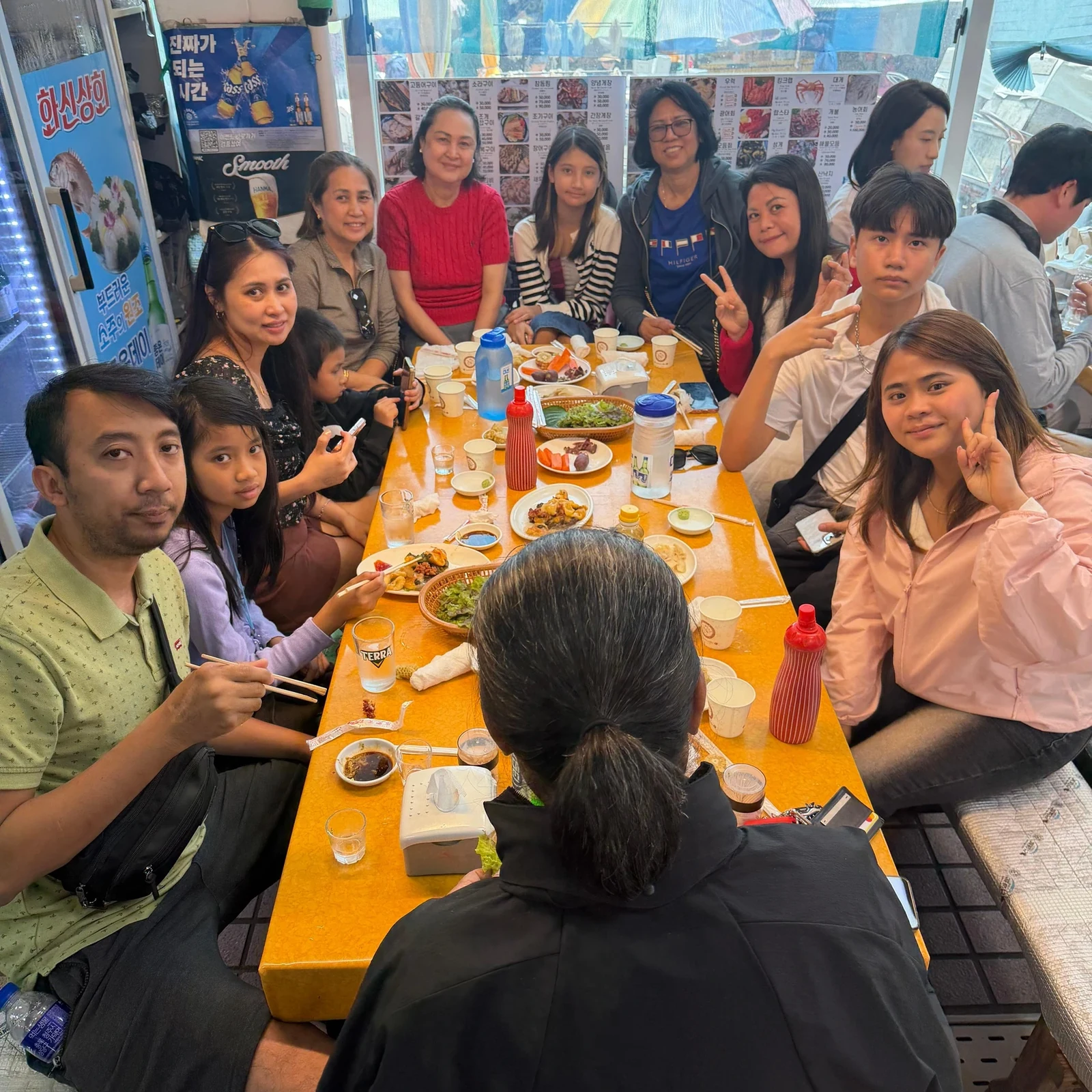
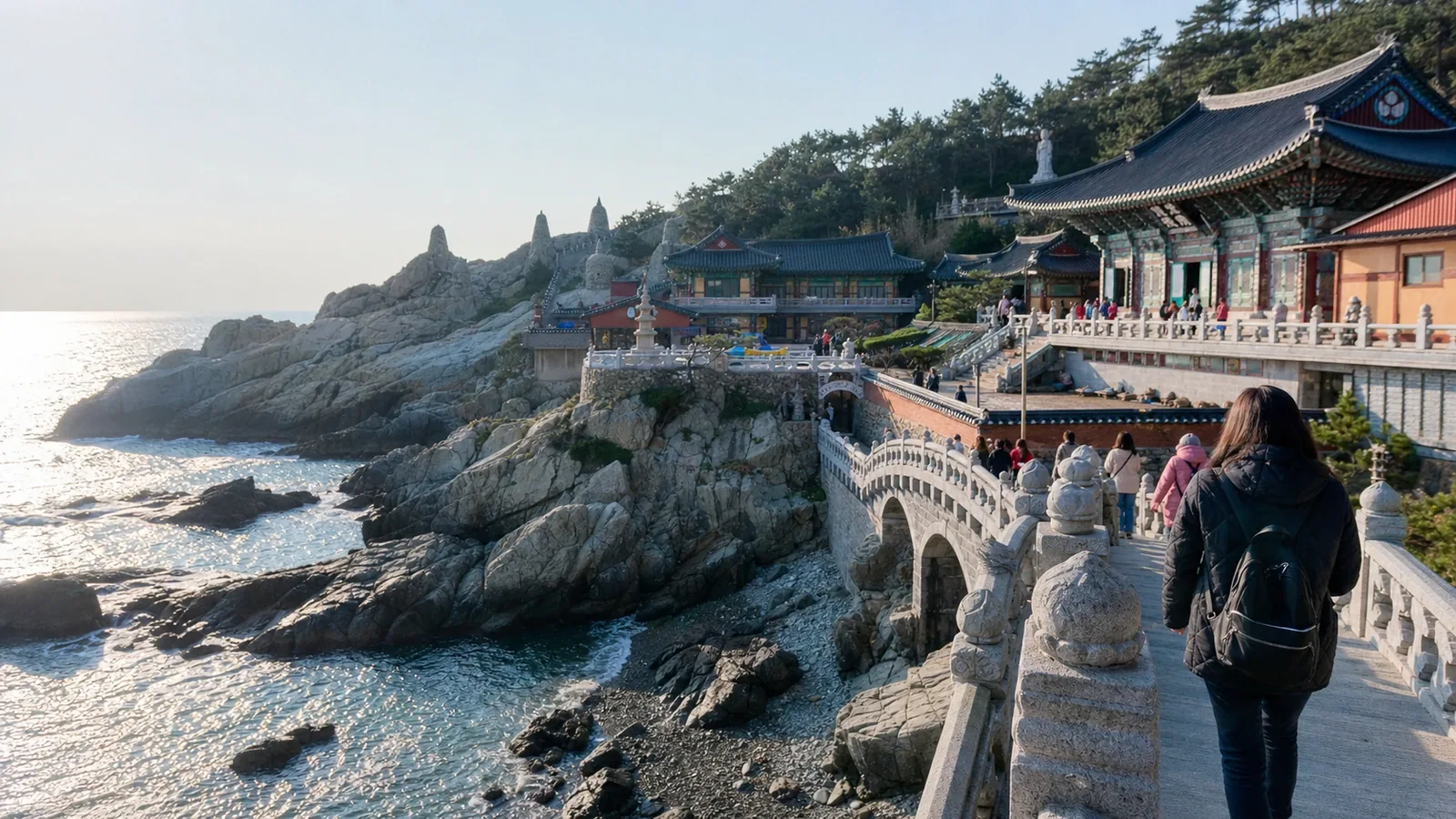
Most Korean temples are hidden in the mountains; Haedong Yonggungsa stands directly above the sea. Steps descend between statues, pavilions and painted rooftops towards a rocky coastline battered by the waves.
The setting is extraordinary, although the spiritual atmosphere can fade when large tour groups arrive. To enjoy it in relative peace, go early and avoid the middle of the day. There are also many steps, which visitors with limited mobility should bear in mind.
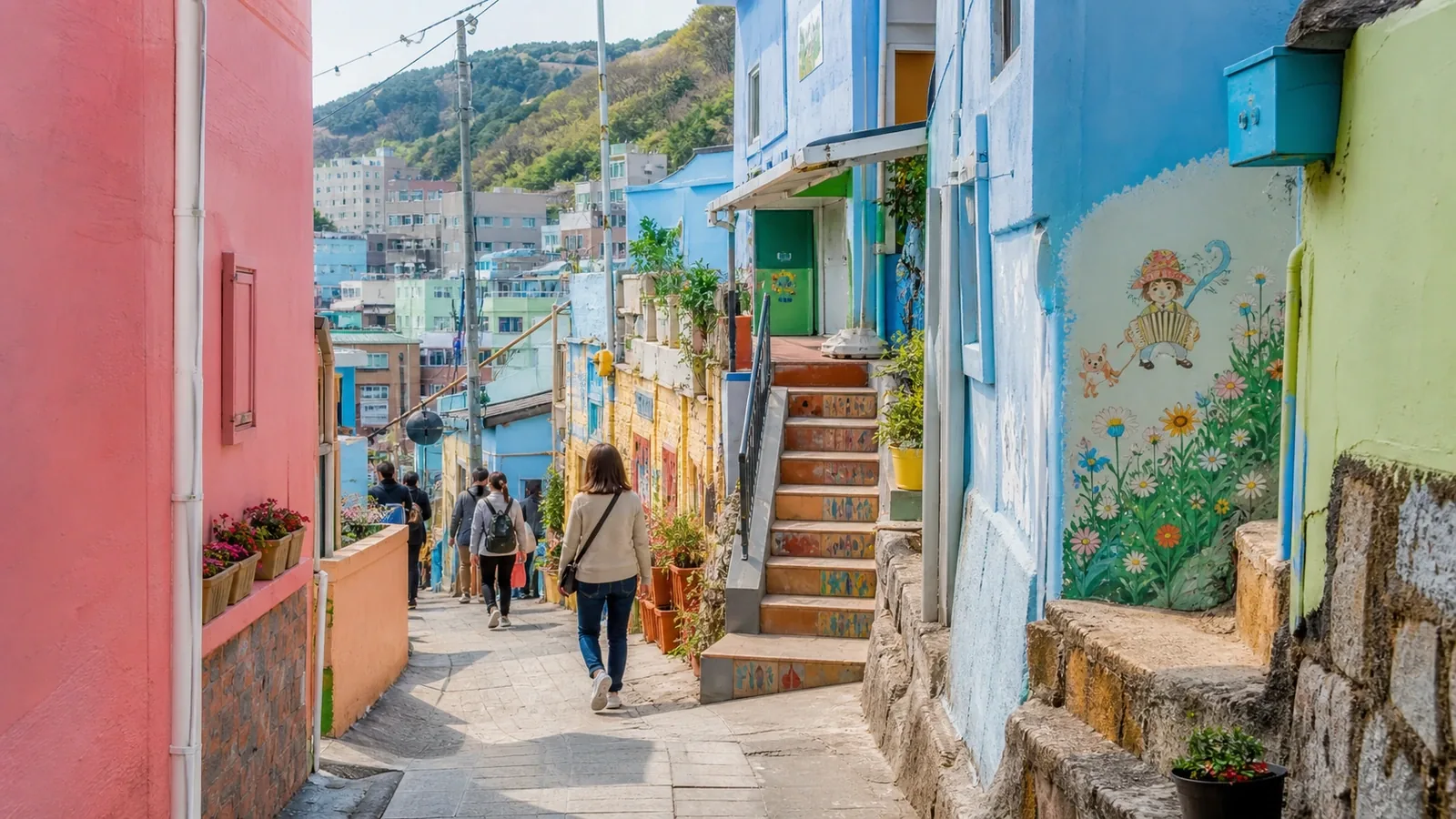
Gamcheon is a maze of colourful houses, narrow stairways, murals and small galleries built along a hillside. From its viewpoints, rooftops tumble down towards the port, creating one of Busan’s most recognisable scenes.
However, it is still a lived-in neighbourhood. The best way to visit is to walk quietly, respect residential areas and avoid photographing open doors or windows as though they were part of a theme park.
The slopes are steep, and the walk can be uncomfortable in intense heat. In return, it reveals a more human side of Busan than the city’s grand seafront promenades.
Jagalchi Market reveals the city’s maritime character: tanks full of seafood, market stalls, fishmongers at work and restaurants where the catch moves quickly from the market to the plate. Nearby are BIFF Square, Gukje Market and Bupyeong Kkangtong Market, a succession of shopping streets, food stalls and long-established businesses.
Not everything is picturesque. The floors can be wet, the smells are intense, and choosing seafood without understanding the pricing system can be confusing. Ask for the full cost before sitting down, especially when preparation and service are charged separately.
Taejongdae, on Yeongdo Island, brings together forest, viewpoints and cliffs facing the open sea. It is a good alternative for anyone needing a break from commercial bustle and skyscrapers.
The scenery depends heavily on the weather. On clear days, the horizon seems to widen; in fog, many of the views disappear. The route also takes longer than the map suggests, so it should not be rushed into the same day as Haeundae, which lies at the opposite end of the city.
Dadaepo is far from the usual tourist routes, but it offers one of Busan’s broadest horizons. The beach is extensive, the water is shallow, and the mouth of the Nakdong River creates a landscape very different from Haeundae.
It is more rewarding for walking and watching the sunset than for seeking sophisticated nightlife. The journey is worthwhile when the sky is clear; on a very short stay, it may be wiser to remain in better-connected areas.
Rain changes the experience considerably, since much of Busan’s appeal lies outdoors. Even so, there are worthwhile alternatives.
The aquarium in Haeundae is a convenient choice for families and for hot or rainy days, with large tanks and an underwater tunnel.
Visit Busan
The National Maritime Museum helps visitors understand Korea’s relationship with the ocean, while the Busan Museum offers an introduction to the city’s history and provides free access to its permanent exhibitions.
Visit Busan +1
You can also spend the day exploring covered markets, visiting the cafés of Jeonpo or enjoying a thermal bath in the Dongnae area. What is least advisable is insisting on Gamcheon, Taejongdae or coastal viewpoints during heavy rain: the slopes become slippery, and the scenery loses much of its impact.
Many of the city’s best experiences require no admission fee: walking along Haeundae or Gwangalli, watching the sunset at Dadaepo, following sections of the coastal trails, entering Haedong Yonggungsa or wandering respectfully through Gamcheon.
The Busan Museum and many urban parks are also free. Costs begin to rise when panoramic trains, cable cars, observation decks, aquariums or water activities are added. Busan can be visited on a moderate budget, provided the itinerary does not turn into a collection of paid attractions.
For families, the city combines beaches, scenic transport and interactive spaces. The aquarium, the National Maritime Museum and the Busan National Science Museum usually work better than a full day of temples or markets. Haeundae Blueline Park is also entertaining, although the waiting times can test younger children’s patience. The official family offering includes interactive museums, parks, maritime experiences and coastal attractions.
VISITKOREA – Imagine Your Korea +1
In Gamcheon, children need close supervision on the stairways and in the alleys. Taejongdae can be tiring, while Dadaepo and Busan Citizens Park offer more room to move around.
Busan is especially pleasant in the late afternoon. A good sequence is to walk around Dongbaek, have dinner near the sea and finish the evening facing Gwangalli Bridge.
Cheongsapo feels more intimate than Haeundae, while the lights of Marine City create an urban, cinematic atmosphere. An evening stroll works better than trying to string together too many viewpoints: Busan’s beauty emerges when you give it time to reflect on the water.
Gwangalli is Busan’s main night-time stage. Cafés and restaurants face Gwangandaegyo Bridge, whose lights draw a bright line across the bay. The city also recommends Hwangnyeongsan, Marine City and several hillside neighbourhoods as panoramic viewpoints.
Visit Busan
Drone shows are held over Gwangalli on certain dates, but the schedule is announced and changed periodically, so it is best to check the official calendar shortly before your visit.
Visit Busan
Seomyeon offers bars, restaurants and a more local atmosphere. Nampo is better for night markets and street food. Haeundae has a wider range of tourist-oriented venues, although some streets can feel impersonal outside the main season.
The biggest mistake is trying to combine Haeundae, Gamcheon, Taejongdae and Haedong Yonggungsa in a single day. They may look manageable on a map, but they are separated by long journeys.
It is also best to avoid visiting Gamcheon at midday in summer, arriving late at viewpoints on clear days or spending too much time queuing for a particular photograph. Busan rewards a slow walk along the coast more than a race between attractions.
In summer, the heat, humidity and crowds completely transform the beaches. Spring and autumn offer more comfortable temperatures for walking. Winter can be cold and windy, but it also brings clear skies, fewer visitors and especially crisp light over the sea.
Busan is worth visiting for travellers who enjoy combining energetic cities with coastal scenery, food and working-class neighbourhoods. Those looking for a compact, monumental city that is easy to explore on foot may find it scattered and exhausting. Its charm lies not in one single masterpiece, but in contrast: temples facing the waves, markets beneath skyscrapers and modern lights reflected in a port that never seems to stop.
Discover selected experiences in Busan to complete this guide with Korean culture, food, coastline, markets, temples and well-organised day trips.
Activity on TourBookGoBook a full-day private Busan tour to Haedong Yonggungsa, Cheongsapo, Gamcheon and Jagalchi, with private transport for up to four people.
 Activity on TourBookGo
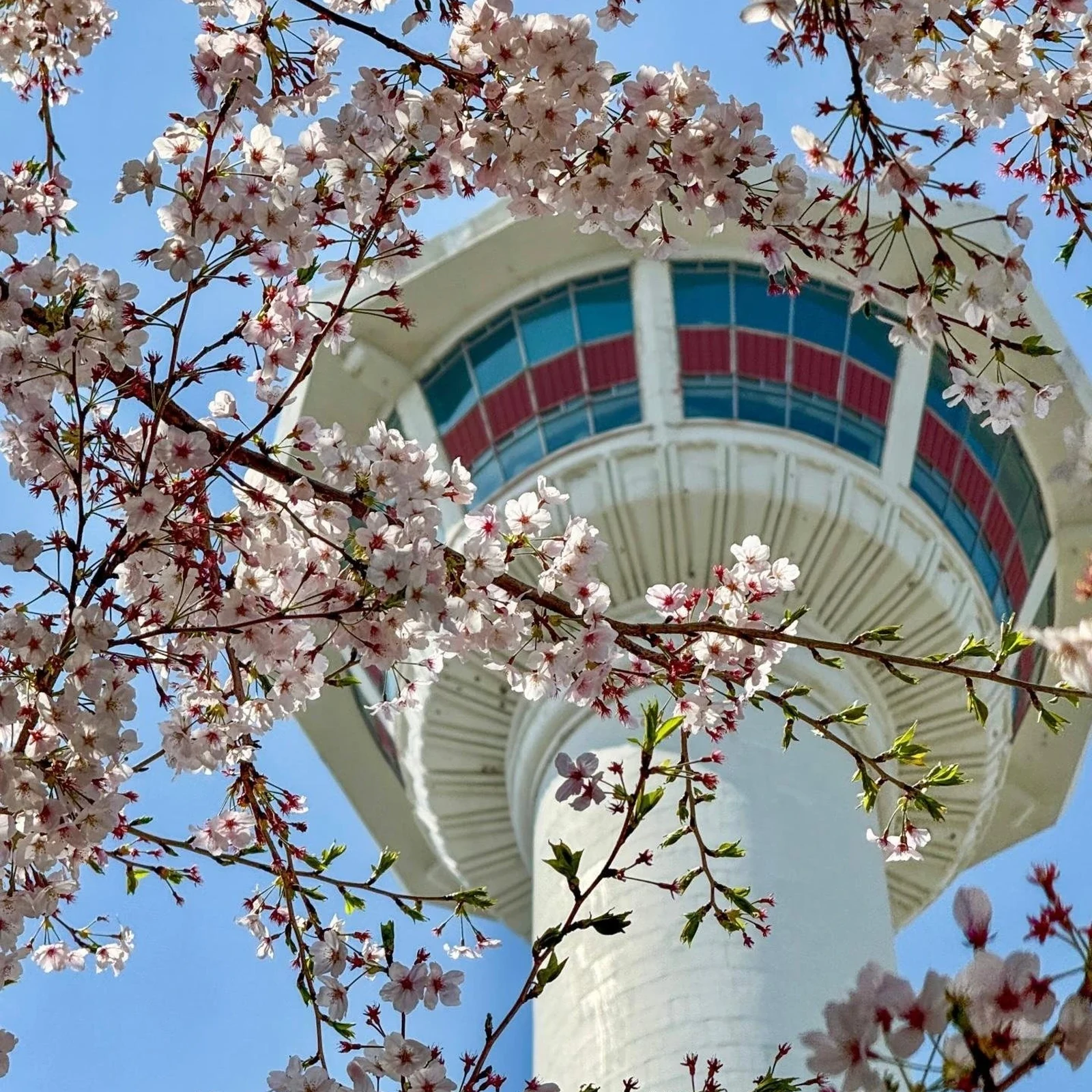
Book a small-group Busan tour lasting about 10 hours, with Busan Tower, the Songdo cable car, Gamcheon, Bupyeong Market and transport.
 Activity on TourBookGo
Book an 8-hour Busan history tour covering Korean War sites, Ami-dong and Songdo, with English guide, transport and cable car ticket included.