 Activity on TourBookGo
Busan Sky Capsule tour, coastal temple and cultural villages
Book a 9-hour Busan Sky Capsule tour visiting Haedong Yonggungsa, Haeundae Blueline Park, Huinnyeoul and Gamcheon, with transport and tickets included.
Busan blends urban beaches, seafood markets, hillside neighborhoods, seaside temples, and coastal trails in a port city shaped by striking contrasts.
Yes, Busan is worth visiting if you want to experience a more maritime, relaxed, and open-horizon side of South Korea than Seoul. The city does not make the same immediate impression as the capital. Its appeal emerges gradually: in the salty scent of the markets, the mountains weaving between buildings, the temples overlooking the sea, and the nights in Gwangalli, when the illuminated bridge seems to float above the bay. South Korea’s second-largest city combines urban beaches, hillside neighborhoods, traditional markets, coastal trails, and a cultural scene closely linked to cinema. It is neither a tropical getaway nor a monumental city in the classical sense. It is a sprawling, irregular Asian port whose personality reveals itself over time. Busan is especially rewarding when your trip to Korea lasts more than a week and you want to experience something different from Seoul. Compared with the capital’s density, speed, and intensely urban character, the horizon opens up here. The sea accompanies many everyday scenes: fishermen by the harbor, young people eating beside the beach, cafés facing the waves, and trails where the city disappears behind pine trees for a few minutes. It is also a layered destination. You can spend the morning among the alleyways and fish stalls of Nampo-dong, walk past the colorful façades of Gamcheon, end the afternoon by the ocean, and have dinner beneath the neon lights of Seomyeon. This variety explains why a single day often feels insufficient. Even the national tourism organization recommends spending the night in the city to experience its evening atmosphere. But Busan does not appeal to everyone. Its best-known attractions are spread far apart, some districts have a gritty port-city aesthetic, and its urban beaches do not offer the intimacy of an island. Anyone expecting a small seaside town or a succession of traditional corners may instead find a metropolis that is larger, more modern, and more dispersed than imagined.
Compare locations and options to find a base that suits your trip. Booking.com confirms current availability and pricing.
Find accommodation on BookingGeography shapes the entire Busan travel experience. The city stretches around bays, hills, bridges, and rocky headlands, creating a fragmented yet visually striking landscape.
In Haeundae, skyscrapers rise beside a long beach. In Gwangalli, Gwangan Bridge dominates the nighttime skyline. Farther south, Taejongdae offers cliffs, forest, and open sea, while Oryukdo provides views of waves crashing against rock formations far from the city’s towers. The official three-day itinerary brings together precisely these contrasts between coastline, parks, temples, historic neighborhoods, and urban districts.
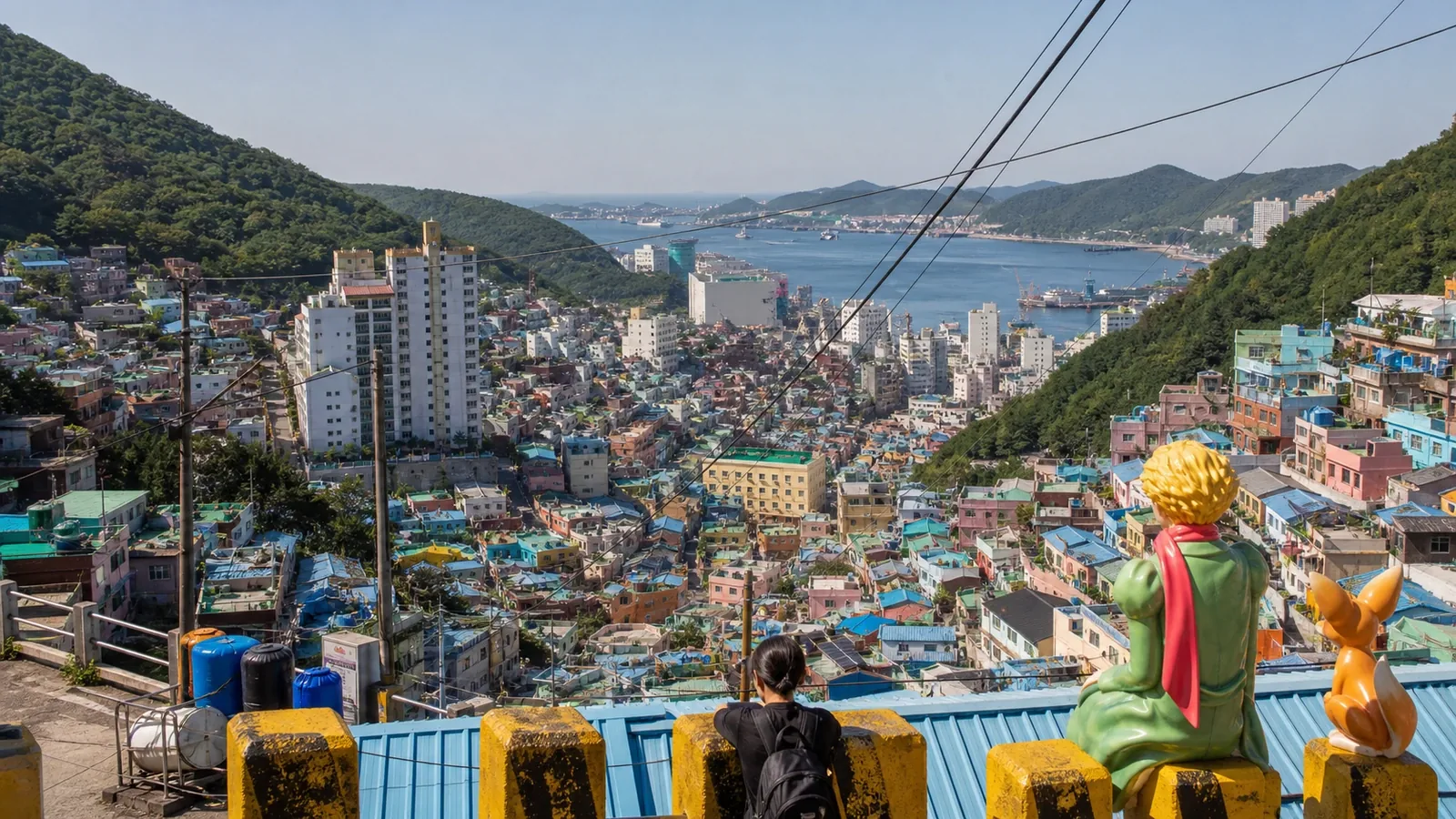
Gamcheon Culture Village is often photographed as a cheerful collection of brightly colored houses. Its origins, however, are linked to the displacement of people during the Korean War. Art, viewpoints, and small businesses have since transformed the neighborhood, but it remains a residential area.
It is worth exploring slowly and respectfully. The main mistake is to treat its alleyways like a film set: shouting, blocking entrances, or photographing homes without considering that people live there.
Jagalchi, Gukje, and Bupyeong Kkangtong reveal a more direct, everyday side of the city. Steam rises from kitchens, containers are filled with seafood, vendors call out to customers, and food is served without much ceremony.
Jagalchi will not appeal to everyone. The smell of fish can be intense, and some travelers feel uncomfortable seeing live marine animals. Even without sitting down for a meal, however, the area helps visitors understand the extent to which the port forms part of Busan’s identity.
Busan tends to work particularly well for travelers who want to combine city life, coastline, and food.
It suits people interested in markets and local life.
It appeals to fans of urban photography and seascapes.
It works well for couples who enjoy nighttime walks by the sea.
It offers a change of pace for travelers after several days in Seoul.
It also rewards film enthusiasts, especially during the Busan International Film Festival.
It can also be a good base for continuing on to Gyeongju, although it is best to allow enough time for both cities rather than turning the trip into a race between day excursions.
Busan may not be a priority for those visiting Korea for only four or five days and wanting to focus on Seoul. The journey is easy by high-speed train, but adding another major city means changing accommodation and reorganizing the itinerary. The Gyeongbu rail line connects Seoul and Busan in around three hours, although schedules should be checked before traveling.
It is not the most suitable choice for anyone looking for secluded beaches and nature without buildings.
It is not a small city that can be explored entirely on foot.
Its historic architecture is not concentrated within an old town.
It is not ideal for a restful holiday without lengthy journeys across the city.
Haeundae and Gwangalli are metropolitan beaches. They can be enjoyable, but they attract large crowds during peak season, and their skylines are dominated by hotels and residential towers. Some travelers find this combination fascinating; for others, it takes away part of the coastal charm.
Busan accommodates very different styles of travel. You can eat well in markets, small noodle shops, gukbap restaurants, and family-run establishments without resorting to high-end venues. The subway and buses help keep daily spending under control, and many of the best experiences—walking along the coast, admiring Gwangan Bridge, or exploring the markets—do not require an expensive entrance ticket.
Costs rise when choosing sea-view hotels, designer cafés, panoramic attractions, or seafood restaurants in the most tourist-oriented areas. Staying in Haeundae can be appealing, but it is not always the most practical or affordable option. Seomyeon is often more convenient for getting around, while Nampo-dong works well for those who prefer markets, a port atmosphere, and easy access to the southern part of the city.
Busan should not be approached as a cheap beach getaway, but as a major coastal city where accommodation and location have a significant impact on the final cost.
One day: a single day only provides a superficial impression. You would need to choose between the Haeundae and Gwangalli area or the Nampo-dong, Jagalchi, and Gamcheon corridor. Trying to see everything means spending too much time in transit.
Two days: two days is the reasonable minimum. One day can be devoted to historic, portside Busan and the other to the beaches and eastern coastline.
Three days: three days is the most balanced length for a first visit. It allows you to combine markets, Gamcheon, Haeundae, Gwangalli, a temple, and a coastal walk without turning the trip into a rushed checklist. The official tourism portal recommends precisely a three-day itinerary to cover the city’s main areas.
Four or five days: this makes sense for slow travelers, sea lovers, or anyone wishing to include Taejongdae, Songjeong, Dadaepo, coastal routes, and lesser-known neighborhoods.
On a map, many places appear close together. In practice, crossing Busan can consume a considerable part of the day. The public transport network is useful, but transfers and the city’s elongated layout mean that visiting attractions at opposite ends requires planning. The municipal tourism portal itself warns that journeys can be long even when using the subway and buses.
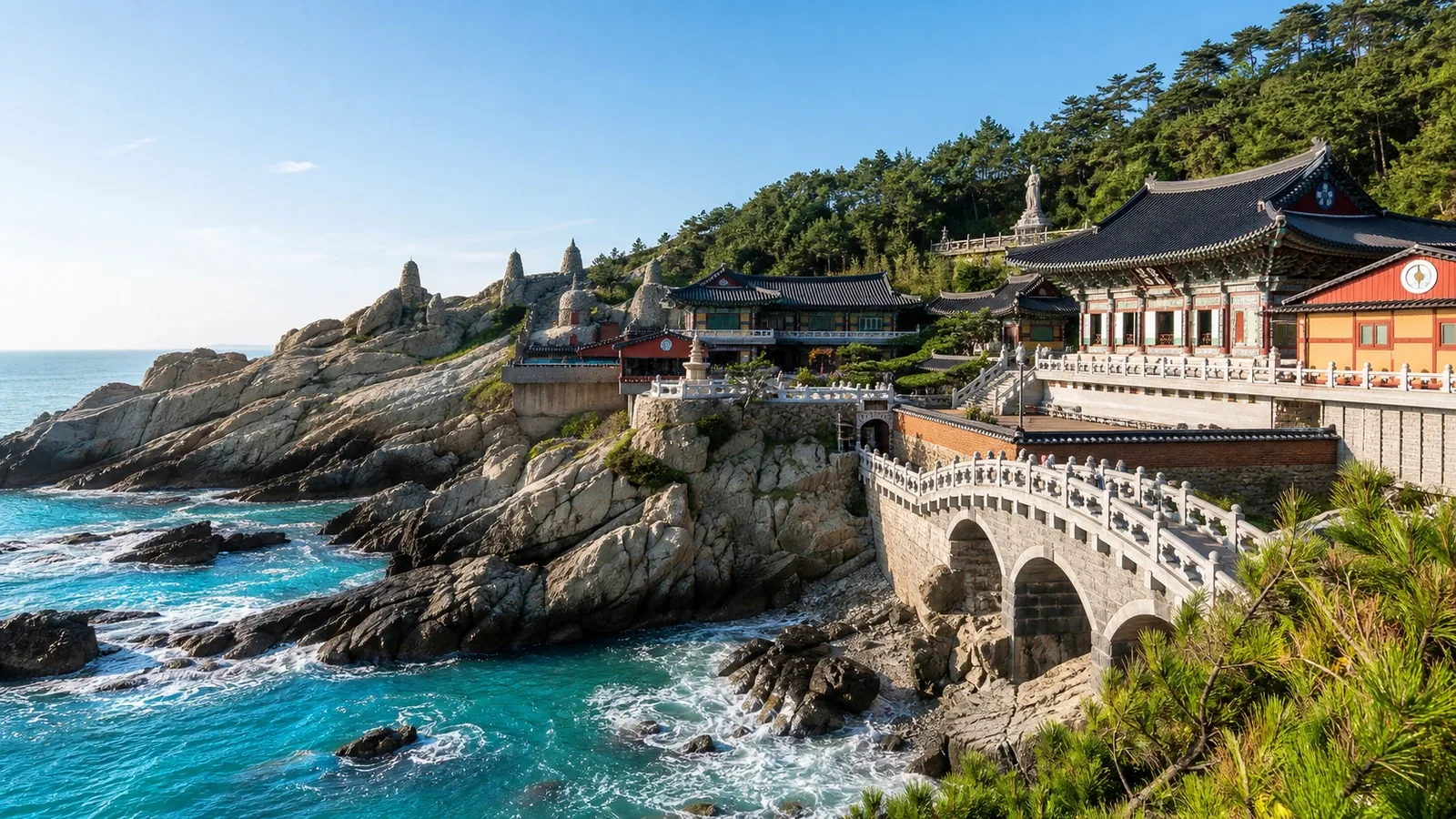
It is best to organize each day by area. Haeundae, Songjeong, and Haedong Yonggungsa Temple can form one group; Gamcheon, Jagalchi, and Nampo-dong another. Constantly jumping from east to west is usually the most exhausting mistake.
Spring and autumn usually offer pleasant conditions for walking along the coast. Summer brings a livelier beach atmosphere, but also humidity, heat, and larger crowds in Haeundae and Gwangalli. Winter can be cold and windy, although it also brings clear skies, fewer visitors, and a more melancholy mood by the sea.
Busan remains interesting throughout the year, but it does not offer the same experience in every season. Anyone traveling mainly for the beaches should avoid idealizing them outside summer, while those prioritizing markets, food, and urban walks may enjoy the city more in mild temperatures and with fewer crowds.
Busan is worth visiting for anyone who wants to discover a less centralized, more maritime, and slightly more relaxed side of Korea without giving up the energy of a major city. Its strength lies in the combination: temples facing the water, neighborhoods climbing steep hills, noisy markets, beaches surrounded by towers, and nights reflected across the harbor.
It is not a city that reveals itself immediately. It requires travel time, some planning, and a willingness to embrace its contrasts. There may be traffic, humidity, unattractive areas, and tourist sites that lose some of their appeal when crowded.
But when evening falls over Gwangalli and the lights begin to trace the bridge across the sea, Busan reveals what sets it apart: it is not simply a city with a beach, but a metropolis that has learned to live facing the water.
If you have at least two or three days and enjoy markets, seascapes, and urban energy, Busan can become one of the most memorable contrasts of a trip through South Korea.
Discover selected experiences in Busan to complete this guide with Korean culture, food, coastline, markets, temples and well-organised day trips.
Activity on TourBookGoBook a 9-hour Busan Sky Capsule tour visiting Haedong Yonggungsa, Haeundae Blueline Park, Huinnyeoul and Gamcheon, with transport and tickets included.
 Activity on TourBookGo
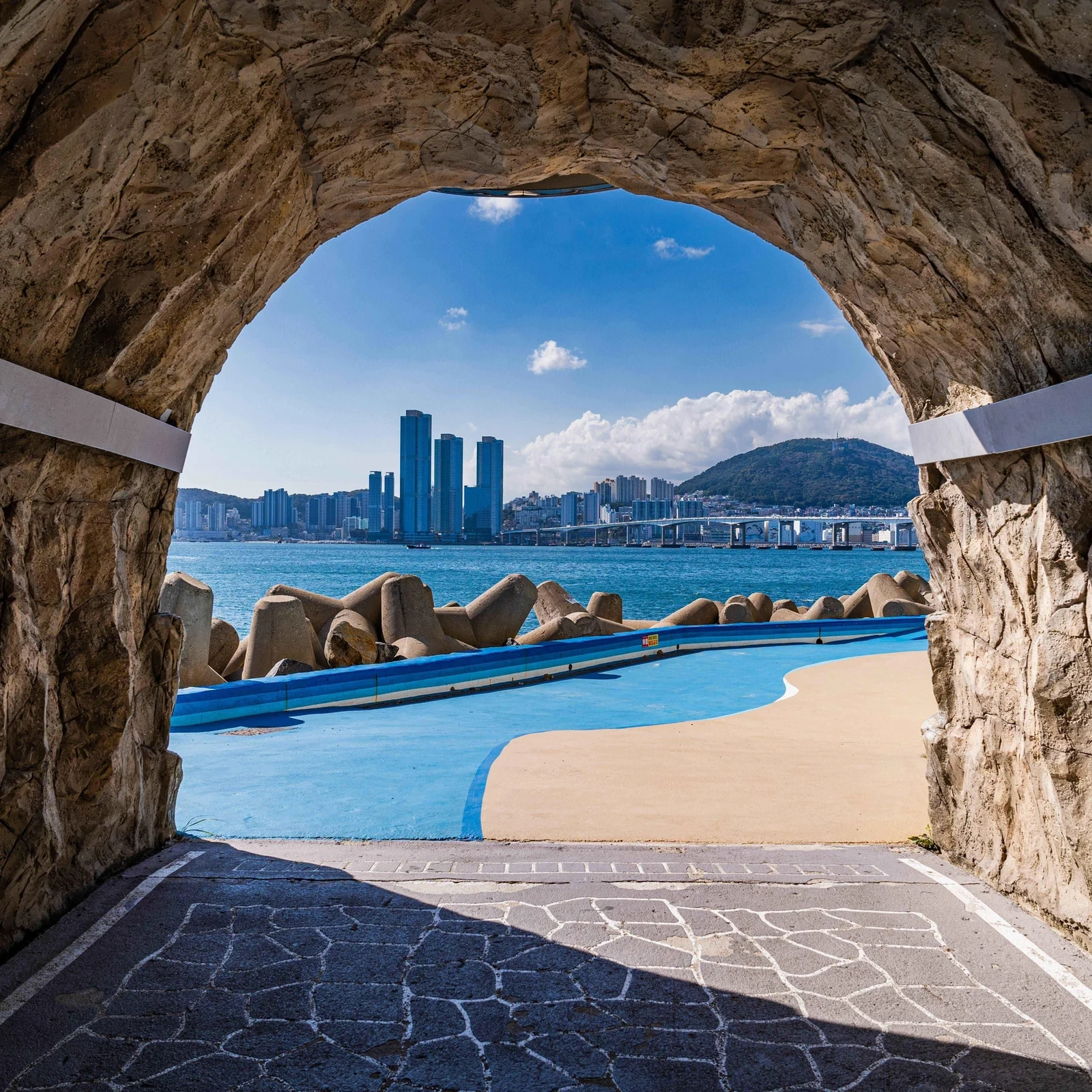
Book a Busan coastal tour with Sky Capsule and visit Haeundae, Oryukdo, Huinnyeoul and Gamcheon on a guided 9–10-hour day trip.
 Activity on TourBookGo
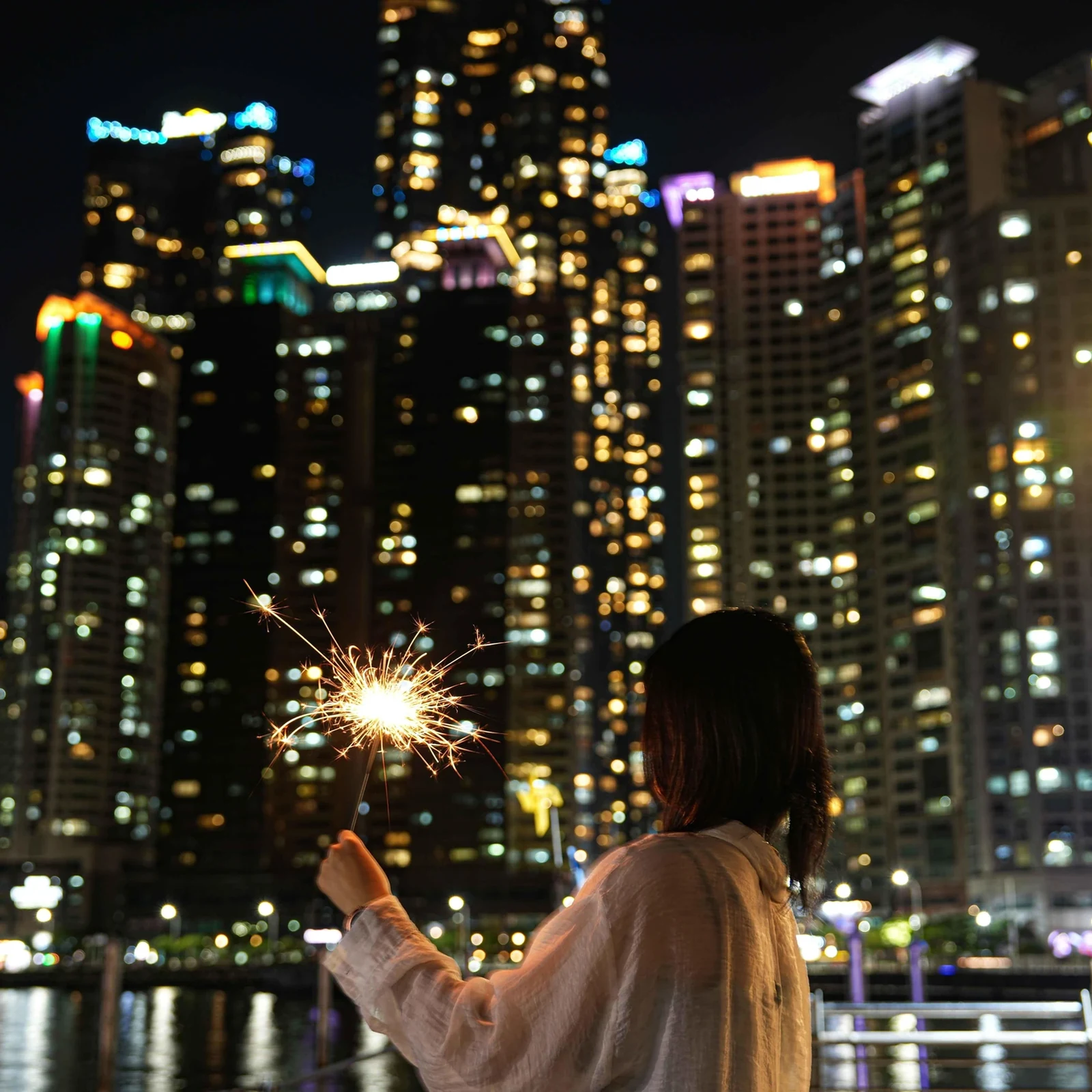
Book the Haeundae Sky Capsule and Busan night tour with transportation, a guide, reserved admission and stops at The Bay 101 and Gwangan Bridge.