 Activity on TourBookGo
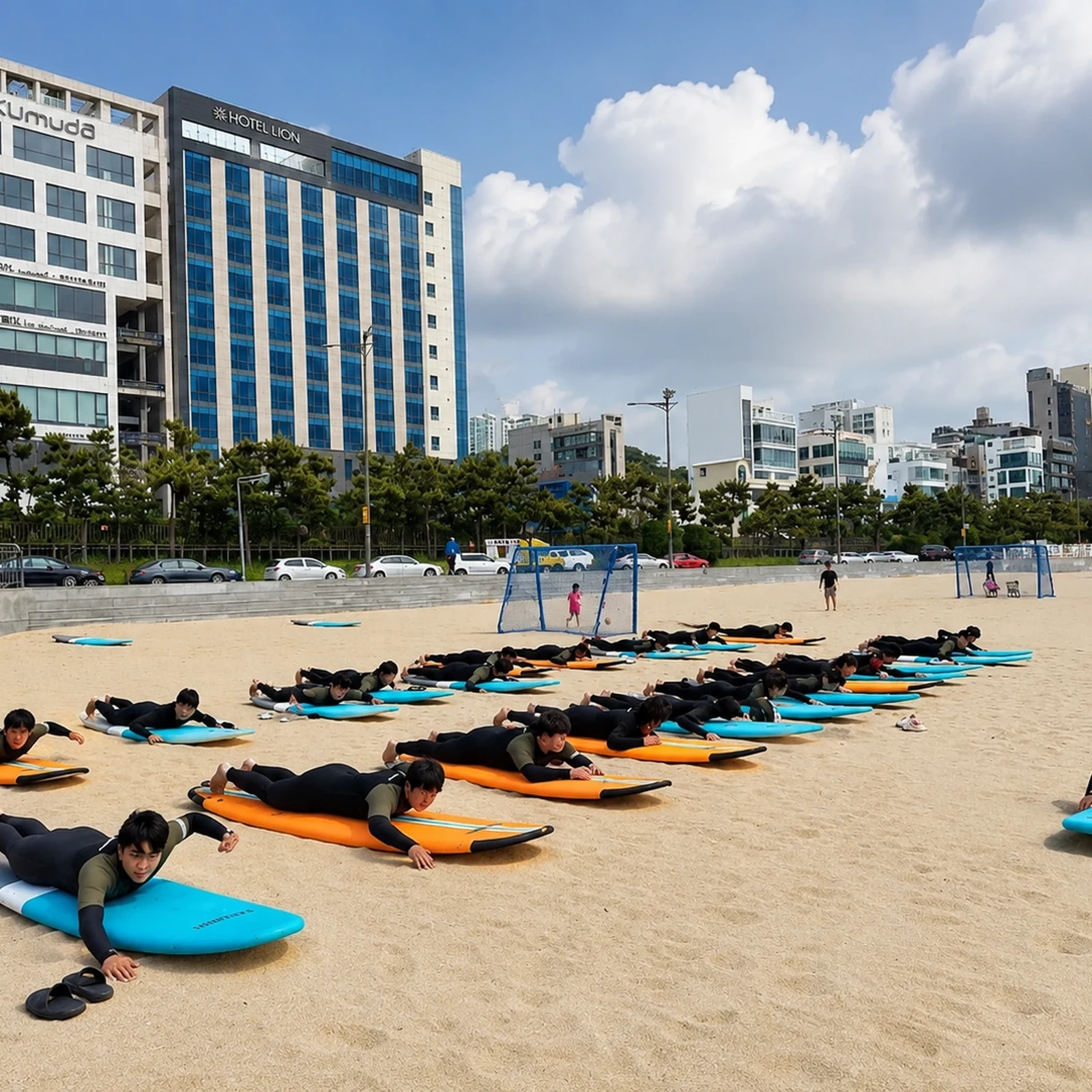
Busan Surf Lesson with Korean BBQ and Social Dinner
Book a Busan surf lesson for beginners at Songjeong Beach, including equipment, free practice time, activity photos and a Korean BBQ dinner.
The best time to visit Busan is generally April to May and late September to October, when the weather is ideal for coastal walks, seaside temples and hillside neighborhoods without the humid summer heat or biting winter winds.
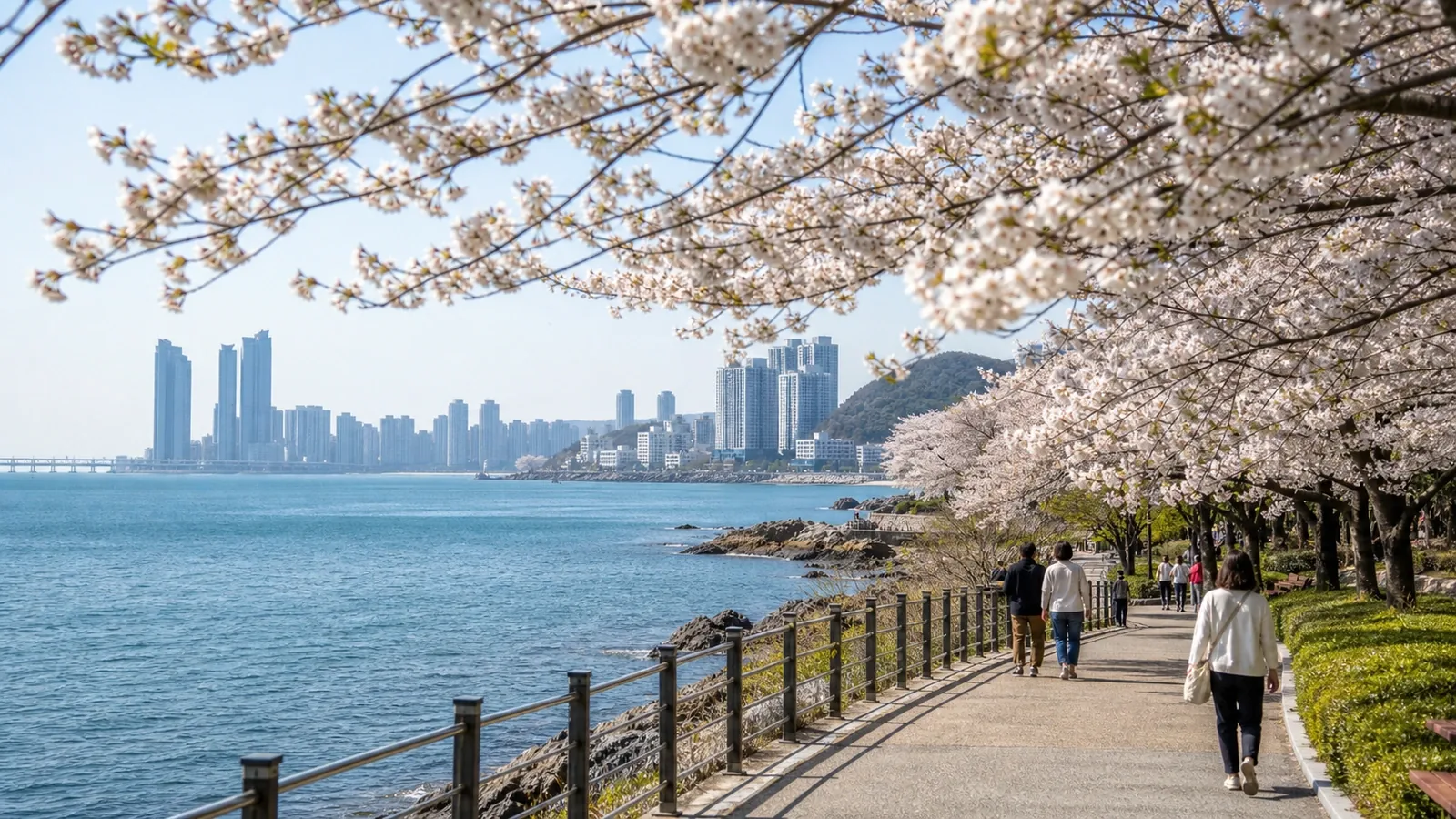
The best time to visit Busan is generally April to May and late September to October. During these months, Busan weather is comfortable enough for walking along the coast, climbing to scenic viewpoints, visiting seaside temples and exploring hillside neighborhoods without heat or cold setting the pace of your day. Busan changes dramatically with the seasons. Beneath the spring cherry blossoms, it feels bright and delicate; during August’s tropical nights, it becomes a lively beach city; and beside the gray sea in January, it reveals a quieter side. The right time depends on how you like to travel: beaches, festivals, photography, peace and quiet, or more affordable prices.
Compare locations and options to find a base that suits your trip. Booking.com confirms current availability and pricing.
Find accommodation on BookingApril and May are ideal for a first visit to Busan, with pleasant temperatures, vibrant greenery, and weather well suited to combining coastal walks, temples, and urban neighborhoods.
October offers perhaps the best overall balance: frequently clear skies, lower humidity, and a lively cultural scene. In 2026, the Busan International Film Festival will also take place from October 6 to 15, so booking ahead is advisable when traveling during those dates.
July and August are the right months for anyone who wants to experience Haeundae and Gwangalli at the height of beach season and is willing to accept crowds, humidity, occasional heavy rain, and hot nights.
December, January, and February may appeal to travelers who prioritize peace and quiet and do not need to swim in the sea. Busan’s winter is relatively mild by South Korean standards, but the coastal wind can make it feel considerably colder than the thermometer suggests.
March.
March signals the arrival of spring, but it does not always feel like it. Trees begin to bloom, and cherry blossoms usually appear toward the end of the month, although the exact timing varies each year. The air can be clear and bright, but gusts coming in from the sea mean it is wise to keep a jacket close at hand.
It is an appealing month for photographing the city and encountering fewer visitors than in April. The trade-off is somewhat unpredictable weather: one afternoon may feel warm, while the next serves as a reminder that winter has not fully retreated.
April and May.
These are two of the best months to visit Busan. Temperatures are comfortable enough for hours of walking through Taejongdae, Igidae, or the coastal trails, while Gamcheon regains its colors under gentler light.
Spring lends itself to a varied itinerary: markets in the morning, seaside temples at midday, and an evening walk along Gwangalli. The water may still be too cold for swimming, however, so this is not the best choice for a purely beach-focused vacation.
It is also worth bearing in mind that blossom weekends and public holidays can push up hotel occupancy. Even so, visitor numbers are generally more manageable than at the height of summer.
June.
June begins relatively pleasantly, but the rainy season approaches toward the end of the month. The sky can shift from brilliant sunshine to a curtain of rain within a matter of hours.
Traveling during the first half of the month offers long days and an atmosphere that is still fairly relaxed. Weather becomes less predictable in the second half, making it sensible to prepare some indoor alternatives.
July and August.
During these months, Busan becomes a full-fledged summer city. Haeundae fills with beach umbrellas, Gwangalli stays awake late into the night, and the waterfront takes on a festive mood. This is the best time for travelers seeking beaches, swimming, and lively evenings.
Summer also has a less photogenic side. The weather is hot and humid, rainfall can be heavy, and once the rainy season ends, muggy days and tropical nights set in. The best-known beaches attract large crowds, and well-located accommodation is usually more expensive.
It is not a bad time to visit, but it means embracing Busan at its most intense. Travelers coming for hiking, long walks through different neighborhoods, or relaxation may enjoy spring or autumn more.
September.
September retains some of the summer heat, particularly at the beginning of the month. The sea may still be warm enough for swimming, while visitor numbers gradually decline after August.
The main drawback is the risk of typhoons. This does not mean the trip will necessarily be disrupted, but it is wise to monitor the weather forecast and keep plans flexible, especially for coastal activities and ferry connections.
October.
October is probably the most well-rounded month for discovering Busan. Days are usually mild and bright, while evenings are cool without being harsh. The city invites you to explore it on foot, from Haedong Yonggungsa Temple to the streets of Nampo-dong and the waterfront terraces in between.
It is also an important month culturally. The Busan International Film Festival transforms the area around the Busan Cinema Center and attracts industry professionals, filmgoers, and visitors from around the world. The atmosphere is exciting, although hotels in Haeundae and Centum City may sell out early and become more expensive during the event. In 2026, the festival is scheduled to run from October 6 to 15.
November.
November begins with an autumn feel and ends on the edge of winter. It is a good alternative for travelers seeking peace and quiet, clear skies, and urban walks without large crowds.
The downside is that daylight hours grow shorter, while northwesterly winds can cause temperatures to drop quickly. Dressing in layers is advisable, and sunshine alone should not be taken as a sign of warmth.
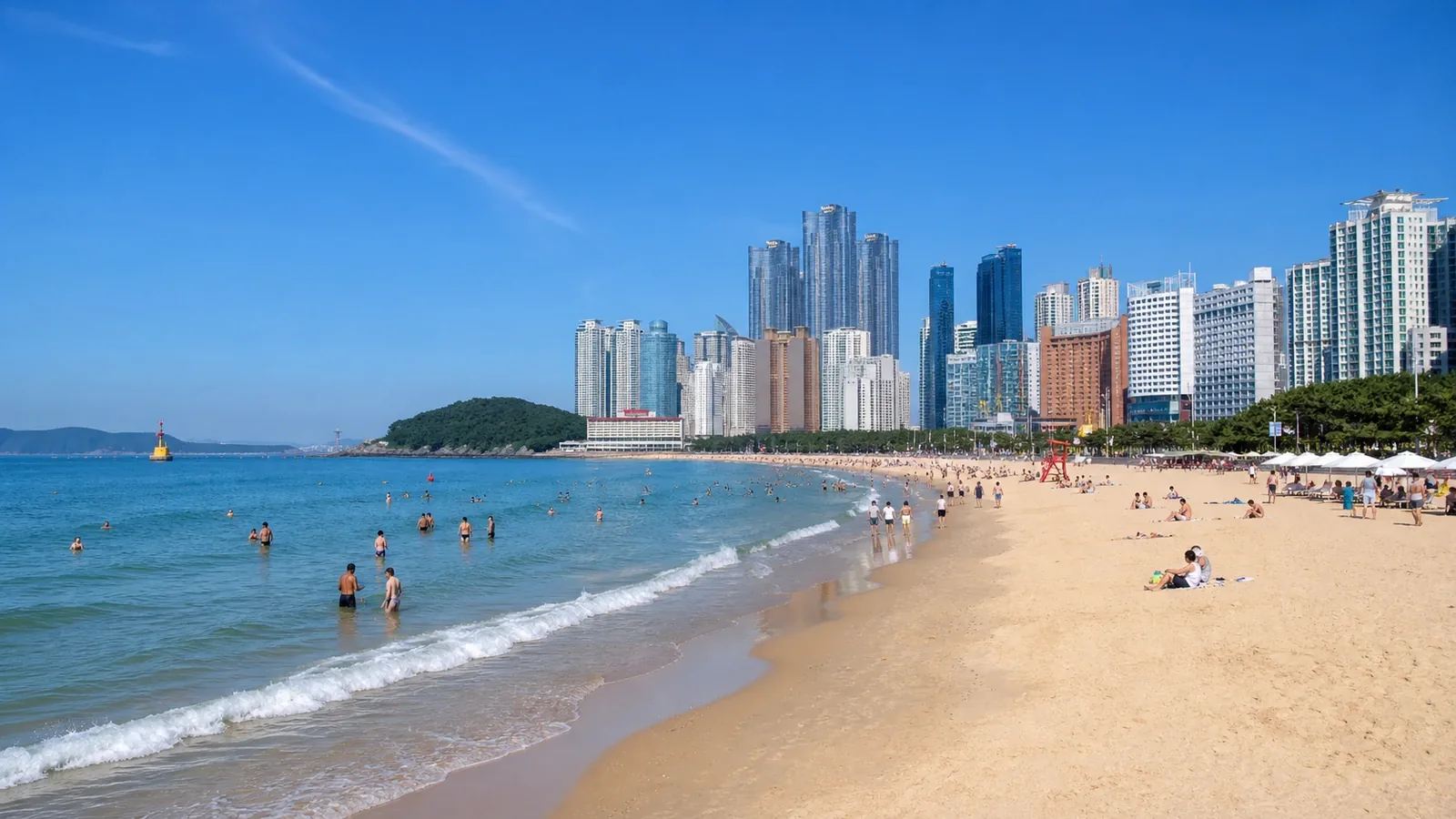
Between December and February, Busan reveals a more understated kind of beauty. The beaches empty out, cafés overlooking the sea regain their calm, and temples seem to blend more naturally into the landscape.
Snow is uncommon, and temperatures are milder than in many inland parts of Korea, but winter is dry and windy. In exposed locations such as Taejongdae, Gwangalli, or Cheongsapo, the wind chill can be considerable.
It is an appealing season for travelers interested in food, markets, museums, and experiencing a less congested city. It is less suitable for anyone dreaming of long hours on outdoor terraces, lush vegetation, or full days spent by the water.
The quietest periods are generally found in winter, outside the holiday season, and during parts of March and November. At these times, it may be easier to find well-located accommodation and visit popular attractions without encountering large groups.
Summer, cherry blossom weekends, and autumn festivals tend to generate higher demand. Prices do not rise evenly across the city: Haeundae, Gwangalli, and Centum City are usually more affected by major events and beach season than inland neighborhoods or areas near Busan Station.
Booking early matters more than searching for a supposedly universal “cheap season.” Busan is a large city, and an inexpensive room located too far from the places you plan to visit may ultimately cost you time and transportation expenses.
For a first visit, April, May, or October offer the most balanced experience.
For beaches and nightlife, July and August are the liveliest months, although they are also the most humid and crowded.
For photography and long walks, April, October, and early November provide better light and more comfortable temperatures.
For traveling on a tighter budget, consider March, November, or winter, while avoiding public holidays and major events.
For cinema and cultural life, October is the clear standout, but advance planning is essential.
Anyone hoping to experience Busan in comfortable weather should choose late April, May, or much of October. Spring reveals a bright, delicate city, while autumn presents a clearer, calmer, and more culturally vibrant Busan.
Summer is worthwhile when the beach is the main purpose of the trip rather than simply an added attraction. Winter, meanwhile, rewards travelers who enjoy destinations outside peak season and know how to appreciate the beauty of an empty waterfront.
There is no single best time to visit Busan for everyone. The city offers several distinct experiences throughout the year, and the ideal one appears when the season matches your personal way of traveling.
Discover selected experiences in Busan to complete this guide with Korean culture, food, coastline, markets, temples and well-organised day trips.
Activity on TourBookGoBook a Busan surf lesson for beginners at Songjeong Beach, including equipment, free practice time, activity photos and a Korean BBQ dinner.
 Activity on TourBookGo
Explore personal color analysis in Busan with 210 fabric swatches and K-Beauty advice for clothing, makeup and hair. Check the price and book online.
 Activity on TourBookGo
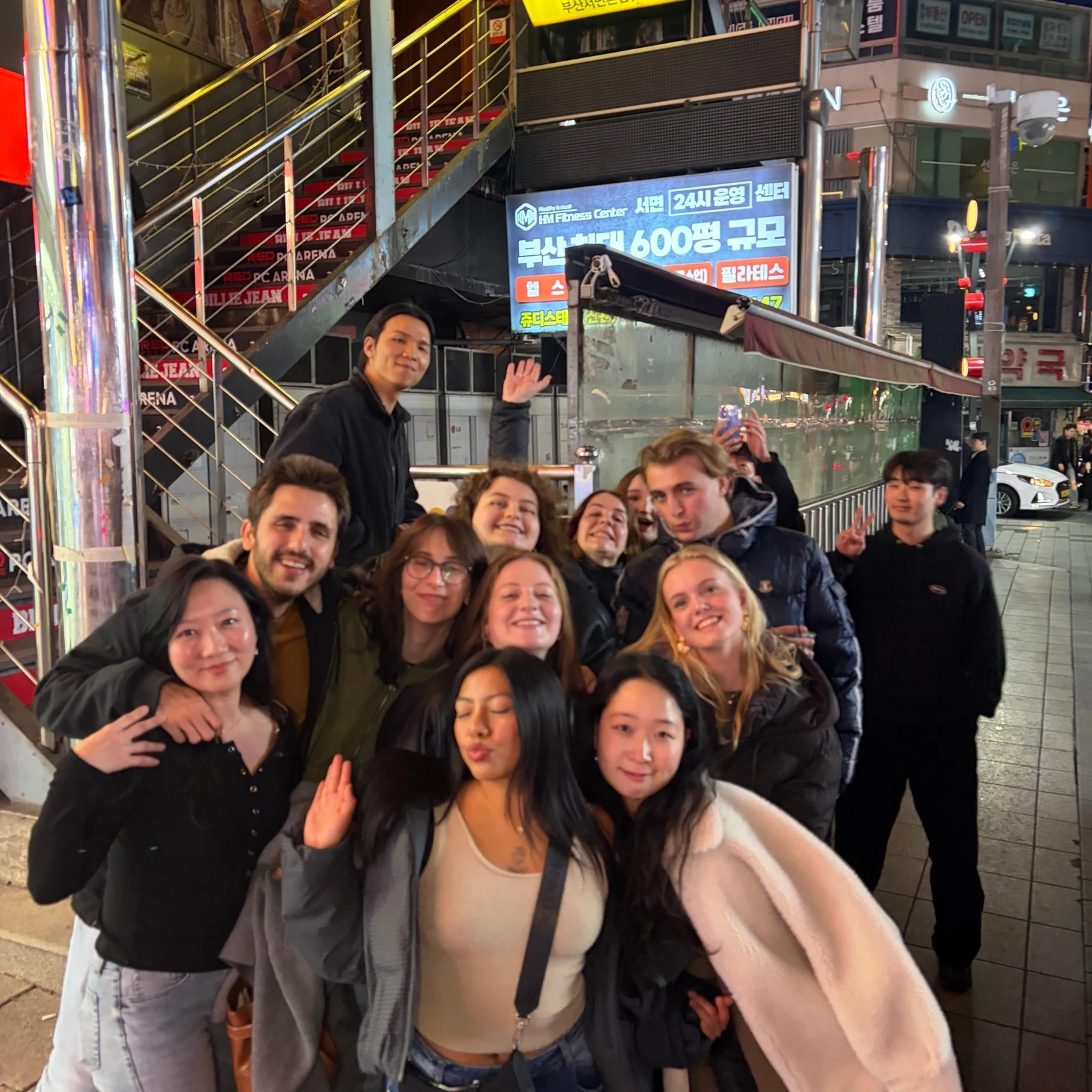
Book a Busan pub crawl through four Seomyeon nightlife venues, with complimentary shots, local hosts and an international crowd over approximately four hours.