 Activity on TourBookGo
Busan Food Tour through Markets, Street Food and Seafood
Book a Busan food tour with a local guide. Explore BIFF Square, Gukje Market and Jagalchi Market, taste Korean street food and choose a seafood course.
This guide to where to eat in Busan explores fish markets, pork soup, cold noodles, seafood, and street stalls that reveal the bold character of this Korean port city.
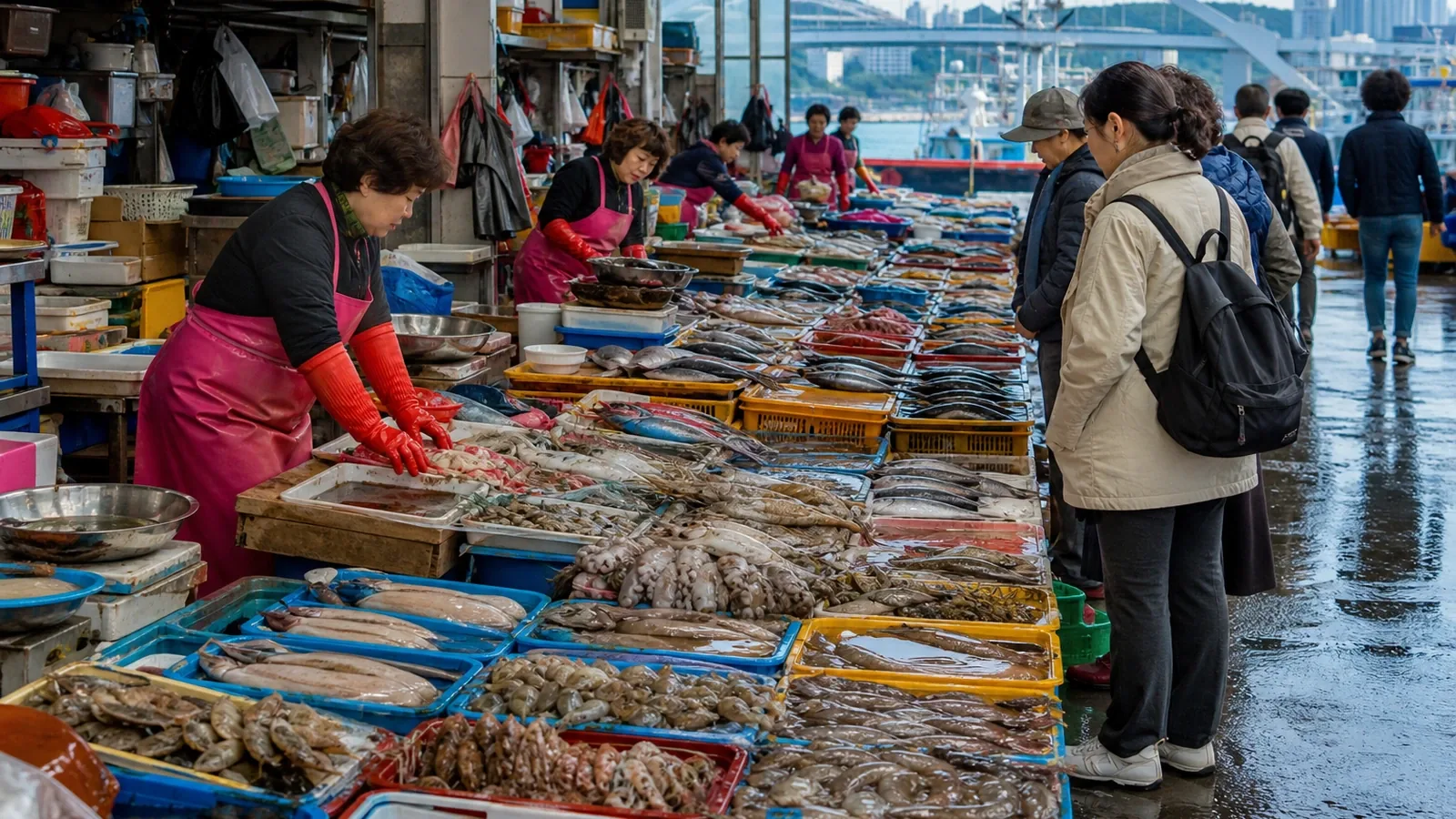
Knowing where to eat in Busan is one of the best ways to understand this Korean port city. Seafood reaches the markets still glistening with seawater, pork soups have been simmering since early morning, and street stalls fill the avenues with the scent of hot oil, caramelized sugar, and fish broth. Traditional Busan food is not defined by the quiet refinement of a gastronomic temple—although the city also has an exciting fine-dining scene—but by bold, direct flavors: heat, saltiness, fermentation, charcoal, and broths capable of restoring your spirits after a windy day by the sea.
Compare locations and options to find a base that suits your trip. Booking.com confirms current availability and pricing.
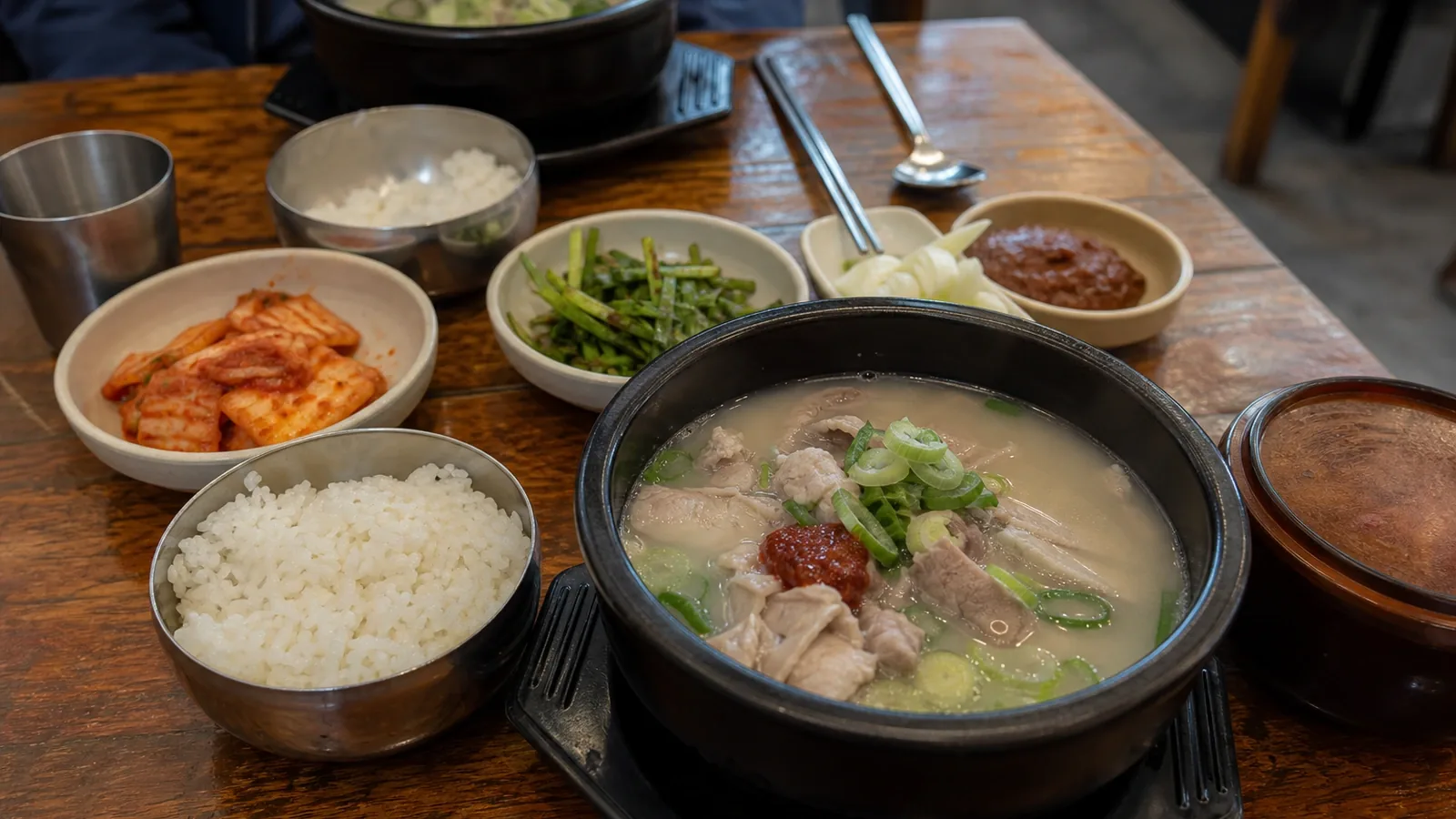
Find accommodation on BookingDwaeji-gukbap is a pork soup served with rice, spring onions, chili paste, fermented tiny shrimp, and side dishes. It arrives bubbling hot, often in unpretentious restaurants where steam fogs the windows and nobody seems to be in a hurry.
Do not season it all at once. Taste the broth first, then add small amounts of the condiments and adjust the heat to your liking. It is one of Busan’s most affordable and comforting dishes, particularly welcome during the colder months. The city’s tourism website considers it, alongside milmyeon and nakgopsae, one of the most representative flavors of local cuisine.
Milmyeon is made with wheat noodles and can be served in a cold broth—mul milmyeon—or mixed with a red sauce that is sweet, tangy, and spicy—bibim milmyeon.
It is especially refreshing in summer, although the flavor can be unexpected: the broth is often sweeter and more heavily seasoned than many travelers anticipate. For a milder taste, ask for less chili sauce and try it before mixing everything together.
Nakgopsae combines octopus, beef intestines, and shrimp in a red sauce cooked at the table. It is a bold, satisfyingly rich, and fairly spicy dish. It is usually eaten with rice, which soaks up the sauce and balances the flavors.
It is well worth trying for adventurous travelers and small groups, but it may be too much for anyone who dislikes offal or has a low tolerance for spice.
Eomuk—fish cake served on skewers with hot broth—is one of the easiest snacks to find. Ssiat hotteok is a fried pancake filled with sugar, seeds, and nuts, and is particularly associated with BIFF Square and Nampo-dong.
Both are inexpensive and delicious, but also filling. The best approach is to share several items rather than turning every stall into a full meal.
The area around Jagalchi Market, Gukje Market, and BIFF Square brings together much of Busan’s most recognizable food culture. Jagalchi combines a traditional-looking outdoor market with an indoor building selling live fish and seafood. Some vendors will prepare Korean-style sashimi, grilled fish, or spicy stews on the spot.
It is a memorable experience, but not always an inexpensive one. Before choosing anything, ask for the total cost, including preparation, side dishes, and service charges. Do not assume that buying fish at a market will be cheaper than ordering a set menu at a conventional restaurant.
Nearby, Bupyeong Kkangtong Market is better for snacking, with fish cakes, tteokbokki, fried tofu, chicken, and nighttime food stalls. The atmosphere is lively, but the central areas can become crowded, and some products are designed more for photographs than as a genuine reflection of everyday Busan cuisine.
Seomyeon probably offers the best balance of variety, price, and atmosphere. Its side streets are filled with dwaeji-gukbap restaurants, barbecue spots, taverns, nakgopsae specialists, and small establishments that stay open late.
It may lack Haeundae’s seaside scenery and Jagalchi’s sense of spectacle, but it is often a more practical choice for a good dinner without paying extra for the view. It is also convenient for solo travelers, as informal, fast-turnover restaurants are plentiful.
Haeundae Traditional Market, just a few minutes from the beach, offers tteokbokki, fried foods, soups, raw seafood, dwaeji-gukbap, and grilled sea eel. It is easy to visit and works well when time is limited.
Its main drawback is its popularity. Restaurants featured on television can have disproportionately long lines, while those facing the sea often charge more for an experience that is not necessarily better on the plate.
Haeundae’s seaside stalls offer a picturesque dinner among glowing lights, high-rise towers, and tanks full of live seafood. They are more worthwhile for the atmosphere than for value for money.
The Gwangalli waterfront is ideal for a leisurely dinner, a drink, or a seafood meal overlooking Gwangan Bridge. More local and moderately priced options can be found on the streets farther inland.
The rule is simple: the more perfect the view, the higher the markup tends to be. For better food, walk one or two streets back from the waterfront, then return to the beach afterward to enjoy the lights.
Gijang Market is known for its crab, fish, seaweed, and agricultural produce. Local seaweed is a highlight in spring, while seasonal species such as hairtail appear in autumn.
The trip makes sense for serious seafood enthusiasts or travelers exploring the eastern coast. On a short stay, however, the journey may take up too much time, and crab is not a budget option even when eaten inside the market.
To keep costs down, look for restaurants specializing in a single dish. Places serving gukbap, milmyeon, mandu, or noodles usually offer better value than restaurants with extensive menus in the beach districts.
Markets allow you to sample many different foods, but buying five or six separate snacks can end up costing more than a sit-down meal. It is also worth noticing where workers, students, and families eat: lines of visitors do not always point to the most authentic establishment.
The Michelin Guide maintains a Bib Gourmand selection in Busan that includes affordable restaurants specializing in pork soup, noodles, mandu, eel, and vegan cuisine. It is a useful reference for travelers who prefer professionally reviewed establishments without necessarily venturing into fine dining.
Busan is no longer simply a city of markets and casual eateries. The 2026 edition of the Michelin Guide selected 55 restaurants in the city and awarded one star each to Mori, Palette, Fiotto, and Le DORER.
These restaurants offer more polished interpretations of Korean ingredients, contemporary techniques, and international influences. They are worth the investment for a celebration or an introduction to Busan’s new culinary scene, but they cannot replace the experience of sitting in a market or in front of a steaming bowl of soup.
Do not have every meal in Haeundae. It is a convenient base, but it leaves out much of the culinary life of Nampo-dong and Seomyeon.
Nor should you order a dish “not spicy” and assume it will be completely mild. Some sauces and broths are prepared in advance. Vegetarians should also confirm what the broth contains, as a dish with no visible meat may still include fish, seafood, or an animal-based stock.
At fish markets, agree on the price before the vendor begins preparing your food. And do not choose a stall solely because it has a huge line: in Korea, a television appearance can dramatically increase the wait without guaranteeing a proportionate improvement in quality.
Start with a breakfast of dwaeji-gukbap in Seomyeon. At lunchtime, try milmyeon and mandu. Spend the afternoon exploring BIFF Square and share a ssiat hotteok. Finish the day at Jagalchi with grilled fish or at Bupyeong Kkangtong Market with a selection of small street-food dishes.
It may not be the most refined dinner of your trip, but it will be a day that captures the essence of Busan: a salty, bustling city built around its port, where the food retains something of the character of its people—direct, warm, and refreshingly unceremonious.
Discover selected experiences in Busan to complete this guide with Korean culture, food, coastline, markets, temples and well-organised day trips.
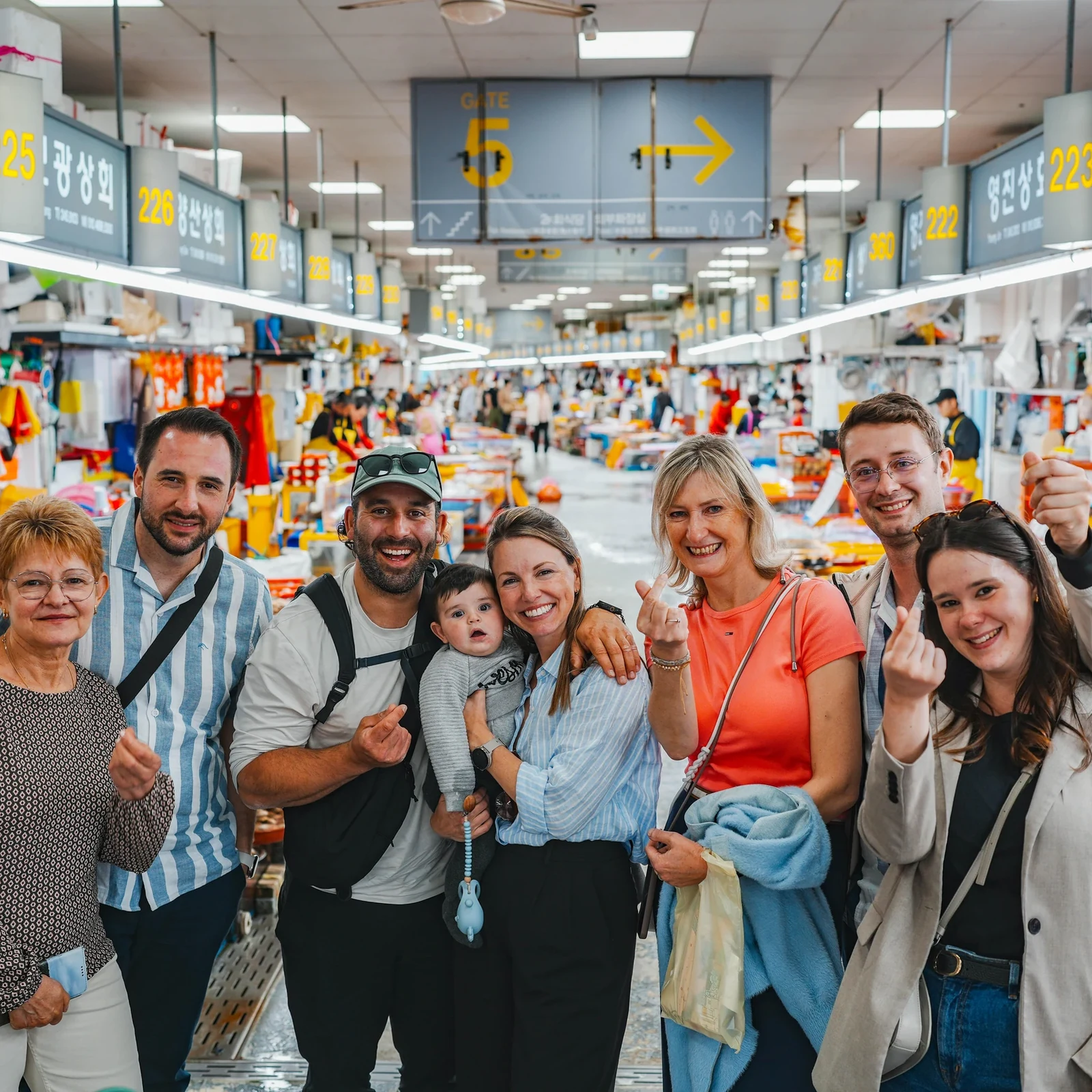
Activity on TourBookGoBook a Busan food tour with a local guide. Explore BIFF Square, Gukje Market and Jagalchi Market, taste Korean street food and choose a seafood course.
 Activity on TourBookGo
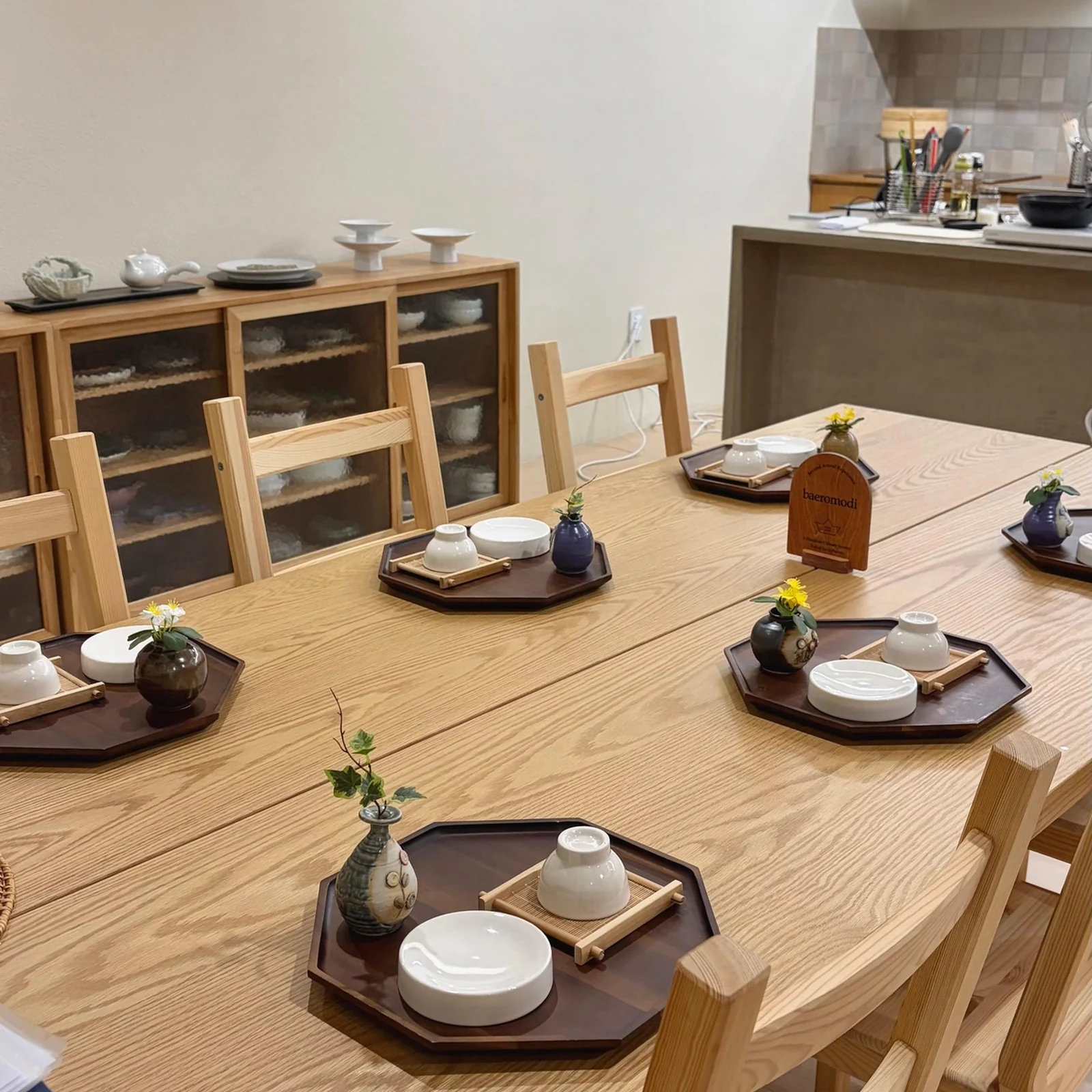
Book a Korean cooking class in Busan with a traditional market tour, hands-on recipes, a full meal and a small group of only six guests.
 Activity on TourBookGo
Discover this 8-hour Busan Dalmaji cultural tour with a mother-of-pearl workshop, Moontan Road walk, meditation, tea ceremony, Korean dinner and lantern walk.