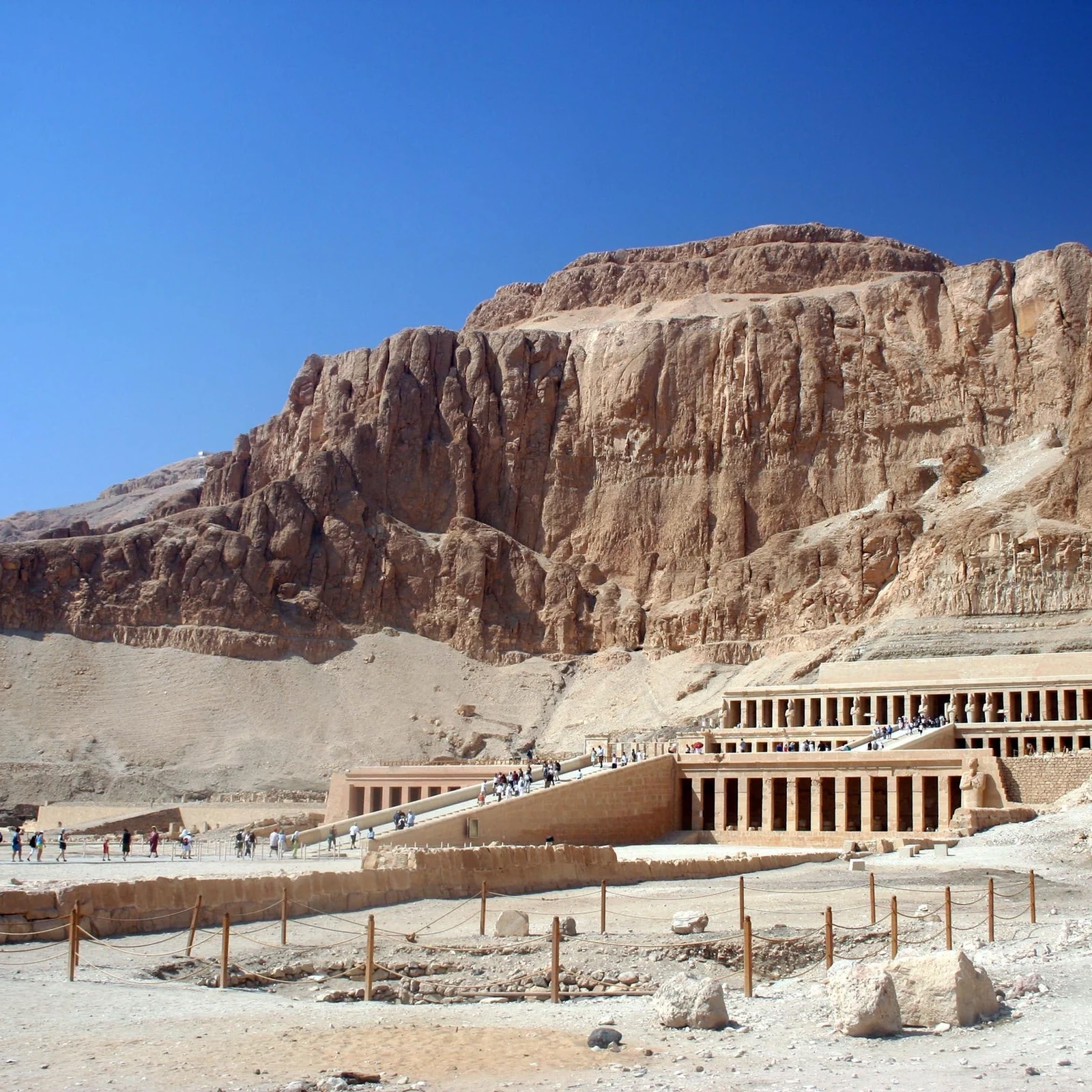
 Activity on TourBookGo
Private day trip from Cairo to Luxor by plane
Visit Luxor from Cairo on a private trip with flights, transfers, guiding, tickets and lunch. Check flight times and cancellation terms before booking.
Balance major monuments, lively neighbourhoods and pauses beside the Nile to understand a city that can be both fascinating and demanding.
Cairo is not an orderly collection of monuments. Its car horns, minarets, street stalls, overflowing avenues and unexpected beauty can fascinate and exhaust during the same walk. The best approach is to alternate major sights with breaks and neighbourhoods where everyday life sets the pace.
Compare locations and options to find a base that suits your trip. Booking.com confirms current availability and pricing.
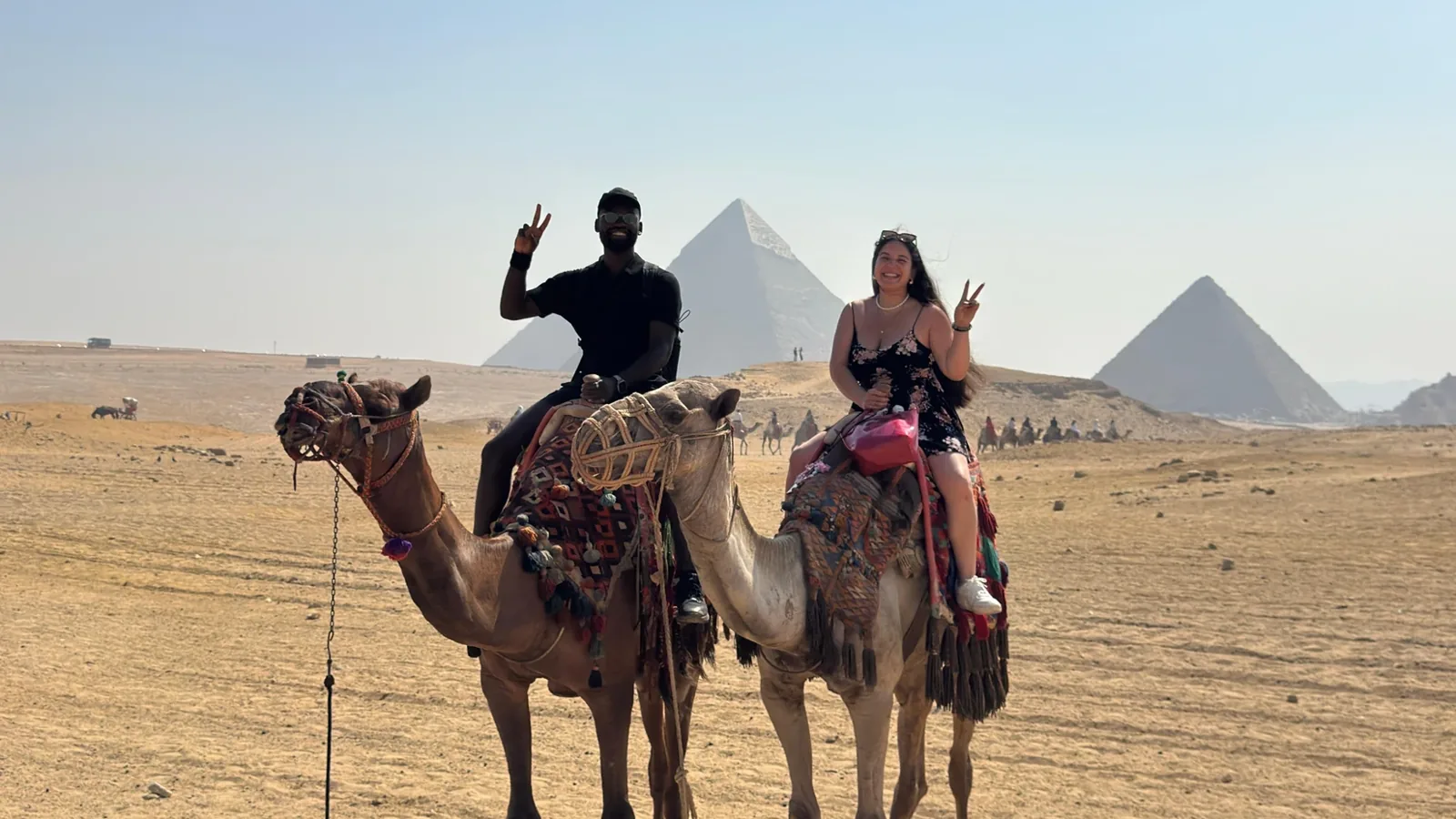
Find accommodation on BookingThe Giza Plateau holds the journey's most recognisable image: the pyramids and the Great Sphinx against a city that has grown almost to the desert. Allow plenty of time and expect heat, dust, persistent vendors and large numbers of visitors.
The experience improves when you observe the site calmly from different perspectives. Going inside a pyramid is not essential, and the cramped interiors can be demanding for anyone with claustrophobia or limited mobility.
Giza deserves a visit, but it is only a gateway. Seeing nothing beyond the pyramids would be like reading the first page of a book and abandoning it.
Al-Muizz Street and its surroundings contain mosques, madrasas, courtyards and monumental façades. Their appeal also lies in the workshops, homes, traders and people who use these streets every day.
The nearby Jan el-Jalili market is especially atmospheric when explored without becoming fixated on buying. Some sections cater heavily to visitors, while local trade dominates others. Bargaining can be part of a purchase when approached with good humour.
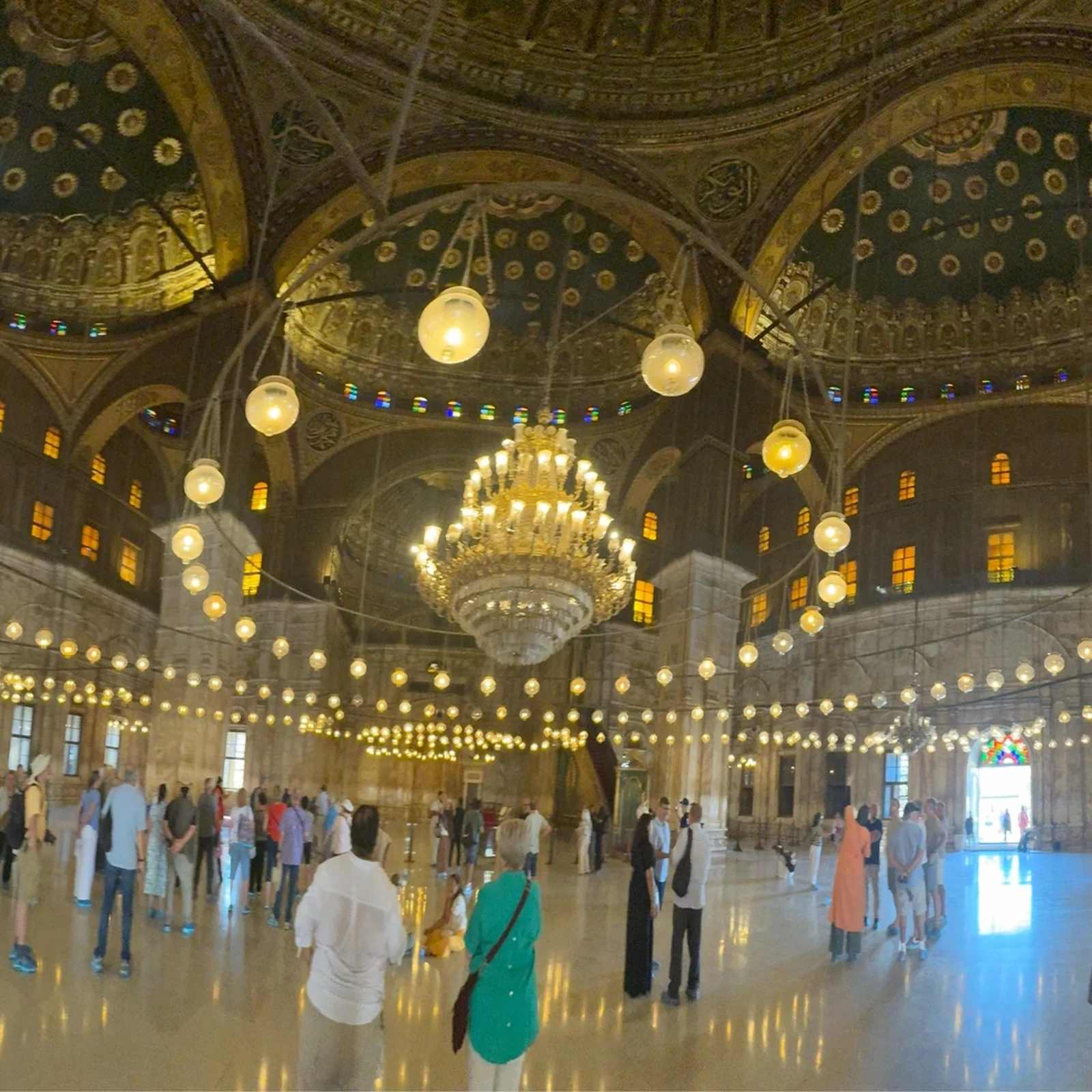
The Ibn Tulun Mosque offers a more restrained and spacious architectural experience than other famous monuments. Respect dress codes and the atmosphere of prayer in religious buildings: they are not tourist sets.
After several hours among monuments and traffic, a green space can transform the day. Al-Azhar Park offers room to rest and a more open view of the historic skyline.
Nile islands such as Gezira show a different Cairo, with leafier sections, cultural venues, clubs and residential streets. Zamalek combines relaxed walks with galleries, bookshops or cafés, although it presents a more affluent and incomplete picture of the city.
You can also explore neighbourhoods where urban life itself is the main interest. Be sensitive: photographing people, homes or small businesses without permission can be intrusive.
Egyptian collections can occupy many hours and eventually become overwhelming. Choosing a few periods, objects or themes and examining them carefully is more rewarding than rushing past every display case.
The organisation of collections and access arrangements may change. Check which museum houses the objects that interest you before visiting so that you do not plan the day around outdated expectations.
Museums are also useful during the hottest hours, on dusty days or when the pace of the streets becomes excessive. A short, focused visit usually works better for families.
The Nile provides a visual break from the city's density. A walk beside the river reveals Cairo on a different scale, particularly when the light begins to soften.
Boat trips are possible, but agree on the terms clearly before boarding and do not assume every offer provides the same experience. Walking, sitting beside the river or watching the boat traffic may be enough.
Roads and construction affect parts of the riverfront, so not every stretch is peaceful or pleasant.
Coptic Cairo provides access to another fundamental layer of the city's history. Its churches, alleyways and religious sites form a relatively compact area that is easier to explore than many others.
The district offers a contrast to the noise of the main avenues, but it should not be treated as a checklist of churches. Egypt's Christian presence belongs to a living community, and respect matters as much as historical curiosity.
With an extra day, Saqqara helps explain that the pyramids did not suddenly appear at Giza. Its archaeological landscape reveals other stages of Egyptian funerary architecture and a clearer relationship between the monuments and the desert.
It can be combined with Memphis, but too many stops can turn the day into a race. Transport requires planning, and the heat may limit how much energy you have.
This trip is better suited to travellers with a genuine interest in archaeology than to those seeking only another photograph beside a pyramid.
Rain is rarely the main obstacle, although it can disrupt traffic and make some routes uncomfortable. Heat and dust usually have a greater effect on the day.
In these conditions, prioritise museums, cultural spaces, quiet cafés and indoor visits. Another option is to split the day between an early activity, a break during the harshest hours and a late-afternoon walk.
Fighting the weather merely to complete an itinerary rarely improves the experience.
Cairo can be enjoyed without stringing together admission tickets and excursions. Walking through the centre, watching the Nile bridges, exploring markets without buying or stopping at a simple café can bring you closer to everyday city life.
Busy bakeries, bookshops, fruit sellers, board games and streets that change after dark can give the journey depth without replacing the major monuments.
To spend less, reduce travel time and group visits by area instead of crossing the city repeatedly. Traffic consumes time, energy and money.
Families should avoid overly ambitious days. One archaeological visit, a relaxed meal and a short walk often work better than a chain of monuments. Traffic, uneven pavements and crowds can make using a pushchair difficult.
For couples, a Nile boat trip or an afternoon with a view can provide a pleasant break, although Cairo's charm is rougher, more unpredictable and more urban than the conventional image of a romantic city.
Slow travellers may enjoy devoting each day to one area. More active visitors can combine additional sights, but they need generous margins because distances can be deceptive and traffic disrupts plans.
The city does not switch off after dark: streets stay crowded, cafés remain busy and the Nile takes on a different mood. Nightlife may also mean a late dinner, a cultural performance or a long conversation in a café.
Options vary greatly between neighbourhoods. Plan the return journey and remember that alcohol does not occupy the same social place as in other destinations. Reading the atmosphere and acting discreetly helps avoid uncomfortable situations.
A common mistake is to demand comfort, silence and order from the city. Cairo rewards those who accept some friction without romanticising it: noise is tiring, traffic wears you down and some commercial interactions can feel persistent. There is also hospitality, humour, memory and a vitality that resists reduction to a list.
A rewarding stay combines the pyramids with historic neighbourhoods, a museum or two, time beside the Nile and periods without a particular objective. Leave room in the schedule: Cairo does not always offer what you imagined, and that is where the real experience may begin.
Discover selected experiences in Cairo and compare different ways to explore the city before booking.
Activity on TourBookGoVisit Luxor from Cairo on a private trip with flights, transfers, guiding, tickets and lunch. Check flight times and cancellation terms before booking.
 Activity on TourBookGo
Visit Sakkara, Dahshur and Memphis with private air-conditioned transport and a guide. The tour prioritises personalised service, although pickup, actual timings and any access inside the pyramids should be confirmed.
 Activity on TourBookGo
Explore the museum, Islamic and Coptic Cairo and Khan el-Khalili with an Egyptologist guide, admission, transport and selected pickup.