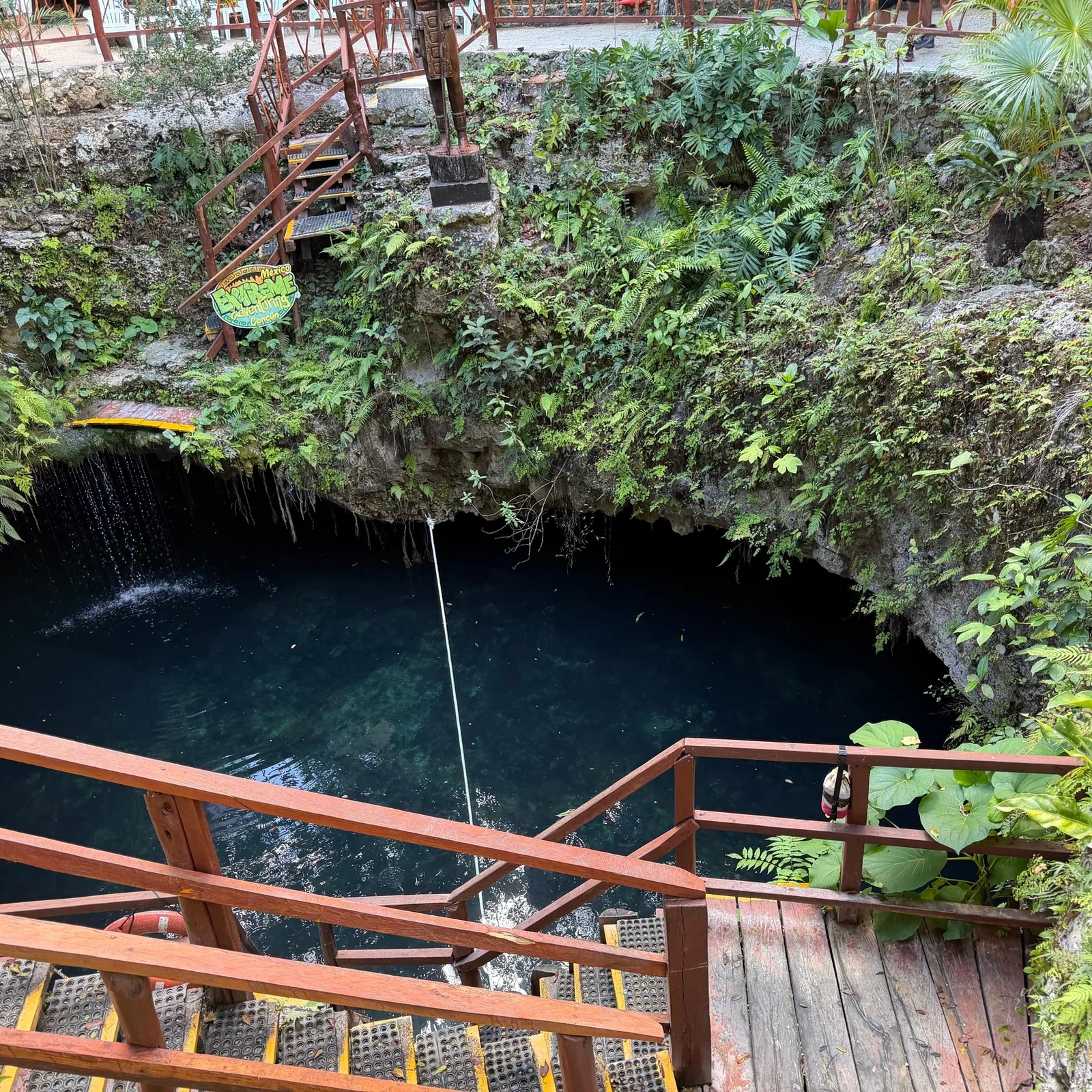
 Activity on TourBookGo
Cancun Cenote Tour with Tequila and Mayan Snack: Is It Worth Booking?
Book a Cancun cenote tour with three cenotes, swimming, ziplining, tequila tasting, a Mayan snack and pickup. 5-hour activity from €69.
If you are wondering where to eat in Cancun beyond the tourist restaurants, step away for a few hours from the almost unreal blue of the Caribbean and follow the scent of achiote, warm tortillas, and freshly cooked fish.
To decide where to eat in Cancun, it helps to understand its two very different dining scenes: the Hotel Zone, polished and convenient, with spectacular views; and downtown Cancun, more everyday, less scenic, and generally far more interesting if you want genuine local food and Yucatecan flavors. There is no need to choose one and dismiss the other. There are good restaurants in the Hotel Zone. The problem begins when a terrace overlooking the lagoon is mistaken for a guarantee of good cooking.
Compare locations and options to find a base that suits your trip. Booking.com confirms current availability and pricing.
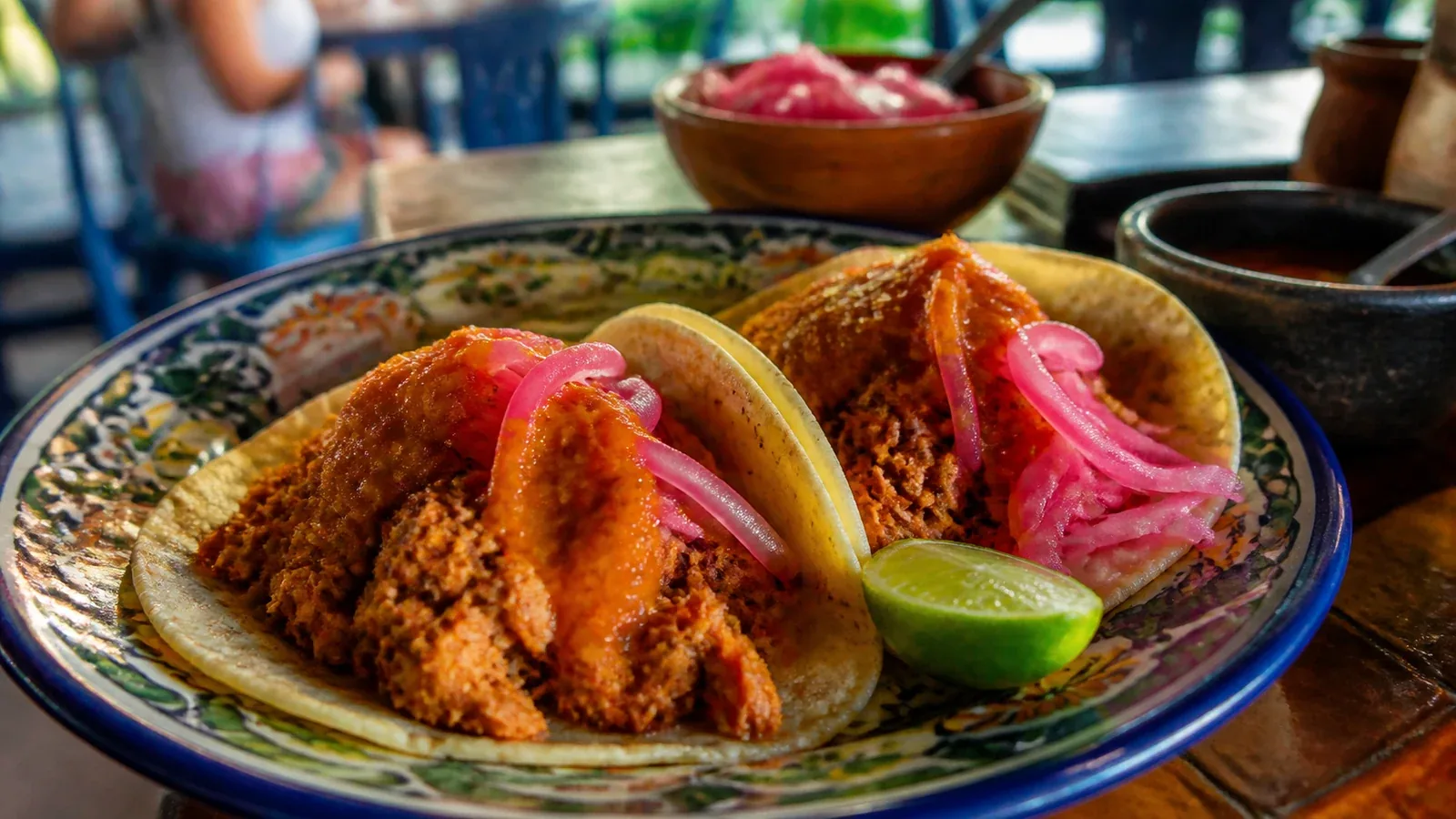
Find accommodation on BookingAlthough Cancun is in Quintana Roo, much of its culinary identity is tied to the cuisine of the Yucatan Peninsula. If you are deciding where to eat in Cancun for regional flavors, look for cochinita pibil, panuchos, salbutes, sopa de lima, papadzules, relleno negro, and tikin-xic fish.
Pork slowly cooked with achiote and spices, usually served with pickled onions and habanero chili. When done well, the meat almost falls apart and the flavor is deep without being heavy. It is one of those dishes that is often more rewarding at a simple lonchería than at a restaurant trying too hard to reinvent it.
These are excellent for anyone who wants to sample Yucatecan food in Cancun without sitting down to a long meal. Both use corn tortillas as a base and can be topped in different ways. They work particularly well for a late breakfast, a casual lunch, or ordering several dishes to share.
A light chicken or turkey broth with lime and fried tortilla strips. There is something paradoxical about it: it sounds like a dish made for a cool afternoon, yet its acidity works surprisingly well in the Caribbean heat.
Tortillas filled with hard-boiled egg and covered with a pumpkin-seed and tomato sauce. They are less internationally known than cochinita pibil, but they offer a glimpse of a more traditional Yucatecan cuisine that has been less adapted to visitors.
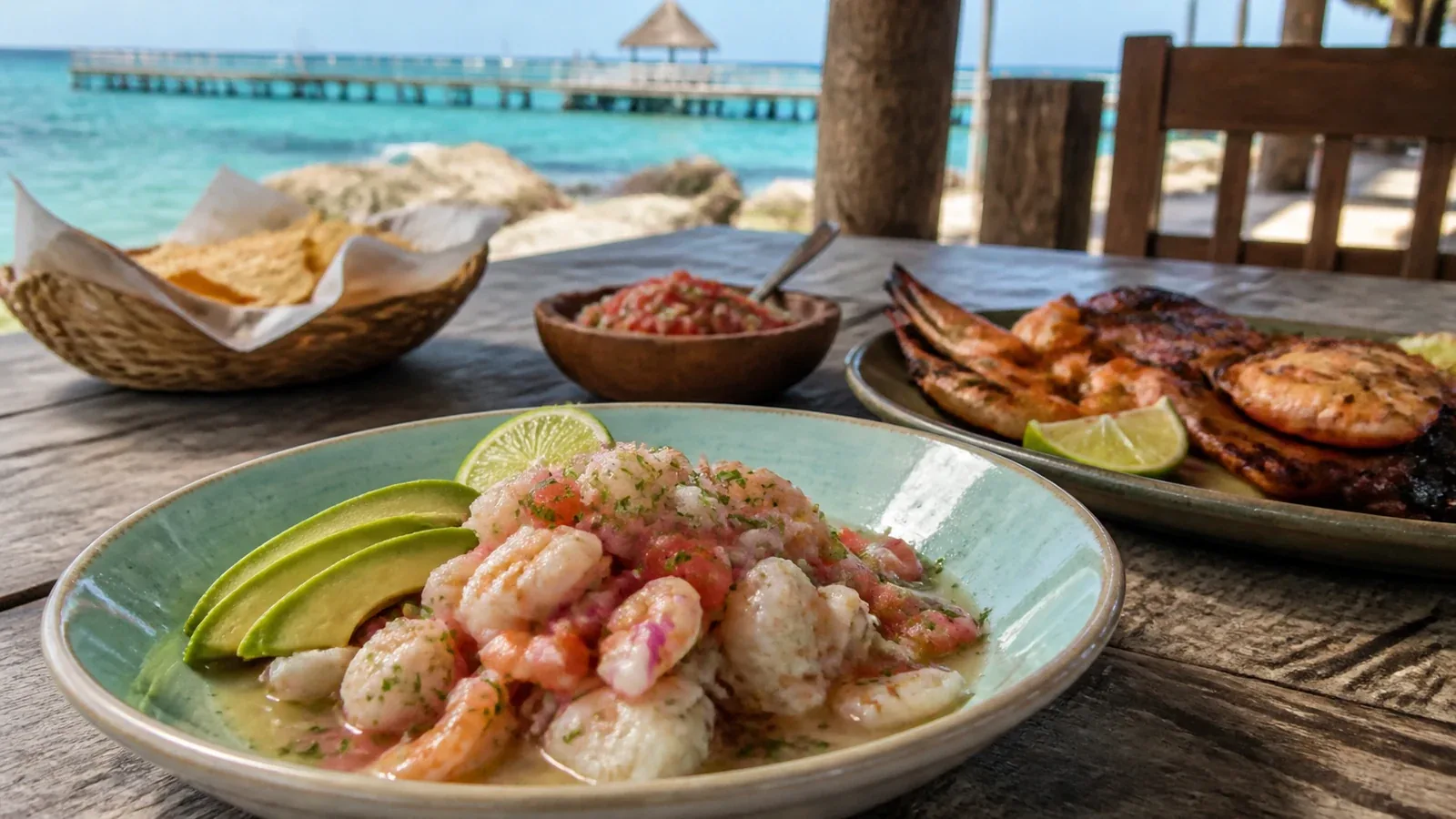
Seafood also deserves plenty of attention in Cancun: ceviches, grilled fish, fish tacos, shrimp, and dishes such as tikin-xic. Looking for good seafood in Cancun is one of the easiest ways to discover a local cuisine that goes far beyond burritos and nachos by the pool.
Mercado 23 is one of the best places to go if you want to eat local food in Cancun and swap the tourist scene for a few hours for a much more everyday side of the city. Here you will find fruit, chilies, spices, meat, small stalls, and simple food among shoppers who are not necessarily on vacation. Historically, it has retained a much more local character than other markets aimed at visitors.
There is no luxury, stylish air conditioning, or tableware designed for Instagram. That is precisely part of its appeal.
Lonchería El Pocito is a well-known downtown spot for trying Mexican and Yucatecan food in Cancun in a setting far less theatrical than the city’s large tourist restaurants.
Another option is Emara Antojitos Yucatecos, a good choice for anyone who wants to focus on regional snacks and flavors without turning the meal into a luxury experience.
In both cases, the best strategy is simple: arrive ready to try several dishes, ask what is being prepared that day, and do not stick only to what already feels familiar.
El Oasis Mariscos I Cancún is a place to look for fish and seafood in Cancun away from the grand hotel backdrop. It is an especially appealing option for anyone who values what is on the plate more than having a table overlooking the Caribbean.
There is no need to leave the Hotel Zone every time dinner rolls around. Convenience matters, especially after a day at the beach or out on excursions.
El Fish Fritanga is a fish-and-seafood-focused option in the Hotel Zone and can make sense for anyone who wants to stay close to their accommodation without necessarily committing to a formal dinner.
The main difference is financial: in this part of Cancun, you are not paying only for the food. You are also paying for the location, service, views, high rents, and the fact that you are dining inside the city’s main tourist corridor. Downtown, it is easier to find a balance between price and quality that works in the traveler’s favor.
Mercado 28 is one of the best-known markets among tourists and is worth visiting for handicrafts or simply to browse, but today it is much more geared toward visitors than Mercado 23.
That does not mean it is impossible to eat well there. It simply means I would not choose it as a first experience of local food in Cancun.
For food, Mercado 23 is more convincing. For souvenirs, bargaining, and a tourist-market atmosphere, Mercado 28 makes more sense.
If you are looking for cheap eats in Cancun, the easiest way to keep your budget under control is not to hunt for promotions in the Hotel Zone, but to eat where the city eats.
Downtown loncherías, taquerías, and markets make it possible to try several specialties without turning every meal into one of the major expenses of the trip. Alternating is also a good strategy: one special dinner by the water can be worthwhile; eating every meal in tourist restaurants probably is not.
On a tight budget, I would prioritize breakfasts and lunches downtown.
I would choose tacos, panuchos, salbutes, and antojitos instead of full-service restaurants.
Markets work well for casual meals.
I would keep one more elaborate dinner in the Hotel Zone if the views are part of the experience.
The main one is not a specific restaurant, but choosing solely based on location. A spectacular terrace may justify a high price, but it does not guarantee that the food will be equally impressive.
It is also wise to check the menu and prices before ordering, especially in heavily tourist-oriented areas. In Mexico, businesses are required to display prices clearly, and tipping is voluntary; according to Profeco, it cannot be imposed on customers or automatically added without their consent.
I would also be wary of anywhere where it is difficult to understand what you are paying for, waiters who try to push dishes or drinks before handing you a menu, and restaurants that seem to rely entirely on pulling in passersby.
Regional food can be enjoyed year-round, but the experience surrounding it does change.
During the hottest and most humid months, walking around markets is far more pleasant early in the day than under the midday sun. During busy tourist periods, the most popular restaurants in the Hotel Zone may require more planning.
And there is another culinary advantage to leaving the resort from time to time: even if the weather is bad, it rains, or the sea is not at its best, sitting down to a bowl of sopa de lima, a plate of panuchos, or some cochinita pibil lets you discover a side of Cancun that does not depend on the color of the water.
If it were my first visit, I would divide my meals between two worlds.
I would eat at least once at a market or lonchería downtown, try authentic Yucatecan cuisine, and set aside another meal for fish or seafood. Then I would choose one dinner in the Hotel Zone only if the atmosphere, views, or convenience justified paying more.
Cancun can feel overwhelmingly touristy if you stay within its hotel corridor the entire time. The same is true at the table. Travel just a few kilometers away from the big resorts and the trip begins to take on different aromas: achiote, red onion, freshly made tortillas, lime, habanero chili, and fish cooking over the fire.
That version of Cancun may not appear in the classic beach photo. But if you are wondering where to eat in Cancun for a genuine taste of the city, it is the one most worth seeking out.
Discover Cancun through selected experiences that combine Mayan culture, Caribbean beaches and reefs, cenotes, boat trips, adventure and full-day excursions to suit the pace of your trip.
Activity on TourBookGoBook a Cancun cenote tour with three cenotes, swimming, ziplining, tequila tasting, a Mayan snack and pickup. 5-hour activity from €69.
 Activity on TourBookGo
Discover Puerto Morelos snorkeling with reef time, transport from Cancun and Riviera Maya, beach time, lunch and tequila, plus prices and booking tips.
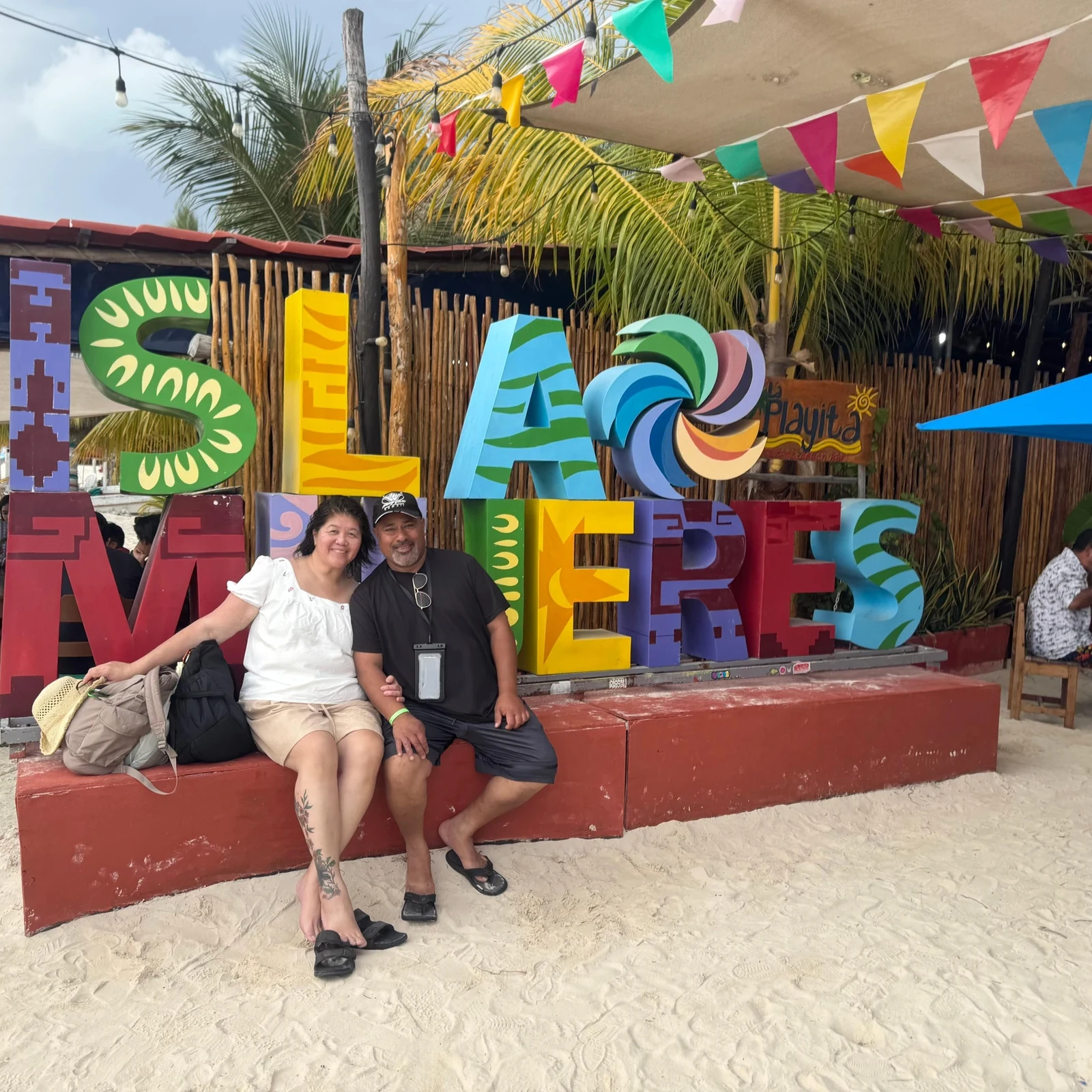 Activity on TourBookGo
Isla Mujeres catamaran tour from Cancún lasting about 7 hours with guided snorkeling, open bar, Caribbean buffet, Playa Norte and downtown island time.