 Activity on TourBookGo
Art Institute of Chicago: Guided Tour with Admission
Explore the Art Institute of Chicago for 2.5 hours with an English-speaking guide and admission included. Compare private and semi-private options on Viator.
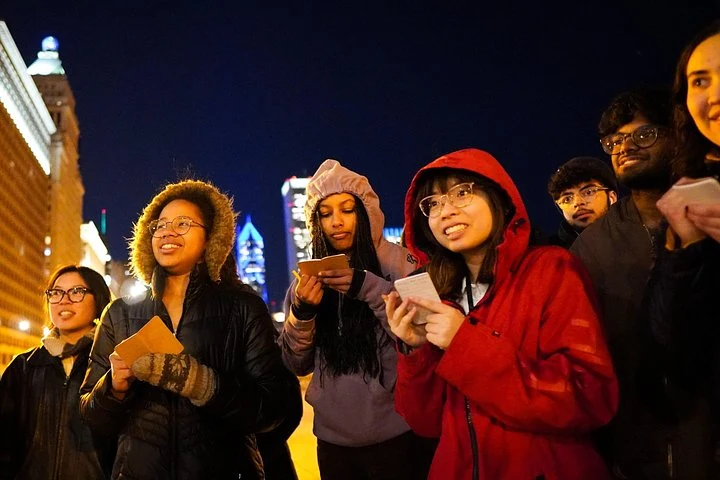
The night scene shows people in coats holding cards, a red hood and illuminated buildings. A photo does not establish a place’s safety.
Consider the place, the time and your needs. Architecture, parks and culture can shape your plans; a clear route back helps you carry them out.
This is a night scene: several people in coats hold cards, one wears a red hood, and illuminated buildings stand behind them. The same photo provides a destination reference when comparing accommodation for your visits. It does not show a room or establish hotel views or facilities; confirm those details in the accommodation listing.
Find accommodation on BookingThe Loop brings together architecture and downtown attractions, but that description for visitors does not guarantee conditions on every street or at every hour. A neighbourhood's name alone is not enough to rule it out or recommend it on safety grounds.
When planning a visit, establish the address, your arrival point and the route you will take afterwards. Check current advice relevant to that area and the time you intend to visit. If information only describes the food or cultural scene, use it to choose what to explore, without treating it as a risk assessment. The useful decision is how to reach a specific place and get back from there.
The Chicago Transit Authority provides maps, a journey planner, timetables and service alerts. Use these tools to review the whole journey, including transfers and the final stretch on foot. A station close to your destination does not, on its own, cover the entire route.
For airport travel, CTA lists the Blue Line for O’Hare and the Orange Line for Midway. Check the service for your travel date and arrange your luggage so you can handle it while keeping your belongings in sight. If this is your first visit, save the directions before setting out: deciding your next step in advance reduces improvisation.
The Jay Pritzker Pavilion is part of Millennium Park. The scene shows large, curved silver metal panels surrounding a glass-fronted stage, with rows of red seats in front and beams and cables crossing overhead. This image helps identify features of the space, but does not demonstrate its safety conditions.
If your plans include an activity there, confirm the entrance and exit instructions for that visit. Decide where to meet your companions if you become separated and how to continue afterwards. Your choice will depend on whether you want to head straight back or extend your day: settle both possibilities before arriving, especially if you depend on transport.

Photographing buildings encourages you to look up and pause. The Marina City scene shows round towers with repeated balconies, people beside a stone wall and a dark glass tower alongside. It is a visual reference for an architectural visit, not evidence of safety in the surrounding area.
Before choosing your shot, put away anything you do not need and stop somewhere you will not block the way. Avoid setting a bag aside while taking photographs or checking the map. These are practical precautions, without attributing specific crimes to this location. Enjoying the details is easier when your belongings remain under your control.
River North features in the tourist guide for its restaurants, nightlife and architecture. Those attractions may be a reason to go out, but they do not replace planning your return. Check the route from the exact address where your outing will end, rather than just from the neighbourhood.
If you are a woman travelling alone, choose a way back you feel comfortable managing, and share your plan with someone you trust if that helps. The same principle applies to anyone going out alone. If circumstances change or a journey makes you uncomfortable, reconsider your route and seek help; you are under no obligation to follow the original plan.
Chicago has a continental climate, with cold winters, warm summers and frequent changes over short periods. Lake Michigan influences local temperatures and winter snowfall, with effects that vary across the metropolitan area. These characteristics are not a forecast for your visit.
Before walking or cycling along the Lakefront Trail, check the expected conditions and adjust the length of your route. Choose a starting point that lets you shorten it if it is no longer suitable. Do not mistake a clear view of the lake in a photograph for conditions on the day: your clothing, exertion and options for getting back need to suit the actual situation.
A family visit to Millennium Park or Navy Pier needs arrangements everyone involved can understand. Before starting, agree on an easily recognisable meeting point and explain to children whom to approach if they lose sight of the group. Adapt these instructions to their age.
Carry the details needed to contact the adults responsible and distribute them among your companions. When choosing activities, consider how you will manage pushchairs, bags and transport changes. The aim is not to fit in as many stops as possible, but to stay able to look after the group. If someone needs to finish earlier, having the return journey planned makes that easier.
CTA recommends staying aware of your surroundings and calling 911 when anyone's immediate safety is threatened. It also says passengers can ask a CTA employee for help.
In a train carriage, the Passenger Intercom Unit lets you speak to the operator. It is useful to know about this option before you need it and to distinguish it from an emergency call. When requesting assistance, clearly explain where you are and what is happening, using the information you have. These channels let you respond to a problem; their existence does not guarantee safety throughout the network, in a neighbourhood or at any particular time.
Living in Chicago brings familiarity, but an activity beyond your usual routes may require different preparation. If you are accompanying visitors, review CTA alerts and where the outing will end, even if you know the outward journey well.
For residents, the value lies in checking what is different: another address, another time or companions with different mobility needs. Visitors should also save their accommodation address and directions back. In both cases, a well-prepared day lets you make your own decisions, recognise when to change plans and enjoy yourself without relying on general promises of safety.
Chicago: discover activities for your trip. Before booking, check each activity's location, meeting point and route.
Activity on TourBookGoExplore the Art Institute of Chicago for 2.5 hours with an English-speaking guide and admission included. Compare private and semi-private options on Viator.
 Activity on TourBookGo
Explore the Art Institute of Chicago on a private 2-hour tour with an English-speaking guide and admission included. Check terms and book through Viator.
 Activity on TourBookGo
Explore the Art Institute of Chicago for 150 minutes with an English-speaking guide and admission included. Check options and availability on Viator.