Start with Table Mountain
Table Mountain dominates the city and also sets its pace. Reaching the top provides an immediate sense of how the city centre, the ocean and the peninsula relate to one another. You can hike up by several routes or take the cable car, but weather conditions affect both options and can change quickly.
Anyone choosing to hike should adapt the route to their experience, carry water and sun protection, and bring clothing for changes in temperature. The climb should not be treated like an urban stroll, and it is unwise to improvise along an unfamiliar route. If clouds cover the summit, postpone the plan: the mountain will still be there, and Cape Town offers plenty of alternatives.
Lion’s Head and Signal Hill provide other perspectives. The former requires more effort and care, while the latter offers a simpler way to take in the landscape. In places this popular, getting a photograph should never take priority over safety or respect for the surroundings.
Explore the city centre with an awareness of its history
The centre can be explored on foot, one area at a time, alternating between architecture, gardens, markets and cultural spaces. Company’s Garden provides a green respite, while the surrounding streets retain buildings that reveal different periods in the city’s history.
Bo-Kaap draws visitors with its colourful façades, but reducing it to a photographic backdrop means overlooking its community identity. It is a residential neighbourhood with a history linked, among other things, to the Cape Muslim community. Explore it without encroaching on doorways, blocking streets or photographing residents without permission.
To understand the wounds left by apartheid, the District Six Museum provides essential context. Seemingly ordinary streets take on a different meaning once you learn about the forced removals and displaced communities.
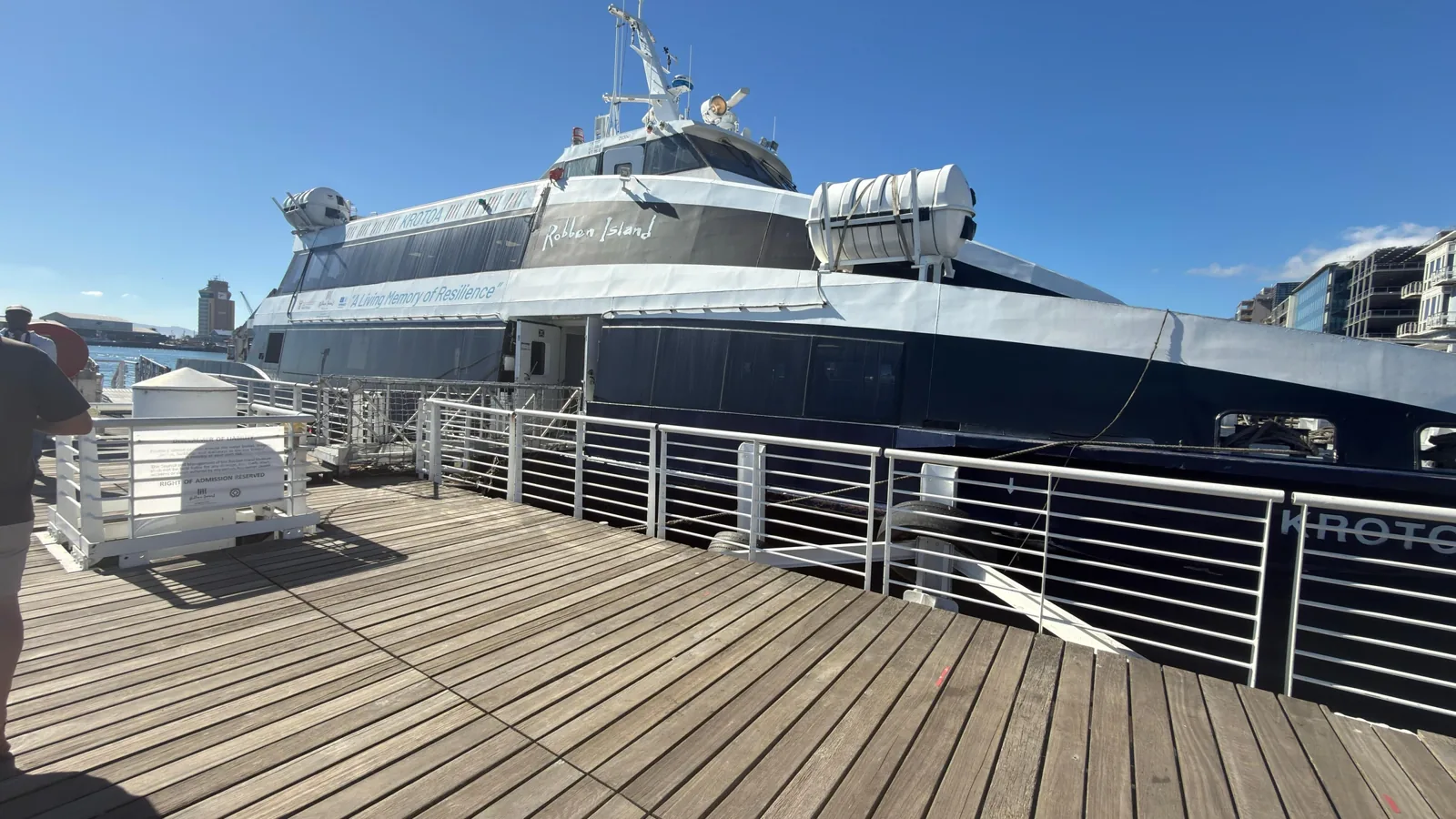
Robben Island also holds a central place in South African memory. The experience depends on sea conditions and tour operations, so check the latest information and book well in advance. This is not a light-hearted excursion, but a place that requires time and a willingness to listen.
Set aside a day for the sea and the peninsula
The Atlantic coast offers some of Cape Town’s most enjoyable walks. Sea Point makes it possible to stroll beside the ocean without organising a major excursion, making it useful for visitors and residents who want some fresh air. Camps Bay combines beach, views and atmosphere, although its popularity can make it feel less peaceful at busy times.
The Atlantic water often feels cold even when the weather makes swimming seem appealing. For many people, these beaches work better as places to walk, relax or watch the sunset than as destinations for prolonged swimming.
The peninsula deserves a full day of its own. The route towards the Cape links coastal towns, viewpoints, beaches and natural areas, but trying to stop everywhere turns the day into a succession of car parks. Choose a few stops and enjoy them properly.
Boulders Beach is known for its colony of African penguins. Visitors must remain in the designated areas and should not approach, feed or chase the animals. Farther south, the Cape landscape unfolds into cliffs, low vegetation and a sense of standing at an ocean frontier. Wind and fog can transform the experience completely.
Having a car makes this excursion easier, although it also means driving carefully and planning your stops. Those who would rather not drive can consider a guided tour, always checking what it includes and how much time is actually spent at each location.
See the city through its gardens and vineyards
Kirstenbosch is one of the best places to slow down. Spread across the eastern slopes of Table Mountain, its gardens offer a chance to discover southern Africa’s plant diversity without leaving the city. It works well for families, couples, solo travellers and residents, provided enough time is set aside to walk at an unhurried pace.
The nearby wine regions offer another change of scenery. There is no need to turn the day into a tasting contest: the estates, gardens, architecture and food are also part of the appeal. If you drink alcohol, avoid driving and arrange transport in advance.
For non-drinkers, the excursion can still be worthwhile, although the experience should be chosen carefully to avoid being tied to a programme focused exclusively on wine.

What to do if it rains or the wind is too strong
Bad weather does not have to mean losing the day. Museums and historic sites in the centre offer an opportunity to delve deeper into the city, while galleries, cafés and some covered markets provide more flexible options. It can also be a good time to spend several hours exploring South Africa’s contemporary history instead of moving from one viewpoint to another with no visibility.
The V&A Waterfront is convenient when you are looking for sheltered activities, restaurants and accessible walks. That convenience comes with a trade-off: it can feel more commercial and less representative of everyday life. It is worth visiting, but should not be mistaken for the whole city.
Free or low-cost activities
Cape Town does not require you to pay for every experience. Walking along Sea Point, taking in the coast from different viewpoints, exploring Company’s Garden or spending time on the beaches can make for memorable days at a moderate cost.
You can also explore the centre and observe how the city changes between its administrative, commercial and residential areas. Research the route, avoid entering private property without permission and refrain from turning vulnerable neighbourhoods into attractions.
Responsible visitors do not seek out poverty to photograph it or consume other people’s stories as entertainment.
Choose according to the type of trip
Families often find a comfortable pace by combining gardens, beaches, coastal walks and short cultural activities. Couples can alternate between nature, food and sunsets without concentrating the entire trip around romantic settings.
Solo travellers should take particular care when planning mountain routes, night-time journeys and their return from outlying areas.
For residents, the city continues to offer simple escapes: a morning at Kirstenbosch, a walk beside the ocean or a coastal drive without turning every outing into a full day of sightseeing.
Cape Town rewards curiosity, but also restraint. Its landscape is extraordinary; its history is uncomfortable and necessary. The best trip is not about collecting the mountain, the penguins, the Cape and the beaches like trophies, but about understanding how nature, memory and local life coexist.