 Activity on TourBookGo
Córdoba equestrian show with Andalusian horses and flamenco
Book your Córdoba equestrian show ticket with Andalusian horses, dressage and flamenco at the Royal Stables. Around 70 minutes of live culture.
How to get around Córdoba is easy once you understand its rhythm: on foot through the historic centre, by bus for medium-distance trips, by taxi when luggage or heat make it worthwhile, and by car only if you are exploring the province.
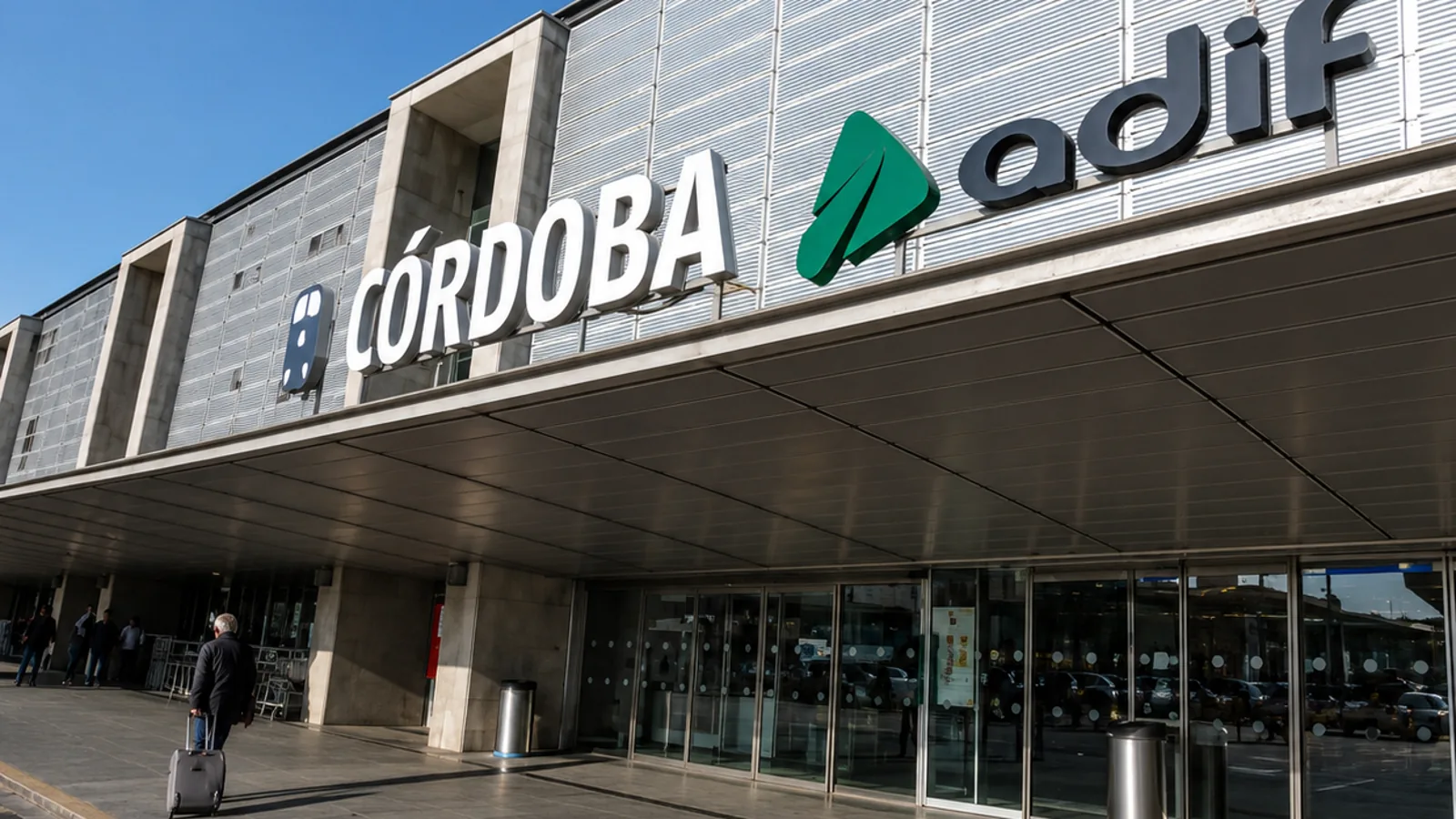
How to get around Córdoba is not just a choice between bus, taxi or car: it is about matching your pace to a city that reveals itself best on foot. The shade of a whitewashed façade, the murmur of a fountain behind an iron grille and the scent of orange blossom in the patios make every journey through the historic centre feel part walk, part discovery. The city is kind to travellers staying near the historic centre. The Mezquita-Catedral, the Jewish Quarter, the Roman Bridge, the Alcázar and many of the main sights can be explored naturally on foot. The train station is also less than two kilometres from the Mezquita-Catedral, just over twenty minutes’ walk, and the bus station is practically next to the railway station.
Compare locations and options to find a base that suits your trip. Booking.com confirms current availability and pricing.
Find accommodation on BookingThe most practical answer is simple: walk around the historic centre, take the bus for neighbourhoods and medium-distance trips, and use a taxi if you are travelling with luggage, in the heat, or short on time.
Córdoba’s old town has a human scale. Its narrow streets, small squares and shady corners were not designed for the modern car, and that is part of its charm. Walking lets you see what transport hides: a blue flowerpot against whitewashed walls, a half-open door, the cool silence of a street that suddenly leads to a tavern.
But Córdoba also has a broader, everyday side. If you are staying far from the centre, arriving at the station with luggage, or heading towards less touristy areas, AUCORSA city buses are the logical option. The network includes urban routes, suburban lines and special services, including a connection to the airport on line 78.
Walking through Córdoba is almost an activity in itself. From the Mezquita-Catedral to the Alcázar, from the Jewish Quarter to the Roman Bridge, distances are short and the route has a slow beauty, made of golden stone, whitewashed walls and hidden patios.
Córdoba on foot is worth it if you are visiting for one or two days, staying in the centre or near the Ribera, wearing comfortable shoes and not travelling in the height of summer during the harshest hours of the day. The city invites you to get a little lost: not too much, because the centre is manageable, but enough for streets you had not planned on to appear.
In July and August, walking at midday can become an endurance test. Córdoba does not hide the heat: it lets it fall onto the stones, stores it in the squares and slowly gives it back in the afternoon. In summer, it is best to go out early, rest during the middle of the day and pick up your route again at sunset.
Walking from the station to the centre can also be uncomfortable if you are carrying large suitcases. Although the distance is not excessive, the route loses its charm when your luggage is heavy and the sun is beating down.
The bus in Córdoba is not usually essential for visitors who only plan to see the historic centre, but it is very practical if your accommodation is in a more distant neighbourhood, if you want to get to or from the station without walking, or if you need to cross the city cheaply.
City buses generally run between 6:00 a.m. and 11:00 p.m., with variations on weekends and public holidays, so it is worth checking updated timetables before planning important journeys. AUCORSA provides information on routes and timetables, as well as service alerts and real-time bus arrival information.
Public transport in Córdoba is a good option if you are travelling on a tight budget, staying outside the centre, or want to avoid long walks between the station and your accommodation. It can also help on very hot days, when a distance that seems reasonable on paper becomes tiring.
Do not expect the bus to be the most romantic way to discover Córdoba. For travellers moving only between the Mezquita, the Jewish Quarter, the Alcázar and the river, it may be slower and less direct than walking. Also, many streets in the historic heart are narrow or pedestrianised, so it will not always drop you exactly where you want to be.
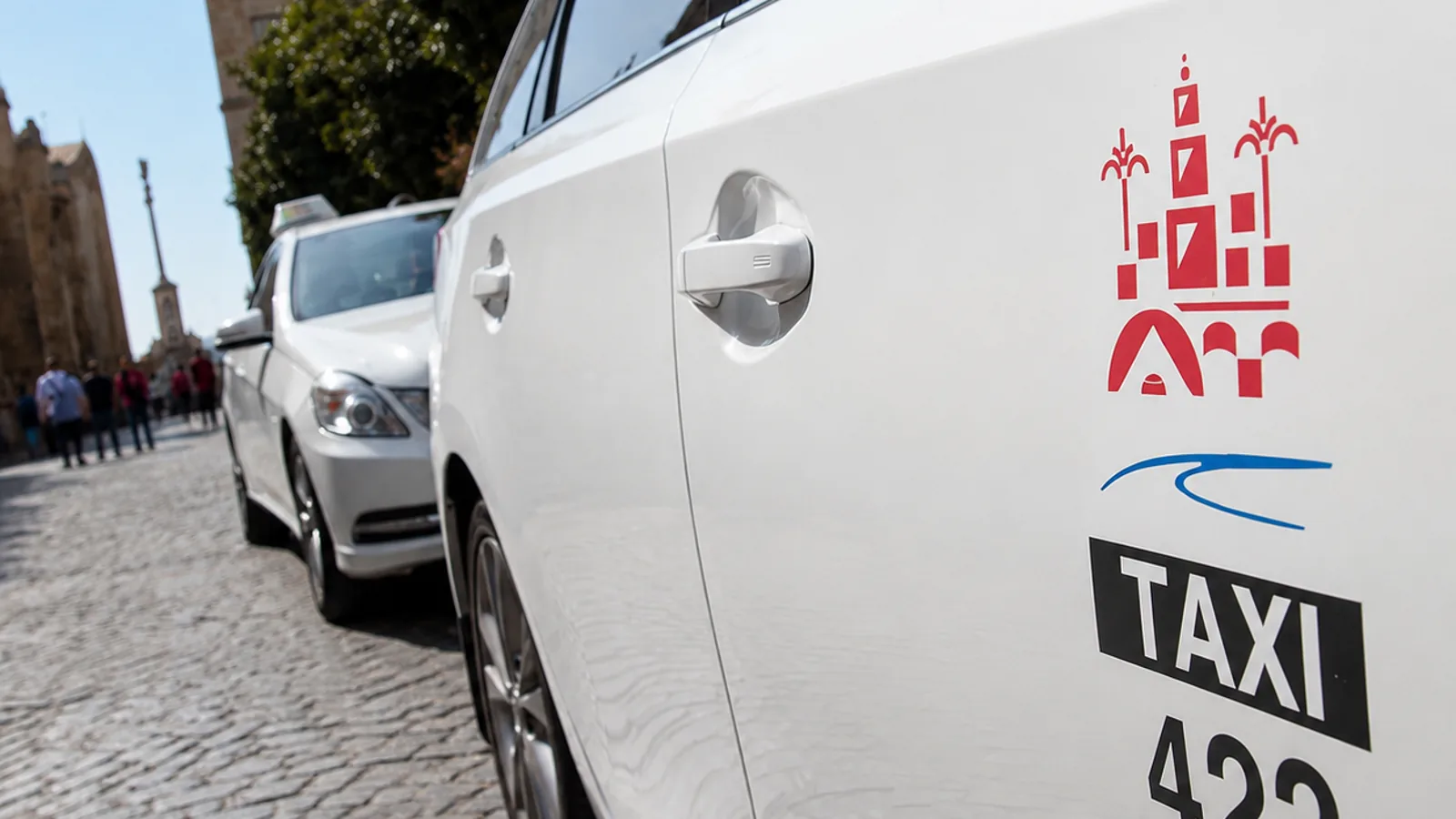
Taxis in Córdoba make sense at specific moments: arriving from the station with luggage, leaving early, returning late, dealing with intense heat, or staying somewhere a little out of the way. Official taxis are white and display their identification number on the door.
You do not need to rely on taxis throughout your visit, but one can greatly improve the experience if you arrive tired or pressed for time. Sometimes the best mobility advice is not to save every euro, but to avoid starting your trip sweating, dragging a suitcase over uneven pavements and cursing a city that really deserves a different frame of mind.
A car can be excellent if you are going to explore the province, nearby towns or routes through Andalusia. But within Córdoba’s historic centre, it is usually a bad idea. Narrow streets, pedestrian areas, restrictions, limited parking and unintuitive turns make the car an awkward guest.
If you arrive by car, the most sensible option is to look for accommodation with parking or leave it in an authorised area and forget about it while you visit the centre. Córdoba is best enjoyed without worrying about signs, bollards and free parking spaces.
It is worth it if Córdoba is part of a wider route through Andalusia, if you are going to visit towns in the province, or if you want the freedom to explore rural areas. For a city-focused getaway, it usually does not pay off.
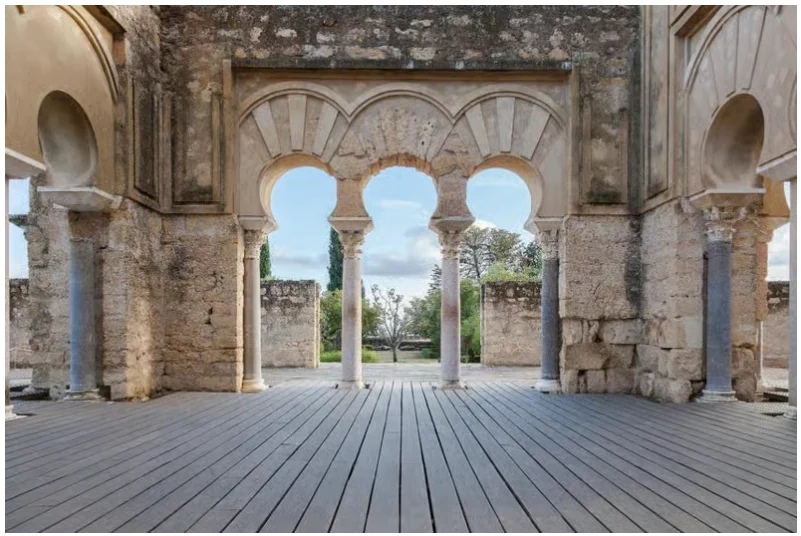
Medina Azahara lies outside the urban centre, and this is where walking stops being a reasonable option. Córdoba’s tourist office lists the daily bus to Medina Azahara as a direct way to reach the archaeological site, with departures from points along Paseo de la Victoria. It also warns that you should be punctual for the return journey, because if you miss the bus, no alternative transport is arranged.
This detail matters: Medina Azahara is not visited with the same spontaneity as a square in the old town. It is worth checking schedules, booking where necessary and planning the morning calmly.
Córdoba may seem tempting to explore by bike because of its size, but the historic centre is not always the most comfortable terrain: narrow streets, uneven paving, pedestrians, tourist groups and heat. It may work better for specific journeys outside the densest areas than for exploring the Jewish Quarter.
Horse-drawn carriages exist as a tourist experience, especially in areas near the Mezquita-Catedral, the Alcázar and the Glorieta de la Cruz Roja. They may have charm for some travellers, but they are not a necessary means of transport; they are more of a scenic activity, moving at the slow rhythm of another era.
The first mistake is staying far away because you think “everything is close.” Córdoba is not huge, but heat, luggage and schedules can greatly change how distances feel.
The second is driving into the historic centre unnecessarily. What looks easy on a map can turn into a succession of narrow streets, restrictions and difficult parking.
The third is visiting Medina Azahara as if it were next to the Mezquita. It is not. It requires transport and planning.
The fourth is underestimating summer. In Córdoba, mobility does not depend only on the map: it depends on the sun. The smart approach is to walk early, seek interiors and shade at midday, and leave longer strolls for the evening.
For most travellers, the ideal formula is clear: arrive by train or bus, take a taxi or bus if you have luggage, stay near the centre and explore historic Córdoba on foot. Use the city bus only when the distance justifies it. Arrange specific transport for Medina Azahara. Avoid driving in the centre unless it is essential.
Córdoba rewards travellers who slow down. It is not a city to pass through, but one to brush against its walls, pause in its patios, watch the light change on the stone of the Mezquita and cross the Roman Bridge as the day begins to turn golden. Getting around Córdoba well is not just about saving time: it is about not losing the city’s delicacy by trying to arrive too quickly.
Complete this transport guide with experiences in Cordoba that fit easily into your journeys and routes around the city.
Activity on TourBookGoBook your Córdoba equestrian show ticket with Andalusian horses, dressage and flamenco at the Royal Stables. Around 70 minutes of live culture.
 Activity on TourBookGo
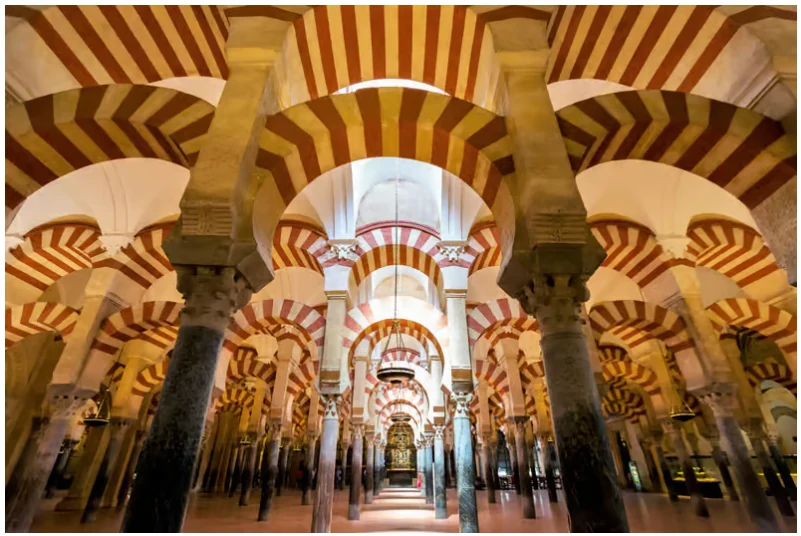
Book a Mosque Cathedral Córdoba guided tour with entry included, an official local guide and a 1 hour to 70 minute historic visit.
 Activity on TourBookGo
Book a Medina Azahara guided tour from Córdoba with a Spanish-speaking guide, archaeological site visit, museum and optional transport. Approx. 3 hours.