 Activity on TourBookGo
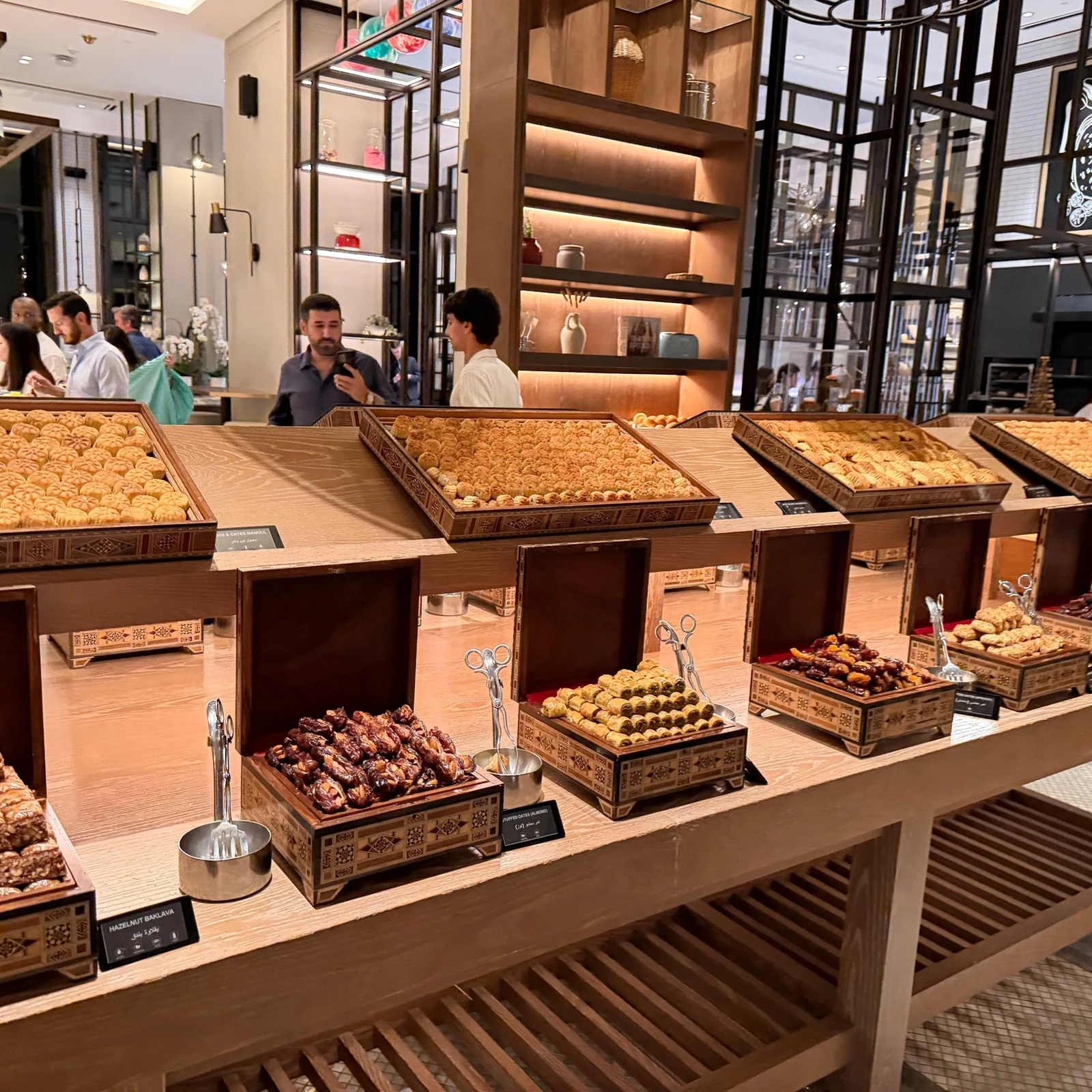
Gastronomy Atlantis The Royal buffet Dubai: 2-hour dinner
Enjoy a 2-hour Gastronomy dinner buffet at Atlantis The Royal with 17 live cooking stations, international cuisine, premium water and valet parking from €63.
Dubai’s real culinary richness emerges from the meeting of two worlds: Emirati cuisine rooted in the Arabian Gulf and an extraordinary variety of cuisines brought by communities from around the world.
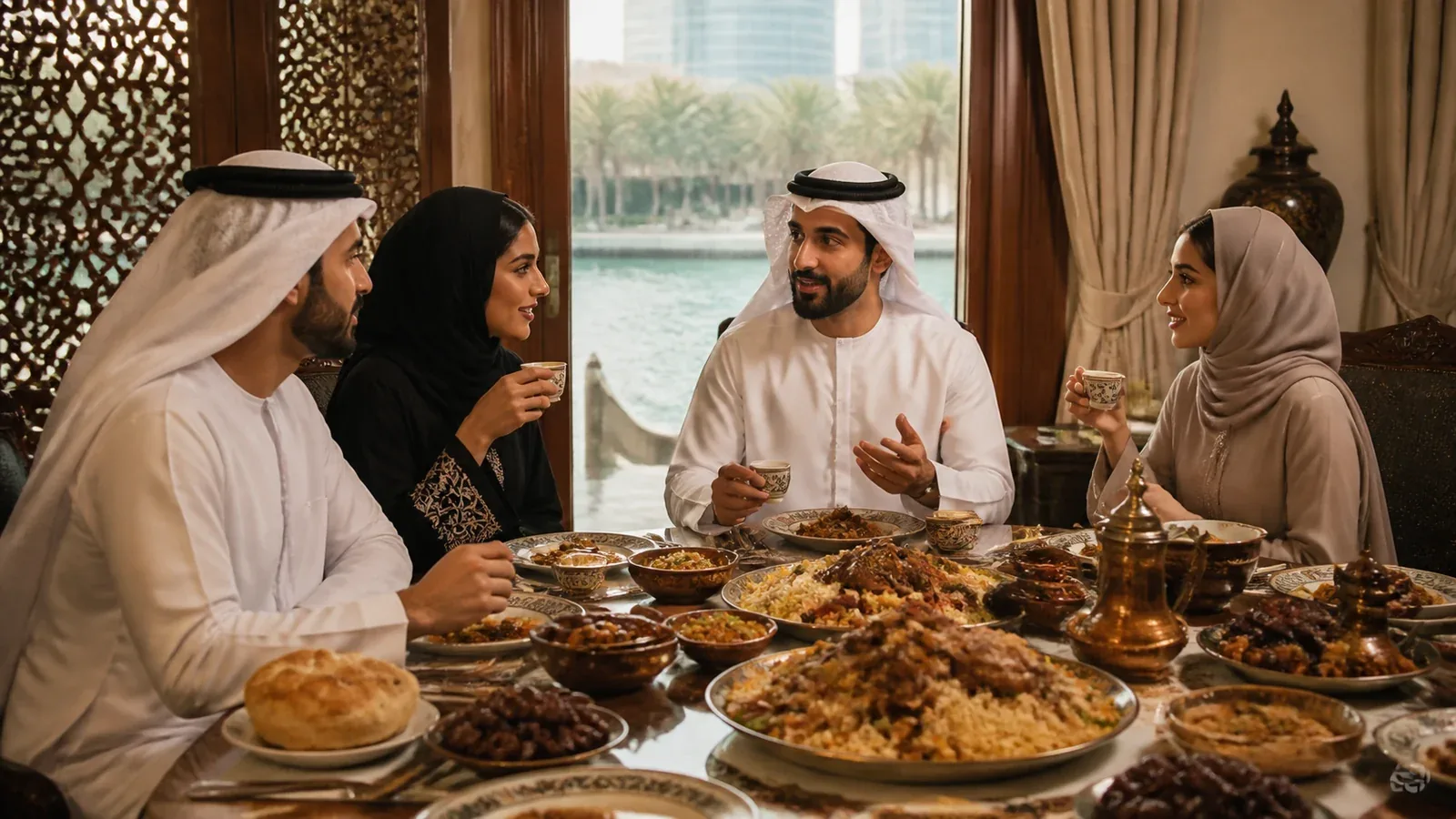
At first glance, Dubai can seem like a city designed for dining beneath crystal chandeliers, ordering dishes created by internationally renowned chefs, and admiring the skyline from a terrace on the fiftieth floor. That version of the city exists, and sometimes it is well worth experiencing. But if you stick to it alone, you will only discover a fairly small part of Dubai. Dubai’s real culinary richness emerges from the meeting of two worlds: Emirati cuisine rooted in the Arabian Gulf and an extraordinary variety of cuisines brought by Indian, Pakistani, Iranian, Lebanese, Filipino, and many other communities. In neighborhoods such as Deira, Bur Dubai, and Al Satwa, eating can be far simpler, cheaper, and more revealing than dining opposite the Burj Khalifa. Dubai’s own official guides highlight Old Dubai precisely for its souks, traditional food, and the cultural mix that can still be felt around the Creek.
Compare locations and options to find a base that suits your trip. Booking.com confirms current availability and pricing.
Find accommodation on BookingIt is worth starting with one clarification: Dubai does not have a single cuisine. Emirati food is an essential part of its identity, but the modern city has also been shaped by people from dozens of countries.
If you want to explore the traditional flavors of the United Arab Emirates, look for dishes such as machboos, aromatic spiced rice usually served with meat or fish; harees, made by slowly cooking wheat and meat until it develops a creamy texture; or thareed, a deeply comforting combination of bread, broth, vegetables, and meat. Arabic coffee, dates, and cardamom-flavored preparations are also part of this culinary culture.
For breakfast, it is worth trying local breads, eggs, cheeses, legumes, and sweet dishes such as balaleet, a surprising combination of sweet spiced vermicelli and egg.
Not every one of these dishes will appeal to everyone. Some Emirati recipes are hearty, while the flavors can be subtler than expected by travelers who imagine the cuisine to be constantly spicy. That is precisely why it is interesting to try it without expecting it to resemble other Middle Eastern cuisines.
To understand Dubai through its food, crossing the Creek on an abra and walking through Deira, Bur Dubai, and Al Fahidi is more revealing than restricting yourself to the city’s large shopping malls.
Even the surroundings change here: some of the marble and monumental facades disappear, the streets become narrower, and the smells of spices, grills, freshly baked bread, and tea drift through an urban landscape where dining tables sit alongside small shops and markets.
Al Fahidi also preserves some of the city’s historic architecture and is home to places where you can discover Emirati cuisine in a traditional setting. Dubai’s official 2026 guide, for example, recommends Al Khayma Heritage Restaurant for Emirati dishes in this historic neighborhood and also mentions XVA Café as a particularly interesting option for vegetarian food.
The area is fairly touristy, especially in certain spots, but it remains a good introduction to a Dubai that feels very different from the city portrayed in photographs of Downtown.
Deira is worth exploring without too much of a plan.
Around the souks and commercial streets, you will find Iranian, Arab, Indian, and South Asian restaurants where the surroundings may be simple and the experience far less formal. That is precisely part of the appeal.
The Spice Souk adds another dimension: saffron, cardamom, cinnamon, dried fruit and nuts, teas, and spice blends create one of the most intensely aromatic settings in the city.
If your priority is eating well rather than photographing a spectacular dining room, this part of Dubai often makes more sense than areas built around luxury.
Dubai can be very expensive, but expensive meals are not inevitable.
A common mistake is to use restaurants in five-star hotels, Downtown, certain beachfront districts, or some shopping-mall venues as a benchmark for the general cost of eating in the city.
For more modest budgets, look toward Deira, Bur Dubai, Karama, and Al Satwa. These neighborhoods are full of informal restaurants connected to the communities that live and work in Dubai. Al Satwa, in fact, is still officially promoted as one of the city’s older neighborhoods, with plenty of casual restaurants and affordable options.
Here, it makes more sense to look for freshly sliced shawarma, Arab grills, biryanis, curries, dosa, Pakistani dishes, Filipino food, freshly baked bread, hummus, and falafel.
The dining room does not need to be photogenic. Some of Dubai’s most memorable food experiences happen under fluorescent lights, with an enormous menu and families sharing dishes at nearby tables.
Searching only for “Arab restaurants” is another way of missing a fundamental part of Dubai.
The historic and contemporary presence of communities from the Indian subcontinent has made the city an excellent place to discover biryanis, kebabs, curries, tandoori breads, vegetarian dishes, and South Asian sweets.
Iranian cuisine also has strong ties to the Gulf’s commercial history: fragrant rice dishes, grilled meats, saffron, dried lime, and fresh herbs appear on menus at numerous restaurants.
Strictly speaking, these are not Emirati flavors. They are, however, deeply associated with Dubai today.
Understanding that distinction makes the trip richer.
Once, perhaps.
Some dinners are as much about the location as the food. A terrace overlooking the illuminated skyline can make for a wonderful evening, especially for couples or on a special occasion.
The problem comes when every meal is planned that way.
In the most touristy areas, it is relatively easy to end up paying a substantial premium for the view, the design, or the address. A spectacular restaurant does not automatically guarantee memorable food.
If you have the budget for one special experience, choose one that genuinely excites you. For the rest of the trip, combining it with simpler restaurants will give you a far more complete view of the city.
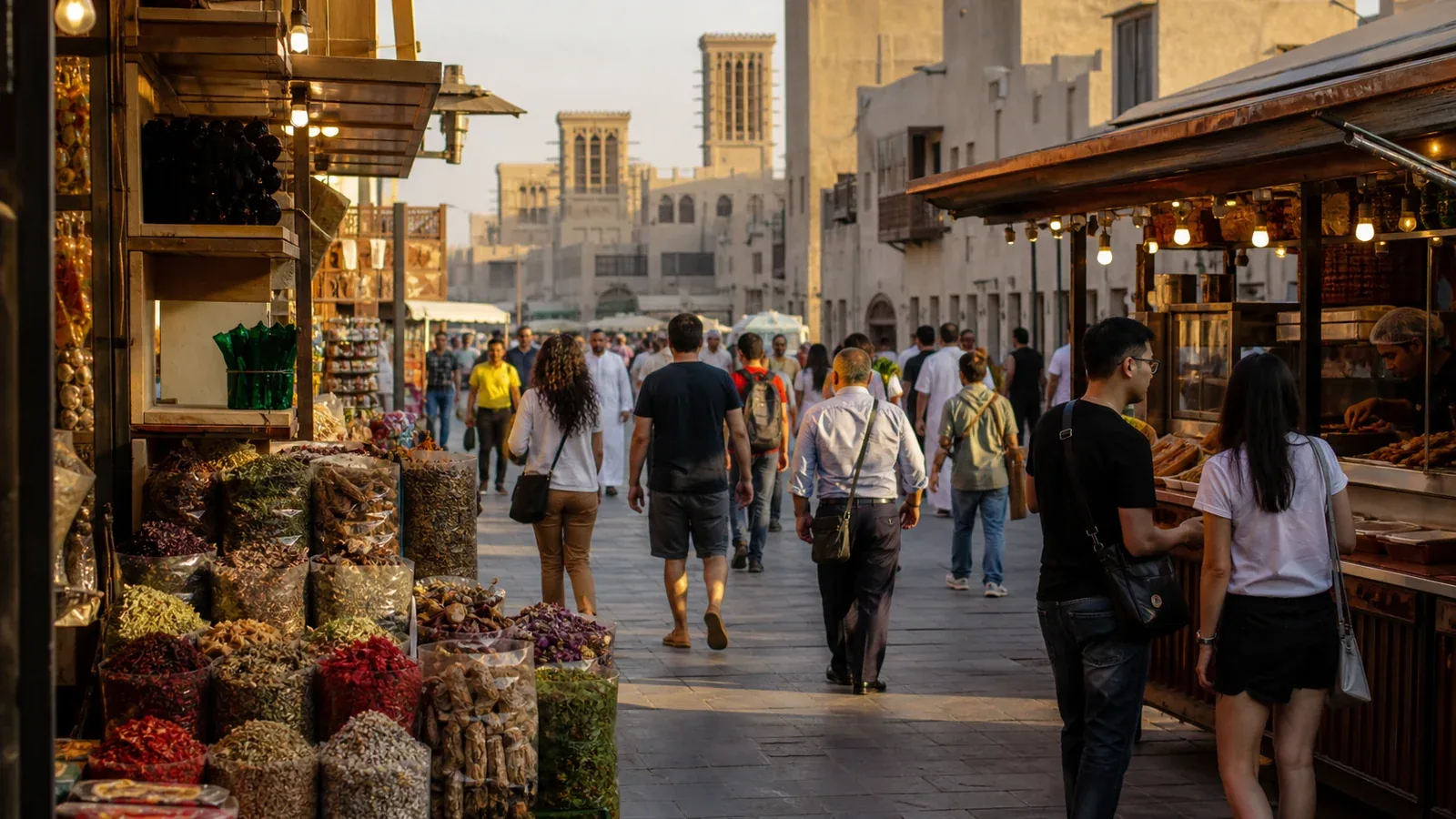
Deira’s traditional markets are worth visiting even if you do not plan to sit down for a meal.
The Gold Souk, Perfume Souk, and, from a culinary perspective above all, the Spice Souk are part of an urban landscape that helps explain Dubai’s historic trading connections.
Try some dates, admire the piles of spices, and ask the price before buying.
Vendors can be persistent, and the atmosphere is considerably more commercial than some travelers expect. Do not imagine a market frozen in time: it remains a real place of trade, now mixed with tourism.
Dubai is relatively easy for families when it comes to food because its enormous variety of restaurants means there are options even for less adventurous children.
Rice, flatbreads, grilled chicken, hummus, pasta, and other simple dishes are widely available.
However, it is worth asking about spice levels in Indian or South Asian restaurants. “Not too spicy” can mean very different things depending on who is cooking and who is asking.
Sharing several dishes often works better than ordering a separate one for each person: it allows everyone to experiment without turning every choice into a gamble.
Dubai’s cultural diversity works in travelers’ favor here.
Indian cuisine offers a huge range of vegetarian dishes, while Levantine cuisines contribute hummus, moutabal, tabbouleh, falafel, and many vegetable-based options. There is also a substantial contemporary dining scene.
Even so, anyone with severe allergies should explain them clearly. A seemingly simple dish may contain nuts, dairy, sesame, or other ingredients that are not immediately obvious.
One of the biggest is confusing luxury with quality. Dubai has outstanding high-end restaurants, but it also has expensive restaurants whose main selling point is their location.
Another mistake is eating only inside shopping malls. They are convenient—especially during the months of intense heat—but if every meal takes place there, the city can start to feel far too uniform.
It is also worth avoiding the obsessive pursuit of whichever places happen to be most famous on social media. Trends change quickly, and a long queue can be the result of a viral photograph just as easily as exceptional cooking.
And perhaps the most important mistake of all is failing to leave monumental Dubai behind.
Crossing the Creek, walking through Bur Dubai, wandering around Deira, or having dinner in Al Satwa reveals a city far more complex than the succession of hotels, infinity pools, and panoramic restaurants that dominates its international image.
The best strategy is not to find “the best restaurant in Dubai,” but to spread your meals across the city’s different sides.
Set aside one evening for a special dinner if your budget allows. Devote another to trying Emirati food. Have lunch or dinner in Deira or Bur Dubai one day. Look for Indian or Pakistani food at a place popular with residents. Drink Arabic tea or coffee. Try something you do not know how to pronounce.
In summer, when walking during the middle of the day can be exhausting, it makes sense to plan meals around air-conditioned spaces and save the historic neighborhoods for early morning or late afternoon. During the milder months, by contrast, eating outdoors and walking along the Creek is considerably more enjoyable.
Dubai tastes better once you abandon the idea that everything has to be extraordinary.
Sometimes it will be: an illuminated terrace overlooking the skyline, an elegant dining room, a dinner prepared with almost theatrical precision.
But at other times, a plate of spiced rice, warm bread straight from the oven, and a simple table on a street in Deira will be enough.
And that may be where you truly begin to understand the city.
Discover Dubai through selected experiences that combine landmark architecture, historic districts, desert adventures, boat trips, dining, theme parks and organised excursions to suit the pace of your trip.
Activity on TourBookGoEnjoy a 2-hour Gastronomy dinner buffet at Atlantis The Royal with 17 live cooking stations, international cuisine, premium water and valet parking from €63.
 Activity on TourBookGo
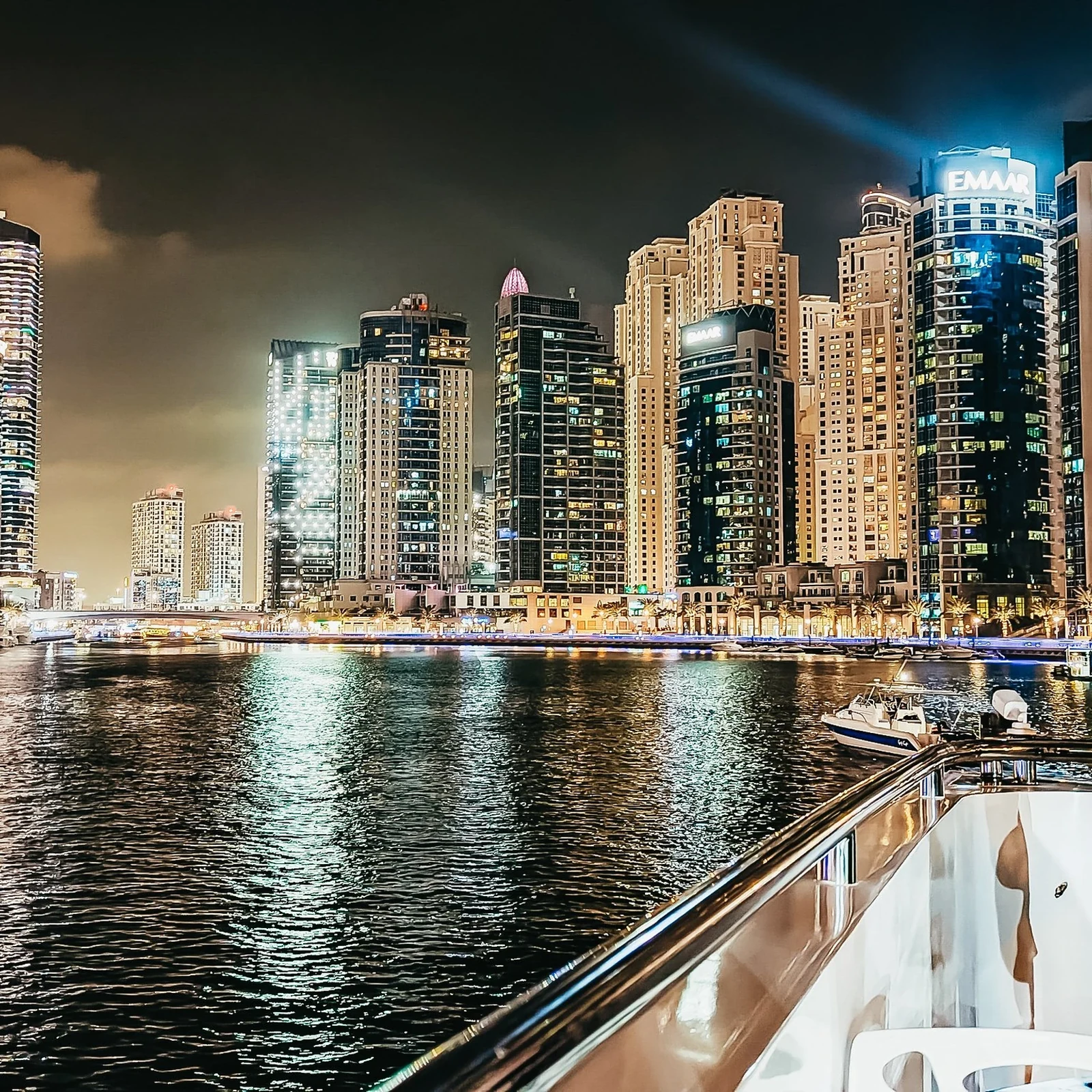
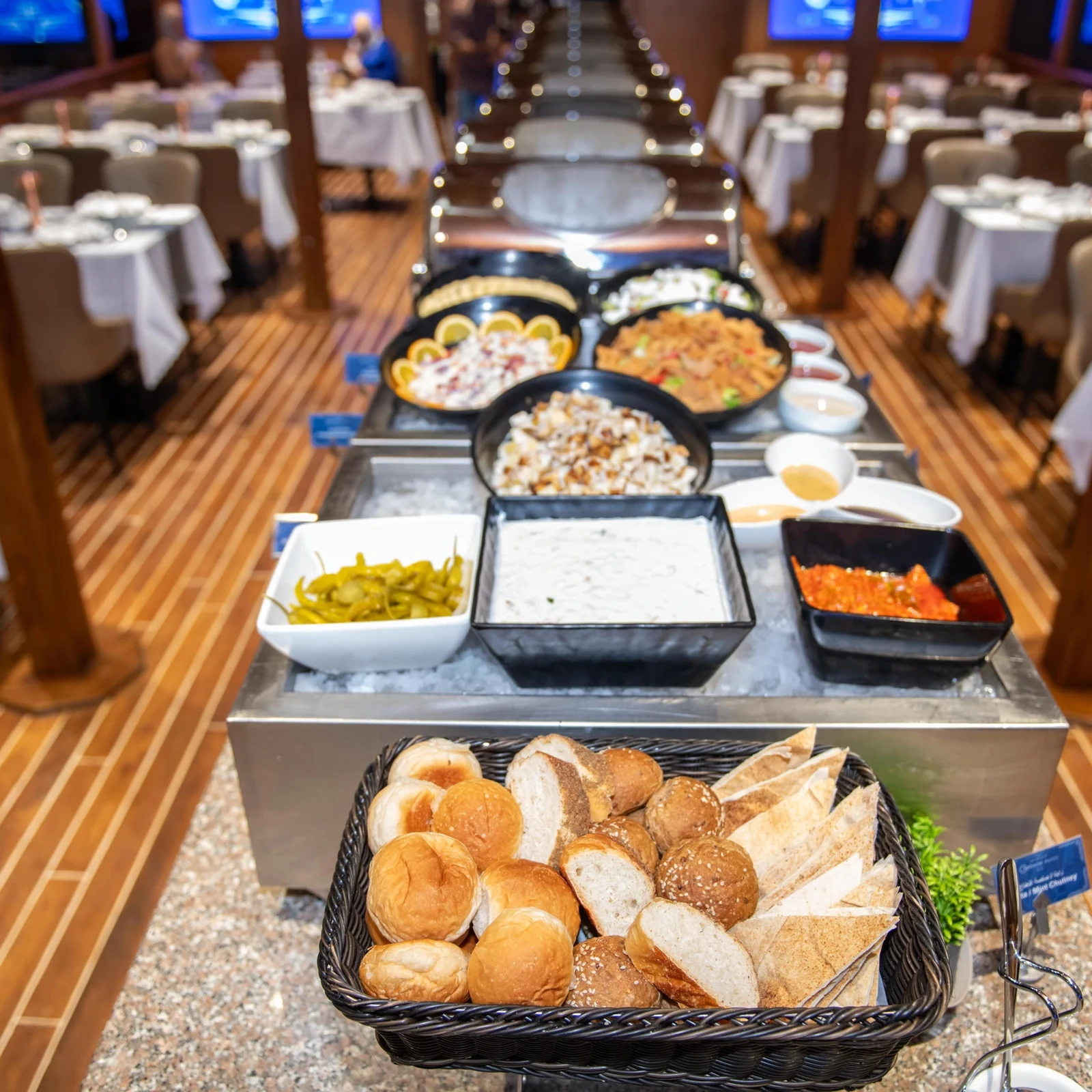
Sail from Dubai Marina on a mega yacht with buffet dining, soft drinks and live entertainment. Compare Standard and VIP before booking.
 Activity on TourBookGo
Cruise Dubai Marina at night with an international buffet, drinks and live entertainment. Choose your deck and alcoholic or non-alcoholic package.