 Activity on TourBookGo
The Alba Adventure: Customisable Private Tour of Scotland
Explore The Alba Adventure’s private itinerary from Edinburgh, its stops, inclusions and the details to confirm on Viator before booking.
Edinburgh brings together urban history, culture, nature and distinct neighbourhoods. The Glencoe Highlands can extend the visit as a full-day trip, but they should not replace the time needed to understand the capital.

Prioritise activities around your interests and available time so each day feels varied without becoming overcrowded. Weather, gradients and access conditions make it sensible to combine only a few main decisions and check current information.
Edinburgh accommodation as a base before an excursion to the Glencoe Highlands.
Find accommodation on BookingEdinburgh rewards those who choose experiences for their contrasts. The Scottish capital brings together medieval streets, neoclassical urban planning, military heritage, museums, culture and a landscape of volcanic origin within a relatively compact city. Trying to cover everything, however, can turn a visit into a succession of steep climbs and rushed admissions.
Old Town and New Town form the UNESCO-recognised historic core, but each offers a different reading of the urban landscape. Old Town retains a medieval layout that reveals how the city adapted to its terrain. New Town reflects a more orderly approach to neoclassical planning. Exploring both provides a better understanding of Edinburgh than visiting isolated monuments.
There is no need to turn the walk into a race. Its value lies in noticing the relationship between two models of city, their views and their changes in elevation. Steep slopes, cobblestones and steps make it advisable to adapt the route to each person’s mobility. For a first visit, this contrast is a clear introduction to Edinburgh; for residents, exploring it with a specific architectural focus can bring a fresh perspective to overly familiar places.
Edinburgh Castle stands on Castle Rock, at the upper end of the Royal Mile. Its history reaches back to an Iron Age fortification and is closely linked to royal and military functions. It is therefore particularly suitable for visitors who want to understand the relationship between power, defence and the urban landscape.
The visit requires a deliberate choice: either give it enough attention or appreciate its presence from the city and reserve the time for somewhere else. It is not a universal obligation. Those with little interest in institutional history may gain more from exploring neighbourhoods or cultural venues. Tickets, opening hours, closures and accessibility conditions may change, so consult the relevant official information for the chosen date.
Holyrood Park introduces hills, crags, lochs and archaeology into Edinburgh’s urban fabric. Arthur’s Seat is its best-known landmark, although experiencing the park should not simply mean reaching a summit. It can also be approached as a landscape experience adapted to the time available, individual fitness and ground conditions.
This choice works well for anyone seeking fresh air and a different perspective on the city, but it may disappoint if treated as a guaranteed activity regardless of the weather. Rain, wind and visibility should be checked against a dated Met Office forecast. Road and access notices may also vary. Suitable footwear and a cultural alternative prevent a change in conditions from ruining the day.
Museums and cultural venues offer more than shelter when the weather deteriorates. They provide opportunities to explore history, art and Scottish identity without relying on outdoor routes. They are a good choice for families that need to alternate walking with indoor time, couples who prefer a slower-paced day and visitors already familiar with the city’s most widely circulated images.
Because exhibitions, access arrangements and programmes can change, select each venue according to its current subject matter, rather than relying on an inherited list. One sensible strategy is to reserve a block of time for culture and combine it with just one nearby part of the city. The museum then becomes part of the day’s narrative rather than an improvised solution between unnecessary journeys.
Edinburgh does not end at the Royal Mile. Leith, Stockbridge and Portobello represent distinct urban settings and help counter the impression that the entire city shares the same historic atmosphere. The choice between them depends on the visitor’s interests and preferred distribution of travel time; they should not automatically be grouped into a single day.
For first-time visitors, exploring one neighbourhood adds everyday life to the trip without diminishing the value of the centre. For residents, the best activity may be to choose an area outside their usual routine and build the day around an exhibition, a walk or a meal checked that same day. Routes, service frequencies and potential transport disruptions should be confirmed with the current operator.
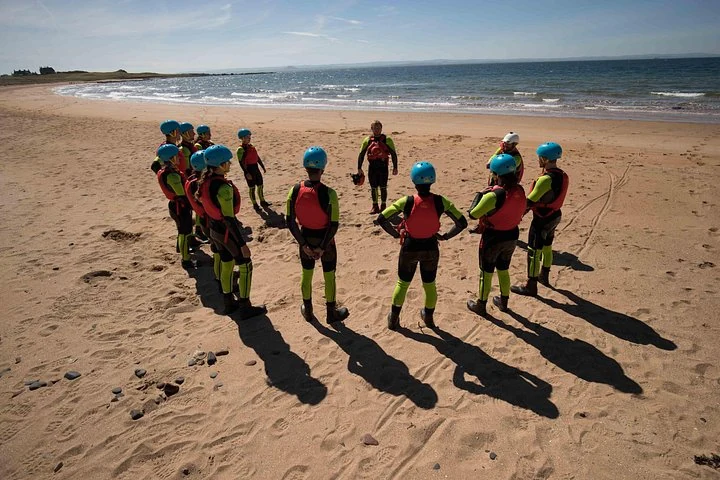
Shell Bay, in Fife, offers something very different: a guided coasteering experience with equipment. It lies outside Edinburgh and must be presented as a day trip, never as an activity located in the city centre. Its appeal comes from exchanging heritage sites and streets for an active day connected to the coast.
This option suits people looking for physical exertion and a guided experience, not a quick addition between two visits. Before booking, the current activity listing should confirm the duration, meeting point, inclusions, restrictions and cancellation terms. Nor should travellers assume that the supplied equipment covers every personal need. If the group prefers culture, straightforward mobility or a flexible day, remaining in Edinburgh may be a more coherent choice.
The Glencoe Highlands can be included as a full-day activity from Edinburgh. The mountain road adds a panoramic dimension, but demands a substantial part of the day. It is not a continuation of the urban visit and should not be squeezed into a schedule already filled with the castle, museums or Holyrood Park.
This trip appeals to travellers willing to spend time in transit in exchange for a complete change of scenery. Those with only a few days may have a richer experience by remaining in the capital and exploring its neighbourhoods at a relaxed pace. Journeys, stops, inclusions and restrictions are defined by the operator’s current listing; they must not be inferred from photographs or previous experiences.
The main decision is not how many attractions to accumulate, but how to combine different experiences: urban history, cultural spaces, nature, neighbourhoods and, if time allows, a trip beyond the city. Weather, gradients and access conditions can disrupt any plan. Check the latest information before deciding on a day, particularly for outdoor activities or ticketed sites.
A good day in Edinburgh combines no more than two main decisions: an urban route with a cultural visit, or heritage with an outdoor landscape. Families can prioritise manageable distances and an indoor alternative. Couples can pair a neighbourhood with a food experience whose menu and opening hours have been checked. Budget-conscious travellers can focus on urban walks and select paid admissions carefully, without assuming that every outdoor activity is free.
The key is to leave room for gradients, weather and operational changes without repeating the same advice at every stage. Edinburgh works best when its contrasts are observed: medieval and neoclassical city, rock and architecture, centre and neighbourhoods. Day trips broaden that experience, but only when they do not replace a city that has not yet been properly seen.
Edinburgh: discover activities for your trip. Before booking, check each activity's location, meeting point and route.
Activity on TourBookGoExplore The Alba Adventure’s private itinerary from Edinburgh, its stops, inclusions and the details to confirm on Viator before booking.
 Activity on TourBookGo
Explore Summerhall Distillery on a shared English-language tour with four gin samples, a cocktail and a G&T. Check current details and availability on Viator.
 Activity on TourBookGo
Explore Edinburgh locations associated with Harry Potter on an English-language walk, then visit Camera Obscura & World of Illusions.