 Activity on TourBookGo
Private Edinburgh to Glasgow day trip by luxury MPV | Viator
Explore Glasgow from Edinburgh on an eight-hour private tour for 1 to 7 travellers, with pickup, a guide and Mercedes V-Class transport.
History, architecture and landscape meet in a capital of striking contrasts, while a hands-on gin workshop reveals its creative and participatory side.

Edinburgh is worth visiting for its heritage, distinct neighbourhoods and open landscapes within the capital. It also demands choices, as slopes, terrain and daily conditions affect the experience.
Edinburgh accommodation for pairing a stay with a local gin workshop.
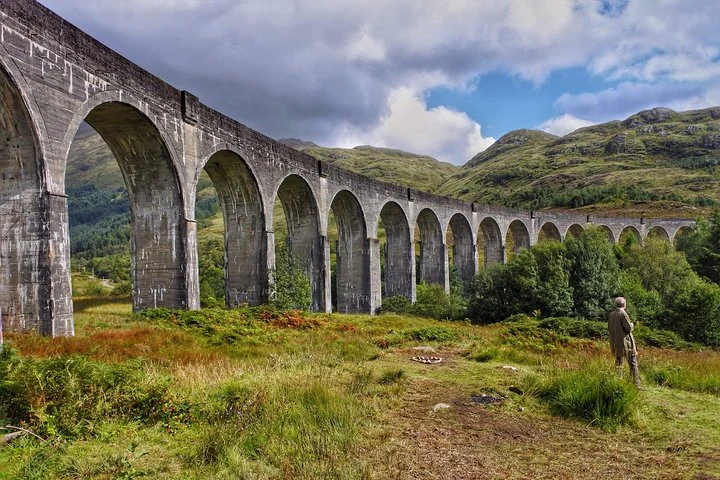
Find accommodation on BookingGlenfinnan Viaduct represents the scenic excursions that can broaden an Edinburgh-based stay. Its appeal lies in changing scale: leaving the urban setting for a day to encounter a different landscape elsewhere in Scotland.
Glenfinnan is neither in central Edinburgh nor an urban attraction. Suggesting otherwise would misrepresent the city and the excursion. This separate trip needs its own planning, with transport, conditions, availability and duration confirmed through current information from the chosen operator.
It adds value when the itinerary has flexibility and scenery is a genuine priority. It may not when it sacrifices the neighbourhoods that motivated the stay or turns a few days into repeated transfers. The excursion expands Edinburgh as a base; it does not replace knowing the city.
Edinburgh is worth visiting for anyone who enjoys cities where history, architecture and landscape can be experienced together. Its appeal is not tied to one attraction. It comes from contrasting neighbourhoods, terrain that shapes each walk and cultural life beyond the monuments.
It is not a universal choice. Steep slopes, cobblestones and uneven ground can make routes demanding. Travellers wanting a completely flat city, a mainly restful break or a schedule predictable to the minute may encounter difficulties.
Weather and access conditions can also alter outdoor plans. Edinburgh rewards curiosity more than haste: a short visit cannot include everything, so it helps to decide which side of the city matters most.
Edinburgh’s recognisable character emerges from the relationship between the medieval Old Town and neoclassical New Town. UNESCO protects them together because their juxtaposition explains the capital’s urban identity. They represent different ways of understanding streets, space and urban development.
In the Old Town, the layout draws attention towards the Royal Mile and a past that still shapes movement through the area. The New Town offers a more ordered urban language. Exploring both explains Edinburgh’s distinctiveness without making every building compulsory.
The limitation is mistaking this historic core for the entire city. It is a powerful introduction, but Leith, Stockbridge, Portobello and other neighbourhoods provide different settings. Seeing only the historic postcard reveals an essential yet incomplete Edinburgh.
Edinburgh Castle stands on Castle Rock, where the official historical source places a fort in the Iron Age. Its later royal and military roles explain why it dominates the city’s story and skyline. The rock, elevated position and history built upon it form one narrative.
That relationship between stone and terrain continues in Holyrood Park. Its hills, crags, lochs and Arthur’s Seat bring landscape and archaeology into the capital. Visitors can move from historic streets to open ground without treating them as separate worlds.
The practical drawback is that access, roads, admission, closures and ground conditions can change. Before making the castle or park the focus of a day, check the relevant official information for the specific visit date.
Edinburgh also deserves attention when it stops performing its history. A hands-on gin workshop reveals a creative, participatory side that contrasts with viewing monuments. Its value is not universal typicality, but a local practical activity for people interested in the subject.
A cycle route near Murrayfield can bring neighbourhoods, sport and outdoor time into a visit otherwise concentrated on the historic centre. Its suitability depends on mobility, time and conditions that day; it should not be assumed to work for everyone.
For residents, such activities offer ways to rediscover the city without repeating the Royal Mile. For visitors, they show that Edinburgh continues beyond the heritage circuit and that a different activity can reveal another dimension.
Edinburgh particularly suits travellers interested in heritage, urban design, museums, culture and historically rich walking routes. It can also appeal to those who combine indoor visits with outdoor spaces or alternate major monuments with neighbourhoods and participatory activities.
Families should consider terrain and pace before the number of attractions. Couples can find variety without relying on one kind of experience. Solo travellers have enough layers to create different days, although activities and access should be assessed against individual needs.
Edinburgh may suit less anyone expecting to see everything without slopes, improvise every attraction without checking conditions or reduce Scotland to photographs. Not everyone must climb Arthur’s Seat, enter the castle or take a distant excursion. The best visit is selective, not driven by a checklist.
A short stay reveals the central contrast but leaves little time to understand the neighbourhoods. With longer, Old Town, New Town, Holyrood Park and other districts can be explored separately. The right duration depends on mobility, chosen activities and interest in leaving the historic core.
Walking is practical across much of the centre, although slopes and cobblestones change how distances feel. Buses, trams and trains broaden the options. Routes, disruptions, fares and frequencies should be confirmed with the council and current operators.
The budget depends on individual decisions rather than one universal figure. Accommodation, arrival, meals, admission, local transport and excursions should be considered separately. Walking more may reduce some costs, but should not be imposed when it makes the experience uncomfortable.
Edinburgh is worth visiting because it brings together two contrasting historic cities, a castle inseparable from its terrain, open spaces within the capital and neighbourhoods that broaden its identity. Its heritage reputation is well founded, but the visit gains depth beyond the Royal Mile.
It also requires compromise. With limited time, the centre, neighbourhoods, Holyrood Park and an excursion outside the city cannot receive equal attention. Choosing carefully matters more than accumulating stops and allows the trip to reflect individual interests and mobility.
For a first visit, combine Old Town and New Town with an experience revealing landscape, neighbourhood life or creativity. Residents can instead explore an area or activity beyond their usual route. Edinburgh’s value lies in how each layer changes the one before it.
Edinburgh: discover activities for your trip. Before booking, check each activity's location, meeting point and route.
Activity on TourBookGoExplore Glasgow from Edinburgh on an eight-hour private tour for 1 to 7 travellers, with pickup, a guide and Mercedes V-Class transport.
 Activity on TourBookGo
Explore the Highlands on an eight-hour private trip from Edinburgh, including Loch Tay, Doune Castle and Glenturret. Check terms on Viator.
 Activity on TourBookGo
Ride 20 miles around Edinburgh on a shared guided tour linking cycle paths, canals, parks, Leith and Portobello. Check current details on Viator.