

Book a 2.5-hour Bosphorus cruise in Istanbul on a small yacht, with an English-speaking guide, snacks and a short Asian-side stop.
View experienceHow to get around Istanbul the smart way
For most travellers, the most sensible combination is walking + tram + metro + ferry. A car is usually a bad idea within the city: heavy traffic, difficult parking, narrow streets and driving that can feel stressful if you are not used to it.
The Istanbulkart for tourists is the practical basis for getting around by public transport: it works on services such as buses, metro, tram, cable car, Marmaray, metrobus and ferry.
It is worth buying or topping it up at the start of the trip, because it saves you from relying on single tickets and makes it easier to switch between modes of transport during the day.
The secret is not to move around a lot, but to move around well.
The Istanbul tram: the first-time visitor’s best ally
The tram, especially the line connecting tourist areas of the historic centre with places such as Eminönü, Karaköy or Kabataş, is one of the most useful ways to travel on a first visit. It lets you move between mosques, bazaars, piers and historic neighbourhoods without having to fight too much with the traffic.
Its drawback is obvious: at peak times it can get very crowded. In summer, with the heat and the crowds, even a short ride can become tiring. Even so, for anyone staying in Sultanahmet, Sirkeci, Gülhane, Eminönü or Karaköy, it is usually a much more comfortable option than a taxi.
For anyone staying in Sultanahmet, Sirkeci, Gülhane, Eminönü or Karaköy, the tram is usually a much more comfortable option than a taxi.
The Istanbul metro: fast, useful and less romantic, but necessary
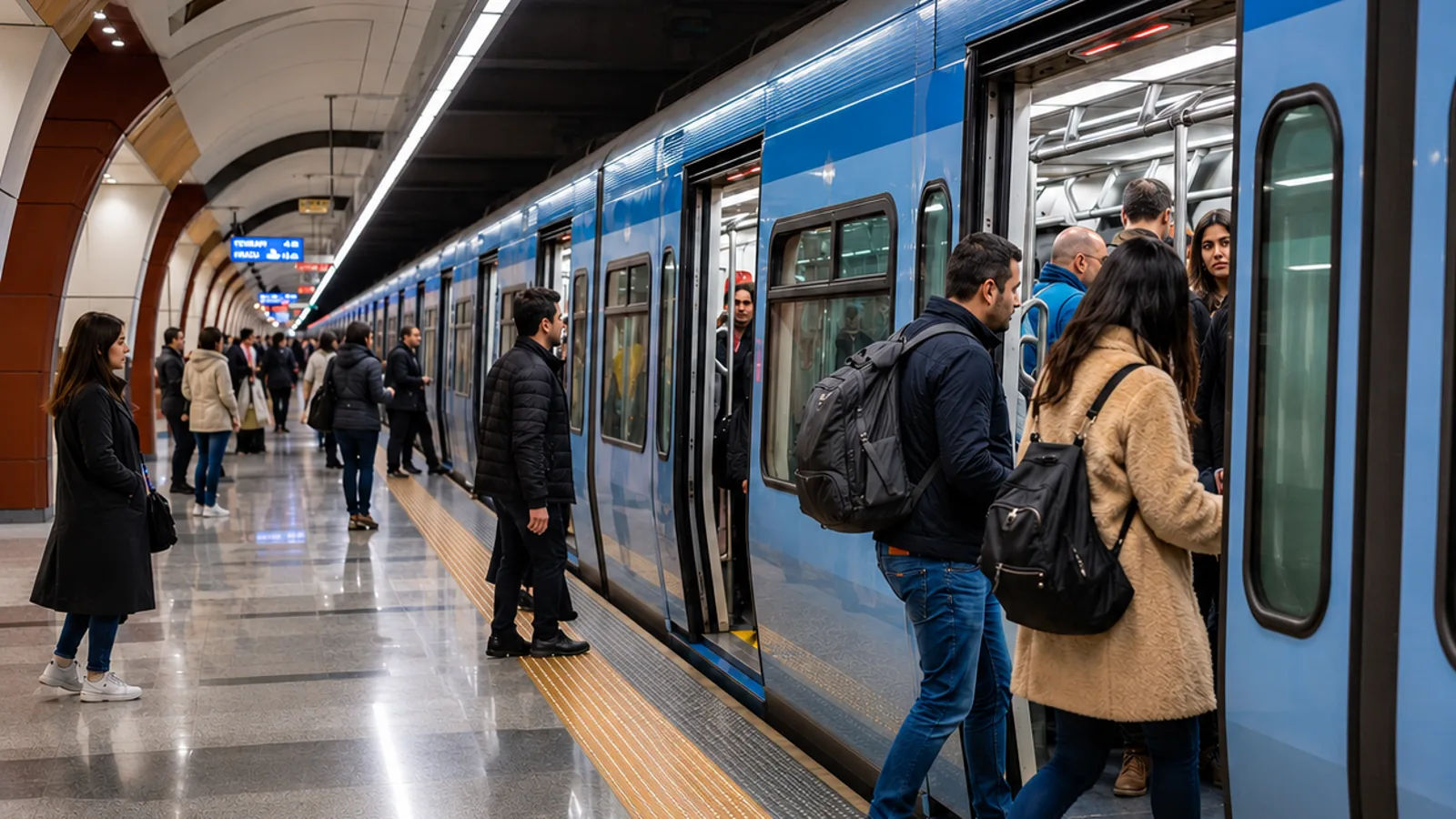
Istanbul’s metro does not have the charm of the ferry or the beauty of a walk along the Bosphorus, but it saves time. It is especially useful for getting around modern areas such as Taksim, Şişli and Levent, or for reaching more distant parts of the city. Metro Istanbul maintains network maps, lines, timetables and a journey planner, which is highly recommended before setting off if you plan to combine several forms of transport.
For travellers, the metro works best when understood as the backbone of a journey: it covers the longer stretches, while the tram, ferry or a walk complete the experience.
The Istanbul ferry: public transport and an unforgettable moment
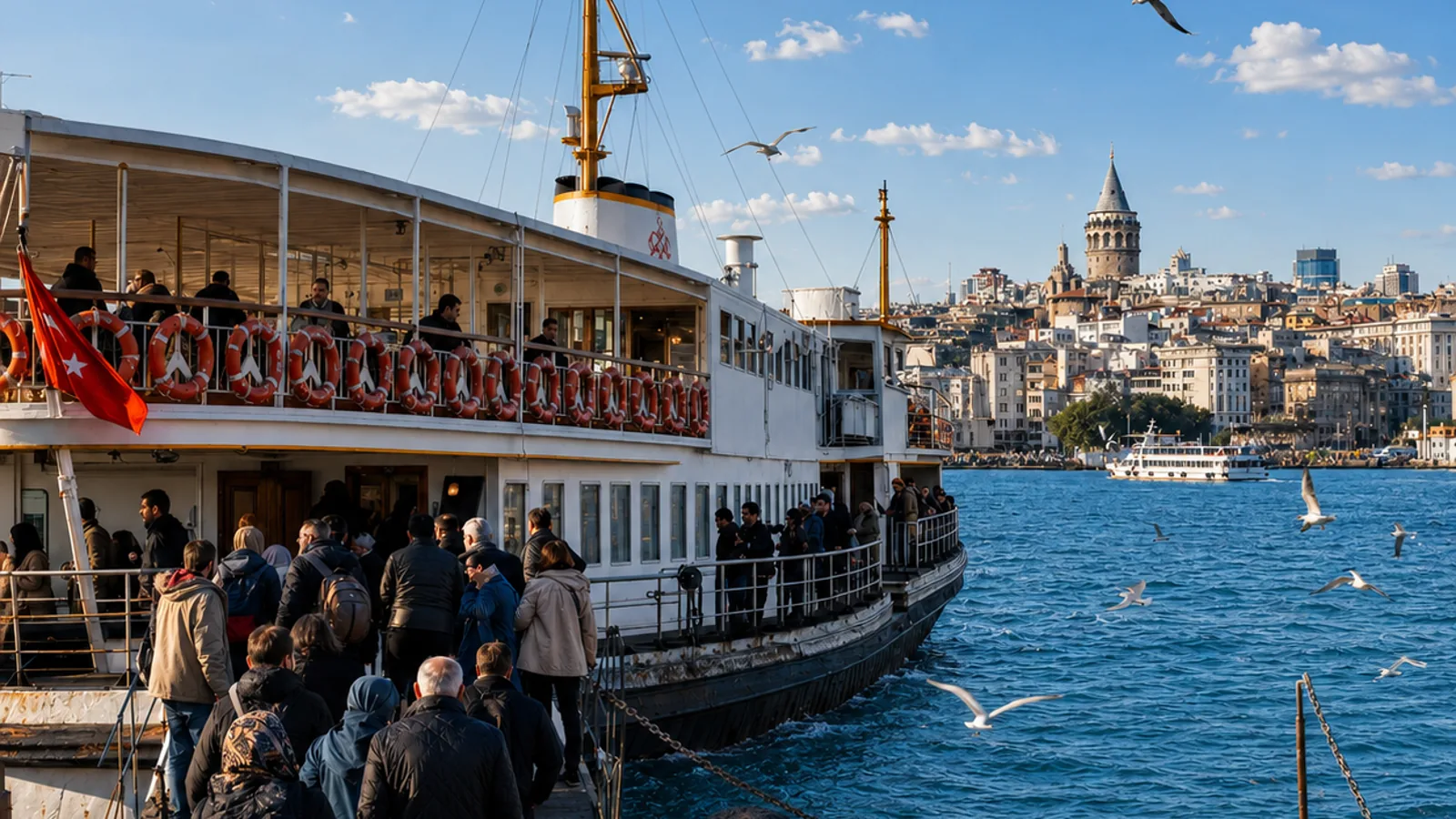
In Istanbul, the ferry is not just a way to cross the water. It is a pause. You sit down, the wind clears away the noise of the city, domes appear, then minarets and wooden façades, and for a few minutes Istanbul seems to explain itself.
Public ferries connect different piers across the city and also include routes to the Princes’ Islands and cruises along the Bosphorus; Şehir Hatları publishes official timetables and routes to help plan these journeys.
To cross between the European and Asian sides, routes from places such as Eminönü, Karaköy, Kabataş or Beşiktaş to Kadıköy or Üsküdar are usually very pleasant.
The honest part: not all ferries run with the same frequency, the wind can be uncomfortable in winter and some piers require quite a bit of walking afterwards. But if the weather is on your side, crossing by ferry is one of the smartest and most beautiful ways to get around Istanbul.
If the weather is on your side, crossing by ferry is one of the smartest and most beautiful ways to get around Istanbul.
Walking in Istanbul: beautiful, but not always easy
Walking is essential if you want to understand Istanbul. Many of its best scenes appear in the streets: a cat asleep on a rug, a steaming teapot at the entrance to a shop, the call to prayer echoing between old façades.
But Istanbul is not flat, nor is it always easy to walk around. There are steep hills in Galata, Cihangir, Balat, Fener, Üsküdar and many historic neighbourhoods. Pavements can be narrow, the ground uneven and the traffic demands attention. Good shoes make a big difference to the experience.
The ideal approach is to walk through compact areas and not try to do the whole city on foot. Sultanahmet is easy to explore on foot, as are Karaköy and Galata; Kadıköy invites strolling, and Üsküdar is magnificent by the water. But linking all these places on foot in a single day can turn the trip into an endurance test.
The ideal approach is to walk through compact areas and not try to do the whole city on foot.
Taxis in Istanbul: useful, but with caution
A taxi can be practical at night, with luggage, in the rain or when you are tired. However, it should not be your first choice for getting around the centre. Traffic can make a seemingly short journey take much longer than expected, and some travellers encounter drivers who refuse rides, suggest fixed prices or take unclear routes.
It is best to use official taxi ranks or well-known apps, make sure the meter is running and avoid cars whose drivers approach you insistently in tourist areas. If the driver does not want to use the meter or the price sounds made up on the spot, it is better to get out before the journey begins.
If the driver does not want to use the meter or the price sounds made up on the spot, it is better to get out before the journey begins.
Is it worth renting a car in Istanbul?
For visiting the city of Istanbul, almost never. A car limits you more than it helps: traffic, parking, tolls, stress and little real value in tourist areas.
It may make sense if you are heading out to nearby regions, villages around the Sea of Marmara, the Black Sea coast or routes outside the urban core. But for Sultanahmet, Taksim, Karaköy, Kadıköy, Üsküdar, Balat or Beşiktaş, public transport and ferries are far more sensible.
How to get from Istanbul airports to the city centre
Istanbul has two main large airports: Istanbul Airport, northwest of the city, and Sabiha Gökçen, on the Asian side.
From Istanbul Airport, options include the M11 metro line and bus or shuttle services. The airport’s official website states that Havaist operates several routes between the airport and the city, and that there are also İETT lines; the airport also provides information on the M11 connection to the urban transport network.
From Sabiha Gökçen, the most practical option depends on where you are staying. The airport provides information on connections via the M4 line to Kadıköy, public buses and services such as Havabus to Kadıköy and Taksim.
The honest recommendation is not to choose accommodation without first checking your arrival airport. A “central” hotel can still mean a long journey if you land on the other side of the city, especially at night or during rush hour.
Do not choose accommodation without first checking your arrival airport.
Where to stay in Istanbul for easy transport
If it is your first time and you want to be close to the classic monuments, Sultanahmet or Sirkeci are convenient, although more touristy and quieter at night. If you prefer urban life, restaurants and transport connections, Karaköy, Galata or Taksim may work better, with more going on and also more noise.
Kadıköy is excellent for anyone looking for a more local, youthful and food-focused Istanbul, but it means crossing the Bosphorus for many historic sights. Üsküdar is calmer, with beautiful views, although less practical if you want to go out at night on the European side.
There is no perfect area for everything. In Istanbul, choosing a neighbourhood means choosing a rhythm.
Common mistakes when getting around Istanbul
The first mistake is underestimating distances. On the map, two places may look close, but between hills, traffic, transfers and piers, the journey can become much longer.
The second is relying too much on taxis. They may seem convenient, but at peak times the tram, metro or ferry are usually more reliable.
The third is planning a day that jumps back and forth between Asia and Europe several times without need. It is better to group visits by area: one day Sultanahmet and Eminönü, another Karaköy-Galata-Taksim, another Kadıköy-Moda or Üsküdar.
The fourth is forgetting the weather. In rain, wind or strong heat, walking long distances loses its charm. In winter, the ferries are beautiful but cold; in summer, a packed tram can be exhausting.
It is better to group visits by area and avoid jumping back and forth between Asia and Europe several times without need.
So, what is the best way to get around Istanbul?
Move as the city moves: in layers. Walk where the streets make sense, use the tram for the historic centre, the metro for longer distances, the ferry to cross the water and taxis only when they are truly worth it.
Istanbul does not reward the traveller who wants to see everything in a rush. It rewards the traveller who accepts its scale, its waits, its curves and its contrasts. The city can be chaotic, yes; it can also be slow, noisy and exhausting. But when you choose well how to move through it, every journey stops being an obligation and becomes a way of seeing.