

Book a pub crawl in Istanbul with a party bus, hosts, games, shots, and fast-track entry to bars and rooftop clubs over 6 hours.
View experienceSuggested daily budget for Istanbul
For a traveller staying in simple accommodation, eating in regular local places, and getting around by public transport, Istanbul can still fit within a reasonable budget. For those looking for boutique hotels, terraces with views, historic Turkish baths, special dinners, and a full schedule of visits, costs can rise easily.
Low budget
A frugal traveller can manage on roughly 45 to 75 euros per day, excluding flights. This profile stays in hostels, simple guesthouses, or budget rooms outside the most expensive areas; eats döner, pide, soups, simple set meals, and neighbourhood sweets; uses the tram, metro, ferry, and walks a lot.
It is a possible budget, but not always a comfortable one. Istanbul is tiring: the hills, traffic, summer heat, and distances between neighbourhoods can mean that, on some days, saving too much costs you time or energy.
In Istanbul, saving too much can cost you time or energy because of the hills, traffic and distances.
Mid-range budget
A more balanced budget is around 90 to 160 euros per day. This allows for a decent hotel, good meals without major indulgences, coffees, entry to several monuments, public transport, and the occasional taxi or transfer when needed.
This is probably the most sensible range for most travellers: it does not turn the trip into a savings race, but it also does not force you to pay for every Bosphorus view as if it were gold.
High budget
For a more comfortable experience, with a nice hotel, carefully chosen restaurants, rooftop terraces, a traditional hammam, occasional taxis, shopping, and visits without too many compromises, it is worth calculating 180 to 300 euros per day or more.
Istanbul can be luxurious without asking permission: hotels facing the Bosphorus, rooftop dinners, jewellery, ceramics, leather, carpets, and private experiences can raise the budget very quickly.
How much accommodation costs in Istanbul
Accommodation is the expense that changes the budget the most. Sultanahmet tends to attract first-time visitors because it allows you to stay close to Hagia Sophia, the Blue Mosque, Topkapi, and the Basilica Cistern. It is convenient for visiting monuments, but it can feel more touristy, less lively at night, and somewhat more expensive in terms of value for money.
Beyoğlu, Galata, Karaköy, and Cihangir often appeal to those who want cafés, nightlife, galleries, shops, and a more urban Istanbul. Kadıköy, on the Asian side, can offer a more local atmosphere and good prices, although it requires crossing the Bosphorus for many classic sights.
For a double room, reasonable reference prices would be: budget, simple accommodation from around 35-60 euros per night; mid-range, decent hotels between 70 and 140 euros; boutique or higher-end, from 150 euros upwards; luxury, easily above 250-400 euros per night.
Cheap options do exist, but you need to check the location, noise, lift, bathroom, and recent reviews carefully. In Istanbul, a “central” room may be on an inconvenient street, with steep slopes or constant traffic.
In Istanbul, a “central” room may still be inconvenient: check slopes, noise, traffic and recent reviews carefully.
How much food costs in Istanbul
Food can be one of the great joys of the trip, but also a source of poorly estimated expenses. Eating cheaply is easy if you move away from the most obvious terraces and go where Turkish students, office workers, or families eat. Eating expensively is also very easy if the restaurant lives off its views, alcohol, or a menu designed for tourists.
In 2026, a simple meal in an inexpensive restaurant in Turkey appears in cost-of-living references at around 400 lira, while a three-course meal for two in a mid-range restaurant can be around 2,000 lira, although Istanbul varies greatly depending on the neighbourhood and type of venue.
Meal spending ideas
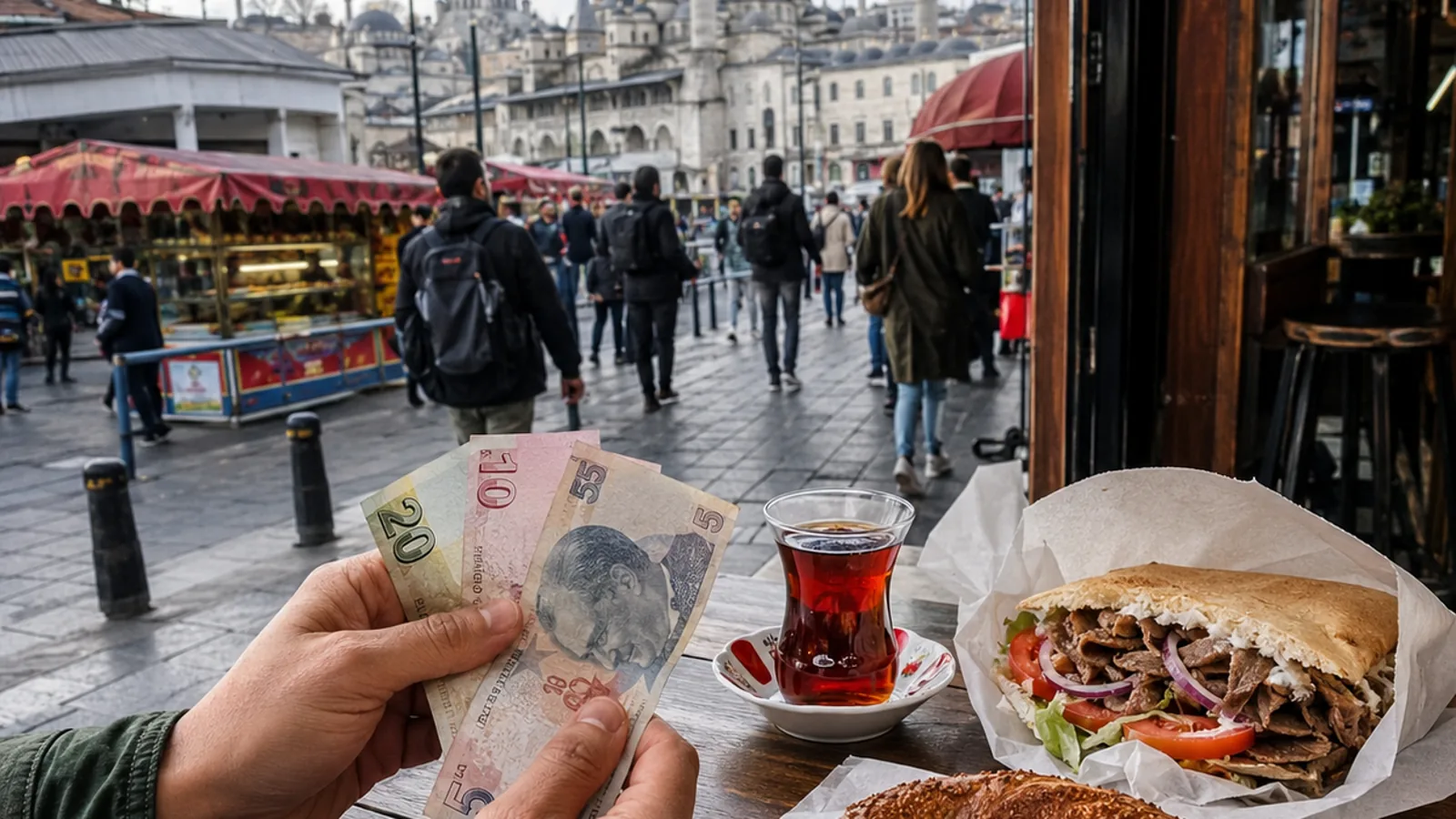
A simple breakfast with tea, bread, cheese, or pastries can be cheap if taken in a bakery or local café. A full Turkish breakfast in a tourist area is a different story.
To eat without spending too much, lokantas — restaurants serving prepared dishes — work well, as do döner stalls, soups, lahmacun, pide, fish sandwiches in popular areas, and markets. For dinner with wine, fish, or views, the budget moves into another category.
The common mistake is thinking that all restaurants in Istanbul are cheap. They are not. Especially in Sultanahmet, Galata, Karaköy, Nişantaşı, and along the Bosphorus, the bill can look very much like one in a European capital.
Not all restaurants in Istanbul are cheap, especially in Sultanahmet, Galata, Karaköy, Nişantaşı and along the Bosphorus.
Transport: one of the best ways to save
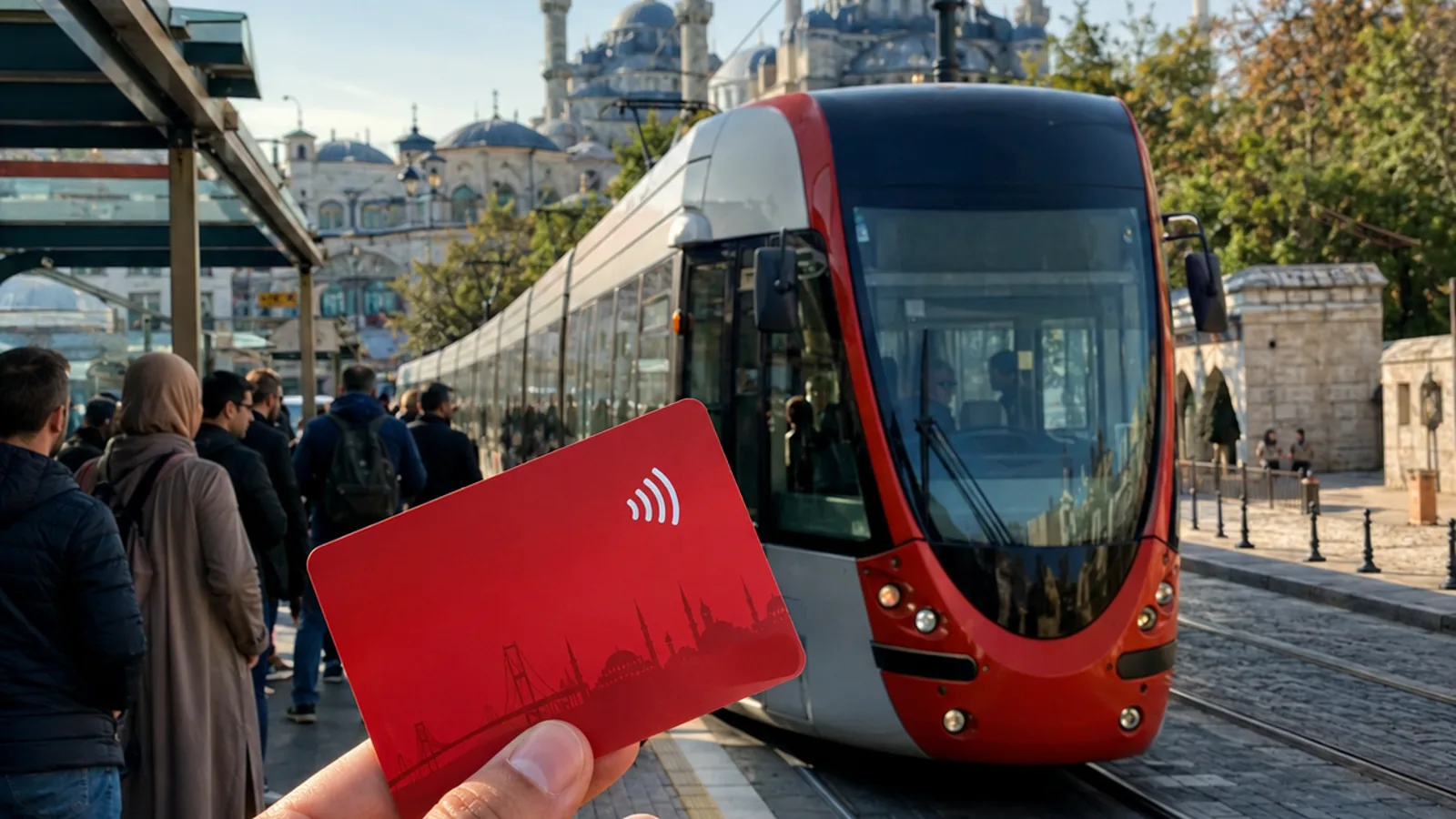
Istanbul’s public transport is a blessing once you understand it. Metro, tram, ferry, Marmaray, funicular, and buses connect much of the city. And getting around by ferry is not only practical: it is one of the most beautiful and affordable experiences of the trip, with minarets on one side, seagulls in the air, and the Bosphorus opening up like an avenue of water.
In 2026, the full fare with an Istanbulkart for metro, tram, bus, and funicular is listed at 42 lira, while single-use electronic tickets are more expensive. That is why, for almost any visitor who plans to use public transport more than once, the Istanbulkart pays off.
For almost any visitor who plans to use public transport more than once, the Istanbulkart pays off.
Taxis and transfers
Taxis can be useful, but they are not always pleasant. Traffic is heavy, some routes are stretched out, and it is best to make sure the meter is running. To get from the airport, the metro and Havaist buses are often more predictable options than a taxi at rush hour. Istanbul Airport states that Havaist operates routes between the airport and different parts of the city, making it a practical alternative for many travellers.
From the airport, the metro and Havaist buses are often more predictable than a taxi at rush hour.
Entrance fees, museums, and visits
This is another area where Istanbul is no longer cheap. Many major monuments and museums have prices aimed at international tourism. If the trip has a strong cultural focus, it is worth setting aside a clear part of the budget for entrance fees.
The Museum Pass İstanbul costs 105 euros and allows visits over 5 days to several museums run by the Ministry of Culture and Tourism and Milli Saraylar; the official website itself recommends checking whether museums are open or under restoration before going. It can be worthwhile if you plan to visit many included sites, but it does not always pay off for a traveller who prefers walking, taking ferries, wandering through neighbourhoods, and visiting only two or three monuments.
The Museum Pass İstanbul can be worthwhile if you plan to visit many included sites, but it does not always pay off.
Three days in Istanbul
For three days, excluding flights, a low-budget traveller could spend between 180 and 300 euros if they sleep cheaply and keep entrance fees under control. A realistic mid-range budget would be between 350 and 650 euros. With a comfortable hotel, good restaurants, and several visits, it is easy to exceed 750 euros.
Three days force you to choose. Anyone trying to see everything will spend more and enjoy less. It is better to focus on Sultanahmet, the Grand Bazaar, Eminönü, Galata, a ferry ride, and one or two neighbourhoods at a calm pace.
Three days force you to choose: trying to see everything usually means spending more and enjoying less.
Five days in Istanbul
Five days allow you to breathe more easily. A low budget can be between 300 and 500 euros. A mid-range one, between 600 and 1,000 euros. A comfortable or high-end experience can climb to 1,200 euros or more.
At this point, it is worth crossing to Kadıköy, spending time on the Bosphorus, exploring Balat or Fener, visiting more museums, and leaving room for cafés, sweets, small purchases, and sunsets.
Seven days in Istanbul
A week allows you to experience the city in greater depth. A frugal budget can be around 450 to 750 euros. A mid-range one, 850 to 1,400 euros. A high budget can easily exceed 1,700 euros, especially if the accommodation is special.
Seven days also reveal the inconveniences: the noise, fatigue, insistent sellers in tourist areas, traffic, and distances. But they also reveal the most memorable Istanbul: slow breakfasts, everyday ferries, cats on stairways, mosque courtyards, neighbourhood markets, and golden light over the Golden Horn.
How to save without impoverishing the trip
Saving money in Istanbul does not mean experiencing the trip in fear of spending. It means choosing well.
Staying in Kadıköy or less obvious areas can improve value for money. Using public transport avoids unnecessary taxis. Eating in lokantas lets you try real cuisine without paying for tourist décor. Buying water, snacks, or fruit in regular shops helps more than it seems. And walking, although tiring, offers scenes that do not appear on any guided tour.
It is also worth comparing before entering restaurants with views, checking menus, asking prices if they are not clear, and being wary of overly insistent invitations near major monuments.
Saving money in Istanbul means choosing well, not experiencing the trip in fear of spending.
What can disappoint you about the budget in Istanbul
Some travellers are surprised that Istanbul no longer feels so cheap. Entrance fees can sting, centrally located hotels do not always offer great quality, and a nice dinner can cost quite a lot. Local inflation has changed the relationship between price and expectation.
It can also be disappointing to pay a lot for experiences that are too touristy: generic cruises, restaurants with mediocre views, overpriced souvenir shops, or hammams that live more off the setting than the service.
The best Istanbul is not always the most expensive. Sometimes it costs no more than a ferry ride, a glass of tea, a hot dish in a lokanta, or an unhurried afternoon walk.
How much money should you take to Istanbul?
To travel with peace of mind, the most sensible option is to carry a combination of card and some cash in Turkish lira. Cards work in many hotels, restaurants, and shops, but cash remains useful for small payments, markets, tips, public toilets, street stalls, and simple local places.
As a general reference, for a balanced trip to Istanbul, you should calculate: 3 days, 350-650 euros per person, excluding flights; 5 days, 600-1,000 euros per person, excluding flights; 7 days, 850-1,400 euros per person, excluding flights.
You can spend less. You can spend much more. But within that range, Istanbul allows you to sleep reasonably well, eat with pleasure, visit the essentials, and not experience every decision as a sacrifice.
Istanbul deserves a flexible budget. Not because it demands luxury, but because it is a city of constant temptations: a coffee by the water, an unexpected entrance fee, a handmade ceramic piece, a Turkish bath, a pistachio dessert, another sunset ferry. Spending well here does not mean buying more; it means leaving room for the city to interrupt you.
For a balanced trip, calculate 350-650 euros for 3 days, 600-1,000 euros for 5 days, and 850-1,400 euros for 7 days, excluding flights.