

Book Basilica Cistern Istanbul fast-track entry with audio guide, 1-day online ticket validity and access without the ticket office line.
View experienceWhat to do in Istanbul on a first visit
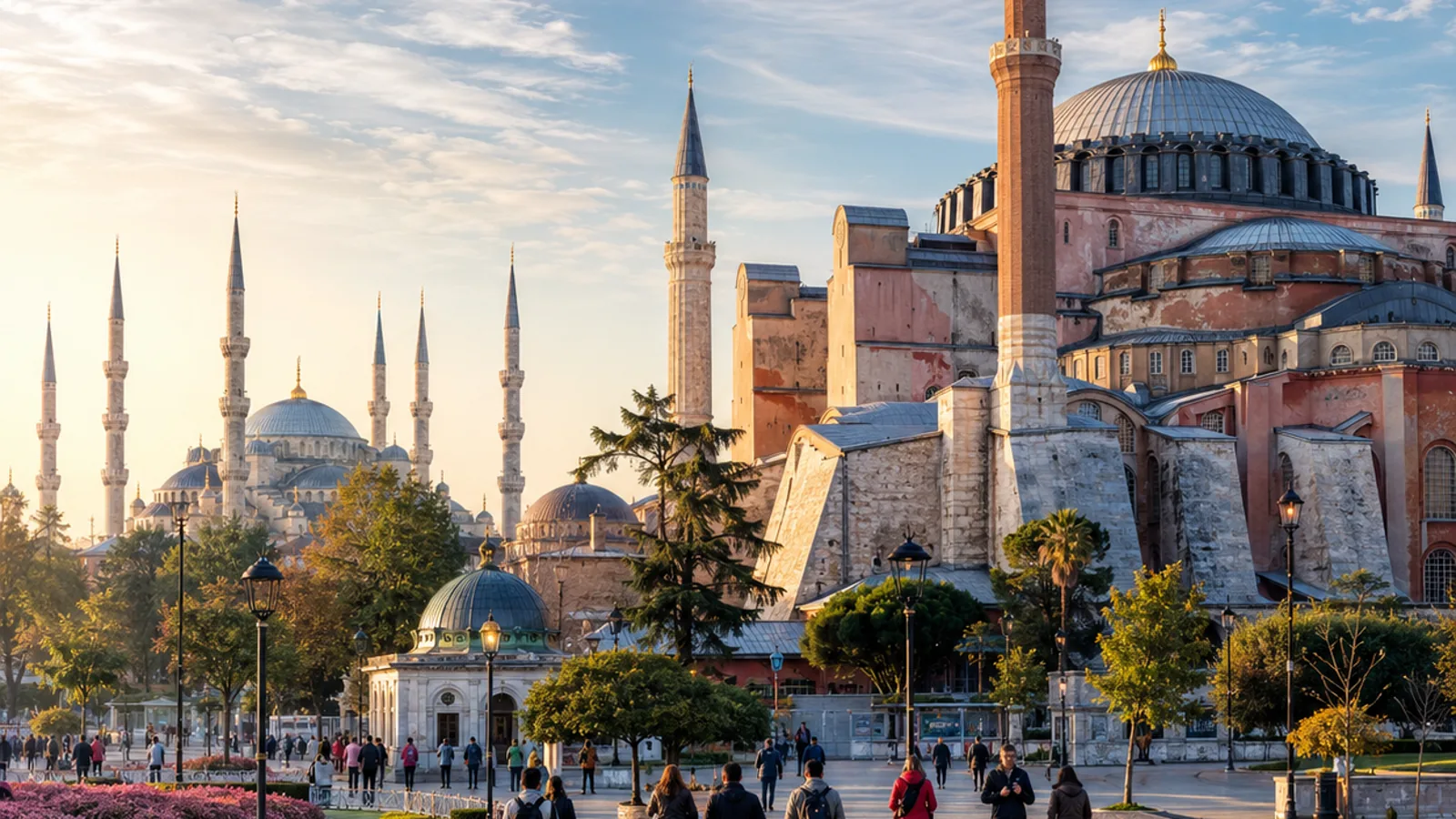
Hagia Sophia remains one of Istanbul’s great symbols, not only because of its scale, but because of its visible layering of centuries: Byzantine basilica, Ottoman mosque, museum for decades and today an active mosque. Tourist access is organised separately from the prayer area, and visiting the upper gallery requires a specific ticket for foreign visitors; it is worth checking the conditions before going, as the rules may change.
Very close by, the Blue Mosque offers a different experience: brighter, more harmonious, less mysterious. It may disappoint those expecting to find it empty and silent; there are usually groups, access controls and partial closures during prayer times. Even so, when the soft light enters through the windows and the İznik tiles begin to glow, the place retains a serene beauty.
Topkapi is not just a palace: it is a city within the city. Courtyards, pavilions, views over the Golden Horn, imperial rooms and an Ottoman memory that is best understood by walking through it slowly. The best advice is not to combine it with too many other monuments on the same day. It can be expensive and tiring, especially if you add special sections, but it helps you understand Istanbul far better than a simple panoramic view.
The Basilica Cistern is one of the best refuges when the heat, rain or outside noise becomes overwhelming. Underground, among damp columns and dim lights, Istanbul changes temperature and voice. The visit is not long, but it is deeply atmospheric. According to the museum’s official information, it opens every day from 09:00 to 22:00, although tickets and access conditions should be checked before visiting.
The best advice is not to combine Topkapi with too many other monuments on the same day.
Recommended Istanbul experiences: Bosphorus, bazaars and Kadıköy
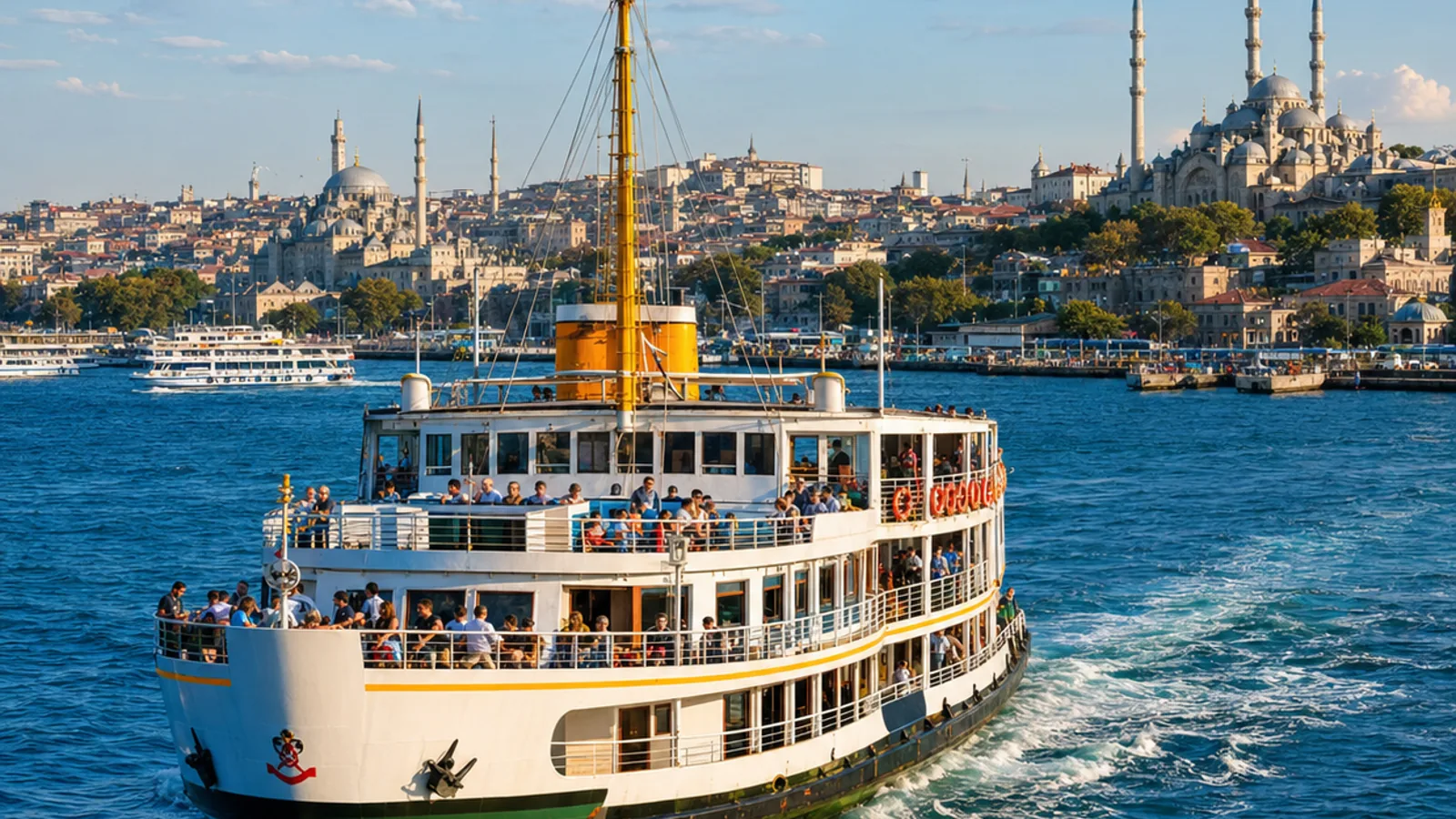
Few things explain Istanbul better than a public ferry. You do not always need to book a tourist cruise: sitting on deck, ordering a tea, watching Üsküdar, Kadıköy, Beşiktaş or Eminönü pass by and listening to the seagulls is already a complete experience.
The public company Şehir Hatları operates urban routes and Bosphorus tours, including short and long cruises with officially published timetables. For those with little time, the short tour or a simple crossing between Eminönü and Kadıköy may be enough; for those who want a slower day, the long route lets you feel the full breadth of the strait.
The Grand Bazaar is impressive, but it can also be overwhelming. Its covered lanes, lamps, carpets, jewellery and ceramics create an almost theatrical scene. The least interesting thing is usually to shop in a hurry; the best is to look, compare, leave through a side gate and discover the hans, courtyards and shopping streets around it. It is important to go with patience and not feel obliged to buy.
The Spice Bazaar is smaller and more aromatic: tea, dried fruit, lokum, saffron, soaps, sweets. It is also touristy, but it still preserves a very Istanbul-like sensuality if you visit early.
Kadıköy, on the Asian side, is one of the best antidotes to monumental Istanbul. Here the city becomes more everyday: fish markets, bookshops, cafés, bakeries, murals, bars and young people walking without the solemnity of Sultanahmet. It does not have the visual impact of Hagia Sophia, but it does have a local energy that many travellers remember more vividly.
You do not always need to book a tourist cruise: a public ferry may be enough.
Excursions from Istanbul
The Princes’ Islands are a good escape if you have at least a long half-day. Büyükada and Heybeliada offer wooden houses, quieter streets, views of the Sea of Marmara and a break from urban traffic. Go Türkiye presents them as a scenic respite close to the city, accessible by ferry from both the European and Asian shores.
They are not ideal for everyone: at weekends and in summer they can become very crowded, and the experience loses charm if you go expecting a paradise beach. They work better as a slow outing, with lunch by the sea and a return at sunset.
Going up towards Pierre Loti lets you see the Golden Horn from another perspective. It is a short excursion, easy to combine with Eyüp, although quite popular. It is worth it if you are looking for a broad view, but it should not become an absolute priority if you only have two days in the city.
The Princes’ Islands work better as a slow outing, not as a search for a paradise beach.
What to do in Istanbul when it rains
Istanbul in the rain can be uncomfortable: pavements become slippery, traffic thickens and some outdoor visits lose their charm. But there are also good refuges.
The Basilica Cistern is the most atmospheric option. Istanbul Modern, in Karaköy, works very well for those who want contemporary art and architecture facing the Bosphorus; the museum lists opening hours from Tuesday to Sunday, with closure on Mondays and extended hours on Fridays.
You can also choose a historic hammam. It is not a cheap activity if you pick a very touristy one, but on a cold or rainy day it can become one of the most memorable experiences of the trip.
Free or almost free plans
Walking through Sultanahmet at dawn, crossing Galata Bridge, watching locals fish, wandering through Balat, respectfully entering lesser-visited mosques such as Süleymaniye, sitting by the Bosphorus in Üsküdar or strolling along the Moda waterfront are wonderful ways to feel Istanbul without spending much.
Süleymaniye, in particular, can be more moving than some famous sights: less theatrical than Hagia Sophia, quieter than the Blue Mosque, with a beautiful view over the city.
Istanbul with children
With children, Istanbul requires a flexible pace. Ferries usually work very well: they are entertaining, restful and visual. Children may also enjoy the Basilica Cistern, parks by the water, Turkish ice cream and some of the more interactive museums.
What can become complicated is Sultanahmet at peak times: queues, controls, heat and too many groups. It is best to alternate monuments with breaks, avoid overly ambitious itineraries and always leave room for eating or resting.
With children, it is best to alternate monuments with breaks and avoid overly ambitious itineraries.
Istanbul as a couple
For couples, Istanbul has very powerful moments: a ferry at sunset, a simple dinner in Kadıköy, a walk through Karaköy, tea facing the Bosphorus or an evening in a meyhane with dishes to share. There is no need always to look for the most elegant restaurant; often intimacy appears at a small table, with fish, meze and the city glowing on the other side of the water.
What to do at night in Istanbul
At night, Istanbul changes rhythm. Sultanahmet becomes photogenic but somewhat empty once the groups have left. Beyoğlu, Karaköy and Kadıköy have more real life: bars, music, terraces, restaurants and cafés open until late.
The night calls for the normal caution of any big city: avoid lonely streets, watch your belongings in crowded areas and be wary of overly insistent invitations to bars or tourist venues. The best night in Istanbul is not usually the most expensive one, but the one that lets you sit and look at the Bosphorus while the city keeps breathing around you.
The best night in Istanbul is not usually the most expensive one.
What may disappoint
The crowds at the major monuments may disappoint, as may the commercial pressure in very touristy areas, inflated prices near Sultanahmet and the feeling that some experiences have turned into a circuit. The scale of the city can also be tiring: moving between neighbourhoods takes time, and not everything is as close as it seems on the map.
That is why the best advice is to choose. See less, but see it better. Istanbul cannot be conquered with a list of “things to do”; it is understood when its great icons are combined with small rituals: boarding a ferry, drinking tea, listening to the call to prayer, crossing a market, sitting without hurry and accepting that the city always keeps something back.
See less, but see it better.