

Book a Bosphorus dinner cruise in Istanbul with a private table, 3-course meal, night views and a live Turkish show on Mega Lüfer Yachts.
View experienceWhat to eat in Istanbul to understand its cuisine
Istanbul’s cuisine brings together kebabs, fish, breads, sweets, pickles, olive oil dishes, soups, mezes, and recipes from many regions of Turkey. The city works almost like a tasting room for the entire country, with a strong presence of seafood from its maritime surroundings, generous breakfasts, home-style lokanta dishes, and street food at any hour.
Turkish breakfast in Istanbul: starting slowly
A good Turkish breakfast in Istanbul may include simit, cheeses, olives, tomato, cucumber, honey, kaymak, menemen, and black tea served in small glasses. It is a beautiful experience, but not always a light one: many “traditional” breakfasts aimed at tourists are excessive, expensive, and more photogenic than memorable.
Where to try it: Beşiktaş is a lively area for breakfast; Kadıköy and Moda also offer more local, relaxed cafés. Sultanahmet can be convenient if you are staying there, but it often offers poorer value for money.
Beşiktaş, Kadıköy and Moda are often better breakfast choices than the most monumental areas.
Istanbul street food: the city’s real pulse
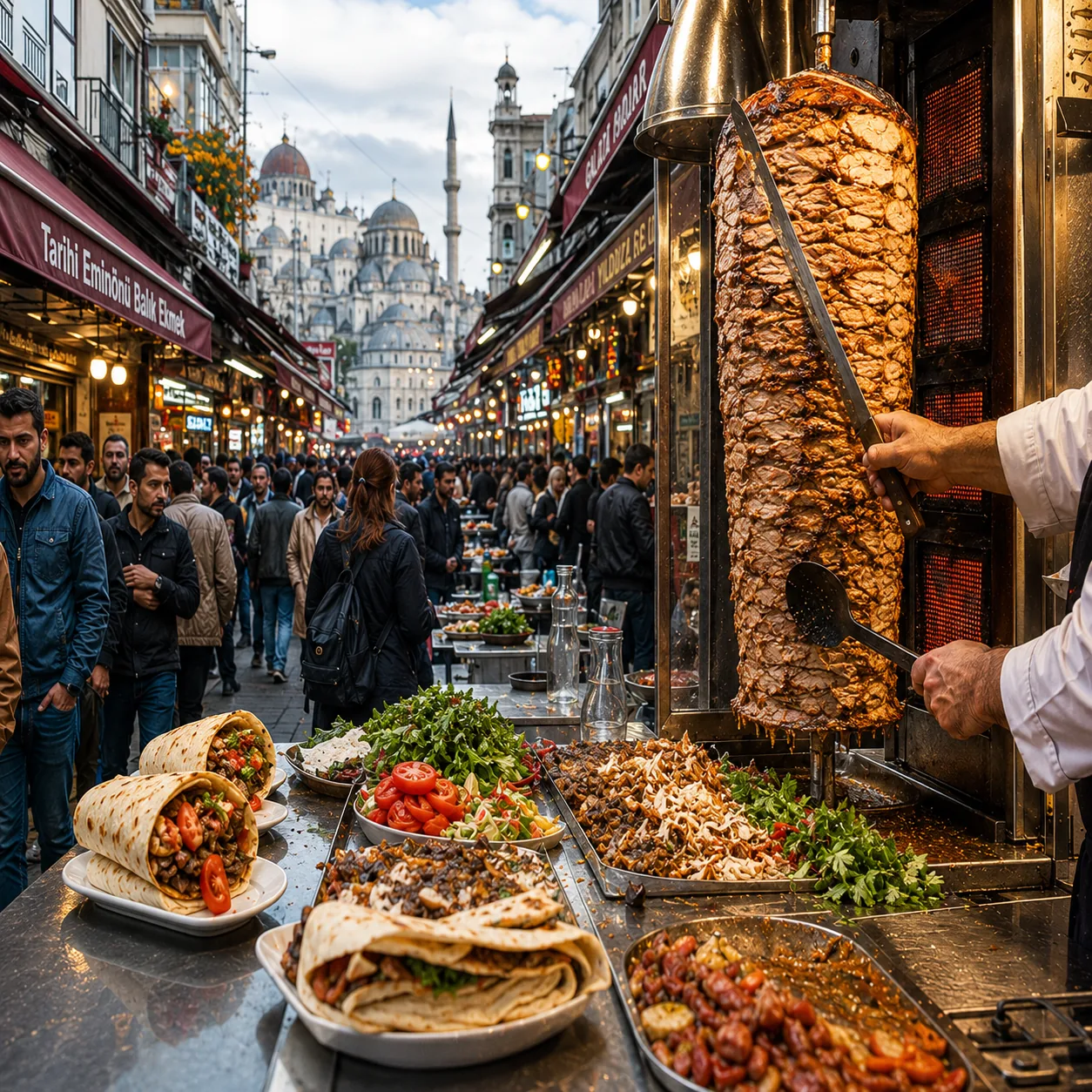
Simit, dürüm, lahmacun, pide, döner, chicken pilav, börek, chestnuts, corn, midye dolma, and balık ekmek are part of the everyday landscape. Döner is one of the city’s most popular street bites, while kumpir is strongly associated with Ortaköy, by the water and with views of the Bosphorus Bridge.
Istanbul street food is well worth trying, but it should be chosen with common sense: stalls with high turnover, visible produce, and local customers are usually a better sign than empty display cases or reheated dishes sitting under tired lights.
Choose stalls with high turnover, visible produce, and local customers.
Kadıköy: one of the best neighbourhoods to eat in Istanbul
Kadıköy, on the Asian side, is probably one of the best gastronomic decisions you can make on the trip. The ferry already prepares your appetite: seagulls, tea, salty wind, and the silhouette of the city receding behind you. Once you arrive, the market and nearby streets mix fishmongers, bakeries, pickles, cheeses, sweets, cafés, meyhanes, and simple restaurants.
You come here to eat with less haste and less tourist theatre. It is ideal for trying mezes, fish, kokoreç, lahmacun, desserts, and modern cafés. Kadıköy’s food market is known for its colourful atmosphere and for attracting lovers of local gastronomy.
It may disappoint if you only have an hour or do not want to cross the Bosphorus. Kadıköy asks for time.
Kadıköy asks for time: it may disappoint if you only have an hour.
Eminönü and Karaköy: balık ekmek, docks and crowds
Eminönü has one of Istanbul’s most recognisable images: balık ekmek by the water, boats, mosques in the background, and the smell of grilled fish. It is a very Istanbul experience, though not always the most refined. Balık ekmek is found especially in waterfront areas such as Eminönü, Karaköy, and Kadıköy.
Karaköy, meanwhile, mixes design cafés, modern restaurants, bakeries, lively tables, and a certain feeling of a transformed neighbourhood. It is a good area to eat if you are looking for something more contemporary, but some places rely more on aesthetics than on what is on the plate.
Beşiktaş: breakfasts, students and food without solemnity
Beşiktaş works well for breakfast, a quick bite, or dinner without too much ceremony. It has youthful energy, more reasonable prices than many monumental areas, and intense local life. It is not the most elegant neighbourhood, but it is one of the most rewarding places to eat without feeling watched as a tourist.
Beyoğlu and İstiklal: choose carefully
Beyoğlu can offer excellent dinners, meyhanes, sweets, historic cafés, and late-night food. It can also be a trap if you let yourself be pulled into overly obvious streets, laminated menus, pushy terraces, and menus with far too many photos.
The area can be very worthwhile, but you need to look twice before sitting down. It is better to seek out places with a clear concept than restaurants that promise “everything”: kebab, pizza, sushi, fish, breakfast, cocktails, and baklava on the same menu.
Seek out places with a clear concept rather than restaurants that promise everything.
Ortaköy: kumpir with a view, not haute cuisine
Ortaköy is beautiful, especially at sunset. Its kumpir — a split baked potato mixed with butter and cheese, then topped with ingredients of your choice — is filling and very popular. The experience lies more in the walk and the view than in the sophistication of the dish. Perfect for something informal; less recommendable if you are looking for a quiet, excellent dinner.
Typical dishes in Istanbul worth trying
For a first visit, try simit in the morning, menemen over a slow breakfast, mercimek çorbası when it gets chilly, lahmacun or pide for something quick, döner from a place with high turnover, köfte, mantı, mezes, fish of the day, balık ekmek, baklava, künefe, Turkish tea, and Turkish coffee.
Fish holds an important place in the local cuisine: anchovies, bonito, sea bass, horse mackerel, turbot, and other fish appear frequently depending on the season and availability.
For curious travellers, kokoreç — seasoned lamb or mutton intestines — is not for everyone, but it is part of the city’s night-time landscape. Midye dolma, mussels stuffed with spiced rice, can be delicious, although it is best to buy them only from stalls with high turnover and a good appearance. Istanbul’s street food scene itself includes midye dolma, kokoreç, simit, fried mussels, börek, and balık ekmek as common bites.
Midye dolma can be delicious, although it is best to buy them only from stalls with high turnover and a good appearance.
Istanbul food markets that are well worth a visit
The Spice Bazaar, in Eminönü, is one of Istanbul’s historic covered markets and preserves its connection with spices, dried fruits and nuts, natural remedies, seeds, delicatessen products, and traditional foods. The current building was constructed in 1660 and forms part of the city’s most recognisable commercial landscape.
It is worth going in, smelling, looking around, and letting yourself be carried away by the colours. But it is not wise to buy from the first stall or accept everything on offer as if it were a rarity. Some shops are excellent; others sell a very touristy version of the same thing. Compare, ask questions, and buy little if you are not sure.
More than a place to tick off a list, Kadıköy is an area to walk through with an appetite. Its streets bring together fish, fruit, vegetables, cheeses, pickles, sweets, and small restaurants. It is one of the most pleasant areas for understanding how Istanbul eats when it is not posing for a photo.
At the Spice Bazaar, compare, ask questions, and buy little if you are not sure.
Tourist traps to avoid
Avoid restaurants with overly insistent waiters, menus with hundreds of dishes, photos of every possible food, and spectacular views as their only selling point. In Sultanahmet, around Galata, and along İstiklal, there are good places, but also many establishments designed for the tired visitor who sits down at the first free table.
It is also wise to be wary of unclear prices, fish sold “by weight” without prior confirmation, and menus where taxes or extras are not clearly explained. Istanbul can vary greatly in price depending on the neighbourhood, season, and type of establishment, so it is better to check the menu before ordering and not assume that an informal meal will always be cheap.
Check the menu before ordering and confirm unclear prices, especially with fish sold by weight.
Who Istanbul’s food scene is worth it for
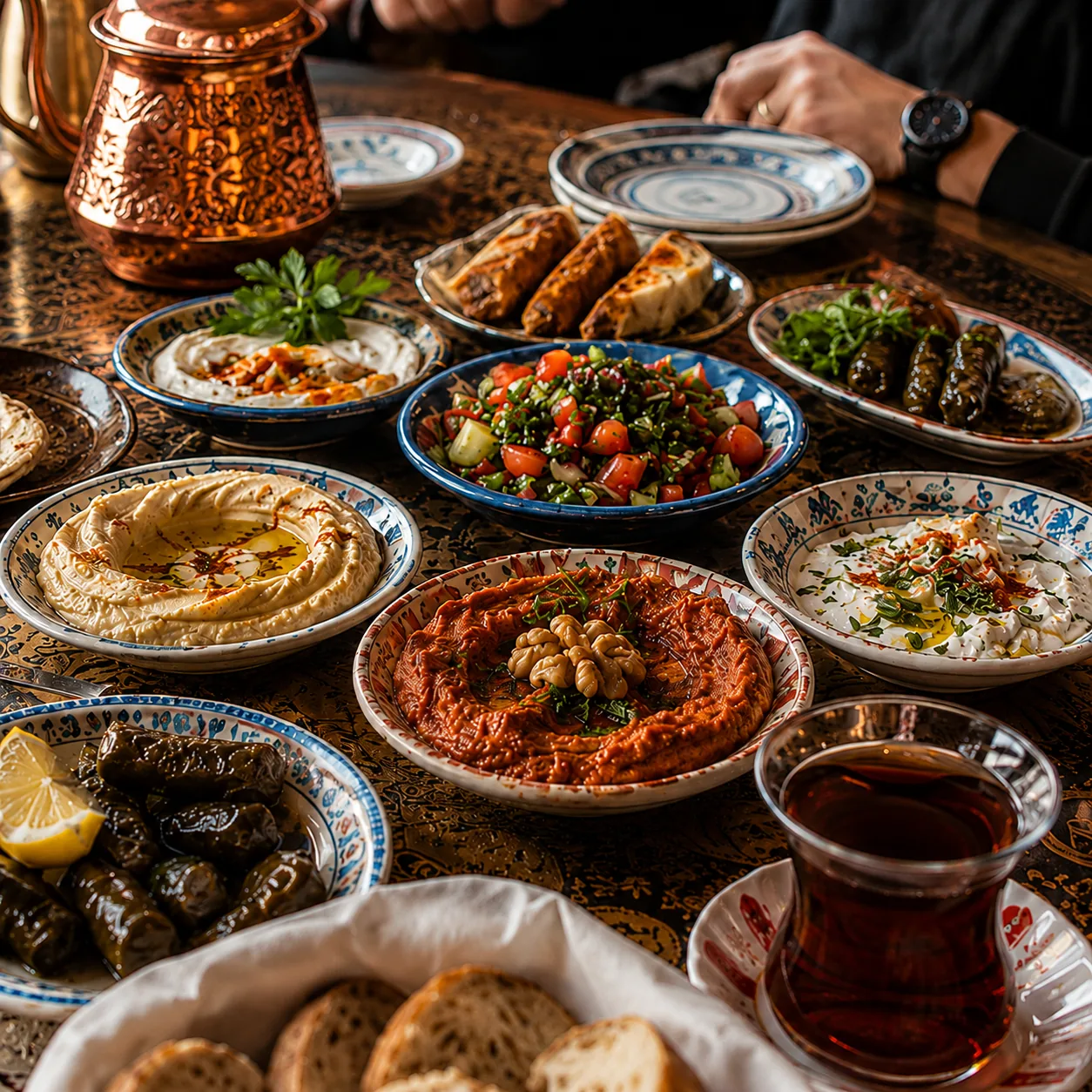
Istanbul is magnificent for travellers who enjoy eating with curiosity: markets, bakeries, simple tables, ferries, long breakfasts, fish, spices, sweets, and contrasts. It is also good for vegetarians if you look for olive oil dishes, legumes, soups, salads, and mezes, although not all restaurants communicate this clearly.
It may disappoint those looking for an orderly, quiet, and easy food scene. Eating well in Istanbul requires walking, comparing, crossing neighbourhoods, and accepting a certain amount of chaos. The reward is there: in a humble lokanta at midday, in a glass of tea by the water, in the crunch of a freshly made börek, or in a meze dinner where the city seems to speak more softly.
Final tip: eat by neighbourhood, not by lists
The best way to eat in Istanbul is not to chase twenty famous restaurants, but to organise each day around an area. Have breakfast in Beşiktaş, snack in Eminönü, cross over to Kadıköy, dine in a meyhane, have something sweet in Karaköy, try a kumpir in Ortaköy, and leave room for the unexpected.
Istanbul is best savoured when you stop searching for the perfect dish and start listening to the city: the vendor’s call, the clink of tea glasses, the smell of bread, the salt of the Bosphorus, and that mixture of tiredness and desire that only appears on great journeys.
Organise each day around an area and leave room for the unexpected.