

Book an Alhambra tour with Nasrid Palaces, official guide and included ticket to visit the Alcazaba, Generalife and gardens in Granada.
View experienceCan you explore Granada on foot?
Yes, and walking in Granada is one of the most rewarding ways to experience the historic centre. The Cathedral, the Alcaicería, Plaza Nueva, the Realejo and much of the shopping area are best enjoyed on foot. Granada is not a city to experience with your eyes fixed on a map every minute, but one to wander through streets that climb, dip and narrow until they open unexpectedly onto a square.
That said, it is worth being realistic: walking around Granada is not always comfortable. In summer, the heat can be intense during the middle of the day; in winter, some damp, cobbled streets can be slippery. For people with reduced mobility, pushchairs or travellers who tire easily, combining walks with Granada transport, city buses or taxis is a far more sensible option.
Walking around Granada is beautiful, but not always easy: adapt your pace to the hills, heat and cobbled streets.
City buses: getting around Granada to the Alhambra, Albaicín and Sacromonte
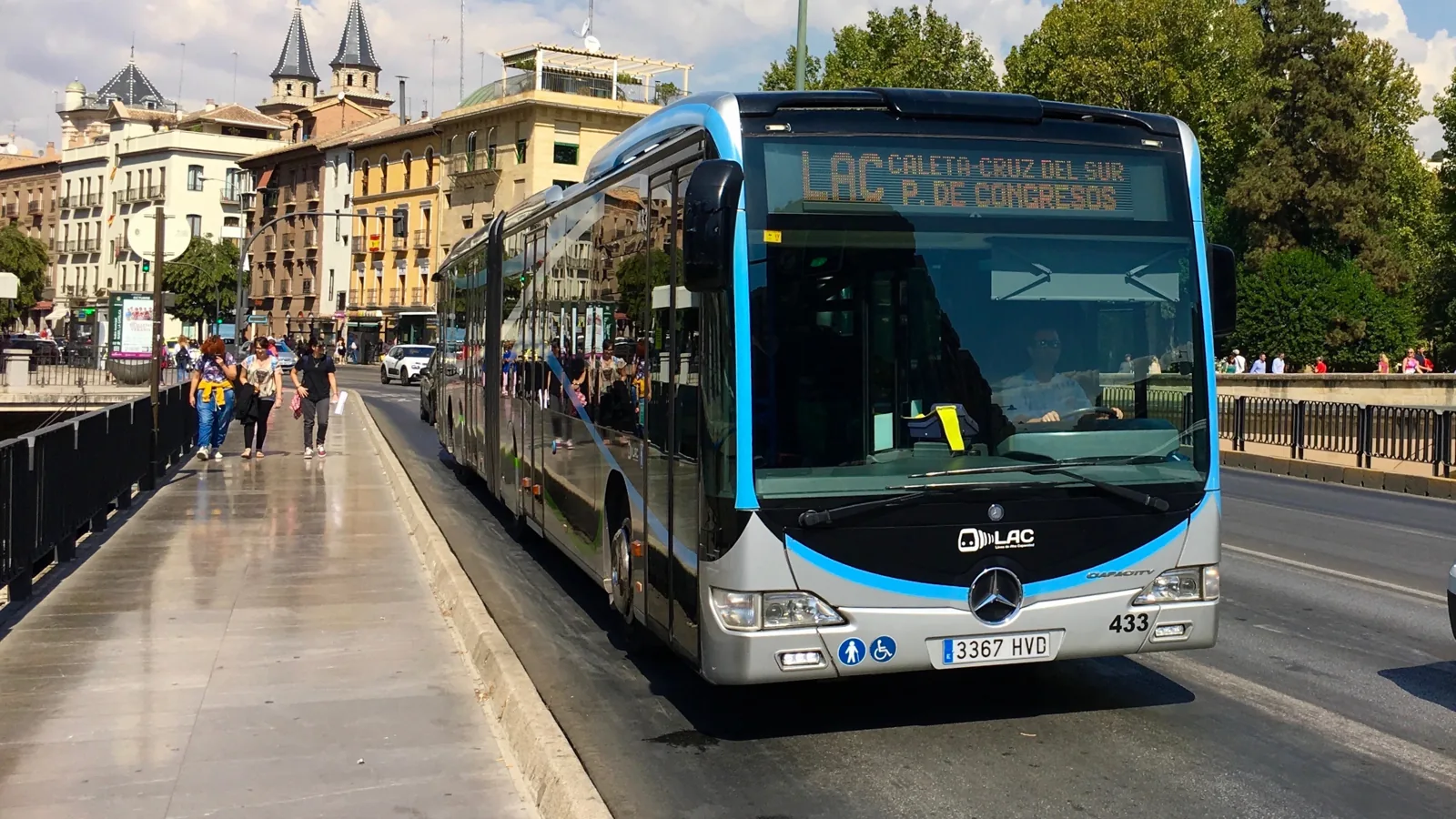
The city bus is one of your best allies in Granada, especially for reaching the higher areas. The urban network includes standard lines and minibuses that can pass through narrow streets where a full-sized bus would make no sense; some routes connect directly with places such as the Alhambra, the Albaicín and Sacromonte. Granada Direct lists 27 city lines, 25 daytime and 2 night lines, while the Centro de Gestión Integral de Movilidad identifies the C30 as the minibus line that goes up to the Alhambra and the Generalife.
For the Alhambra, the most practical option is usually to take the Alhambra bus from the centre if you do not feel like walking uphill. Line C30 connects the centre with the Alhambra, while the C32 links the Alhambra with the Albaicín on a circular route starting at Plaza Nueva.
The main drawback is that, in high season, at weekends or around certain monument entry and exit times, these buses can get crowded. If you have a timed visit to the Alhambra, do not cut it fine: in Granada, arriving ten minutes late can ruin a carefully planned day.
If you have a timed Alhambra visit, leave with a margin: hills, crowded buses and access times can work against you.
Granada Metro: useful, though not for the whole historic centre
The Granada Metro will not help you get lost in the Albaicín or take you up to the Alhambra, but it is convenient for connecting more modern areas, residential neighbourhoods, university districts and towns in the metropolitan area. It works particularly well if you are staying outside the centre or arriving from places such as Armilla, Maracena or Albolote.
The Metropolitano de Granada publishes extensive operating hours: from Monday to Thursday it runs from 6:30 a.m. to 11:00 p.m., while on Fridays, evenings before public holidays and Saturdays, service continues until 2:00 a.m.; frequencies vary depending on the day and time slot.
Its weakness for the classic visitor is that it does not replace walking or the urban tourist minibus. It is practical transport, not scenic transport. If your trip focuses on the Cathedral, Albaicín, Realejo, Carrera del Darro and the Alhambra, the metro will only be a complement.
Do you need to rent a car in Granada?
To visit the city, no. In fact, renting a car to get around Granada city usually creates more problems than it solves. The centre has narrow streets, restricted areas, awkward traffic and limited parking. Many hotels in the old town are also not easy to reach by car.
A car is only worthwhile if you are planning excursions around the province: the Alpujarra, Sierra Nevada, Guadix, the Costa Tropical or smaller villages where public transport can be slower or less flexible. For a two- or three-day city break, the smartest thing to do is leave the car parked and get around on foot, by bus, metro or taxi.
For a two- or three-day city break, the car usually creates more problems than it solves.
Taxis and ride-hailing services: when they are worth it
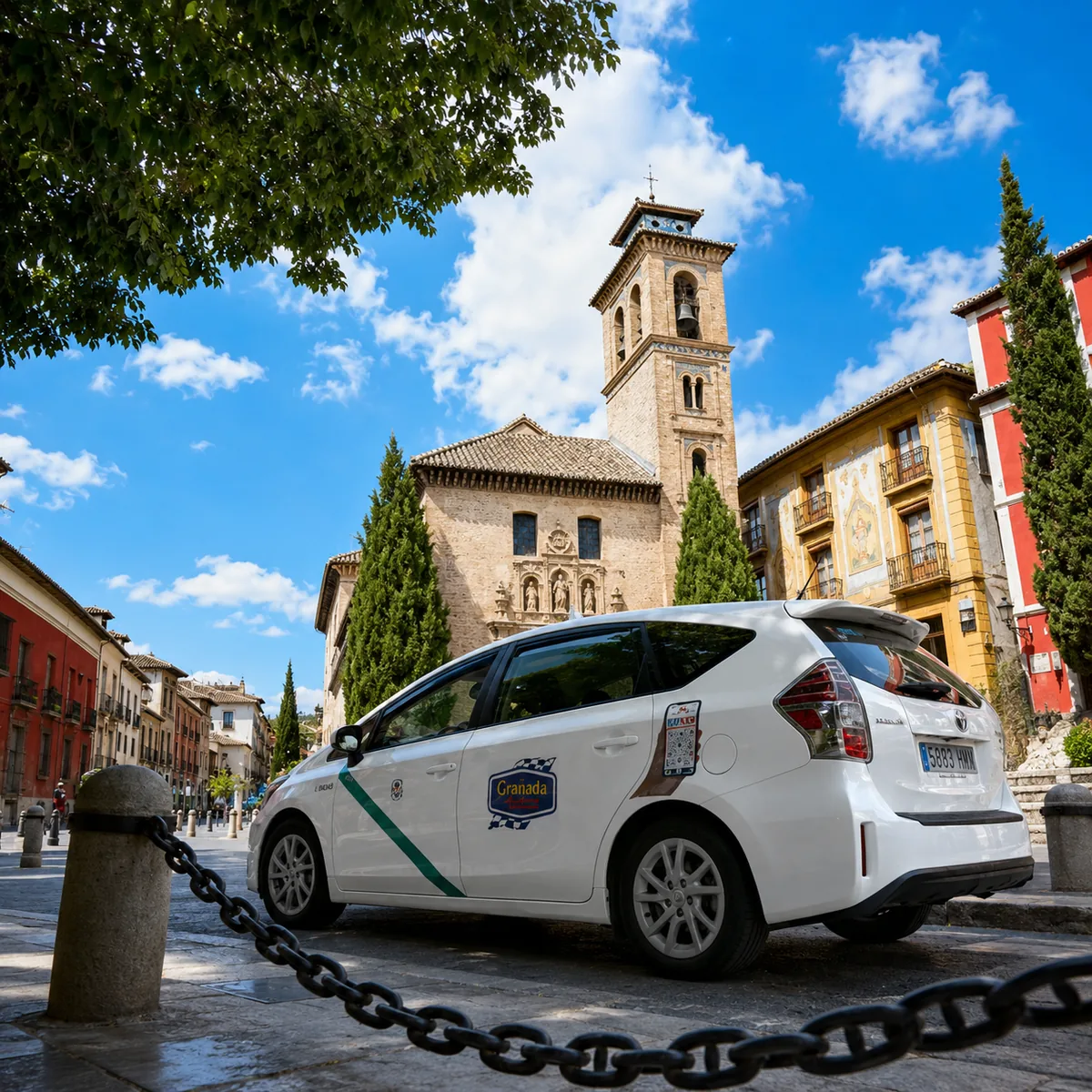
A taxi in Granada is useful when you arrive with luggage, at night, with tired children or if you are staying in an upper part of the city. It can also be a good option for going up to the Albaicín if you do not want to depend on minibus frequency, although in very narrow streets it may not always be able to drop you right at the door.
I would not use it for everything. Granada invites you to walk, and relying too much on taxis makes the city feel more functional but less exciting. The exception is on days of extreme heat, heavy rain or accumulated tiredness: then comfort stops being an indulgence and becomes common sense.
Real distances: Granada looks small, but it can be deceptive
On the map, many distances look short. In practice, the gradient changes everything. Going from Plaza Nueva to the Mirador de San Nicolás may seem like a brief walk, but the climb calls for a calm pace. Walking to the Alhambra from the centre is possible and beautiful, but it is not something to do in a rush, in strong heat or with unsuitable footwear.
A good strategy is to walk downhill and use transport uphill. For example: take a minibus up to the Albaicín and then walk down through the narrow streets towards Plaza Nueva; or reach the Alhambra by bus and return on foot via the Cuesta de Gomérez if your legs are up to it. Granada is more enjoyable when you do not turn every journey into a race.
A simple strategy: use transport uphill and save your walking energy for the way down.
Common mistakes when getting around Granada
The first mistake is booking the Alhambra and leaving the centre late because you think “it’s right there”. It is close, yes, but it is uphill. The second is staying in the heart of the Albaicín with lots of luggage without first checking how to reach the hotel. The third is relying too heavily on the car: in Granada, driving through the centre can be more stressful than useful.
It is also wise to avoid exploring the Albaicín and Sacromonte in uncomfortable sandals or brand-new shoes. The cobblestones look beautiful in photos, but they are less kind to your feet after several hours.
The best way to get around depending on the type of traveller
For a first visit, the most balanced formula is to walk around the centre, use the minibus for the Alhambra and Albaicín, and save taxis for specific moments. For young travellers or those used to walking, Granada can be explored almost entirely on foot. For families, older visitors or travellers with limited mobility, public transport and taxis will make the experience much more pleasant.
If you are travelling in summer, plan the more demanding routes for early morning or late afternoon. If you go in winter, wear shoes with good soles and do not underestimate the damp cold in some shaded streets. In spring and autumn, Granada offers its most walkable version: soft light, kinder temperatures and the urge to linger a little longer in every square.
Verdict: getting around Granada without losing the magic
The best way to get around Granada is not to rely on just one method. Walk where the city asks to be walked. Use the bus when the hills start to take their toll. Take the metro if you are staying outside the centre. Use a taxi when your body, your luggage or the time of day calls for it. And avoid the car unless your trip clearly takes you beyond the city.
Granada does not reward the traveller who rushes, but the one who knows how to pace themselves. Getting around takes a little strategy, but also a willingness to get lost. Because sometimes the best route is not the fastest one: it is the one that unexpectedly leaves you facing a view of the Alhambra glowing in the last light of the day.