

Book an early morning Nara tour from Kyoto or Osaka in a small group, with an English-speaking guide, Kōfuku-ji, Kasuga-taisha, Nara Park, and Tōdai-ji.
View experienceMistakes to Avoid in Kyoto: Rushing from Temple to Temple
The first mistake is trying to see everything.
Kiyomizu-dera at sunrise, Fushimi Inari at midday, Arashiyama in the afternoon, Gion at dusk, Pontocho for dinner. On paper, it seems possible. In reality, it often becomes a sequence of trains, packed buses, uphill walks, queues, hurried photos and a strange feeling: having been in Kyoto without truly feeling it.
Kyoto is best enjoyed by area. One day for Higashiyama and Gion. Another for Arashiyama. Another for the north, with Kinkaku-ji, Ryoan-ji or a less obvious temple. The city rewards those who leave empty spaces in the itinerary: an incense shop, a garden with no famous name, a damp street after the rain, a teahouse where time seems to lose interest.
The first important decision in Kyoto is not adding more visits, but leaving space to feel the city.
Going to Gion as If It Were an Open-Air Show
Gion is beautiful, but it is also one of the places where travellers can most easily get it wrong. Its dark façades, red lanterns, discreet doors and the possibility of crossing paths with a maiko or a geiko feed a fantasy that can sometimes become intrusive.
Do not chase anyone to take a photo. Do not block the way. Do not enter private alleyways. Do not point your camera towards half-open doors. In several areas of Gion, photography is restricted or allowed only in designated zones, and Kyoto’s official guide expressly reminds visitors that not everything beautiful is photographable.
The best way to experience Gion is to walk discreetly. Notice the textures of the wood, listen to the brief sound of a door closing, and accept that some scenes belong to those who live there.
In Gion, discretion is part of the experience.
Confusing Silence with Coldness
Kyoto does not always smile expansively. Many interactions are subtle: a slight bow, a short phrase, a careful gesture when wrapping a purchase, a respectful distance at the counter. Travellers who expect theatrical hospitality may interpret that restraint as coldness, when it is often courtesy.
Learn a few basic words in Japanese. You do not need to say much: sumimasen to apologise or politely get someone’s attention, arigatō gozaimasu to say thank you, and a light bow when appropriate. In small restaurants, traditional shops or family-run ryokan, that attitude changes the experience.
How to Interact with Local People Without Making Them Uncomfortable
In Kyoto, it helps to follow one simple rule: before photographing, ask; before touching, observe; before entering, check whether the space is public. Do not turn people dressed in kimono into tourist props. Do not expect everyone to speak English. Do not occupy the entrance to a house, shop or narrow street to take photos. And if someone says no, the journey is better when you know how to step back gracefully.
Respect in Kyoto is not an exotic formality. It is the key that allows the city to remain liveable.
Before photographing, ask; before touching, observe; before entering, check whether the space is public.
Thinking Buses Will Always Be the Best Option
Kyoto has useful buses, but in high season they can be slow, crowded and exhausting. The mistake is relying on them for everything, especially along very popular tourist routes. Sometimes it is better to combine subway, train, authorised taxi or simply walking. The city’s official guide recommends tools such as Kyoto Smart Navi for useful information on mobility, crowding and tourist etiquette.
If you take a taxi, use authorised services. Kyoto warns of the importance of using taxis with green licence plates or official apps, and of avoiding unauthorised private vehicles that carry passengers for money.
Do not build the whole trip around buses: combine public transport, authorised taxis and walking.
Visiting Fushimi Inari Only at the First Row of Torii
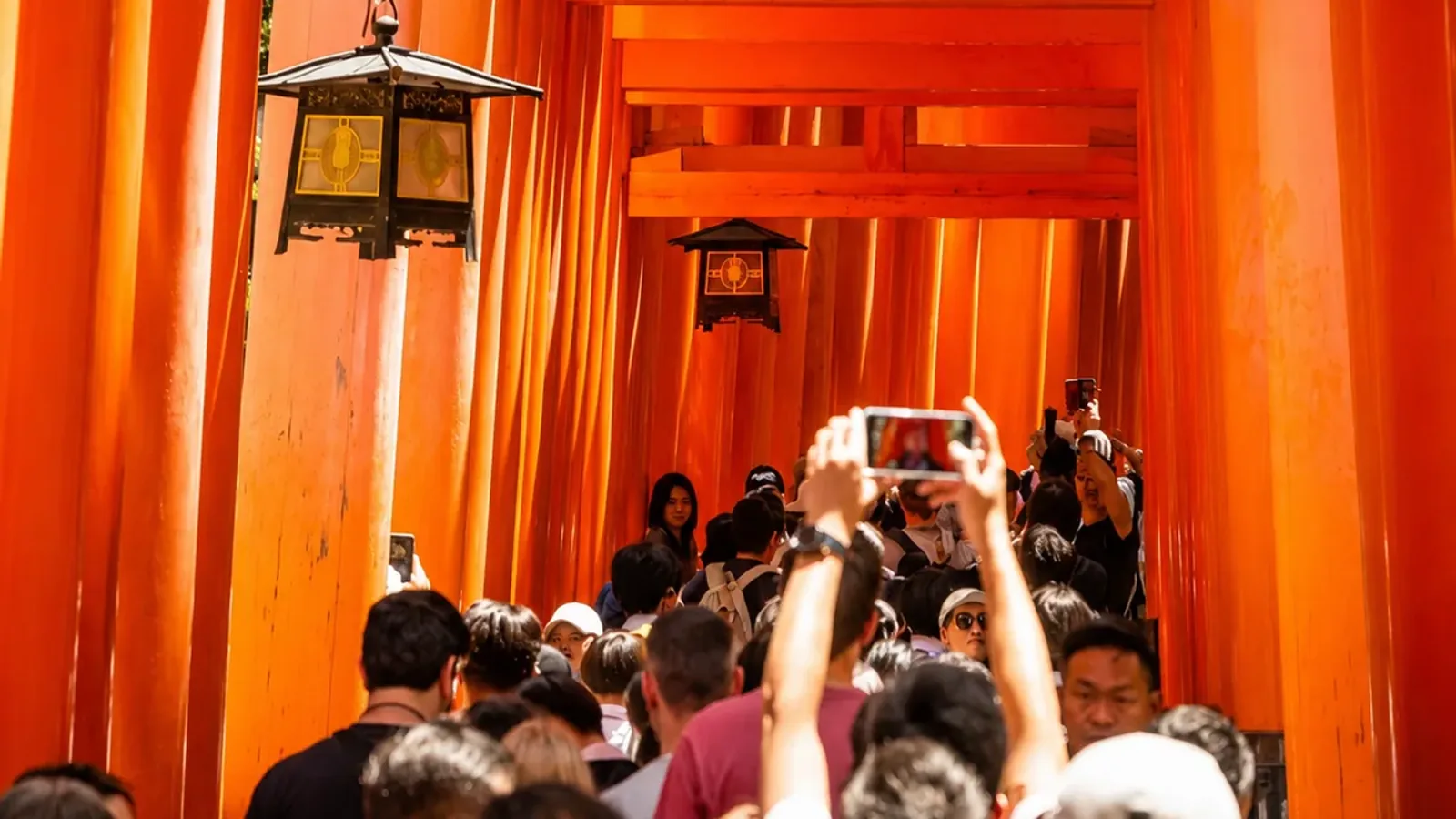
Fushimi Inari often disappoints those who arrive expecting solitude beneath the most famous red gates. The lower part of the shrine can be very crowded, especially mid-morning and in the afternoon. But many travellers make the mistake of staying only in the first few metres, taking the inevitable photo and leaving.
The experience changes if you climb higher. The path grows quieter, the light falls differently between the torii, and small altars appear, along with moss-covered stone and the smell of damp forest. You do not need to reach the very end if you lack the time or energy, but it is worth moving away from the entrance to understand why this place remains powerful even with visitors.
At Fushimi Inari, moving away from the entrance can completely change the experience.
Choosing the Wrong Season and Blaming the City
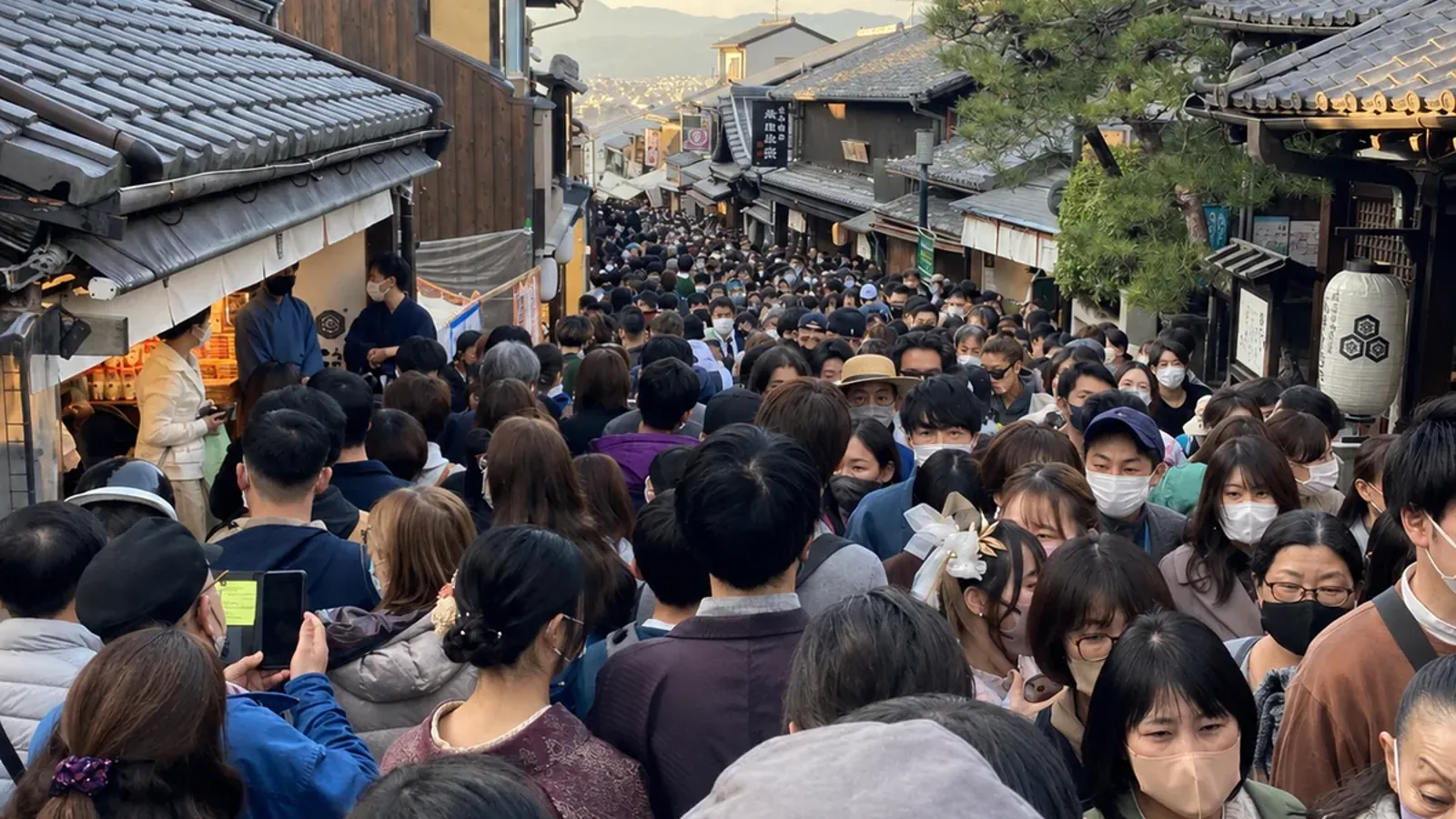
Kyoto changes greatly depending on the time of year. In spring, cherry blossoms light up rivers, temples and parks, but they also bring crowds and higher prices. In autumn, maples set the gardens ablaze with deep reds and golds, although the most famous temples can lose their sense of intimacy. In summer, the heat and humidity make walking harder; in winter, the city may seem more stripped back, but also more serene.
The mistake is not travelling in high season. The mistake is doing so while expecting calm. If you come during blossom season or in autumn, get up early, book well ahead and leave at least one famous place out of the plan. Kyoto cannot be reduced to its most repeated postcards.
The mistake is not travelling in high season, but expecting calm during high season.
Choosing Accommodation Without Thinking About the Rhythm of the Trip
Sleeping far from the centre can save money, but it can also cost you time and energy. Staying in the heart of Gion or Higashiyama can be beautiful, although more expensive and not always convenient with luggage or crowded buses. Near Kyoto Station, you will have practical connections but less evening charm. In Kawaramachi or Shijo, you will find movement, shops and restaurants, but also more noise and foot traffic.
The mistake is choosing accommodation only because of a pretty photo or a low price. In Kyoto, the area changes the trip. For a first visit, it is worth prioritising connections, walkability and easy access to the areas that interest you most.
Dressing for the Photo, Not for Walking
Kyoto looks gentle, but it demands legs. There are slopes in Higashiyama, trails at Fushimi Inari, long distances in Arashiyama and stone floors that do not forgive uncomfortable shoes. There are also temples where you will have to take off your shoes, so it is wise to bring presentable socks and footwear that is easy to remove.
Renting a kimono can be a beautiful experience if done respectfully and without turning every street into a stage. But it is not always practical for long days, intense heat, rain or routes with many uphill sections.
In Kyoto, comfortable shoes matter more than the perfect photo.
Not Booking What Really Matters
Many temples can be visited without much planning, but small restaurants, tea experiences, traditional accommodation, special visits or specific dinners may require reservations. The mistake is leaving until the last minute something that is an essential part of the trip.
You do not need to schedule everything. In fact, Kyoto needs breathing room. But it is worth distinguishing between what is flexible and what is delicate: an afternoon walk can be improvised; dinner in a small restaurant or a stay in a ryokan cannot always be.
Looking Only for Famous Kyoto
Kiyomizu-dera, Fushimi Inari, Arashiyama, Kinkaku-ji and Gion deserve attention, but if your whole trip revolves around them, Kyoto can feel like a saturated and exhausting city. The mistake is not leaving room for secondary temples, quiet neighbourhoods, early-morning markets, less photographed gardens or walks beside the Kamo River as the light fades.
The most memorable Kyoto sometimes does not appear on the list of major sights. It is in a side street after the rain, in the steam rising from a bowl of ramen, in a distant bell at sunset, in the gesture of a woman placing flowers beside a door.
So, How Do You Avoid the Main Mistakes to Avoid in Kyoto?
Travel with less haste than you think necessary. Respect neighbourhoods as living places. Get up early for the most popular sites. Accept that some scenes are not yours to photograph. Combine famous temples with discreet corners. And remember that Kyoto is not obliged to offer you a clean postcard free of crowds.
It is deeply worthwhile for those seeking history, aesthetics, spirituality, gastronomy and a form of quiet beauty. It may disappoint those who expect absolute comfort, total spontaneity or an empty city waiting for the visitor.
Kyoto does not give itself to the impatient traveller. But to those who know how to walk without intruding, look without possessing and listen without demanding, it leaves something more lasting than a photograph: the feeling of having brushed against a city that still preserves part of its mystery.
Kyoto does not give itself to the impatient traveller.