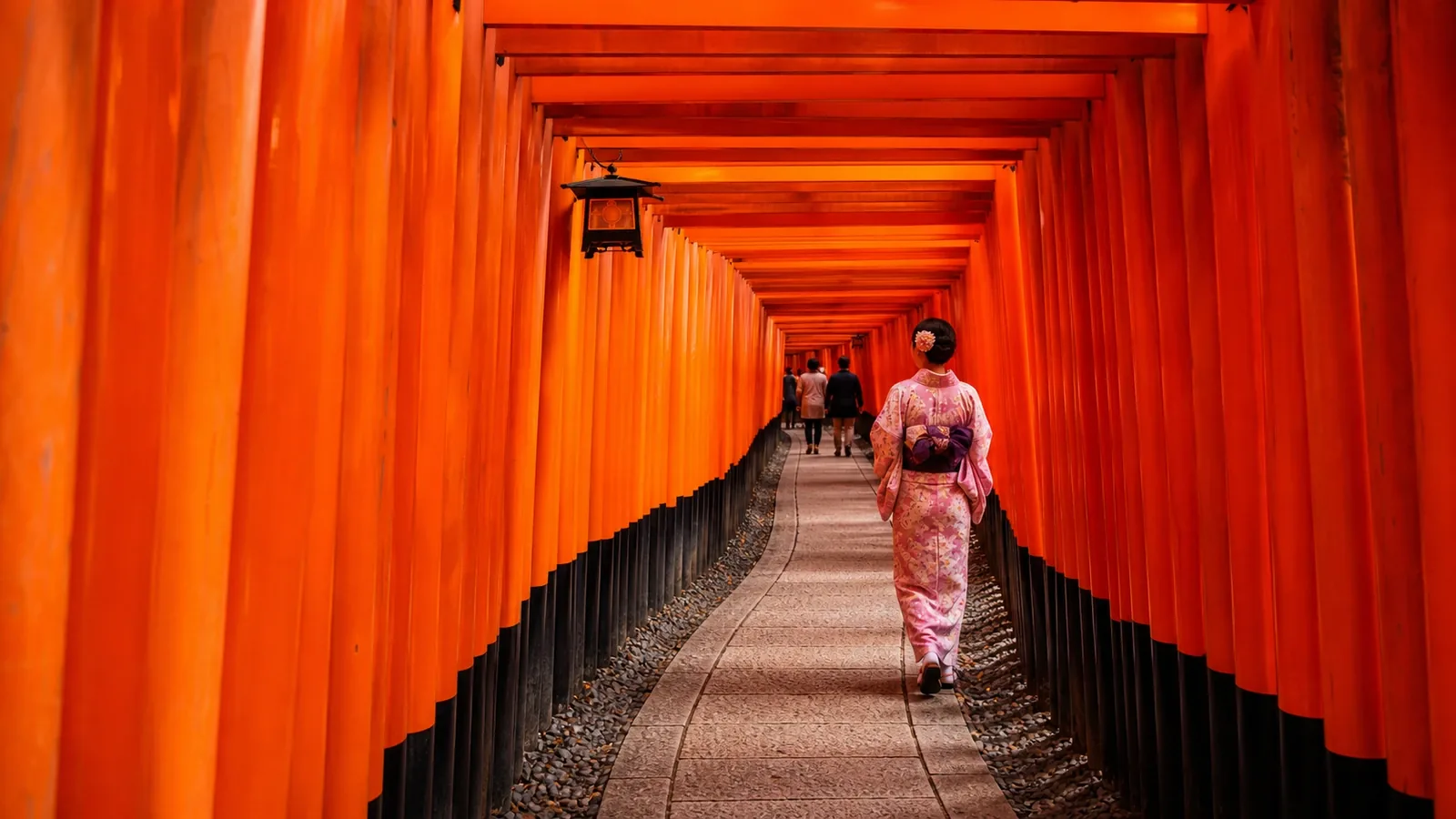


Enjoy a Zen experience in Kyoto at Jusho-in Temple: practice zazen with a monk, enter a historic temple and finish with matcha and sweets.
View experienceWhat makes Kyoto special
Kyoto does not impress through height, speed, or modernity. Its beauty is lower, more horizontal, more restrained. It is found in the curved temple roofs, in dry gardens where every stone seems to have been placed with centuries of patience, in the lanterns of Gion at dusk, in the sound of a sliding door, in the moss covering a path.
The best thing about Kyoto is not simply visiting Kiyomizu-dera, Fushimi Inari, Kinkaku-ji, or Arashiyama. The best thing is understanding that the city does not reveal itself all at once. Sometimes it appears in a lesser-known temple with no queue, in a discreet teahouse, in a residential street where you should walk with respect, or in a simple meal served with a delicacy that elsewhere would feel like ceremony.
For those who love history, Japanese aesthetics, gardens, traditional architecture, refined cuisine, and travel with cultural depth, Kyoto can be one of the great highlights of Japan.
What may disappoint when you visit Kyoto
Kyoto disappoints those expecting an empty postcard. The most famous places can be overcrowded, especially in spring and autumn. The experience of walking through the bamboo grove in Arashiyama or along the streets of Higashiyama changes greatly depending on whether you arrive first thing in the morning or once the day’s tour groups have already arrived.
It may also disappoint those looking for intense nightlife, futuristic shopping, or a city that is easy to improvise in without a plan. Kyoto has useful public transport, but it is not always direct; some routes combine bus, train, and walking. And in old streets and temple areas, distances feel longer than they look on the map.
Another important point: it is not advisable to explore the city with luggage. Kyoto promotes “hands-free” travel services and recommends leaving suitcases before sightseeing to reduce inconvenience and move more easily through stations, buses, and narrow streets.
It is best to avoid exploring Kyoto with luggage and to arrive early at the most famous places.
Who Kyoto is worth it for
Kyoto is very much worth it for travelers who enjoy walking, noticing details, and entering places slowly. It is ideal for couples, photography lovers, history readers, and travelers interested in Buddhism, Shinto, Japanese gardens, local cuisine, and craftsmanship.
It is also a magnificent city for a first trip to Japan, as long as you do not try to turn it into an endless checklist of temples. Two or three well-chosen visits per day can leave a stronger memory than eight hurried stops.
Who Kyoto may not be so worth it for
Kyoto may not be the best choice for those traveling with very young children who are looking for constant ease, large entertainment spaces, or simple journeys. Nor is it the most comfortable city for those who cannot tolerate crowds, although it can be greatly enjoyed by getting up early, choosing less obvious neighborhoods, and not concentrating everything around the tourist icons.
If your priority is modern Japan — neon lights, skyscrapers, technology, huge shopping centers — Tokyo or Osaka will probably feel more stimulating. Kyoto plays in a different league: slower, more symbolic, less immediate.
Is Kyoto expensive?
Kyoto can be moderate or expensive depending on the season and the type of trip. Eating does not have to ruin your budget: there is ramen, soba, markets, simple cafés, and daily set menus. But accommodation rises significantly during popular periods, especially cherry blossom season and the autumn foliage.
The more special experiences — ryokan, kaiseki dinners, private ceremonies, well-located traditional accommodation — can increase the cost considerably. They are not necessary to enjoy Kyoto, but they can transform the trip if they fit your budget.
The key is deciding where to spend: you may not need a luxury hotel every night, but it is worth booking somewhere well located and setting aside money for a memorable meal or a high-quality guided visit if you are interested in understanding the city better.
How many days in Kyoto for a first visit
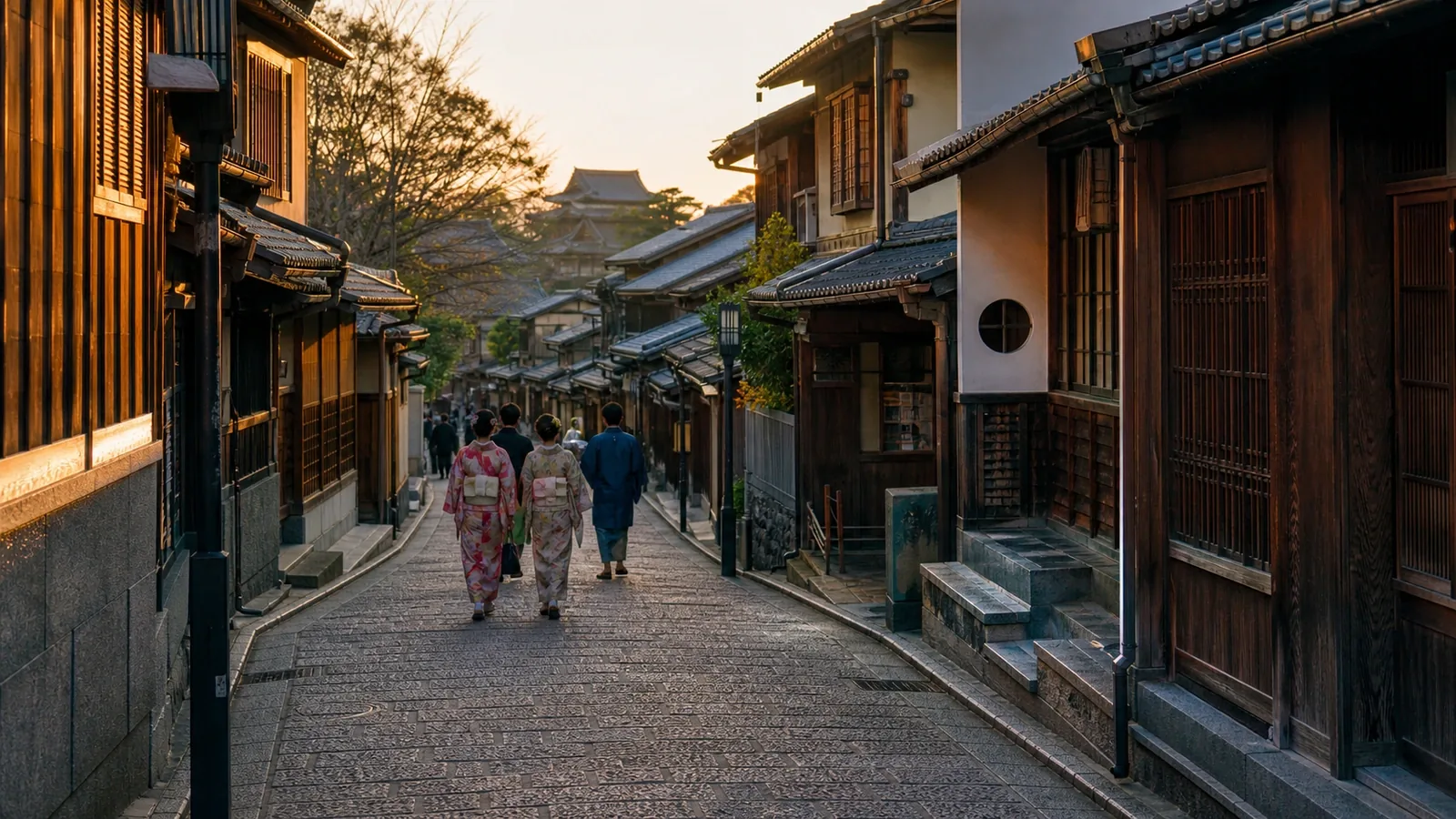
For a first visit, three full days is a reasonable amount of time. It allows you to see the main symbols without rushing too much: Higashiyama and Gion, Fushimi Inari, Arashiyama, a Zen garden, and a less touristy area.
With two days, Kyoto can still be enjoyed, but you will need to choose firmly. It is best to avoid the ambition of covering everything. With four or five days, the city becomes more generous: you can walk with less pressure, revisit neighborhoods at different times of day, visit lesser-known temples, and take a nearby day trip.
A single day from Osaka or Tokyo can offer a beautiful but incomplete image. It works as a first impression, not as a way to understand Kyoto.
Three full days is a reasonable base for a first visit to Kyoto.
Best time to visit Kyoto
Spring and autumn are the most sought-after seasons for obvious reasons: blossoms, soft light, pleasant temperatures, and memorable landscapes. They are also the most crowded. Kyoto’s official guide describes spring as a mild and popular season because of the cherry blossoms, and autumn as another generally mild and sunny season that is also heavily visited.
Summer can be tough: heat, humidity, and accumulated fatigue if you spend many hours walking. Winter, on the other hand, can be a pleasant surprise for those who accept the cold: fewer crowds, clean air, and temples with a more understated beauty.
Common mistakes when visiting Kyoto
The most common mistake is arriving late at the most famous places. In Kyoto, the time of day changes the experience. Getting up early is not an obsession for intense travelers; it is a real way to recover beauty.
Another mistake is treating the city like a theme park. Gion is not a stage set, geisha and maiko are not attractions, temples are not rule-free photo backdrops, and residential streets are still spaces where people live. In areas such as Gion, the city expressly reminds visitors of the importance of following local rules and respecting private areas.
It is also wise not to overload yourself with temples. After the fourth or fifth in a day, even the most beautiful ones begin to blur together. Kyoto is best enjoyed by alternating temples, gardens, markets, walks, tea breaks, and everyday neighborhoods.
Kyoto is best enjoyed by alternating temples, gardens, markets, walks, tea breaks, and everyday neighborhoods.
Verdict: is Kyoto worth visiting?
Kyoto is worth it if you travel with patience, respect, and a certain sensitivity to small things. It is not a perfect city, nor always quiet, nor always easy. But when visited well, it leaves a mark that is difficult to replace.
It is worth it for those who want to see an essential part of Japan’s cultural soul. Not so much for those who only want to tick off famous monuments or repeat the same photos they have already seen a thousand times.
Kyoto rewards the traveler who slows down. The one who enters a garden without speaking too much. The one who understands that an ancient city also grows tired of being watched. The one who discovers that, sometimes, the most beautiful part of a journey is not reaching the exact place, but learning to look at it carefully.