

Book a 45-minute tea ceremony in Kyoto near Kiyomizu-dera with Uji matcha, an English-speaking instructor and a traditional tea house with garden.
View experienceWhat to do in Kyoto if you want to start with the classics
Fushimi Inari is one of those places where Kyoto seems to turn into a symbol: thousands of vermilion torii gates climb up the mountain, creating tunnels of orange light among the trees. The most beautiful part is not necessarily at the entrance, where the cameras gather, but a little higher up, when the noise fades and the forest begins to set the pace.
It is worth going at sunrise or toward the end of the afternoon. If all you want is a quick photo, the crowds may disappoint you. But if you are willing to walk, sweat a little and move beyond the first stretch, the experience gains depth.
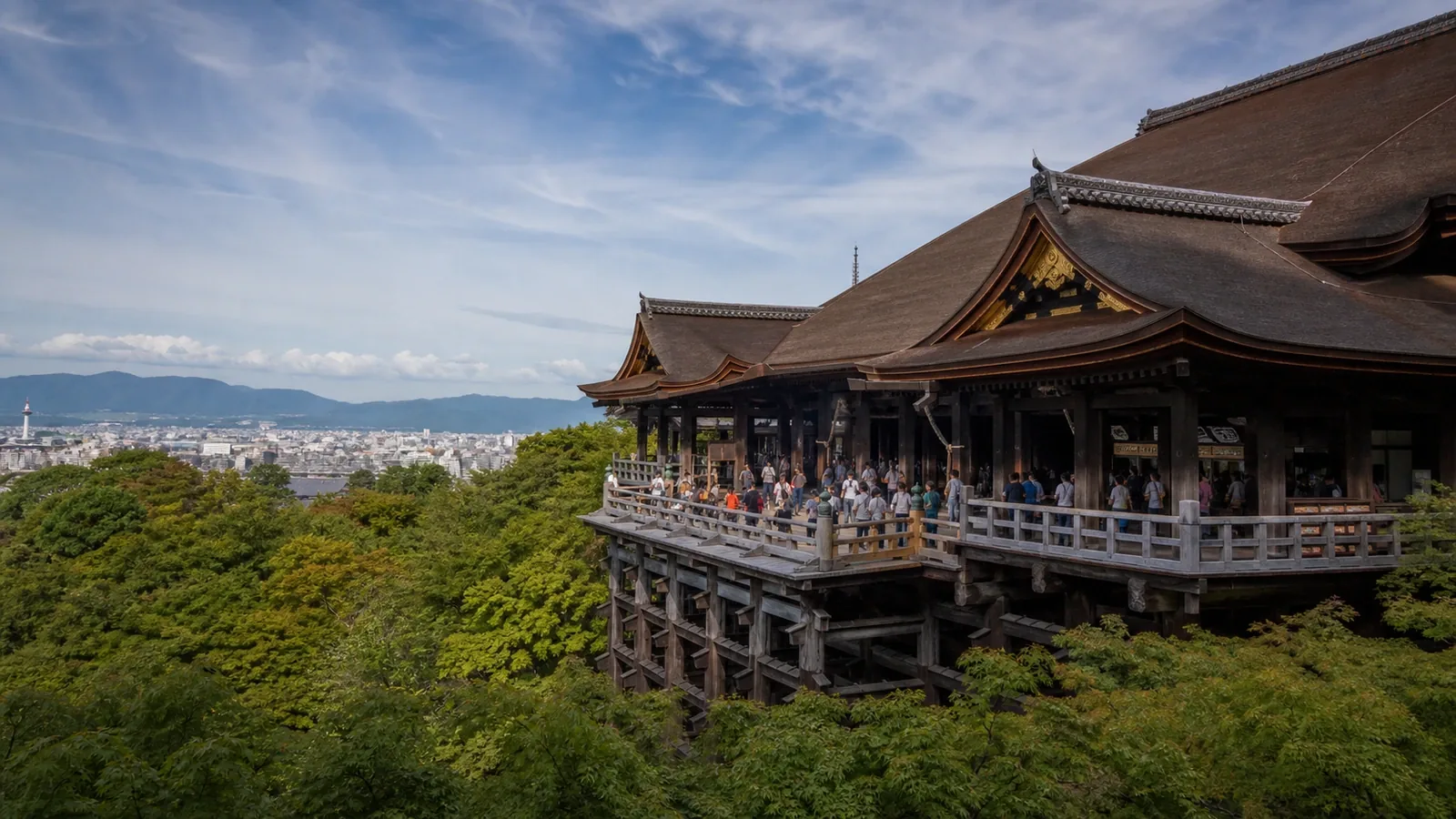
Kiyomizu-dera is one of Kyoto’s great set pieces: timber raised above the hillside, views over the city and, in cherry blossom or maple season, scenery that seems to have been painted with patience. Afterwards, walk down Sannenzaka and Ninenzaka, two historic streets lined with shops, sweets, ceramics and wooden houses.
It is beautiful, yes, but also very touristy. The best way to enjoy it is to arrive early, walk slowly and avoid turning every corner into a photo shoot. In Kyoto, beauty is spoiled when you chase after it.
Kinkaku-ji shines over the pond like an apparition. It is a short, highly photogenic visit and easy to include on a route through the northwest of the city. Its downside is that the route is usually quite fixed and can feel more contemplative than intimate. It is worth seeing, but do not expect a silent temple all to yourself.
The key at Kyoto’s famous sights is to arrive early, walk beyond the first stretch and avoid turning the visit into a photo chase.
Historic Kyoto districts to wander without obsessing over monuments
Gion is the Kyoto of dark façades, teahouses, lanterns and the possibility — only a possibility — of seeing a maiko or geiko pass by on her way to an appointment. But it is not a stage set. It is a neighborhood where real people live and work. Kyoto’s official guide asks visitors not to chase or photograph geiko and maiko without permission, not to enter private property and not to block the streets. Kyoto Travel
The best approach is to walk along Hanamikoji discreetly, continue toward Yasaka Shrine and then lose yourself in the smaller side streets. For a calmer experience, go at night, when the crowds thin out and the lantern light gives the neighborhood back some of its mystery.
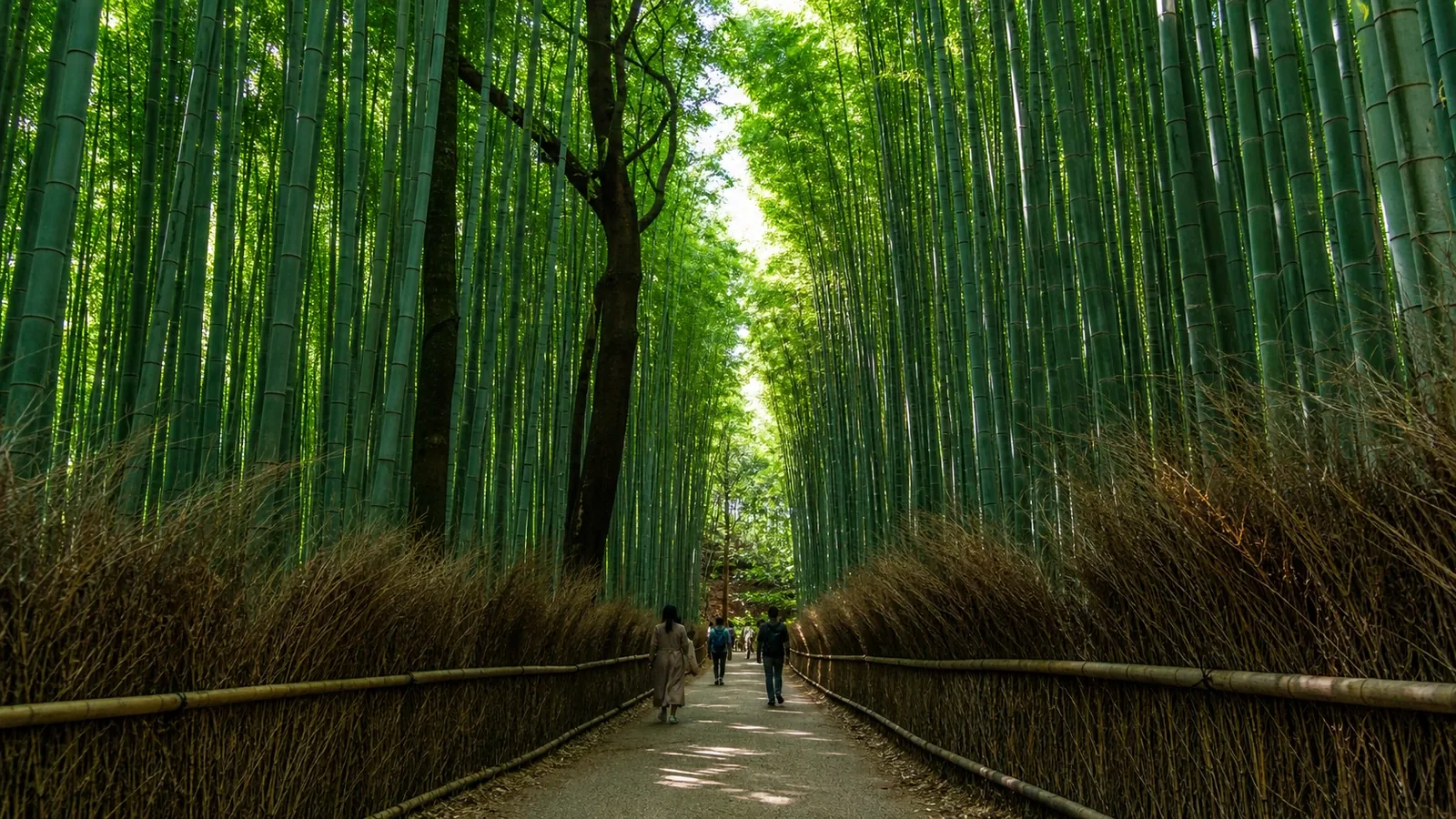
Arashiyama can be magical or disappointing, depending on the time of day. The famous bamboo grove is beautiful, but it is often very crowded. Arrive early, continue on to less-visited temples and do not reduce the area to a single photo. Kyoto also warns about the damage caused by carving names or symbols into the bamboo, a behavior that harms the landscape and may have legal consequences. Kyoto Travel
Togetsukyo Bridge, the river, nearby temples and the quieter backstreets make Arashiyama work better as a full half-day than as a quick stop.
Gion is not a theme park: walk discreetly, do not chase maiko or geiko, and respect private property.
Cultural experiences in Kyoto that give the trip meaning
Kyoto is better understood when you do something, not just when you look. A tea ceremony, a pottery workshop, a calligraphy experience, a visit to a Zen garden or a tofu meal near a temple can reveal a more delicate city than the one on postcards. JNTO highlights tea culture, cuisine, flower arranging and traditional machiya houses as part of Kyoto’s cultural life. Japan Travel
Not all “traditional” experiences are equally authentic. It is worth choosing small groups, avoiding activities that feel overly theatrical and remembering that Japanese culture is not a costume accessory, but something alive.
Choose small-group cultural experiences and avoid activities that feel overly theatrical.
Free or almost free things to do in Kyoto
Walking is one of the city’s great pleasures. The Philosopher’s Path, especially in spring and autumn, offers a slower Kyoto, with canals, trees and small nearby temples. It is also worth strolling along the Kamo River at sunset, stepping into neighborhood shrines, exploring Nishiki Market without buying too much, or climbing part of Fushimi Inari without paying an entrance fee.
The risk with free plans is the same as elsewhere in Kyoto: trying to do too much. Better two walks properly enjoyed than six stops made in exhaustion.
Better two walks properly enjoyed than six stops made in exhaustion.
What to do in Kyoto when it rains
Rain does not ruin Kyoto; sometimes it improves it. Wet rooftops, dark gardens and shining stones create a more intimate atmosphere. On rainy days, museums, craft galleries, teahouses, Nishiki Market, a long local meal or temples with interiors and contemplative gardens all work well.
That said, getting around by bus in the rain can be slow and tiring. Kyoto’s official congestion forecast tool allows you to check crowd levels in areas such as Arashiyama, Gion/Kiyomizu, Nishiki Market, Fushimi Inari and the station area, and recommends adjusting the time or date of your visit for a more comfortable experience. Kyoto Travel
On rainy days, it is worth checking Kyoto’s official congestion forecast and adjusting times or areas.
Day trips from Kyoto to Nara, Uji or Osaka
Nara is the classic day trip: monumental temples, deer and the feeling of an ancient capital that is more open and green. It is well worth it if you have at least three or four days in Kyoto. If you only have two days, it may be better not to sacrifice the city itself.
Uji is a quieter escape, especially appealing for lovers of green tea. JNTO notes that Uji tea is among the oldest and most highly regarded in Japan, and that it can be enjoyed in restaurants, temple gardens and other places in the area. Japan Travel
Osaka is easy to combine with Kyoto, but it offers a completely different energy: more urban, more nocturnal, more food-driven. It is a good option if Kyoto starts to feel too solemn.
Nara is well worth it if you have at least three or four days in Kyoto; with only two days, it may be better to prioritize the city.
Kyoto with children, as a couple or at night
With children, it is best to alternate temples with open spaces: Arashiyama, the Kamo River, local trains, markets and shrines where they can move around without too much rigidity. Kyoto is not always easy with strollers, as there are slopes, steps and crowded streets.
As a couple, the city works best at dawn and at dusk: a walk through Pontocho, a quiet dinner, Gion lit up with restraint, the river to close the day. There is no need to look for postcard romance; it appears when the itinerary has room to breathe.
At night, Kyoto does not have the intensity of Tokyo or Osaka. Its charm is quieter: lanterns, alleyways, small bars, discreet dinners, temples illuminated during specific seasons. Those looking for nightlife may find it limited; those looking for atmosphere will find it.
Mistakes to avoid when visiting Kyoto
The first mistake is filling the day with temples until they all start to look the same. The second is underestimating distances and relying too much on buses during peak hours. The third is treating Gion as if it were a theme park. And the fourth is carrying luggage around during the day: the official guide recommends using lockers or luggage storage services to move around more comfortably and reduce congestion on public transport. Japan Travel
Avoid carrying luggage around during the day: use lockers or luggage storage services to move around more comfortably.
So, what is most worth doing in Kyoto?
It is worth combining one great shrine, one important temple, one historic district, one aimless walk and one slow cultural experience. Fushimi Inari at sunrise, Higashiyama early in the morning, Arashiyama with enough time, Gion with respect, a teahouse, Uji or Nara if you have spare days: that is a more balanced Kyoto.
Kyoto rewards travelers who do not consume it in a hurry. It can be tiring, it can be crowded, it can feel less secret than you imagined. But when you choose the right time, walk gently and accept that the city also belongs to those who live there, Kyoto retains a beauty that is hard to replace.
A balanced Kyoto combines one shrine, one temple, one historic district, one aimless walk and one slow cultural experience.