

Book Hozugawa River rafting near Kyoto: a half-day guided tour with equipment included, optional swimming and free cancellation.
View experienceSpring: when to travel to Kyoto for cherry blossoms
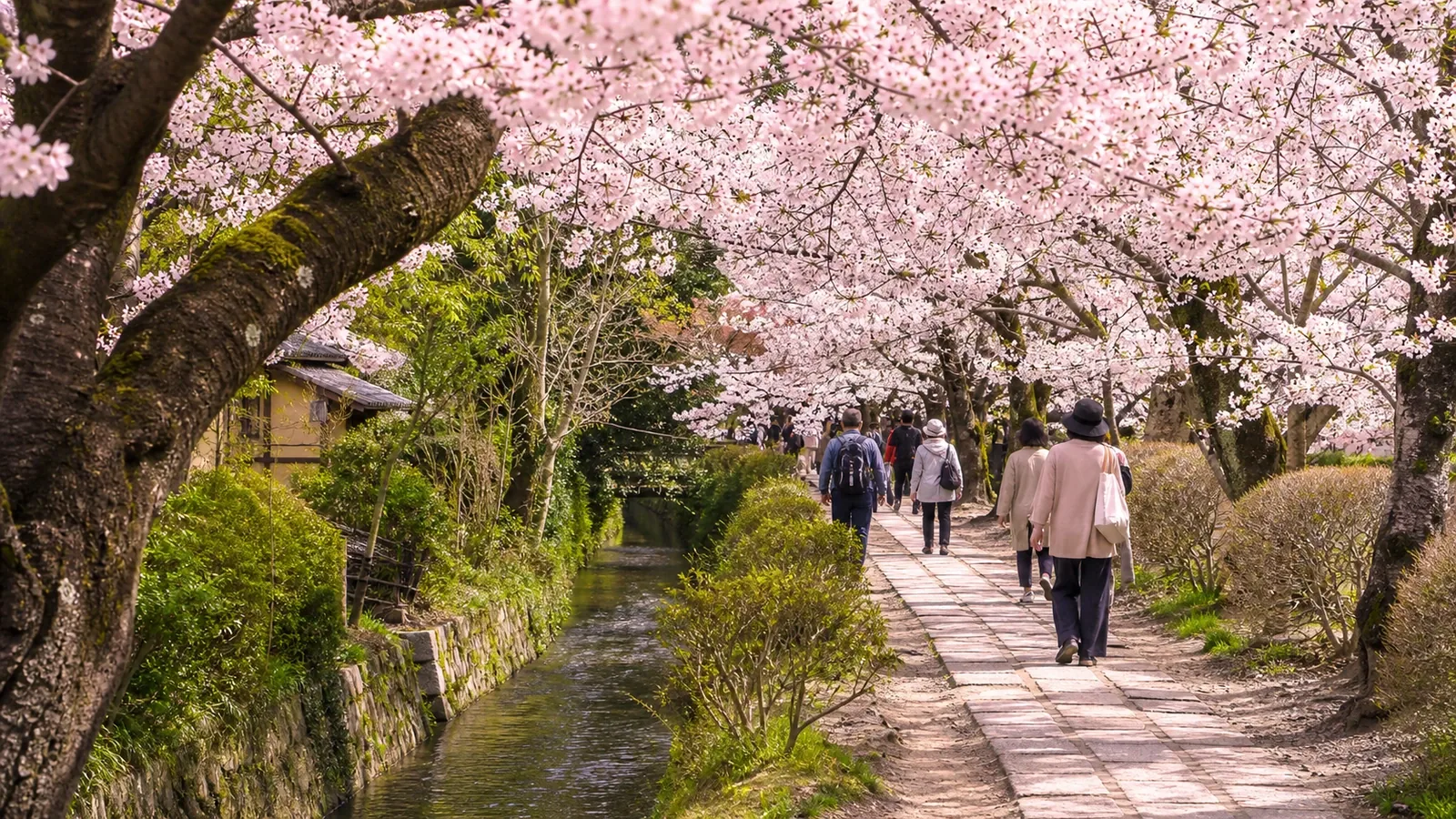
Spring is Kyoto’s most famous season. From late March through April, the city fills with flowers: first plum blossoms, then cherry blossoms, followed by azaleas, wisteria and irises. Walking the Philosopher’s Path, Maruyama Park or the area around Kiyomizu-dera can feel delicate and almost theatrical, especially during Kyoto cherry blossom season.
It is worth it if you dream of seeing Kyoto at its most iconic. It is worth reconsidering if you want absolute calm, spontaneity or moderate prices. To enjoy Kyoto in spring, get up very early, avoid the most famous places during peak hours and book accommodation well in advance.
To enjoy spring in Kyoto, get up early, avoid the best-known spots at peak times and book accommodation well in advance.
Autumn in Kyoto: red maples, gardens and quieter beauty
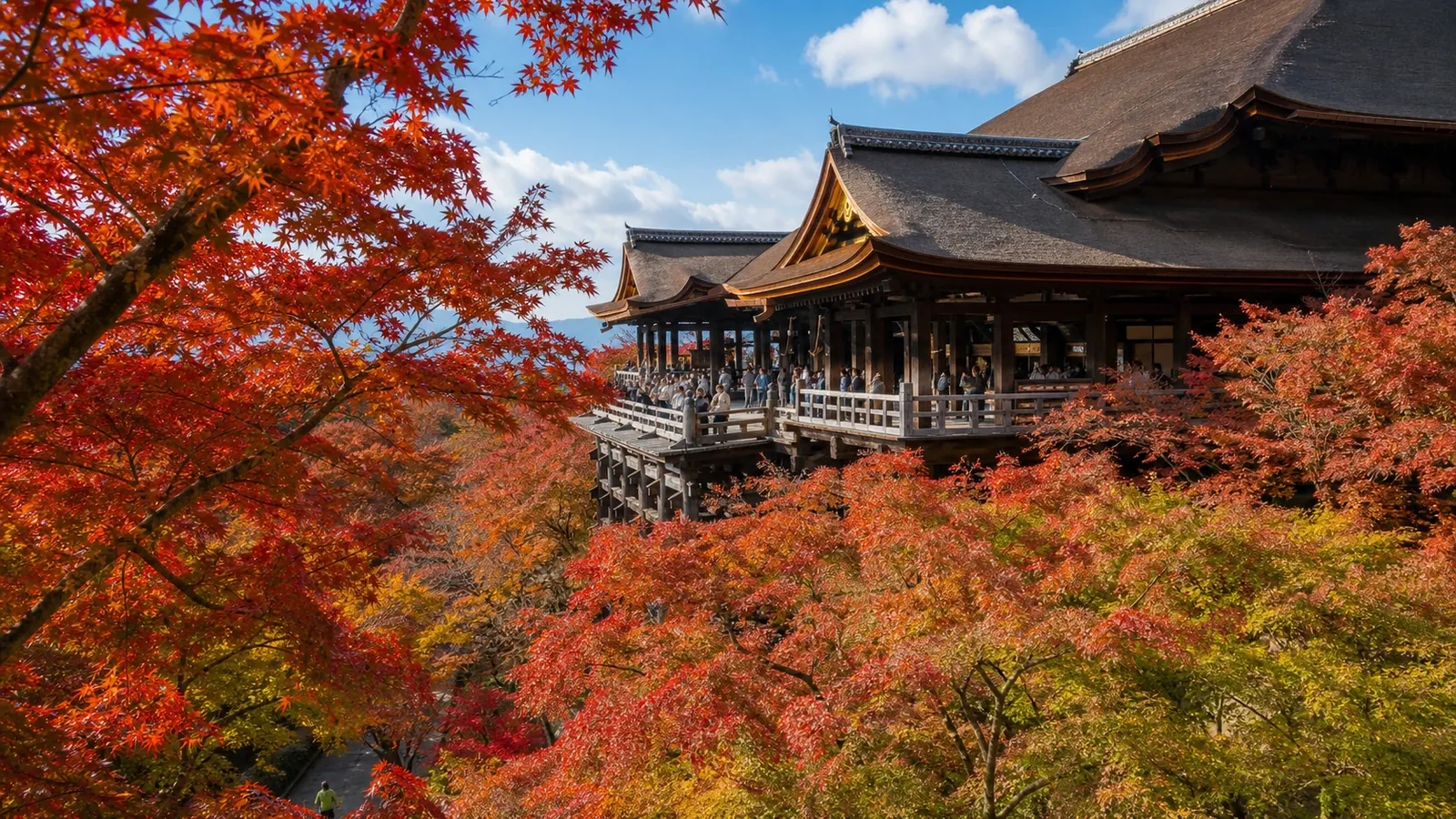
Autumn may be Kyoto’s most elegant season. The light is less sweet than in spring, more golden and slanting. Moss gardens, ponds and aged wooden gates take on a special intensity when Kyoto’s maple leaves turn red.
November is usually the most sought-after month, although the exact timing of autumn foliage changes every year. It is a highly recommended season for travellers who want to combine temples, walks, food and photography. Even so, it is not a hidden season: places such as Eikando, Tofuku-ji, Arashiyama and Kiyomizu-dera can be very crowded.
Summer in Kyoto: festivals, heat and humidity
Summer has character. Kyoto becomes dense, humid and bright, with lantern-lit nights, yukatas and streets full of energy. It is the season of major celebrations such as Gion Matsuri in July and Gozan no Okuribi, the ritual bonfires of August.
But summer is not for everyone. Heat and humidity can make walking from temple to temple exhausting, especially around midday. It is a rewarding time if you are drawn to festivals, local life and warm nights, but less suitable for heat-sensitive travellers, families with small children or itineraries with many hours on foot.
Winter in Kyoto: cold, calm and more livable temples
Winter reveals a more restrained Kyoto. January and February are the coldest months, and although snow can fall occasionally, it rarely accumulates heavily in the city.
The reward is clear: less tourist pressure than in the star seasons, clean light over the rooftops and the chance to experience some temples in deeper silence. It will not always be Kyoto at its most colourful, but it can be one of its most honest versions. It is a good time for travellers who value calm, hot baths, quiet cafés, seasonal cuisine and walks without so much congestion.
Best month to visit Kyoto for the first time
For a first visit, April and November are the most beautiful months, but also the most in demand. If you want a more balanced experience, May, October and early December can be excellent alternatives: the weather is usually gentler than in high summer or deep winter, and the city may feel less saturated than during peak blossom or autumn foliage.
Which Kyoto season fits your travel style?
Travel in spring if you want the classic image of Kyoto beneath cherry blossoms and accept the price of popularity. Choose autumn if you prefer a more serene, colourful and profound beauty, though not one free from crowds. Go in summer if festivals appeal to you and heat does not worry you. Choose winter if you want a more intimate Kyoto, less photogenic at first glance, but easier to inhabit.
Common mistakes when deciding when to travel to Kyoto
The first mistake is assuming Kyoto will be quiet during peak cherry blossom season or at the height of autumn colour. The second is planning every day around the most famous places. The third is underestimating the weather: in summer, walking is harder than many people imagine, and in winter the mornings can feel sharp if you are not prepared.
It is also wise not to become obsessed with getting the exact right day for sakura or momiji. Nature does not work like a fixed calendar. Sometimes the blossoms arrive early, sometimes the colours are delayed and sometimes rain changes the tone of the trip. Kyoto does not stop being Kyoto just because it does not show its perfect postcard face.
Do not become obsessed with the exact day for sakura or momiji: Kyoto remains special even when nature refuses to follow the ideal calendar.
Verdict: when Kyoto is most worth visiting
The best time to travel to Kyoto is autumn, especially if you want pleasant weather, red maples, atmospheric temples and memorable walks. Spring is more iconic, but also more fragile and crowded. Autumn offers broader beauty, less dependent on a few exact days and more generous for exploring the city slowly.
Even so, Kyoto is not understood through the season alone. It is understood through the way you move through it: early, slowly, with respect for its living neighbourhoods and without turning every temple into a box to tick. The best season helps, but the real difference lies in not demanding that the city be a postcard all the time.