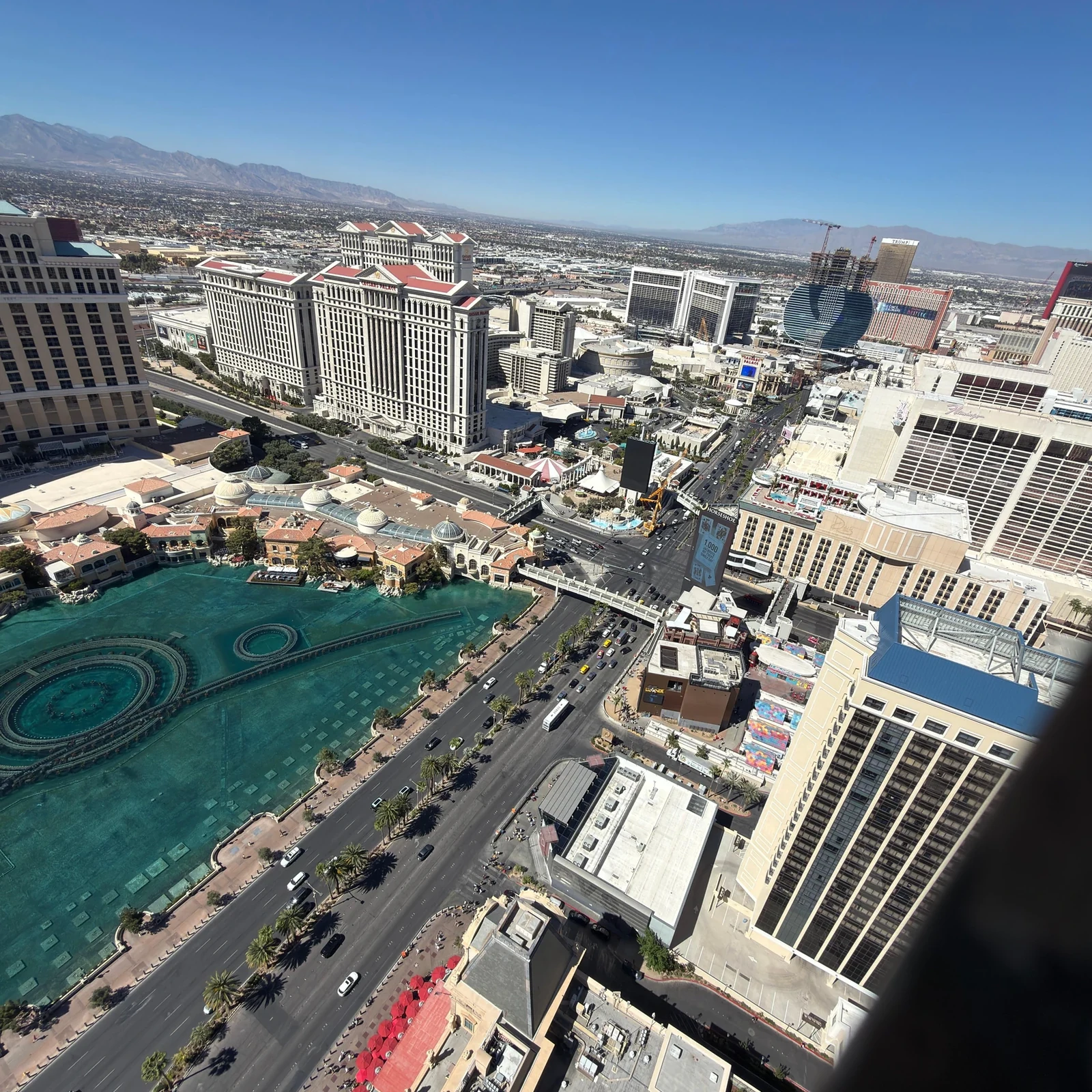
 Activity on TourBookGo
Eiffel Tower Viewing Deck Las Vegas: 360° Strip Views
Book Eiffel Tower Viewing Deck Las Vegas tickets for 360° views over the Strip and Bellagio fountains from around 460 feet above the city.
This Las Vegas itinerary divides the city into manageable areas, helping you explore the Strip, Downtown and the desert without underestimating the distances, heat or size of the resorts.
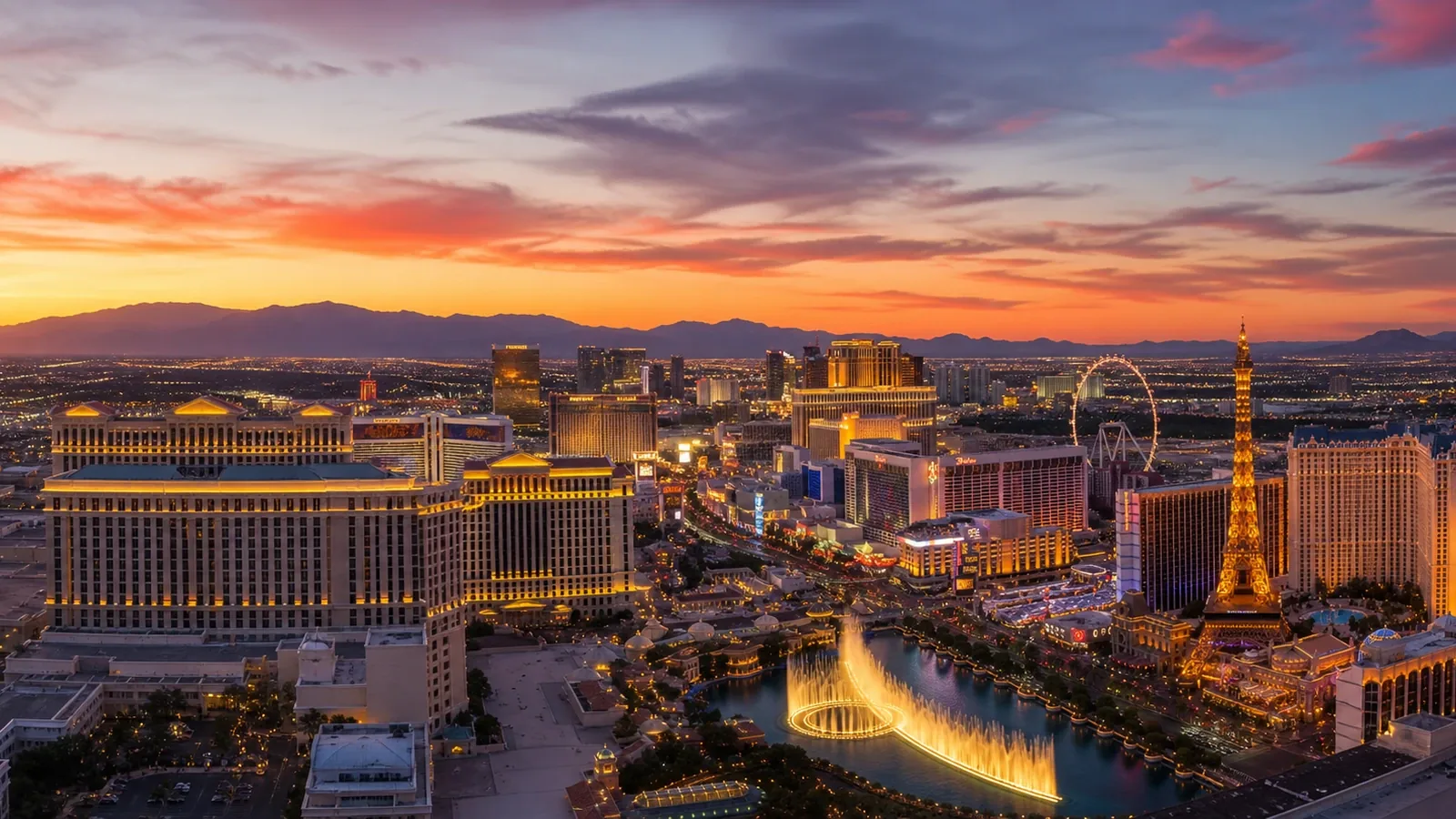
A well-planned Las Vegas itinerary should account for a city that looks easier to explore than it really is: one brightly lit boulevard, instantly recognizable hotels and the desert stretching out in the distance. Yet appearances can be deceiving. A casino that looks as though it is right next door may require a twenty-minute walk, several pedestrian bridges and a small maze of slot machines, restaurants and shopping malls. The best way to discover the city is not to tick off hotels one by one, but to divide it into areas. Set aside one block of time for the central and southern Strip, another for its northern end, one evening for Downtown Las Vegas and, when time allows, a full day for Red Rock Canyon or another desert day trip. This way, you can enjoy Las Vegas without turning the trip into an exhausting march beneath the neon lights.
Compare locations and options to find a base that suits your trip. Booking.com confirms current availability and pricing.
Find accommodation on BookingOne day is enough to grasp the spectacle, though not the whole city. The most logical route begins at the southern end of the Strip, continues toward its central section and finishes in Downtown.
Morning: from the southern Strip to its major attractions.
Start at the Welcome to Fabulous Las Vegas sign early in the morning, while it is still possible to get close without joining a long succession of groups waiting to take their photograph. From there, continue toward Mandalay Bay, Luxor and Excalibur.
There is no need to enter every resort. Luxor is worth seeing for its pyramid-shaped architecture and Excalibur for its deliberately theatrical design, but spending too much time here will leave less for the most interesting part of the route.
Continue toward New York-New York and Park MGM. This area reveals the true scale of Las Vegas: hotels that function like enclosed neighborhoods, indoor avenues, urban replicas and a constant stream of stimuli designed to erase your sense of time.
Afternoon: Bellagio, Caesars Palace and The Venetian.
After lunch, focus your visit on the heart of the Strip:
Bellagio Conservatory and Botanical Gardens.
Bellagio’s exterior and lake.
Caesars Palace and the Forum Shops.
A walk along The LINQ.
The Venetian and its indoor canals.
The route looks short on a map, but it can easily take up the entire afternoon. The key is to choose two or three interiors to explore and admire the rest from the boulevard. Trying to investigate every casino creates a strange sensation: you walk a great deal, yet eventually everything begins to look the same.
The official tourism office also recommends exploring different sections of the Strip on foot to appreciate the variety of resorts and attractions. Bear in mind, however, that the heat and the sheer size of the buildings can make the experience far more demanding than expected.
Evening: Fremont Street.
At nightfall, head to Downtown Las Vegas. Fremont Street has a more compact, noisy and slightly gritty energy than the Strip. Here you will find historic casinos, vintage signs, street musicians and an atmosphere that is less polished but full of character.
Take a walk through Fremont East as well. Those with more time can visit the Arts District or choose a museum, although on a one-day visit it is better not to divide the evening into too many separate stops. Downtown brings together light shows, bars, restaurants and a blend of classic and contemporary Las Vegas that feels distinctly different from the main boulevard.
Who is this itinerary best suited to? Travelers on a stopover or anyone looking for an intense first impression. It is less suitable for families with young children or for visitors who want to explore museums, attend a long show or enjoy the hotels at a leisurely pace.
With two days, it makes sense to spend the first day on the Strip and devote the second to Downtown and the northern end of the boulevard.
Day 1: central and southern Strip.
Follow the route above, but skip Fremont Street. Finish the afternoon at Bellagio and reserve the evening for a show, concert or special dinner.
Do not schedule a performance immediately after dinner at the opposite end of the Strip. Traffic, queues and the distances inside the resorts can ruin even a schedule that appears to leave plenty of time.
Day 2: Downtown, the Arts District and the northern Strip.
Begin the morning at one of Downtown’s museums. The Mob Museum is a good choice for anyone curious about the history of organized crime and the institutions that fought it, while the Neon Museum will appeal more to visitors interested in the city’s visual heritage.
Afterward, explore Fremont Street during the day. It loses some of its magnetism without the darkness, but daylight reveals details hidden by the evening spectacle. Continue to the Arts District for lunch, browse an independent shop or spend a few hours away from the large casinos.
In the late afternoon, return to the northern Strip. The Venetian, Wynn, Resorts World and the exterior of Sphere form a coherent route. End the second evening on Fremont Street if you did not visit it the day before.
Three days is a reasonable amount of time for a first visit. It allows you to explore the Strip, discover Downtown and see that Las Vegas does not end where the illuminated signs disappear.
Day 1: southern and central Strip.
Walk from the Las Vegas sign to Bellagio. Enter only the hotels that genuinely interest you and save some energy for the evening.
Day 2: northern Strip and Downtown.
Spend the morning at The Venetian, Wynn and the resorts at the northern end of the Strip. After a rest, head Downtown to visit a museum, have dinner and see Fremont Street illuminated at night.
Day 3: Red Rock Canyon or a day in the city.
The best option for a break from the sensory overload is Red Rock Canyon. Its red sandstone walls, trails and scenic roads are a reminder that Las Vegas was built in the middle of the Mojave Desert, not in a landscape-free void.
Red Rock Canyon lies around 17 miles west of the Strip and has a one-way scenic drive, hiking areas and viewpoints. From October to May, timed-entry reservations are required for vehicles during certain hours, so check the current conditions before setting out.
Those who do not wish to rent a car can remain in the city and dedicate the third day to swimming pools, shopping, dining, museums or an afternoon show. It is also a good opportunity to return to places visited too hastily.
Seven days is too long to spend exclusively inside casinos, but it can be rewarding when Las Vegas is combined with its surroundings.
Days 1 and 2: the Strip at a relaxed pace.
Divide the boulevard into two areas. Spend one day visiting Mandalay Bay, Luxor, New York-New York, Bellagio and Caesars Palace, and another exploring The LINQ, The Venetian, Wynn, Resorts World and the northern Strip.
This arrangement allows time to enter the hotels, stop for meals and rest during the hottest part of the day.
Day 3: Downtown and the Arts District.
Visit one or two museums, explore Fremont Street and discover the bars, murals and small businesses of the Arts District. Downtown can feel more chaotic than the Strip, and some streets become quiet very quickly once you move away from the busiest areas. Stay aware of your surroundings, especially late at night.
Day 4: Red Rock Canyon.
Set aside a relaxed day for the scenic drive, viewpoints and a trail suited to your level of experience. In summer, hiking at midday can be unwise because of the heat. Starting early is not a matter of aesthetics, but of practicality.
Day 5: Hoover Dam and the Lake Mead area.
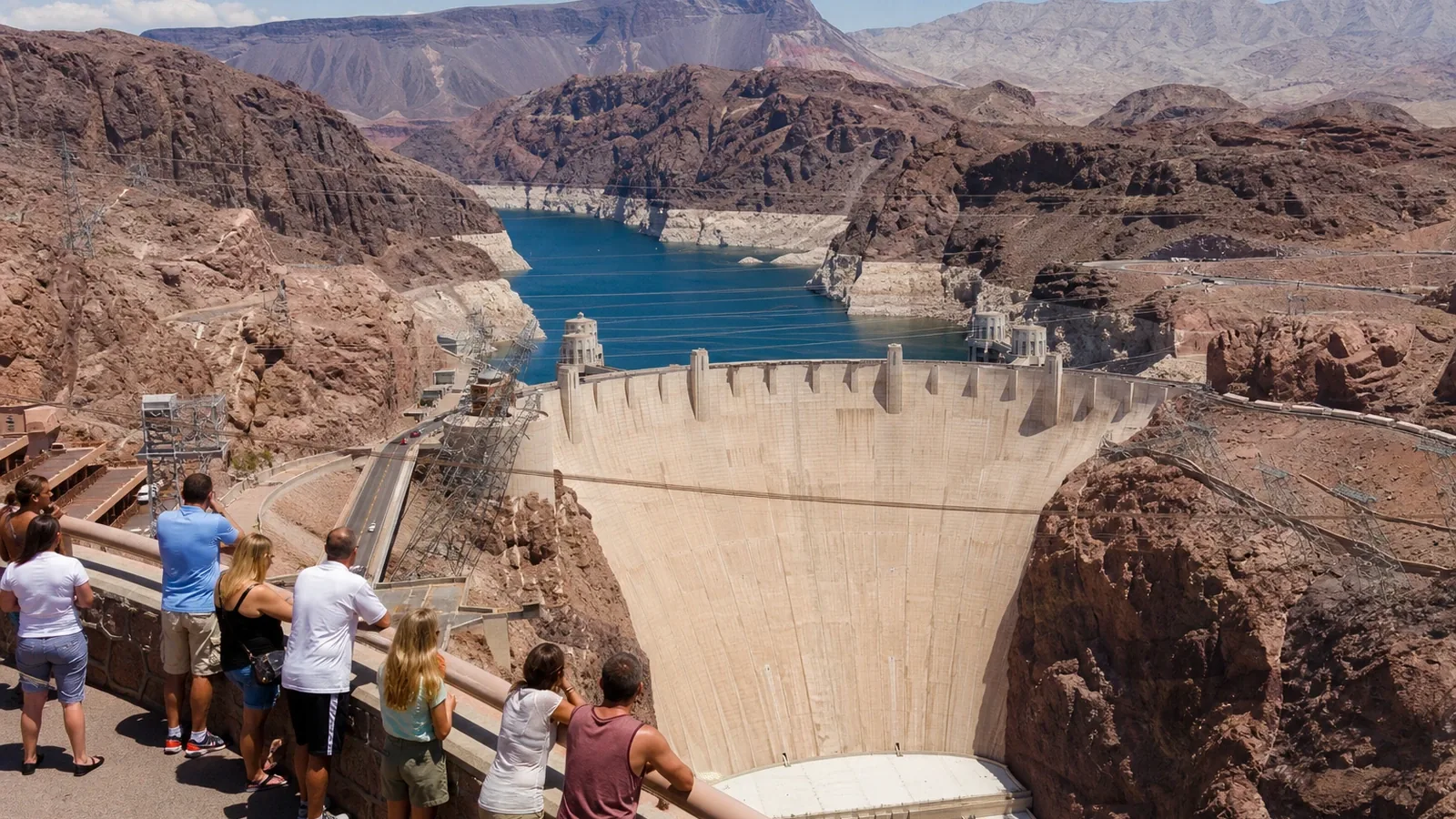
Hoover Dam works well as either a half-day or full-day trip. It is particularly interesting for those who enjoy engineering, the history of the American West and arid landscapes. Visitors expecting untouched nature may find the experience too focused on infrastructure and tourist traffic.
Day 6: Valley of Fire or a longer excursion.
Valley of Fire State Park offers rock formations, scenic roads and colors that are especially vivid during the first and last hours of the day. It is a more peaceful alternative to spending yet another day on the Strip.
Trips to the Grand Canyon are also available, but the distances should not be underestimated. Some commercial tours promise too much in a single day, resulting in long hours inside a vehicle and very little time at the destination itself.
Day 7: rest and a final evening.
Keep the final day partly free. Las Vegas is more tiring than it appears: constant noise, air conditioning, smoke in certain gaming areas, long walks and late nights.
A morning by the pool or at a spa, a leisurely meal and one carefully chosen final evening usually leave a better impression than squeezing in five hurried attractions.
You do not need to rent a car to explore the Strip. Walking works well for short sections, but the high temperatures and enormous size of the hotels make it advisable to combine walking with public transport or taxi rides.
The Deuce bus connects the Strip with Downtown and operates throughout the day, although it can move slowly in heavy traffic. The monorail has seven stations along the eastern side of the Strip and can be useful for covering certain distances without relying on road traffic, but some stations are located quite far from the hotels’ main entrances.
A car is more useful for visiting Red Rock Canyon, Hoover Dam or Valley of Fire. On the Strip itself, it can become a burden because of traffic, parking and the time required to enter and leave the resorts.
Strip + Downtown: the basic combination for understanding the two best-known sides of Las Vegas.
Strip + Red Rock Canyon: ideal for those who quickly tire of casinos and need some scenery.
Las Vegas + Hoover Dam: a logical choice for a four- or five-day stay.
Las Vegas + Grand Canyon: recommended only when there is enough time to avoid a rushed excursion.
Las Vegas + Los Angeles: possible by road, although the journey can become lengthy because of traffic and should not be treated as a minor transfer.
The most common mistake is planning Las Vegas as though it were a compact European city. The second is booking too many paid activities. The third is underestimating fatigue.
Leave enough time between meals, shows and transfers; wear comfortable shoes; drink water even when you do not feel thirsty; and check the conditions for excursions, concerts and major events in advance. Las Vegas changes character depending on the calendar: a convention, race or holiday weekend can affect prices, traffic and availability.
For a first visit, three days offers the best balance. Two are enough to see its main attractions; a full week only makes sense when it includes excursions, time to rest and experiences away from the casinos.
Las Vegas dazzles, but it can also overwhelm. Its appeal does not lie in seeing everything, but in embracing the spectacle, observing its excesses and knowing when to step away from the lights and look toward the desert.
Discover selected experiences in Las Vegas to complete this guide with shows, viewpoints, nightlife, adventure and well-organised day trips.
Activity on TourBookGoBook Eiffel Tower Viewing Deck Las Vegas tickets for 360° views over the Strip and Bellagio fountains from around 460 feet above the city.
 Activity on TourBookGo
Book your STRAT Tower observation deck ticket in Las Vegas for 360° views from indoor and outdoor decks. Flexible entry, from €24 per person.
 Activity on TourBookGo
Check FlyOver Las Vegas tickets for a roughly 30-minute immersive flight experience with motion seats, a 52-foot spherical screen and sensory effects. From €26.