 Activity on TourBookGo
Criss Angel MINDFREAK Las Vegas Tickets
Check Criss Angel MINDFREAK Las Vegas tickets at Planet Hollywood: 50+ illusions, a 75-minute show, prices from €92, showtimes and practical booking details.
Yes, Las Vegas is worth visiting at least once if you want spectacular entertainment, memorable shows, and a deliberately extravagant city break.
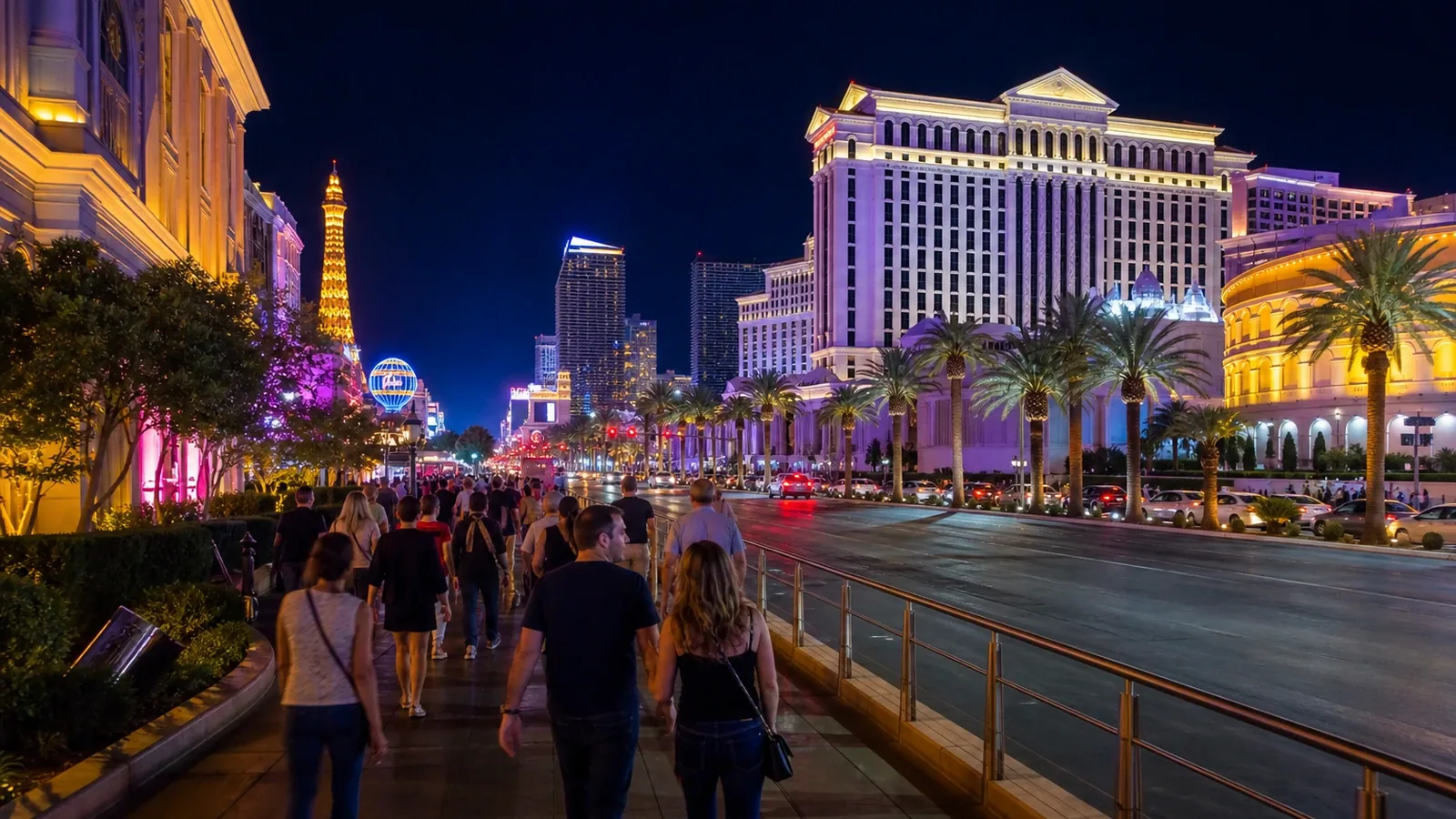
If you are wondering whether Las Vegas is worth visiting, the answer depends on what you expect from the trip. The city rises from the middle of the desert like an electric hallucination. By day, its monumental façades resemble motionless film sets beneath a relentless sun; after dark, the Strip becomes a river of neon, music, screens, and crowds moving without looking at the time. It is excessive, artificial, and exhausting. It can also be fun, surprising, and unlike almost anywhere else. The useful question is not whether Las Vegas is good or bad, but whether it suits you. Yes, Las Vegas is worth visiting at least once if you are looking for entertainment, spectacle, and a deliberately extravagant urban adventure. You do not need to gamble to enjoy it: there are major stage productions, ambitious dining, themed architecture, museums, immersive installations, sports, pools, and several genuinely worthwhile free attractions that can help balance the budget. However, it is important to arrive with the right expectations. Las Vegas does not offer the intimacy of a historic city, the serenity of a natural landscape, or spontaneous street life. Much of the experience is designed to keep you inside hotels, shopping centres, restaurants, and entertainment venues. Everything is competing for your attention—and often for your money as well. That is precisely where its appeal lies: Las Vegas does not try to look natural. It creates an oversized fantasy and invites you to step inside it for a few days.
Compare locations and options to find a base that suits your trip. Booking.com confirms current availability and pricing.
Find accommodation on BookingA concentration of entertainment that is hard to match. Within just a few kilometres, you will find enormous hotels, architectural replicas, casinos, theatres, restaurants, and concert venues. You can have breakfast beneath a recreated European square, walk through a casino with indoor canals, attend a large-scale show, and end the evening looking out over the desert from a rooftop terrace.
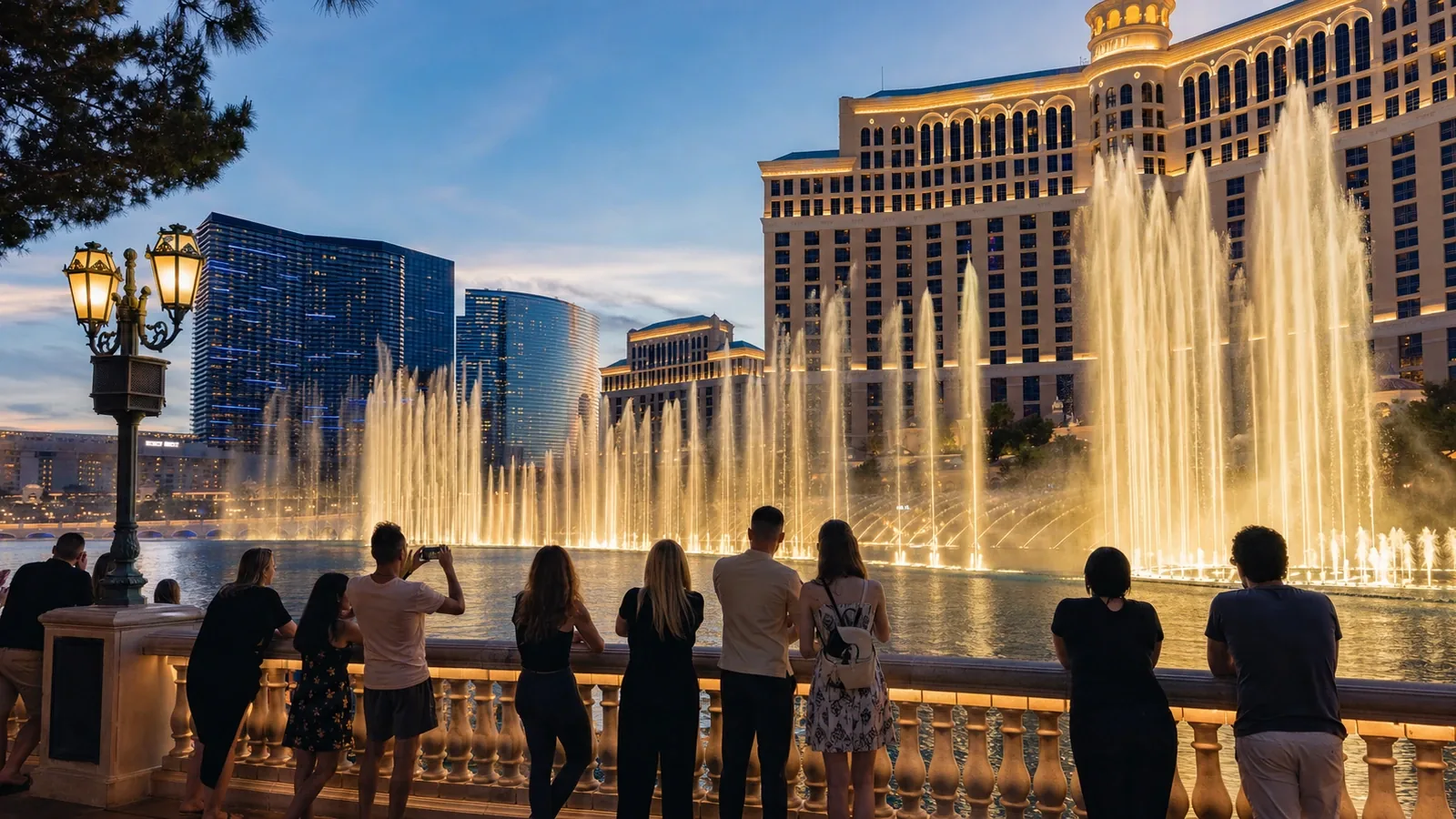
The city is no longer centred solely on gambling. The Strip, Downtown, Fremont Street, and neighbourhoods such as the Arts District allow visitors to combine bright lights, popular culture, food, sport, and immersive art. There are also free experiences—fountains, gardens, installations, and street shows—that let you enjoy part of the city’s character without paying admission at every stop.
The contrast with the desert makes the city even more compelling. Not far away, red mountains, empty roads, and arid landscapes reveal just how improbable this glowing metropolis really is. Red Rock Canyon, for example, lies about 27 kilometres from the Strip and can add fresh air, silence, and a sense of natural scale to a trip otherwise dominated by artificial interiors.
Las Vegas tends to work particularly well for couples looking for a short break with memorable hotels, dinners, and shows.
It also suits groups of friends who enjoy nightlife and high-energy surroundings.
It works for travellers interested in food, concerts, magic, sport, or large-scale stage productions.
It is convenient for people who value having many activities concentrated in one area.
It can be an extravagant stop on a road trip through the western United States.
It may also surprise visitors who have no interest in casinos whatsoever. It is entirely possible to enjoy Las Vegas without gambling by combining shows, museums, pools, restaurants, and day trips instead.
Las Vegas may disappoint anyone looking for everyday authenticity, quiet streets, or a deep connection with local culture. Its energy is commercial, and its urban landscape is designed to impress rather than feel intimate.
It may be less suitable for travellers who are sensitive to noise, bright lights, or crowds.
It may not suit people who dislike casinos or vast indoor spaces.
Families who prefer peaceful, easy-to-navigate destinations may find it exhausting.
It can also be difficult for visitors travelling on a very tight and inflexible budget.
The Strip looks compact in photographs, but the distances are deceptive. The resorts are enormous, road crossings may require pedestrian bridges, and simply entering or leaving a hotel often takes longer than expected.
Las Vegas can be expensive, although not necessarily in the same way for everyone.
Accommodation prices fluctuate considerably depending on the day of the week, conventions, concerts, and major sporting events. A room that initially appears inexpensive may cost far more once taxes, resort fees, parking, and additional charges are included.
Food also covers every possible price range, from quick slices and casual meals to restaurants where a single dinner may exceed another traveller’s entire daily budget. Shows, clubs, and premium experiences are the expenses most likely to send costs soaring.
Even so, there are hotels away from the central Strip, special offers, free activities, and affordable dining options. A Las Vegas trip can still be managed on a moderate budget, but it requires more planning than it did a few years ago.
Two nights. This gives you time to explore the Strip, see a show, and spend a few hours on Fremont Street. It is an intense and somewhat superficial visit, but enough to find out whether the city appeals to you.
Three nights. This is the most balanced length for a first visit to Las Vegas. It gives you enough time to explore without turning every day into a race and matches a long-weekend format.
Four or five nights. This makes sense if you want to add pool time, fine dining, museums, shopping, or a desert excursion. A longer stay may feel excessive for visitors who do not particularly enjoy the city’s atmosphere.
One week. A full week is only worthwhile if Las Vegas is being used as a partial base for exploring the surrounding area or if the trip is built around several specific shows, events, and experiences.
Spring and autumn generally offer the most pleasant balance between temperature and activity. In summer, the heat severely limits the amount of time you can spend outdoors: official climate data places the average July high at around 41°C, and some periods have been even more extreme.
Winter makes daytime walking more comfortable, although nights can be cold and pool season becomes less important. Conventions, competitions, and major concerts can also transform both prices and occupancy levels, so your travel dates matter almost as much as the hotel you choose.
The most common mistake is trying to do everything. Las Vegas constantly stimulates the senses and fills your itinerary with possibilities, but moving from casinos to restaurants, museums, shows, and clubs usually ends in exhaustion.
It is also wise to avoid booking solely because of an eye-catching rate, underestimating distances, planning long walks in summer, or leaving the most popular shows until the last minute.
Above all, your travel budget should never be confused with the money set aside for gambling. Betting should be treated as entertainment, never as a way to finance the holiday.
Yes, Las Vegas is worth visiting for a short, deliberate, and well-paced break. Three nights are usually enough to be surprised by its theatricality without becoming overwhelmed.
It is a good choice for travellers who enjoy shows, food, extravagant architecture, and cities that seem to exist in a parallel reality. It may be a poor choice for anyone who needs silence, spontaneity, or historical depth.
Las Vegas is not beautiful in a conventional sense. Its appeal comes from excess: an improbable city built against the desert that, for a few nights, manages to make artificiality feel like a legitimate form of wonder.
Discover selected experiences in Las Vegas to complete this guide with shows, viewpoints, nightlife, adventure and well-organised day trips.
Activity on TourBookGoCheck Criss Angel MINDFREAK Las Vegas tickets at Planet Hollywood: 50+ illusions, a 75-minute show, prices from €92, showtimes and practical booking details.
 Activity on TourBookGo
Check Mob Museum Las Vegas tickets from €31, explore interactive exhibits, see how long to allow for your visit and review cancellation conditions.
 Activity on TourBookGo
Discover the Madame Tussauds Las Vegas and gondola ride combo: what is included, how the Venetian booking works and whether it is worth it.