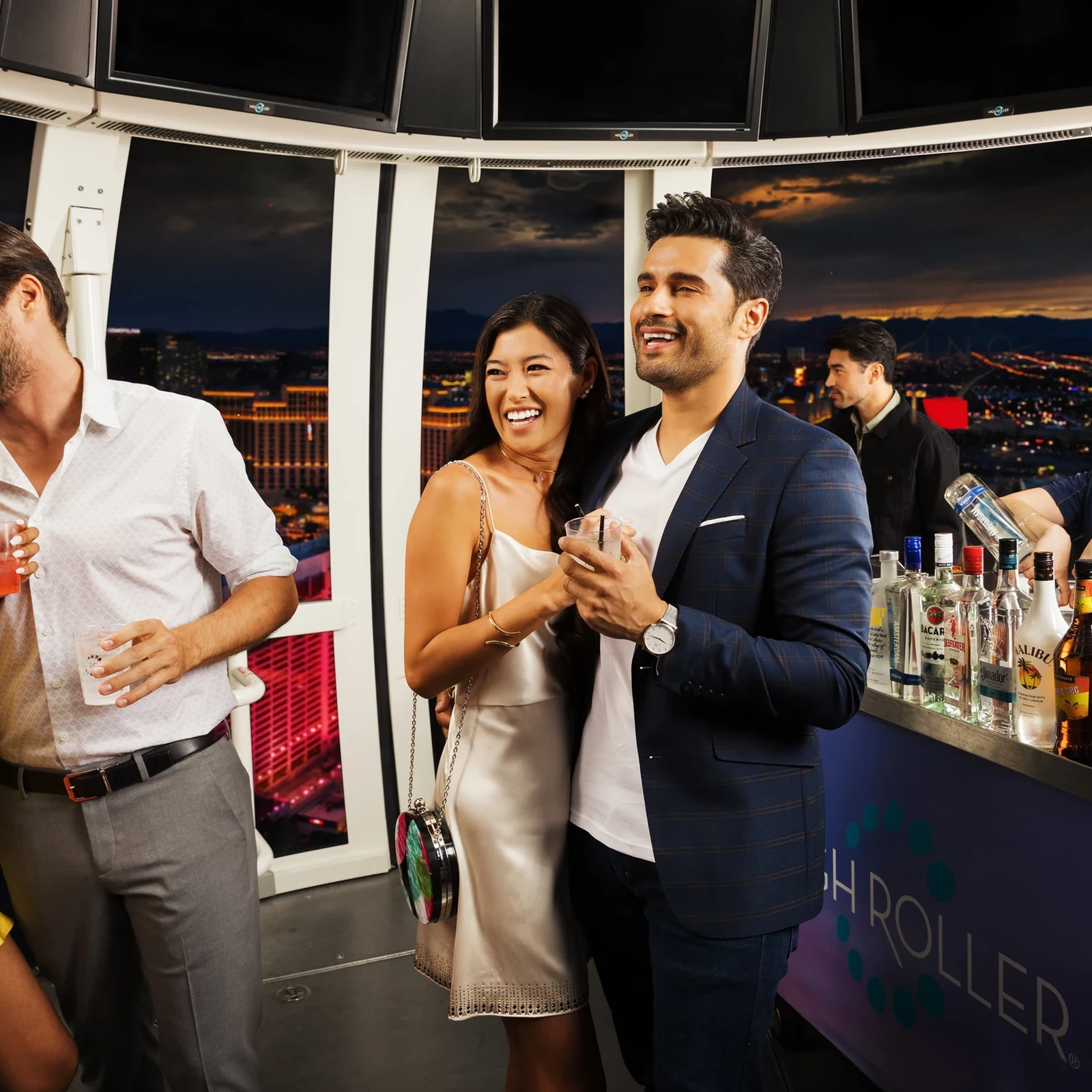
 Activity on TourBookGo
High Roller Happy Half Hour Las Vegas: Open Bar & 360° Views
Book High Roller Happy Half Hour Las Vegas for around 30 minutes of 360° views, an open bar and an onboard bartender for guests aged 21+.
Deciding where to eat in Las Vegas can be as exciting as choosing a show. You can dine beneath a crystal chandelier, eat breakfast beside a slot machine, and end the night over a bowl of ramen in Chinatown. The city thrives on excess, but its most memorable food is not always hidden behind the brightest façade.
Finding where to eat in Las Vegas takes a little planning. The Strip is packed with celebrity names, theatrical dining rooms, and hefty bills, while Chinatown and Downtown offer family-run kitchens, affordable restaurants, and tables where flavor matters more than décor. This guide covers the best areas, dishes, and practical tips for eating well without falling into tourist traps.
Compare locations and options to find a base that suits your trip. Booking.com confirms current availability and pricing.
Find accommodation on BookingLas Vegas does not have a traditional cuisine as clearly defined as New Orleans or San Sebastián. Its culinary identity has developed through a blend of different eras, communities, and cultures.
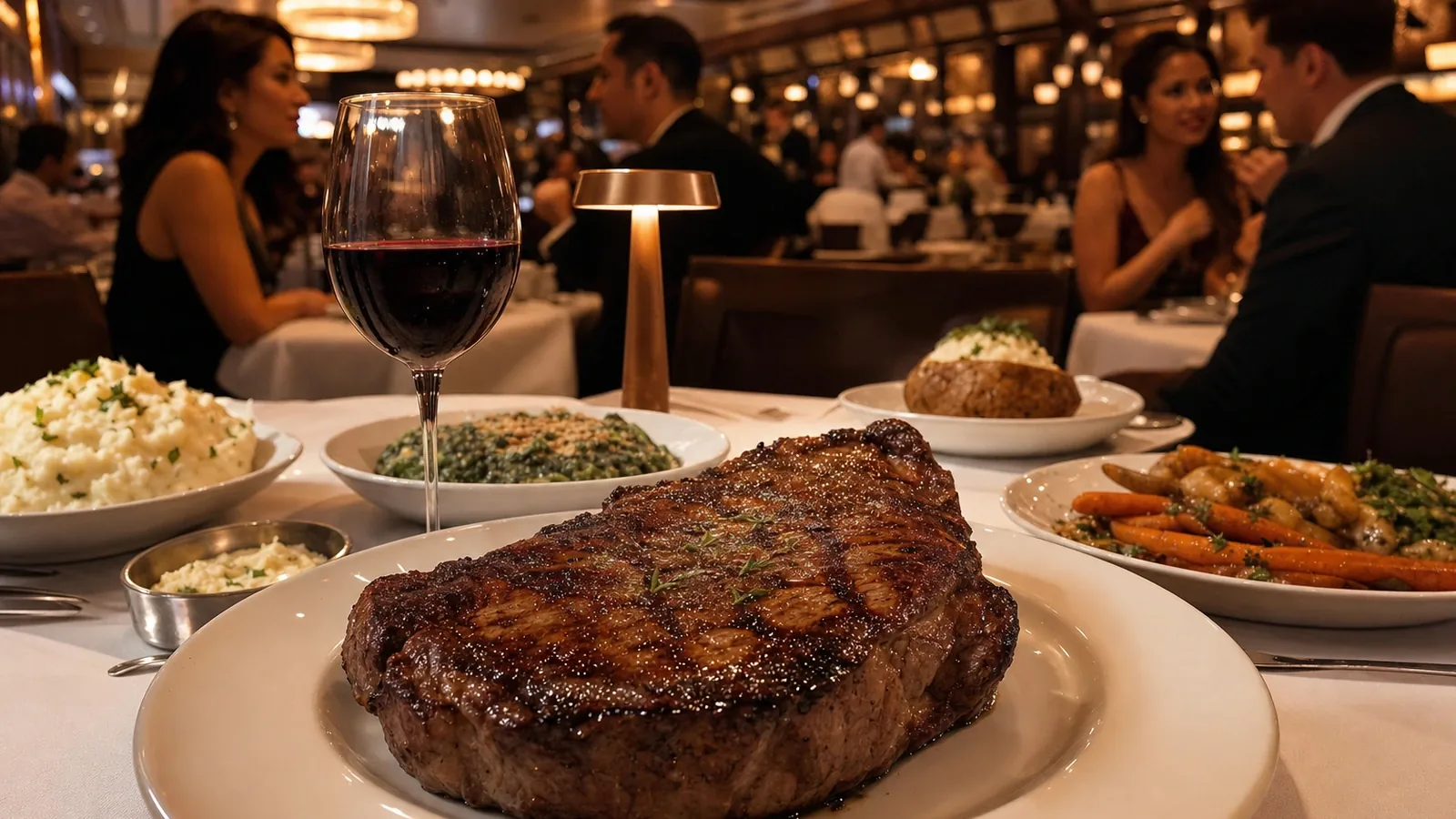
Old-school Las Vegas gave the city oversized steaks, prime rib, shrimp cocktails, and dimly lit casino dining rooms. Modern Las Vegas added celebrity-chef restaurants, an extraordinarily diverse Asian food scene, taquerias, late-night eateries, and international cuisines rarely found together in other destinations.
Flavors worth seeking out include prime rib and classic steakhouse dishes.
Freshly prepared adobada tacos are another option worth seeking out.
Xiao long bao and other Chinese dumplings form part of the city’s most interesting food scene.
Ramen, Japanese curry, and robata-grilled skewers are also worth trying.
Northern Thai cuisine adds another layer to the city’s diversity.
Generous American breakfasts remain part of the Las Vegas experience.
A good slice of pizza can be the right choice after a long night.
There is no need to try them all. One of the most common mistakes in Las Vegas is turning every meal into a spectacle and ending up overwhelmed by both the excess and the bill.
The Strip is home to celebrity-chef restaurants, grand steakhouses, dining rooms with views, and spaces designed to impress before the first dish even arrives. It is the right place to celebrate a special occasion or pair dinner with a show without having to travel elsewhere.
It is also where you are most likely to pay for the name, the location, and the scenery. A packed dining room, a dramatic entrance, and a menu bearing a celebrity’s name do not guarantee a memorable meal. Check the menu before booking and decide whether you are genuinely interested in the food or simply in the experience.
The best strategy is to choose one major dinner on the Strip and spend the rest of the trip exploring other neighborhoods. That way, you can enjoy the luxury without making every meal excessively expensive.
Chinatown stretches along Spring Mountain Road, west of the Strip. Rather than a traditional Chinatown, it is a multicultural corridor filled with hundreds of restaurants, supermarkets, bakeries, and small businesses. Within a few blocks, you will find regional Chinese, Japanese, Korean, Vietnamese, Thai, and French cuisine, along with contemporary dining concepts.
Some of the city’s most highly regarded restaurants are located here. Raku is known for Japanese robata cooking; Shanghai Taste for its dumplings; Monta Ramen for deeply flavored bowls of broth; and Big Dan Shanxi Taste, located inside an Asian supermarket, for its noodles and northern Chinese flavors. Sparrow + Wolf and Partage represent the neighborhood’s more creative and refined side.
Chinatown does not have the romantic atmosphere of a pedestrian market. Many restaurants are located in shopping plazas separated by wide roads and parking lots. To move between several venues, it is usually more practical to drive or use a ride service than to attempt to explore the entire area on foot.
Travelers who prefer milder flavors can begin with ramen, Japanese curry, dim sum, or dumplings. Those looking for something more intense will find hot pot, Korean barbecue, cumin-spiced noodles, Sichuan dishes, and omakase menus.
Ordering several dishes to share is a good approach. Chinatown is best enjoyed as a culinary exploration rather than as one rigid, formal dinner.
“Cheap” is a relative term in a tourist city, but it is still possible to eat sensibly. Tacos, ramen, pizza, and casual restaurants in Downtown and Chinatown can help you control the budget without sacrificing flavor.
This is one of the best-known places to try Tijuana-style tacos, especially the adobada. It has several Las Vegas locations, including one near the northern end of the Strip. There is often a line, and the atmosphere is functional rather than elegant, but it offers a flavorful alternative to casino restaurants.
In Chinatown, Monta Ramen offers a straightforward experience centered on the food: an informal dining room, carefully prepared broth, and portions suited to an unfussy meal. It remains open on Spring Mountain Road.
Hidden inside an Asian supermarket, this is a good place to try noodles, stuffed breads, and regional Chinese dishes without paying for a sophisticated dining room. The surroundings may seem modest, but that is precisely part of its authenticity.
Around Fremont Street, you will find pizzerias, burger joints, and small restaurants that are more affordable than many establishments on the Strip. Evel Pie combines casual pizza with Evel Knievel-inspired décor and remains a popular choice for a quick meal in Downtown.
To save money, make lunch your main meal, share large appetizers, and avoid ordering alcohol out of habit. In Las Vegas, two cocktails can increase the bill far more than the main course.
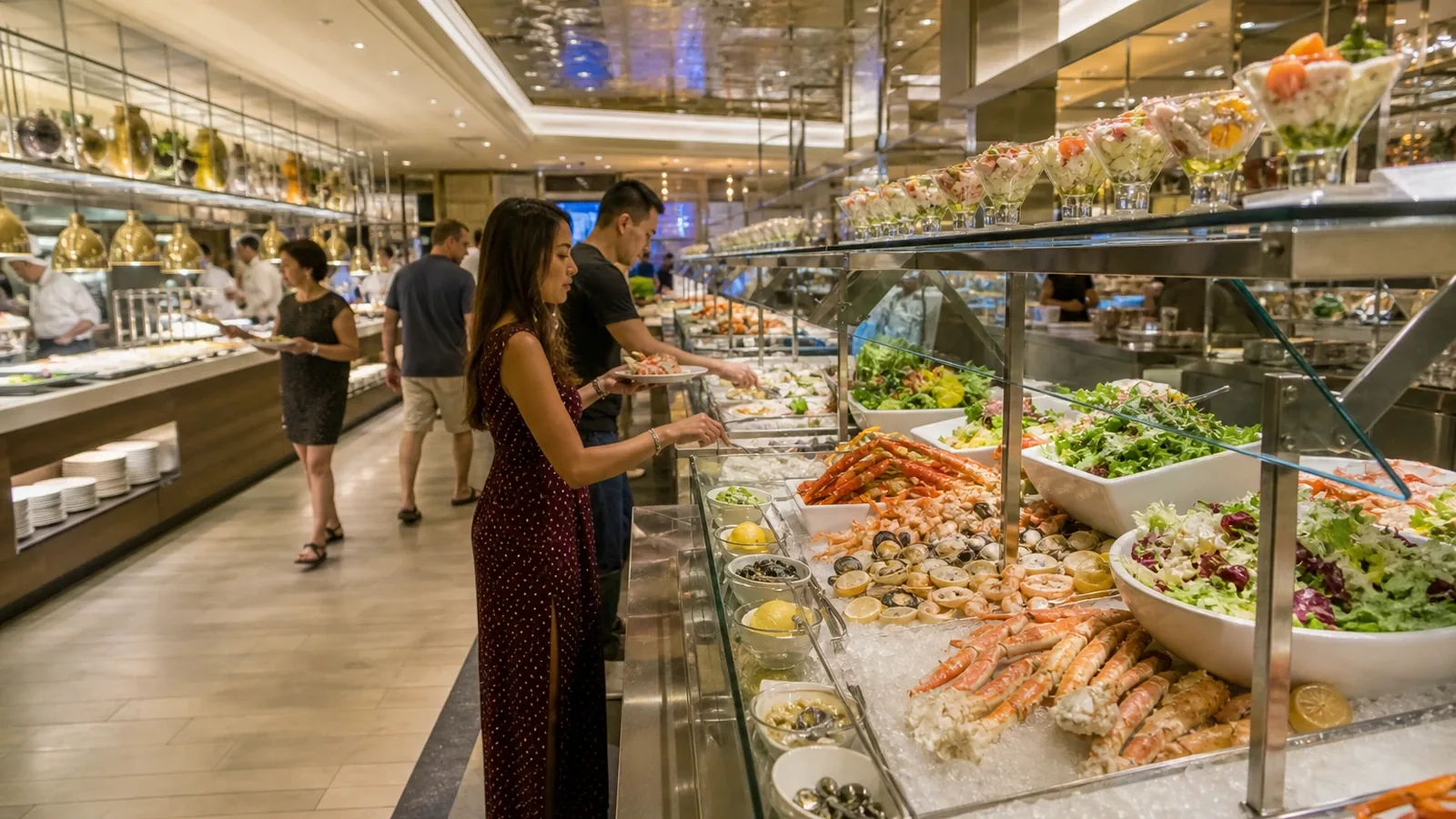
The buffet remains part of the city’s mythology, but it is no longer necessarily a budget option. Those that remain tend to position themselves as expansive dining experiences, with seafood, meats, desserts, and international stations, rather than as cheap places to eat.
The number of buffets has also declined. The MGM Grand buffet closed in May 2026, a reminder that many older lists no longer reflect the city’s current reality.
A buffet can be worthwhile for people who enjoy sampling small portions of many different dishes and have plenty of time. It may disappoint those who prefer precise cooking, a quiet atmosphere, or a light meal. Going in determined to “get your money’s worth” often turns lunch into an uncomfortable competition.
Las Vegas is not known for large historic markets filled with traditional stalls. Its closest equivalents are Chinatown’s Asian supermarkets, small food courts, and modern food halls inside hotels and shopping complexes.
The supermarkets along Spring Mountain Road offer a chance to discover Japanese, Korean, Chinese, and Southeast Asian products. Some conceal tiny restaurants inside, such as Big Dan Shanxi Taste. They are more everyday than photogenic, but they provide a closer look at the city where locals actually eat.
Food halls on the Strip are convenient when a group cannot agree on one type of food, although variety does not always translate into good value.
Choosing a restaurant based only on the chef’s name: sometimes you are paying more for an international brand than for genuinely personal cooking. A famous name may still deliver a solid meal, but it should not replace reading the menu.
Sitting down without checking prices: on the Strip, even an apparently casual meal can become expensive. Looking at the menu before going inside prevents decisions driven by exhaustion or hunger.
Always eating inside the hotel: convenience has value, but it also limits the experience. A single trip to Chinatown, Downtown, or the Arts District can reveal a much more diverse city.
Relying on outdated guides: the dining scene changes quickly, and several significant closures have taken place during 2026. Check that a restaurant is still open before planning an entire evening around it.
Booking too many heavy meals: a steakhouse, a buffet, and a lavish brunch on consecutive days can become exhausting. Alternating a special meal with ramen, tacos, fruit, or shared plates makes the trip more enjoyable.
First-time visitors to Las Vegas can combine one show-stopping dinner on the Strip, a casual evening in Downtown, and a culinary excursion to Chinatown.
Couples will find theatrical settings and elegant tables in the major hotels, although they should expect high prices. Food-focused travelers should spend more time around Spring Mountain Road. Families are often more comfortable in food halls, pizzerias, and casual restaurants, while groups can make the most of shared dishes, hot pot, or Korean barbecue.
The best meal in Las Vegas does not always arrive beneath a golden dome. Sometimes it appears in a neon-lit shopping plaza, on a plate of freshly folded dumplings, or in a taco eaten standing up while the city is still nowhere near ready for bed.
Discover selected experiences in Las Vegas to complete this guide with shows, viewpoints, nightlife, adventure and well-organised day trips.
Activity on TourBookGoBook High Roller Happy Half Hour Las Vegas for around 30 minutes of 360° views, an open bar and an onboard bartender for guests aged 21+.
 Activity on TourBookGo
Discover IKONS of Rock Las Vegas at The STRAT: a 70-minute classic rock tribute show with visual effects, audience interaction and tickets from €64.
 Activity on TourBookGo
Take a Las Vegas night tour by electric vehicle for 1.5 hours. Drive the Strip and see the Sphere, Downtown and Fremont Street from €75 per person.