

Book your Tower of London and Crown Jewels ticket, explore the fortress at your own pace and visit historic exhibitions. Free cancellation up to 24 hours.
View experienceWestminster, Big Ben, and Parliament
Westminster remains London’s great ceremonial stage. Seeing Parliament from Westminster Bridge, with the grey river and the Gothic spires reflected in the water, has a theatrical quality even when the area is packed with people.
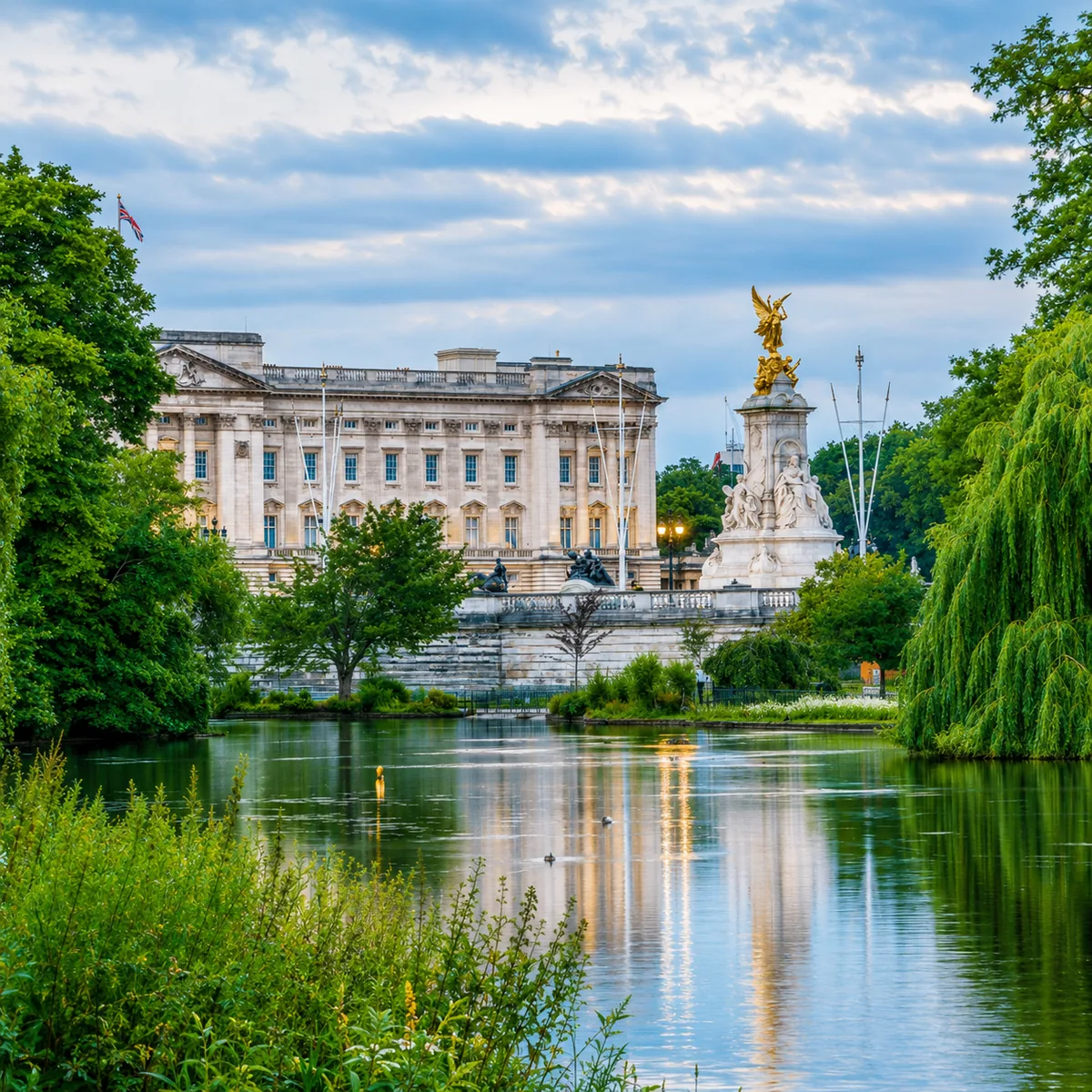
It is best to go early or late in the afternoon. By mid-morning it is usually very crowded, and the experience can feel more like a selfie queue than a walk. From there, you can continue towards St James’s Park, one of the most elegant breathing spaces in the city centre.
Go early or late in the afternoon so Westminster feels more like a walk than a selfie queue.
The Tower of London and Tower Bridge
The Tower of London is worth visiting if you are interested in history: kings, executions, jewels, intrigue, and ancient stone. It is neither a light nor a cheap attraction, so not every traveller needs to go inside. If you are travelling on a tight budget, you can still enjoy it a great deal simply by walking around the outside and crossing Tower Bridge.
The view from the south bank, with the bridge rising over the Thames like a piece of Victorian engineering, is one of London’s most powerful images.
South Bank: one of the best things to do in London
Walking along the South Bank, between Westminster and Tower Bridge, is one of the best things to do in London because it brings together city views, culture, architecture, and street life. Along the way you pass the London Eye, the Southbank Centre, the National Theatre, Tate Modern, and constant views of the river.
It is an ideal plan for a first afternoon, especially if you do not want to spend too much. The riverside walk along the Thames, free museums and galleries, and parks are smart ways to enjoy the city without sending your budget soaring.
Free museums and culture: London indoors
London has a huge advantage for curious travellers: many of its major museums are free to enter, although some temporary exhibitions may require payment or advance booking. Among the most worthwhile are the British Museum, the National Gallery, the Natural History Museum, the Science Museum, the Victoria and Albert Museum, and Tate Modern.
The problem is not which museum to visit, but how much time to give them. The British Museum can feel overwhelming; the National Gallery calls for calm; the Natural History Museum can get extremely busy during school holidays. It is better to choose one or two and see them properly than to turn the day into a race through endless rooms.
Choose one or two museums and give them time: London is better when you do not rush.
For rainy days
London in the rain has its charm, but it is not always comfortable. On grey days, it is worth taking shelter in museums, bookshops, galleries, covered markets, or an afternoon tea if your budget allows. Borough Market works well even in bad weather, although at peak times it can feel crowded.
Tate Modern is a good option because it combines art, industrial architecture, and a riverside walk. If the sky clears after your visit, the exit towards the Millennium Bridge offers one of the best views of St Paul’s dome.
Covent Garden and Soho
Covent Garden is pretty, central, and highly theatrical, but it is also touristy. It is worth passing through to see its arcades, listen to street musicians, and walk towards Seven Dials or Neal’s Yard. For food, it is wise to check prices before sitting down: some places rely too heavily on their location.
Soho, by contrast, retains a more nocturnal and slightly chaotic energy. It is a good area for dinner, drinks, or ending the day, although it can get very crowded at weekends.
Camden Town
Camden is colour, noise, alternative shops, street food, and canals. It can delight anyone looking for a more informal and eccentric London, but disappoint those expecting absolute authenticity: part of the area is heavily geared towards tourism. Even so, a stroll through Camden Market and along Regent’s Canal towards Little Venice can be a pleasant way to see another side of the city.
Notting Hill and Portobello Road
Notting Hill is softer, photogenic, and residential. Its colourful houses and Portobello Road draw crowds, especially on Saturdays. If you want peace and quiet, go during the week. If you want atmosphere, the market is livelier on its busiest days, but there is also less room to wander at an unhurried pace.
Go during the week for quiet; go on the busiest market days for atmosphere, but expect less room to wander.
Parks for breathing in London
Hyde Park, Kensington Gardens, Regent’s Park, St James’s Park, and Greenwich Park reveal a different city: greener, more local, less monumental. They are perfect for balancing out an itinerary heavy on museums and pavement.
Greenwich is worth a half-day trip if you want to leave the centre without going too far. The park, the meridian, the maritime atmosphere, and the views towards Canary Wharf offer a broader, almost panoramic London.
London at night: West End, pubs, and illuminated views
The West End is one of the great reasons to visit London. Seeing a musical or a play can be a memorable experience, although not always a cheap one. The area brings together musicals, theatre, opera, comedy, and dance, with advance booking options as well as last-minute tickets.
For a simpler evening, a historic pub can feel more London than any big show. Look for one away from the most touristy streets, order something without rushing, and observe: low conversations, worn wood, rain on the windows, people leaving work.
Night transport helps, but it does not operate in the same way every day or on every line. The Night Tube runs on Friday and Saturday nights on selected lines such as the Central, Jubilee, Northern, Piccadilly, and Victoria; even so, it is worth checking service status before staying out late.
Book popular theatre or exhibitions in advance and check night transport before staying out late.
What to do in London with children
London works very well with children as long as the itinerary is not overloaded. The Natural History Museum, the Science Museum, the parks, boat trips along the Thames, and some markets are usually good options. The common mistake is linking together too many Underground journeys and too many long visits in a single day.
With children, it is better to organise the day by areas: South Kensington for museums, Westminster and St James’s Park for icons, Greenwich for a more open day, or the South Bank for walking with breaks.
What to do in London as a couple
London can be very romantic if you avoid the obvious postcard version. A sunset walk along the South Bank, a quiet dinner in a less touristy neighbourhood, a West End show, a coffee in Notting Hill, or a walk across Hampstead Heath can be more charming than chasing expensive viewpoints.
For couples looking for calm, the city works best during the week and outside high season. In summer there is more light and more outdoor life; in winter, fewer daylight hours, but an intimate atmosphere of lights, shop windows, and glowing pubs.
Free things to do in London that are truly worthwhile
London is expensive, but not everything in London requires payment. National museums, parks, walks along the Thames, historic neighbourhoods, markets, open churches, and galleries allow you to enjoy a great deal on a controlled budget. If you are looking for free things to do in London, start with what defines the city best: walking, looking, stepping into a museum, and letting each neighbourhood change the pace of the day.
The important thing is not to confuse free with secondary. Some of the best hours in London can be as simple as walking from St Paul’s to Tate Modern, crossing a bridge with a cold wind on your face, or sitting on a bench in St James’s Park while the city lowers its voice a little.
Day trips from London
If you have several days, you can consider Oxford, Cambridge, Windsor, Bath, or Stonehenge. But it is not worth adding day trips if you only have two or three days: London already demands time. Leaving too soon can leave you with the feeling that you have skimmed many things and understood few.
Oxford and Cambridge work well for lovers of university architecture. Windsor appeals to those looking for royal history. Bath is beautiful, but requires more time. Stonehenge can disappoint some travellers because of the distance and because the experience is shorter than they imagined.
Common mistakes when choosing what to do in London
The first mistake is underestimating distances. On the map everything looks reasonable; in practice, crossing the city can take more energy than expected.
The second is paying for too many attractions. Not every panoramic view, tour, or immersive experience is necessary. London offers a huge amount simply by walking.
The third is always eating in overly touristy areas. Near the big icons there are convenient places, but they are not always memorable. Sometimes it is enough to walk two or three streets away to find something more honest.
The fourth is not booking the important things. For theatre, popular exhibitions, or highly demanded attractions, improvising can end up being expensive or leave you without a ticket.
Do not underestimate distances or pay for too many attractions: London offers a huge amount simply by walking.
So, what is most worth doing in London?
For a first visit, I would combine Westminster, the South Bank, Tower Bridge, one major museum, a park, a market, and an evening at the theatre or in a pub. That already offers a rich image of the city: imperial London, cultural London, everyday London, rainy London, elegant London, and imperfect London.
London is worth it for those who enjoy walking, observing, entering museums, getting lost in neighbourhoods, and accepting that a great city is not always comfortable. It can be tiring for anyone seeking absolute calm, low prices, or an easy experience. But if you visit without rushing and without obsessing over seeing everything, London leaves something lasting: the feeling of having walked through a city that contains many cities within it.