 Activity on TourBookGo
Kids Surf Camp at Venice Beach
Kids surf camp at Venice Beach with 5 hours of coaching, boards, wetsuits, ocean-safety training, lunch and small-group activities in Los Angeles.
Los Angeles safety largely depends on choosing the right accommodation, planning journeys, and maintaining normal urban awareness.
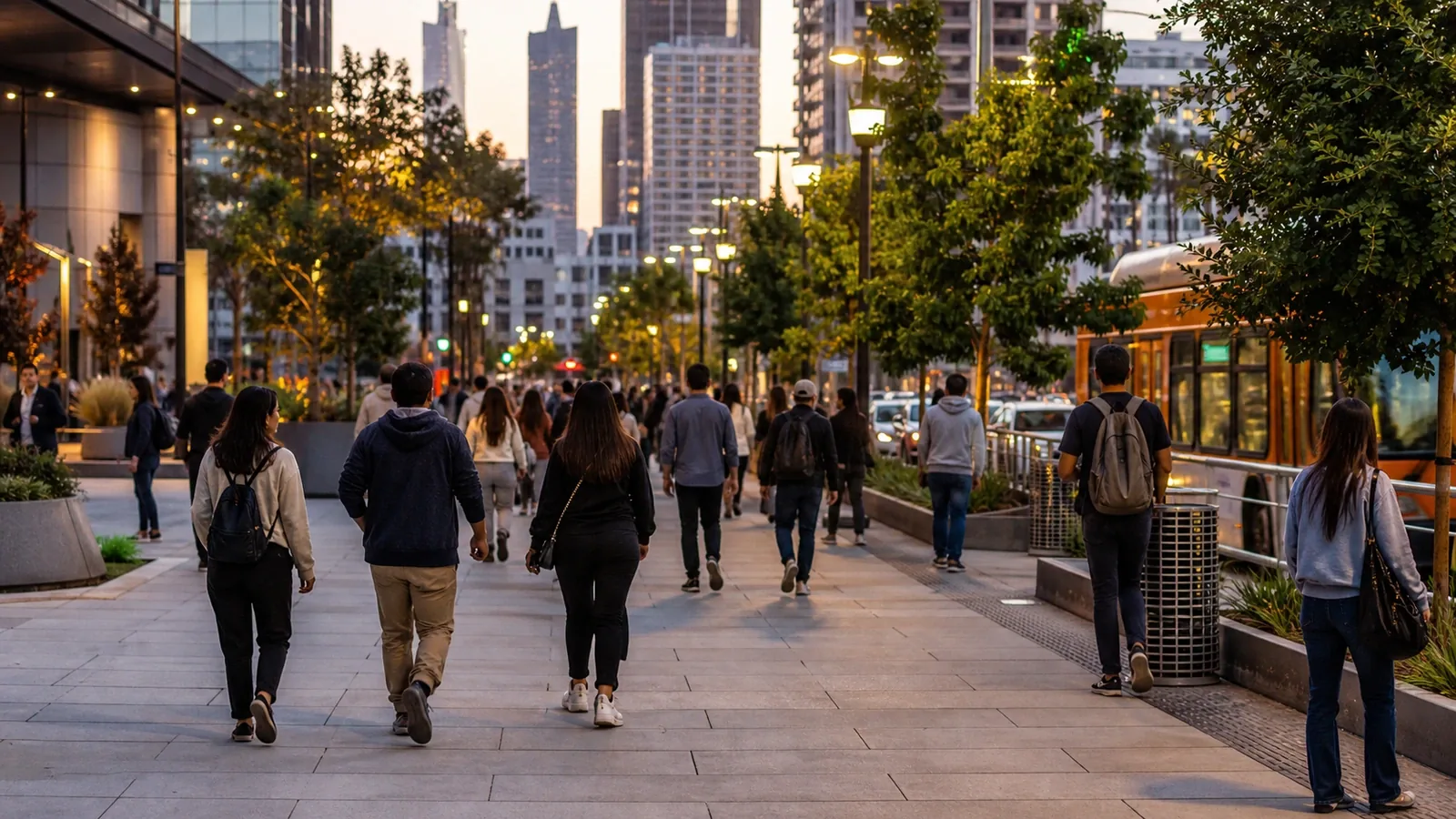
Los Angeles safety varies significantly by neighborhood, time of day, and how you travel. From the Griffith hills, the city can feel bright and carefree, with palm trees outlined against the sky and the ocean breathing at the end of the avenues. At street level, however, it requires a little more awareness than other destinations: distances are vast, the atmosphere can change within two blocks, and an area that feels lively during the day may be almost deserted after dinner. The balanced answer is yes: Los Angeles is a reasonably safe city for tourists, provided you choose your accommodation carefully, plan how you will get around, and do not mistake its cinematic scenery for a complete absence of risk.
Compare locations and options to find a base that suits your trip. Booking.com confirms current availability and pricing.
Find accommodation on BookingLos Angeles is often portrayed in one of two equally inaccurate ways: either as the sunny fantasy of Hollywood or as a metropolis overrun by crime. The reality lies somewhere in between.
The latest complete annual figures from the LAPD show that 230 homicides were recorded in 2025, 19% fewer than the previous year and the lowest number since 1966. That does not make the city risk-free, but it helps put violent crime into perspective. For visitors, the most avoidable problems usually involve unattended belongings, opportunistic theft, theft from vehicles, poorly planned nighttime journeys, and uncomfortable situations on quiet streets.
It is also worth remembering a less dramatic but very real danger: traffic. In 2025, traffic-related deaths exceeded homicides for the third consecutive year. Crossing wide avenues while distracted, driving while looking at your phone, or underestimating distances may be more dangerous than visiting many of the neighborhoods that people fear because of their reputation.
During the day, the area around the Walk of Fame is usually busy. The main practical risk is distraction: phones held up for photographs, open bags, persistent vendors, and costumed characters who may expect a tip after posing with you.
At night, the main streets remain active, but some side streets become bleak and empty very quickly. There is no need to avoid Hollywood, although it is wise to keep nighttime walks to well-lit, busy stretches. The neighborhood may disappoint anyone expecting glamour: it is rougher, noisier, and more chaotic than the movies suggest.
Downtown does not have a single atmosphere. Bunker Hill, South Park, the Financial District, and parts of the Arts District can feel comfortable when offices, restaurants, or events are operating. However, after dark, some streets empty out and the atmosphere can change abruptly.
I would not recommend wandering aimlessly through Skid Row or venturing onto deserted nearby streets, especially at night. This does not mean that everyone living there is a threat; the issue is the concentration of difficult social conditions, the lack of tourist activity, and the possibility of ending up somewhere uncomfortable without knowing how to leave. In the busier parts of Downtown, business improvement districts employ safety teams, identifiable by their brightly colored uniforms, who can provide directions and assistance.
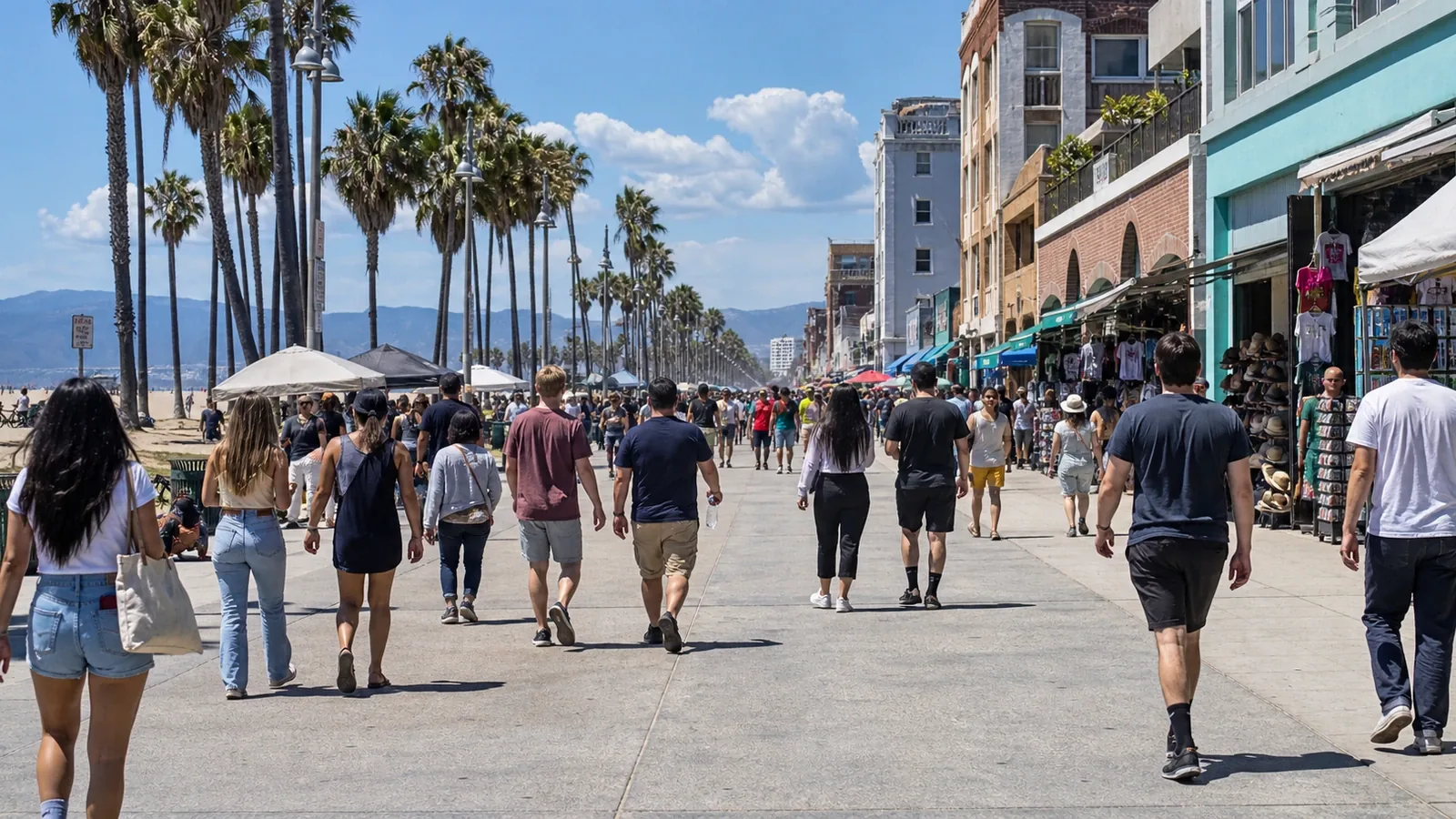
The Venice boardwalk is lively, eccentric, and generally enjoyable during the day. After dark, it loses some of its activity, and certain sections may feel isolated. It is best not to leave backpacks or phones unattended on the sand and to return using busy streets or transportation.
Santa Monica generally offers a more orderly experience, but it is not free from theft or vehicle break-ins. Parking near the beach with luggage visible inside the car is an unnecessary invitation.
Beverly Hills, West Hollywood, Los Feliz, Silver Lake, and many neighborhoods on the Westside are generally comfortable places to stay and go out for dinner. Even so, an “affluent neighborhood” does not mean an “invulnerable car.” Anywhere in the city, leaving a camera, jacket, backpack, or even a seemingly empty bag in plain sight may attract a thief.
It is also unhelpful to label entire neighborhoods in South or East Los Angeles as dangerous. Many communities outside the traditional tourist routes have vibrant cultural and culinary scenes. The difference is that they offer less infrastructure for visitors, so it is better to go to a specific destination, know your route, and arrange your return journey.
One of the most important precautions in Los Angeles is simple: the inside of your car should look completely empty.
Do not leave luggage, documents, shopping bags, electronic devices, coins, or charging cables visible. Put your belongings in the trunk before arriving at your parking destination; doing so after you have parked allows others to see where you are storing them. Close all windows and lock the doors even during a brief stop, and choose well-lit, busy parking areas. These are recommendations that the LAPD itself particularly emphasizes for visitors.
The Metro can be useful for reaching Downtown, Hollywood, Santa Monica, or Universal City, and many visitors use it without incident during busy hours. However, the experience is not always clean or calm: you may encounter erratic behavior, substance use, or people experiencing personal crises.
It is advisable to wait in well-lit areas, travel near other passengers, put your phone away when the doors open, and move to another carriage if a situation feels unsettling. At night, especially when stations are empty, a ride-hailing service may provide a more comfortable journey back.
Metro recommends keeping belongings closed and close to your body, regularly checking your surroundings, and moving away if someone makes you uncomfortable. Its Transit Watch app allows passengers to report incidents and operates 24 hours a day; immediate threats should be reported by calling 911.
In the most touristy areas, be wary of interactions that begin as something “free” and end with a demand for money. Before accepting a photograph, bracelet, CD, demonstration, or improvised tour, clearly ask how much it costs.
Always check the license plate, name, and photograph of the driver before entering a vehicle booked through an app. Do not accept unofficial transportation offered at airports or tourist areas. Keep your bag in front of your body in crowded places, and be alert to shoving, sudden arguments, or staged distractions, which may be used by groups of pickpockets.
A woman can visit Los Angeles alone, but the choice of neighborhood matters greatly. Staying near restaurants, shops, and public transportation reduces the need to walk along empty streets. During the day, the main tourist attractions are generally easy to explore; after a late dinner or night out, it is sensible to arrange transportation directly to the entrance of your accommodation.
On the Metro, it is best to sit near other passengers, avoid isolating yourself with headphones, and change seats or carriages without hesitation if something does not feel right. Intuition does not require an elaborate justification: if a street, station, or person makes you uneasy, returning to a busy area is a sensible decision, not an overreaction.
Los Angeles can work well for families, especially when the trip is organized by area and days with too much travel are avoided. Traffic, crowds, and long distances tend to cause more fatigue than direct danger.
At stations and stops, keep children away from tracks and platform edges, hold on to them while boarding and getting off, and agree on a meeting point in case anyone becomes separated. It is also useful for them to carry the name of the hotel and a contact telephone number in writing.
Los Angeles safety is not limited to crime. Extreme heat, wildfires, smoke, flash floods, and earthquakes can disrupt a visit. Before hiking in the hills, check the weather, carry enough water, and obey any closures.
The city operates the NotifyLA system to send emergency alerts. Visitors can temporarily register the ZIP code of their accommodation by texting it to 888777.
For a police, medical, or fire emergency, call 911.
For non-emergency police assistance within the City of Los Angeles, the LAPD number is 877-275-5273. On public transportation, Metro allows passengers to report incidents through Transit Watch, by calling 888-950-SAFE, or by sending a text message to 213-788-2777.
Yes, provided you visit it as the vast metropolis it is rather than as a theme park without boundaries. Los Angeles rewards travelers who choose their neighborhoods carefully, plan their nighttime journeys, and maintain normal urban awareness.
It may not be the right choice for someone who wants to walk spontaneously at any hour, feels deeply uncomfortable with visible inequality, or expects a compact and uniform city. For everyone else, the necessary precautions are manageable: leave nothing in the car, avoid deserted streets, verify your transportation, watch your belongings, and adapt each journey to the time of day.
The city does not demand fear. It demands context. Beneath its golden light, beauty, wealth, exhaustion, creativity, and deep social divisions coexist. Traveling with your eyes open allows you to enjoy Los Angeles without idealizing it or reducing its problems to a caricature.
Discover selected experiences in Los Angeles to complete this guide with Hollywood, film studios, museums, coastline, nature and well-organised tours.
Activity on TourBookGoKids surf camp at Venice Beach with 5 hours of coaching, boards, wetsuits, ocean-safety training, lunch and small-group activities in Los Angeles.
 Activity on TourBookGo
5-day tour from Los Angeles to Grand Canyon, Zion and Antelope Canyon in a small group of up to 14, with 4 hotel nights and transportation included.
 Activity on TourBookGo
Book the Universal Studios Hollywood VIP Tour in Los Angeles with exclusive backlot access, Universal Express Unlimited, guided studio tour, gourmet meal and valet parking.