11 Mistakes to Avoid in Los Angeles on Your First Trip
Avoiding the most common mistakes in Los Angeles will help you enjoy this fascinating city without losing hours to traffic, long journeys, or unrealistic plans.
Mistakes to avoid in Los Angeles before your trip begins
Knowing the main mistakes to avoid in Los Angeles can completely change your first trip. At first glance, the city can seem like an endless succession of freeways, commercial boulevards, and neighborhoods separated by distances that are difficult to judge. Then come the golden hills, the Pacific haze, taco stands glowing late at night, and peach-colored sunsets that can transform even an ordinary parking lot. Los Angeles can be fascinating, but also exhausting if you explore it as though it were compact, predictable, or designed entirely for visitors. These Los Angeles travel tips will help you choose where to stay, plan transportation, and discover the city neighborhood by neighborhood.
Organize each day by neighborhood to avoid crossing the entire city unnecessarily.
Choose where to stay in Los Angeles according to the places you actually want to visit.
Combine public transportation, driving, and occasional rides according to each day’s route.
Booking.com
Accommodation in Los Angeles
Compare locations and options to find a base that suits your trip. Booking.com confirms current availability and pricing.
Thinking Los Angeles is compact: one of the biggest mistakes to avoid
The biggest mistake is looking at the map and assuming Hollywood, Downtown, Beverly Hills, Santa Monica, and Venice form a single urban center. In reality, Los Angeles works more like an archipelago of neighborhoods, each with its own pace, landscape, and personality.
It is best to organize your days by area. Santa Monica and Venice fit well into the same day; Downtown, Little Tokyo, and the Arts District form another logical cluster; Hollywood and Griffith Park can be combined without crossing half the city. Even official itineraries divide visits by area and devote several days to covering the best-known sights.
Plan each day around one specific area.
Booking accommodation simply because it looks cheap
In Los Angeles, a budget hotel can end up costing you dearly in time, transportation, and energy. Saving a little each night makes little sense if every day begins with a long journey to the places you actually want to visit.
Before booking, identify the center of gravity of your trip. For beaches and coastal walks, staying on the Westside makes more sense. For museums, architecture, and historic neighborhoods, Downtown can be practical. Hollywood makes some classic attractions easier to reach, although certain streets are noisy and the atmosphere may disappoint anyone expecting cinematic glamour.
The best area is not necessarily the most famous one, but the one that reduces your daily travel time.
Choose the area that reduces travel time, not only the one with the lowest price.
Trying to see everything in three days
An itinerary featuring Downtown in the morning, Venice at lunchtime, Beverly Hills in the afternoon, and Griffith Observatory at sunset may look efficient on paper. In practice, it often turns into a race against traffic.
Los Angeles is more enjoyable when you stop trying to collect places. Leave room to walk through a neighborhood, linger in a café, step into an unexpected bookstore, or watch the light change over the palm trees. In this city, the journey is part of the experience—but only when it is not approached with anxiety.
Thinking you need a car for absolutely everything
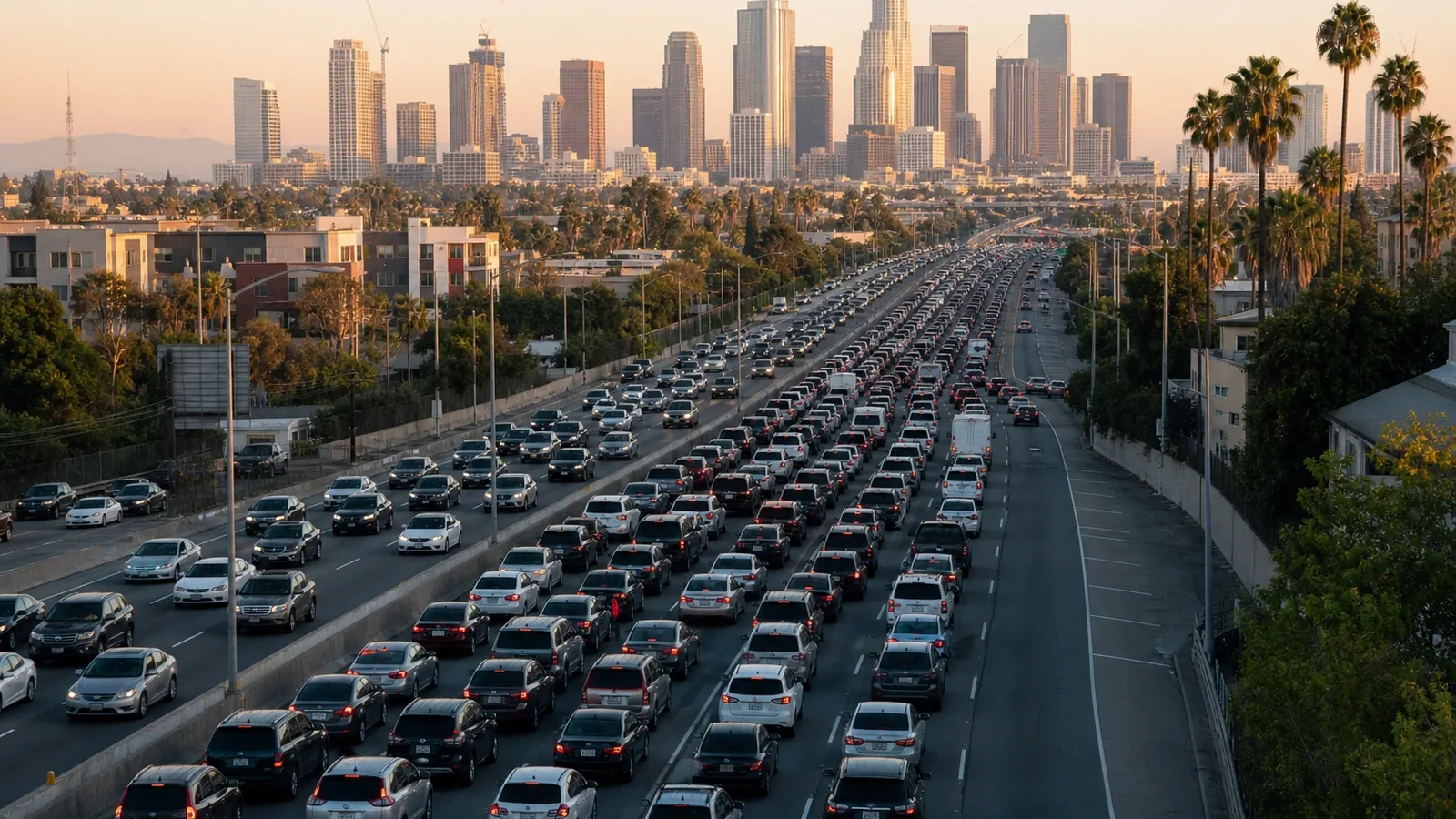
A car offers freedom and is useful for certain routes, especially when visiting outlying areas or traveling as a family. However, renting one for your entire stay is not always the smartest choice.
The transportation network includes subway and light-rail lines, buses, and local services. There are also connections from LAX, buses to Griffith Observatory, and options that make it possible to combine public transportation with occasional taxi or ride-hailing trips.
A balanced strategy may be to stay near a station, use public transportation on urban sightseeing days, and rent a car only for excursions or poorly connected areas.
Combine different forms of transportation according to each day’s needs.
Making the opposite mistake: relying entirely on public transportation
Los Angeles can be explored without a car, but that does not mean every itinerary will be convenient. Some journeys require transfers, long walks, or significantly more time than traveling by road.
Always check the full route before setting out, especially at night. On Metro, it is advisable to wait in well-lit areas, keep your belongings close, avoid isolating yourself with headphones, and move away from any uncomfortable situation. The network itself recommends planning your journey in advance and staying aware of your surroundings.
Check transfers, travel time, and walking sections before starting the journey.
Underestimating parking rules
Parking in Los Angeles can feel like a minor reading-comprehension exam. On a single block, you may encounter time limits, street-cleaning days, residential permits, parking meters, and temporary restrictions.
Finding an empty space is not enough. You need to read every sign and follow the most restrictive instruction. Curb colors also matter: red means no stopping, while other colors indicate specific uses and limits. Paying a meter does not necessarily mean you are allowed to park for that period if another sign says otherwise.
Taking a photo of the signs and your car’s location before walking away can help prevent confusion later.
Read every sign and follow the most restrictive rule.
Leaving luggage or belongings visible inside the car
Your car should not become an improvised storage locker. Suitcases, backpacks, cameras, shopping bags, and electronic devices can attract attention even during a brief stop.
Police advice is to keep valuables out of sight and avoid moving them into the trunk after parking, as someone may be watching. The safest approach is to store everything before arriving at your destination or leave it at your accommodation.
Store your belongings before arriving at the place where you intend to park.
Judging the entire city by the Walk of Fame
Hollywood Boulevard undoubtedly has symbolic value, but its everyday reality is far removed from cinematic fantasy. There is traffic, tourist-oriented businesses, costumed characters, noise, and some neglected areas. For many travelers, the visit is shorter and less exciting than expected.
Los Angeles reveals its character more clearly elsewhere: in the murals of the Arts District, the markets of Koreatown, the modernist homes in the hills, small family-run restaurants, historic movie theaters, and hiking trails from which the city seems to stretch all the way to the horizon.
Visiting Hollywood can be worthwhile. Expecting it to represent the essence of Los Angeles is not.
Expecting a tropical beach
The Los Angeles coastline has a bright, cinematic beauty, but the Pacific is not the Caribbean. There may be wind, morning fog, cool water, and strong currents even on days that appear calm.
Rip-current risks and surf conditions change, so it is wise to check the marine forecast and follow lifeguard instructions before swimming.
Bring a light extra layer even in summer, especially around sunset. The temperature by the ocean can feel very different from conditions in Hollywood, Downtown, or the inland valleys.
Check ocean conditions and always follow lifeguard instructions.
Hiking at midday without enough water
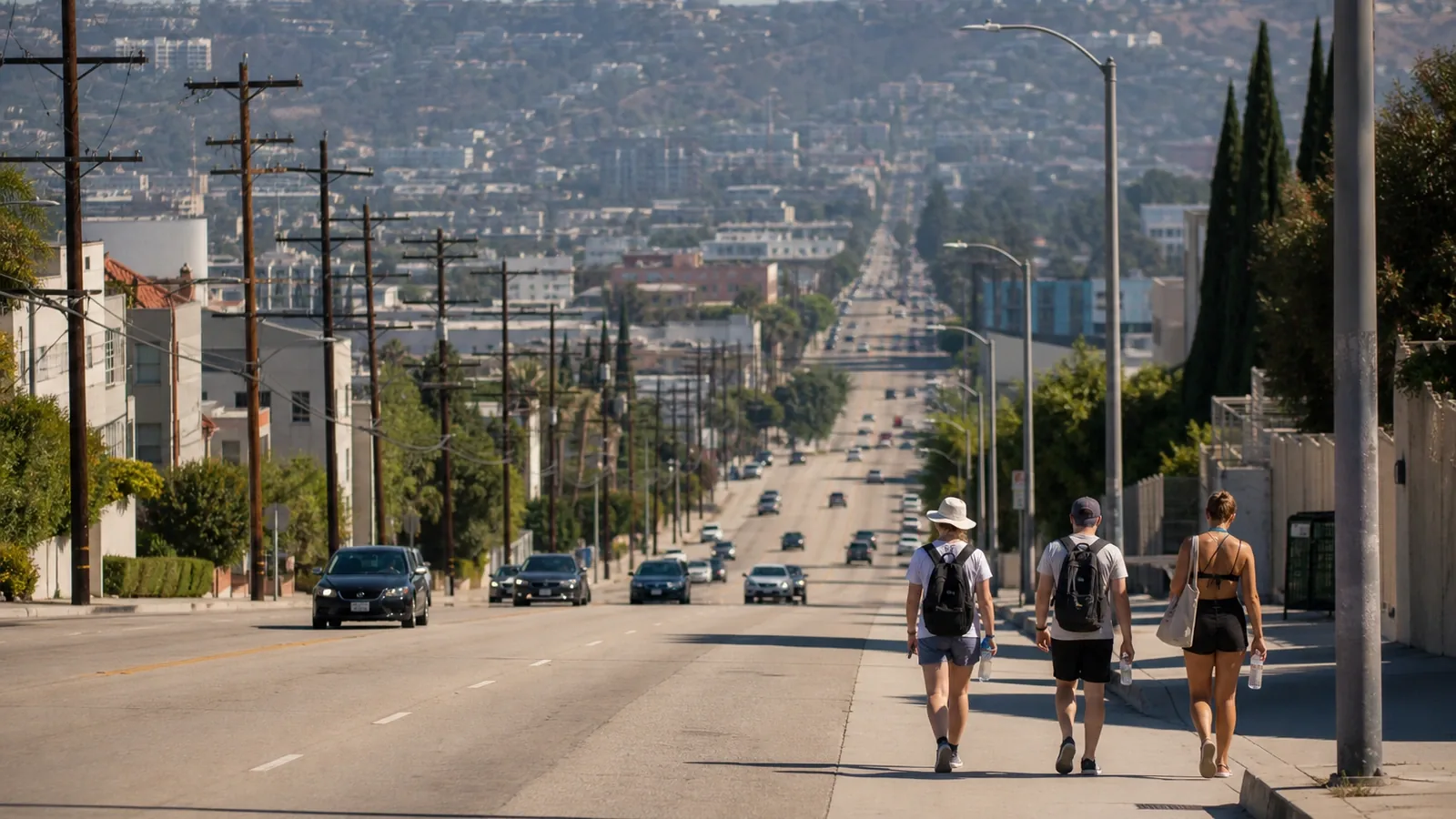
The hills of Los Angeles may seem easily accessible because they are located within the city, but heat, sun exposure, and a lack of shade can turn a simple walk into an unpleasant experience.
On hot days, it is best to start early, reduce activity during the middle of the day, use sun protection, and carry more water than you think you will need. It is also important to check for closures, weather alerts, and park conditions before setting out, especially during periods of extreme heat or elevated wildfire risk.
Start early and carry more water than you expect to need.
Calculating your budget based only on the advertised price
The amount shown on a menu or price tag does not always match the final total. Taxes are added to purchases and meals, and tipping is customary in full-service restaurants. Some establishments also include a service charge, so it is worth checking the bill before adding anything extra.
Parking, valet service, transportation, and accommodation fees can also increase your daily spending. A realistic budget should account for these small amounts, which stop feeling small once they add up.
Check whether a service charge is already included before adding a tip.
How to interact with locals without treating the city like a film set
Los Angeles is accustomed to cameras, but that does not turn its residents into extras. Avoid photographing people without permission, especially in vulnerable situations, and do not trespass on private property in search of celebrity homes.
Communication is usually informal, but that does not imply instant familiarity. A simple greeting, patience when ordering, and respect for personal space work better than trying to play the role of the overly enthusiastic tourist. On public transportation, let passengers exit before boarding, do not block the doors, use headphones, and give up priority seats when necessary.
It is also unwise to assume that every neighborhood exists to entertain visitors. Koreatown, Boyle Heights, Little Ethiopia, and Thai Town are living communities before they are food destinations. Approaching them with curiosity, supporting local businesses, and avoiding caricatured comments can completely change the quality of the experience.
Ask permission before photographing people and respect private property.
The real mistake: expecting Los Angeles to be another city
Anyone looking for a compact historic center, easy transportation, and a concentration of monuments may feel frustrated. Los Angeles requires planning, time, and a certain tolerance for disorder. It also requires accepting its contrasts: dazzling wealth and visible inequality, open beaches and congested freeways, natural beauty and urban sprawl.
But when you explore it slowly, neighborhood by neighborhood, the city stops feeling like an unmanageable expanse. It begins to feel like a collection of worlds connected by the same light.
C
DiscoverCars
Car rental
Compare prices and book your rental car at the best price.
Take a SoFi Stadium tour in Los Angeles and explore the home of the Rams and Chargers on a 2-hour guided experience. From €43 with free cancellation up to 24 hours in advance.
From €43 per personThe visit lasts approximately 2 hours.
 Activity on TourBookGo