
Book a full-day trip from Madrid to Puy du Fou Spain with coach transfer, park ticket depending on option and possible access to El Sueno de Toledo.
View experienceHow to get around Madrid without a car
No, not if you are visiting Madrid itself. In fact, renting a car to get around the centre is usually a mistake. The metro reaches almost all the important neighbourhoods, Madrid city buses cover areas where the metro is less direct, and Cercanías commuter trains are useful for getting to stations, outer districts and nearby day-trip destinations.
A car only starts to make sense if you want to explore outside Madrid with several villages in a single day, visit rural areas with poor transport links or travel around Castile without depending on timetables. For Toledo, Segovia, Ávila, Alcalá de Henares or El Escorial, the train or bus is often a better option than renting a vehicle.
Madrid Metro: The Most Practical Way to Get Around
The Madrid metro is almost always a traveller’s best ally. It is fast, fairly intuitive and avoids traffic. The network has more than 300 stations and connects the city through numerous lines, making it easy to move between tourist areas, shopping districts, train stations and the airport.
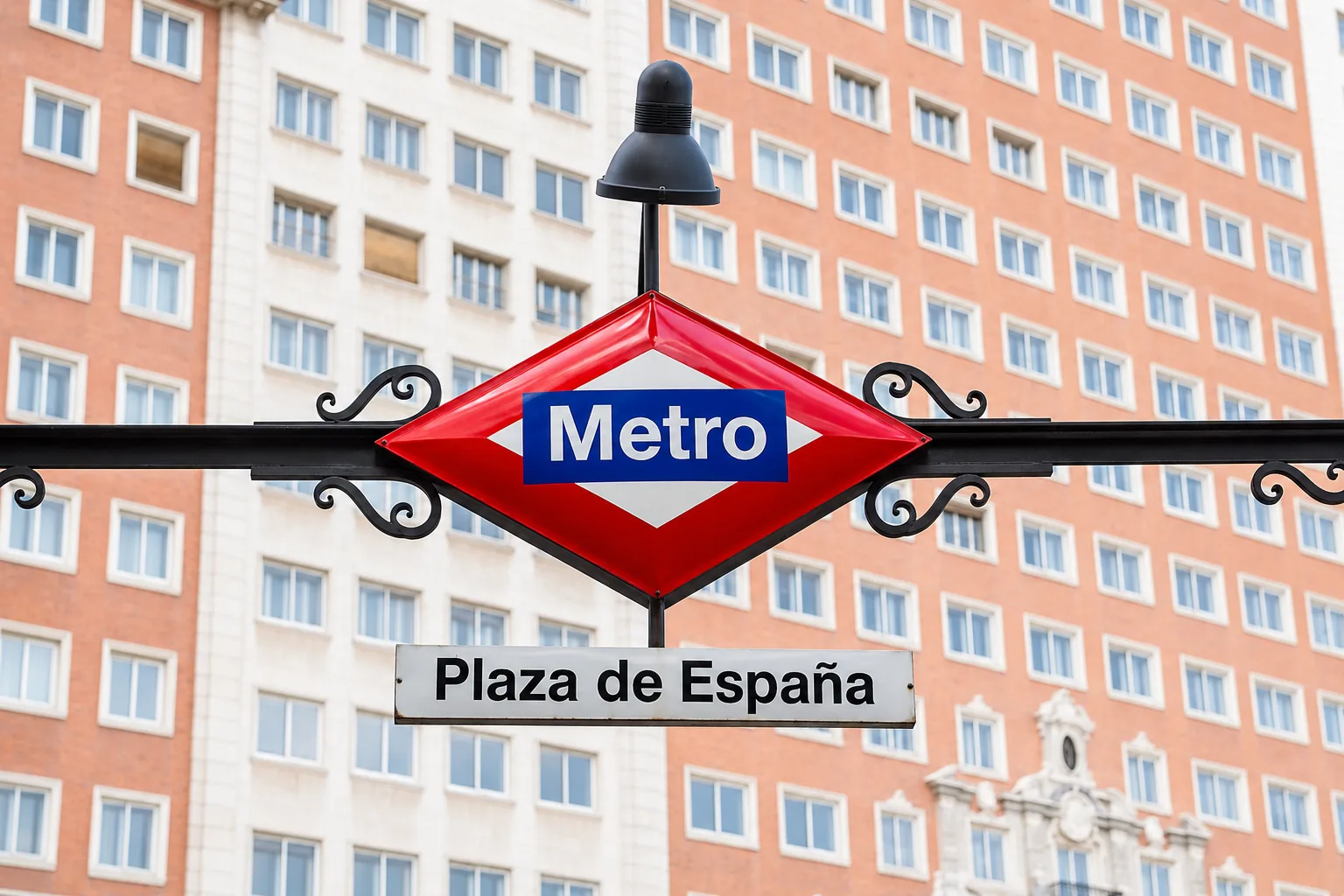
On a first visit, the stations you are most likely to use are Sol, Gran Vía, Ópera, Banco de España, Retiro, Atocha, Tribunal, Alonso Martínez, Plaza de España, Callao, Nuevos Ministerios and Colombia, depending on where you are staying.
The metro is especially useful for travelling from the centre to neighbourhoods such as Salamanca, Chamberí, Lavapiés, Argüelles, Moncloa or Chamartín. It is also convenient for crossing the city when walking would take too much time. The less pleasant side comes at rush hour, when some lines get very crowded, and in stations with long interchanges, where it is best not to cut your timings too fine.
City Buses: Slower, but Very Useful
Madrid city buses are a good option when the route is direct or when you want to see the city as you move around. They are not always faster than the metro, especially when there is traffic, but they are pleasant for short journeys and connect areas where the metro would require a detour.
A single city bus ticket costs €1.50 and can be bought on board, according to EMT Madrid fare information. In practice, for several journeys, it is usually more convenient to use a transport card or tourist travel pass, especially if you are staying for several days.
At night, Madrid has night buses, popularly known as “búhos”, which mostly depart from Cibeles. They are useful, although not as convenient or frequent as the daytime metro. If you are returning late from a nightlife area, travelling alone or unfamiliar with the city, a taxi or ride-hailing service may be the more reassuring option.
From Barajas Airport to Central Madrid
Adolfo Suárez Madrid-Barajas Airport is well connected to the city. The best way to get from Barajas airport to Madrid city centre depends on your terminal, where you are staying, your arrival time and how much luggage you have.
Metro Line 8 connects the airport with Nuevos Ministerios. It is practical if your accommodation is close to a line with a good connection from there. Bear in mind that the airport supplement applies when travelling with a single ticket or 10-journey ticket; the Zone A tourist travel pass includes this supplement.
The Airport Express is one of the simplest options if you arrive late or are staying near Cibeles or Atocha. It links Barajas with the city centre, runs 24 hours a day and costs €5. It is convenient with luggage, although it can take longer when there is traffic.
Cercanías commuter rail is especially useful if you arrive at Terminal 4 and are heading to Chamartín, Nuevos Ministerios, Recoletos, Atocha or Méndez Álvaro. It is a very practical option, but less useful if you land at T1, T2 or T3, as you would first need to get to T4.
The official taxi is the most comfortable option for families, late-night arrivals, travellers with lots of luggage or accommodation with poor transport connections. At the airport, Aena points out that official taxi ranks are clearly signposted outside arrivals and recommends avoiding anyone offering services inside the terminals. Official taxis are white, with a red stripe and the Madrid City Council crest.
Can You Explore Madrid on Foot?
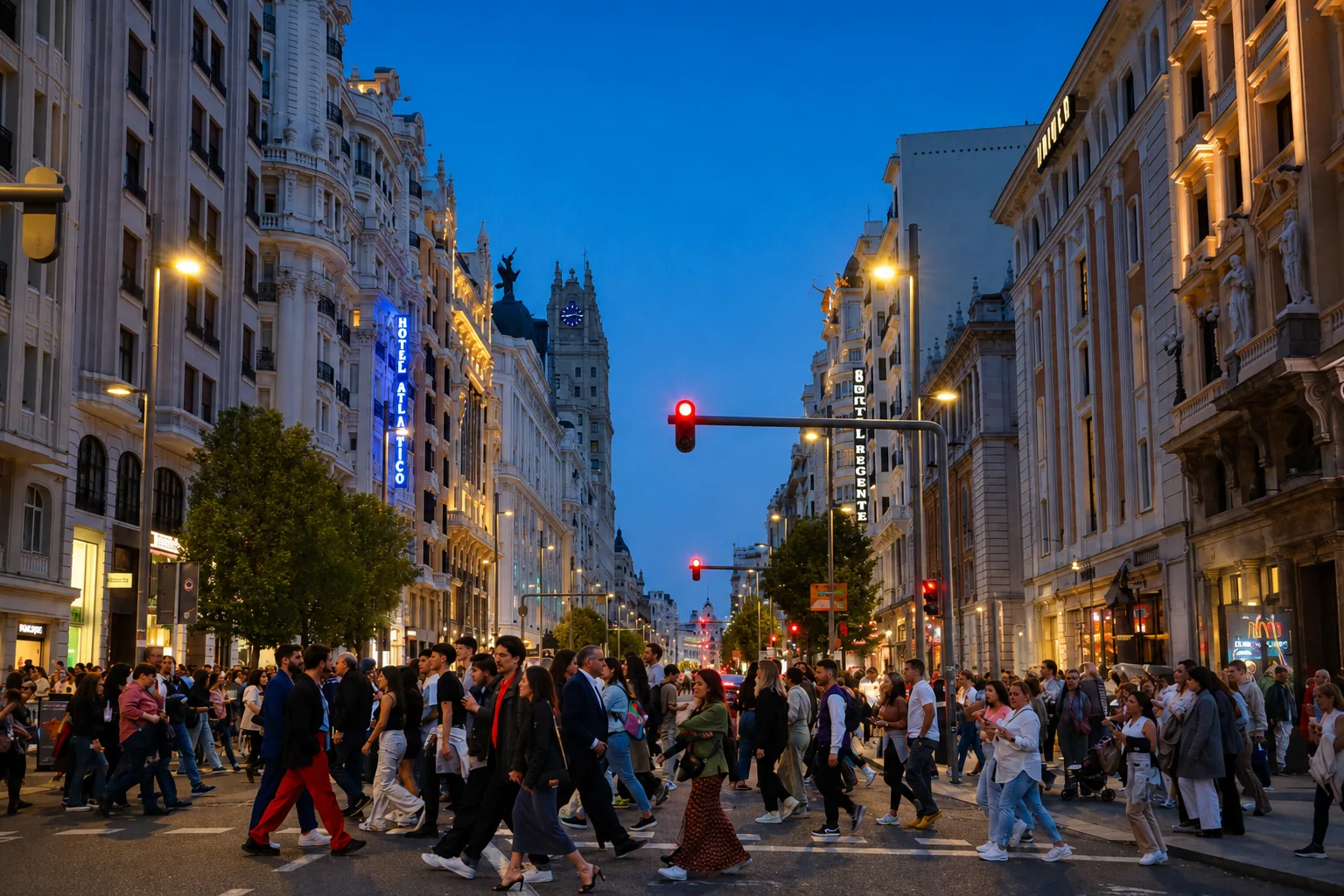
Yes, and you should. Madrid does not have the compact concentration of monuments found in some smaller cities, but its historic and cultural centre is best enjoyed on foot. Walking from Sol to the Royal Palace, from Gran Vía to Malasaña, from Cibeles to El Retiro or from the Prado to Huertas lets you feel the city: old shopfronts, bars with napkins on the floor, elegant façades, packed terraces, bookshops, taverns and that very Madrid mix of hurry and conversation.
As a rough guide, many central routes can be walked in 10 to 30 minutes: Sol to the Royal Palace, about 10–15 minutes; Sol to the Prado Museum, around 15–20; Gran Vía to Malasaña, about 10; Prado to El Retiro, about 10; La Latina to Plaza Mayor, just a few minutes. These are not exact figures, as they depend on pace, heat and stops along the way, but they show how much the centre invites you to walk.
The main caveat is summer. In July and August, walking long distances at midday can be hard going because of the heat. During those months, it is better to plan visits early, rest during the middle of the day and use the metro or a taxi when your body tells you to.
Parking and Driving in the Centre
Parking in central Madrid is neither easy nor cheap. Many streets have regulated parking, private car parks can make a stay considerably more expensive, and environmental restrictions mean you need to check carefully where you are allowed to drive. For a traveller unfamiliar with the city, driving into Sol, Gran Vía, Cortes, Letras, Justicia, Chueca or Malasaña is usually inconvenient.
If you arrive in Madrid by car, the most sensible option is to choose a hotel with parking or stay in a well-connected area outside the densest part of the centre. Another option is to park the car and not move it during your stay. Madrid is much more enjoyable when you are not worrying about fines, number plates, parking times or restricted streets.
Taxis and Ride-Hailing Services: When They Are Worth It
Taxis in Madrid work well for specific journeys. You do not need to use them all the time, but they can solve certain situations very neatly: arriving from the airport with luggage, getting back late at night, travelling with tired children, going to an elegant dinner or crossing the city in the rain.
For daytime travel in the centre, the metro is usually faster and cheaper. At rush hour, a taxi can get stuck in traffic, especially on routes such as Castellana, Gran Vía, Atocha, Cibeles or the airport access roads. Taxis are comfortable, but comfort does not always mean speed.
Farther-Out Areas and Approximate Travel Times
Madrid looks compact on a map, but some distances can be misleading. Getting from the centre to the airport can take around 35 to 50 minutes by public transport, depending on the terminal and connections. From the centre to Chamartín, allow about 20 to 30 minutes. Atocha is much closer to the Prado-Retiro axis and Lavapiés, but from neighbourhoods such as Chamberí, Salamanca or Malasaña it is best to use the metro or Cercanías.
For the Santiago Bernabéu stadium, the metro is usually the most convenient option. For Matadero Madrid or Madrid Río, it depends heavily on your starting point: from some areas the metro works well, while from others a bus or taxi may be better. For IFEMA, Line 8 is practical, although it can be busy on trade fair days.
Madrid Tourist Travel Pass: When It Makes Sense
The Madrid tourist travel pass allows unlimited journeys for several consecutive days in the selected zone. For a visit focused on Madrid city, Zone A is usually enough; if you plan to travel around the wider region, Zone T may be worth considering. The tourist pass covers the metro in Zone A, includes the airport supplement, EMT city buses —except the Airport Express—, Cercanías in zones 0 and A, and Metro Ligero ML1.
It is worth it if you are going to use public transport several times a day, if you are staying outside the centre or if you would rather not bother buying individual tickets. If you are staying in a very central area and enjoy walking, you may not get as much value from it.
The Best Strategy for Getting Around Madrid
For a first visit, the smartest approach is to stay somewhere well connected, walk as much as possible and use the metro as the backbone of your trip. The bus adds scenery and convenience on direct routes. Taxis are best kept for specific moments. As for the car, unless you have particular excursions planned, it is better left out of the equation.
Madrid rewards travellers who do not rush too much. Look at the map, group visits by neighbourhood and avoid crossing the city several times a day. One day for the Royal Palace, Plaza Mayor, Sol and La Latina; another for the Prado, El Retiro and the Literary Quarter; another for Malasaña, Chueca, Chamberí or Salamanca. That way, transport stops being a concern and becomes what it should be: a discreet tool for enjoying the city better.