
Visit the Reina Sofía Museum at your own pace and see Picasso’s Guernica, the permanent collection and temporary exhibitions.
View experienceWhat makes Madrid special
Madrid has an energy that is very hard to fake. It does not rely only on monuments, although it has some magnificent ones. Its greatest strength is its rhythm: late breakfasts, long lunches, world-class museums, neighbourhoods with personality, markets, rooftops, theatres, old taverns and a nightlife scene that does not wind down early.
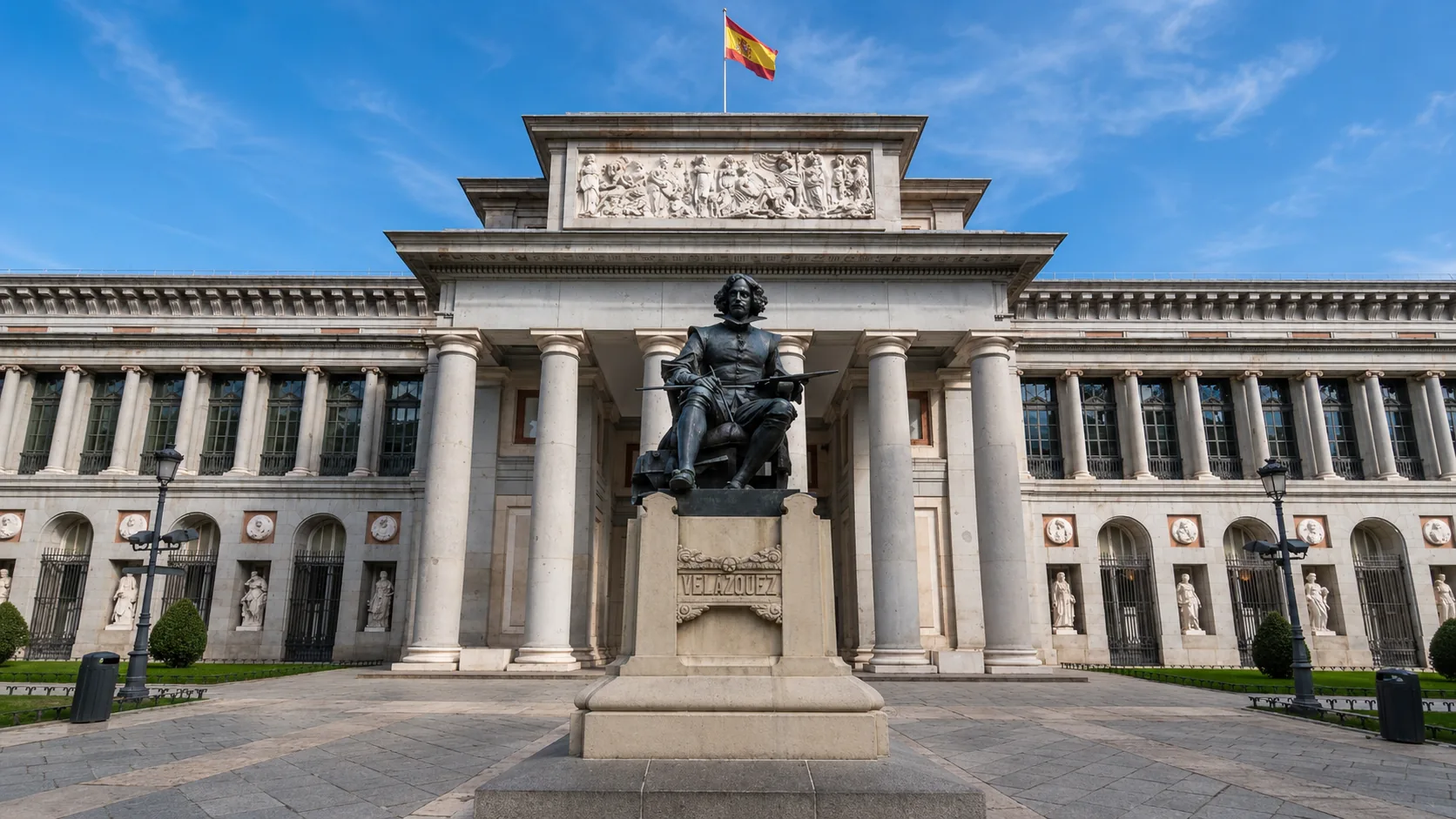
For many travellers, the Prado alone justifies the trip: it is usually open Monday to Saturday from 10:00 to 20:00, and on Sundays and public holidays from 10:00 to 19:00, although it is always worth checking opening times before you go.
It is a highly recommended city for a first urban break in Spain, for lovers of art, gastronomy, theatre, shopping, nightlife and trips that do not require too much planning. The centre brings together some of its great classics: the Prado Museum, El Retiro Park, the Royal Palace, Plaza Mayor, Puerta del Sol, Cibeles, the Reina Sofía and the Thyssen-Bornemisza, all recognised by Madrid’s official tourism guide as major sights. The Royal Palace is also one of the city’s great monumental visits, with opening hours that vary between the winter and summer seasons.
But Madrid does not end with its icons. It has neighbourhoods that can change the whole experience: Malasaña for a young, alternative atmosphere; Chueca for social life and diversity; La Latina for tapas; Las Letras for literature and terraces; Salamanca for elegant shopping; and Chamberí for a quieter, more local version of the city.
Is Madrid for beaches, culture, partying, food or relaxation?
Madrid is, above all, a city of culture, gastronomy and urban life. It is not a beach destination, and anyone looking for the sea, coves or Mediterranean scenery may feel something is missing. Nor is it the most obvious choice for pure nature, although El Retiro, Casa de Campo and day trips to the Sierra de Guadarrama partly make up for it.
For partying, it is absolutely worth it. Madrid has bars, cocktail lounges, nightclubs, theatres, flamenco venues, musicals and rooftop terraces for almost every taste. It also works very well for food: you can eat anything from a calamari sandwich near Plaza Mayor to creative cuisine, refurbished markets, century-old taverns or fine-dining restaurants.
For relaxation, it depends. Madrid can be intense, noisy and hot. In summer, the asphalt feels heavy and some central areas can feel overcrowded. Even so, staying in neighbourhoods such as Chamberí, Retiro, Salamanca or the quieter parts of Las Letras allows you to experience the city at a calmer pace.
Why people travel to Madrid
People travel to Madrid for three main reasons: art, atmosphere and convenience. It is an easy capital for a 2- or 3-day break, it is well connected and it lets you combine major museums with a very enjoyable street life. Its position in the centre of Spain also makes it a perfect base for day trips to Toledo, Segovia, El Escorial or Alcalá de Henares.
Madrid also attracts people who want to experience a Spanish city without relying on beach tourism. Here, the pleasure lies in walking, sitting down, watching, eating late and letting the day stretch out.
What to see in Madrid on a first visit
On a first visit, there are places that help you understand the city:
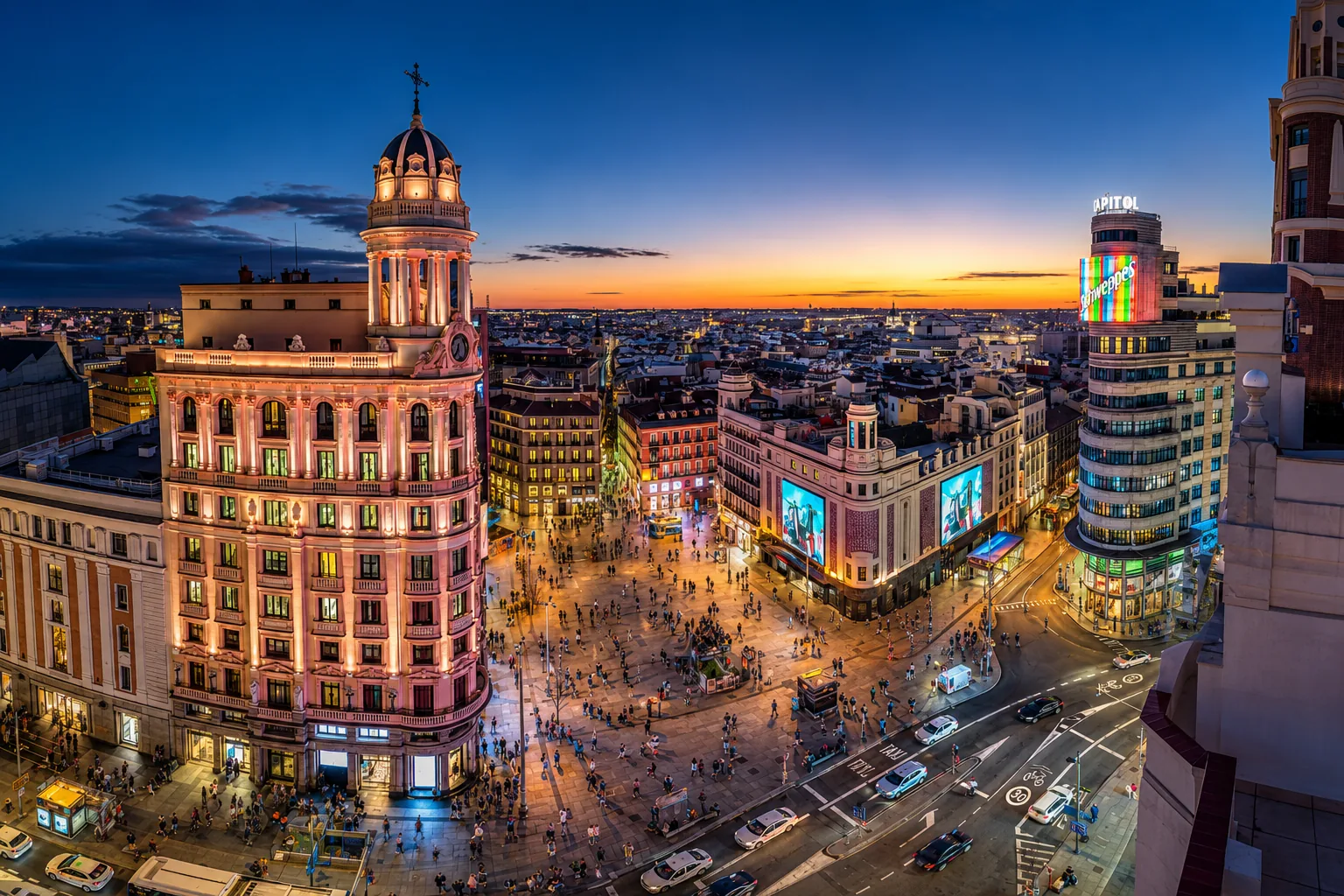
The Prado Museum, if you are interested in classical art. El Retiro, especially at sunset. The Royal Palace and Almudena Cathedral, for their monumental scale. Plaza Mayor, even if it is touristy. Puerta del Sol, more symbolic than beautiful, but central. The Gran Vía–Cibeles–Alcalá axis, to feel Madrid’s theatrical, luminous side. And at least one walk through La Latina, Las Letras, Chueca or Malasaña.
It is also worth visiting the Reina Sofía if you want to see modern and contemporary art, especially because of the cultural weight of its collection. The Prado–Reina Sofía–Thyssen triangle is one of Madrid’s great cultural arguments.
What might disappoint you
Madrid can disappoint anyone expecting a city that is uniformly monumental or “pretty” on every street. It has splendid avenues and historic squares, but also traffic, roadworks, heat, noise, very commercial areas and corners with no particular charm.
Plaza Mayor and the Mercado de San Miguel can feel too touristy if you visit at peak times. Gran Vía is impressive, but it can also feel overcrowded. And some restaurants in the centre live more off their location than their quality.
Nor is it an ideal city for everyone in the middle of August: the heat can strongly shape the pace of the trip. Madrid is best enjoyed on foot, and when the temperature rises sharply, walking stops being a pleasure and becomes a strategy.
Is Madrid expensive or cheap?
Madrid is not a cheap city, but it is usually more flexible than other major European capitals. Accommodation can rise considerably on weekends, long weekends, during trade fairs, events and periods of high demand. Eating out can be reasonable if you move away from the most touristy areas and look for daily menus, neighbourhood taverns or markets that are less visitor-oriented.
Public transport is one of its strengths. Metro de Madrid is keeping discounts on travel passes throughout 2026, with the adult Zone A pass for people aged 26 to 64 priced at €32.70, according to information published by Metro de Madrid. For a short break, it usually makes sense to get around by metro, bus and on foot, without renting a car.
How many days do you need?
For a first visit, 3 full days is a very balanced length of time. It allows you to visit the Prado or the Reina Sofía, explore the historic centre, walk through El Retiro, get to know several neighbourhoods and enjoy the food scene without rushing too much.
With 2 days, you can see Madrid, but you will have to choose: perhaps one major museum, the Royal Palace from the outside or inside, the historic centre and an evening of tapas. With 4 or 5 days, the city becomes more comfortable and allows you to add a day trip to Toledo, Segovia or El Escorial.
A week in Madrid makes sense if you want to enjoy museums at a slower pace, local life, shopping, shows, excursions and less obvious neighbourhoods.
Who is Madrid worth it for?
Madrid is very worthwhile for couples who enjoy walking, eating well, visiting museums and going out at night. It is also great for groups of friends, because it offers atmosphere at almost any hour and a huge variety of things to do. For solo travellers, it is a rewarding city: there are museums, cafés, safe neighbourhoods and a strong cultural life.
For families, Madrid can also work very well, especially thanks to its parks, shows, family-friendly museums and nearby excursions. That said, it is worth choosing comfortable accommodation, avoiding overly long days and not filling the whole trip with museums.
It may not be the best option for anyone looking for absolute rest, wild nature, beaches, silence or a small, easy-to-manage city. Madrid is generous, but it demands energy.
Honest verdict
Yes, Madrid is worth visiting. Not because it is perfect, but because it is alive. It is a city that knows how to combine great museums with simple bars, palaces with working-class neighbourhoods, elegant avenues with squares full of conversation. Its beauty is not always immediate, but once you understand its rhythm, it gets under your skin.
Madrid is best for travellers who want to walk, look around, eat, go into museums, go out without rushing and accept that part of its charm lies precisely in its luminous disorder. If you are looking for the sea or total calm, it may not be your ideal destination. If you are looking for culture, atmosphere, gastronomy and a city that seems to start again every evening, Madrid rarely disappoints.