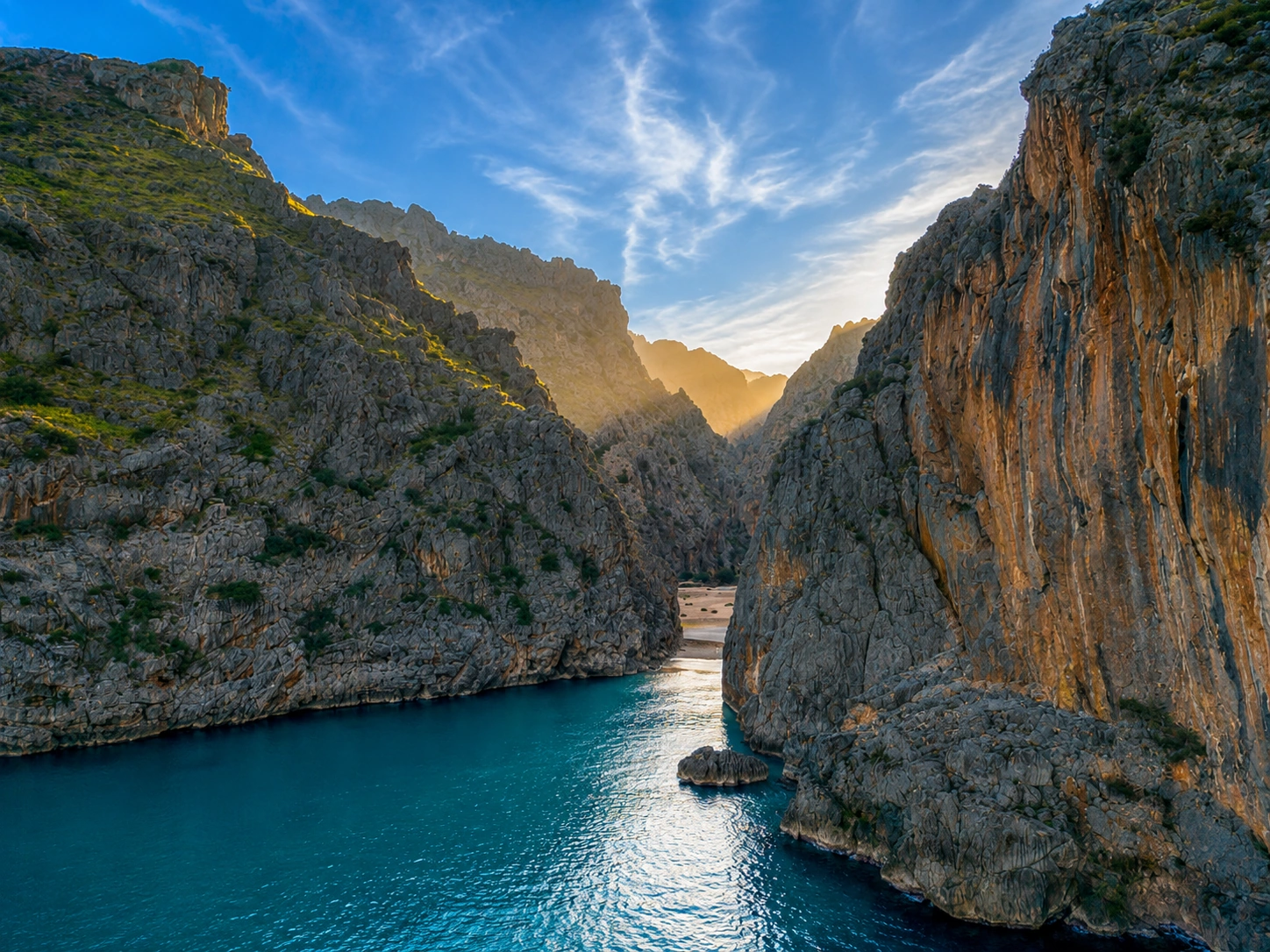

Parasailing flight from Playa del Arenal with a speedboat ride, aerial views of Mallorca and optional sunset departure.
View experienceMallorca itinerary in 1 day
The best route for a first taste of the island is to spend the morning in Palma and the afternoon by the sea somewhere nearby.
Start in Palma’s historic centre: the Cathedral, Parc de la Mar, the outside of the Royal Palace of La Almudaina, the narrow streets of the old town, the grand courtyards and perhaps a quiet stop on a terrace. Palma deserves to be explored slowly, because its beauty is not only in its monuments, but also in the golden light on the stone, the balconies, the hidden squares and that elegant Mediterranean atmosphere that appears when you move a little away from the main shopping streets.
Afterwards, you can head to Illetes, Portals Nous or Cala Major if you want an easy beach close by. They are not Mallorca’s wildest coves, but they work well when time is short. If you prefer culture and views to swimming, go up to Bellver Castle or end the day on the Paseo Marítimo.
For 1 day, the best order would be: Palma in the morning, lunch in the centre or Santa Catalina, an afternoon at a nearby beach or viewpoint, and a relaxed dinner in Palma.
I would not try to go to Sa Calobra, Formentor or Cala Mondragó on a one-day visit unless that is your only goal. They are beautiful places, but the time on the road can end up taking over the experience.
Mallorca in 2 days
With 2 days, you can already combine city, mountains and sea without feeling as though you are travelling just to tick names off a list.
Day 1: Palma and surroundings. Dedicate the first day to Palma. Visit the Cathedral, the old town, the La Lonja area, Santa Catalina and Bellver Castle if you want a wide view of the bay. It is an ideal day to do on foot, without a car and with proper breaks for good food.
In the afternoon, you can head to a nearby beach or stay in the city if you are more interested in food, local shops and the late-afternoon atmosphere.
Day 2: Valldemossa, Deià and Sóller. The second day should be for the Serra de Tramuntana. The Valldemossa, Deià and Sóller route is one of the most beautiful on the island, especially if you like stone villages, scenic roads, olive groves, mountains and viewpoints over the sea.
Valldemossa is very photogenic, but also very popular. It is best to arrive early. Deià has a more artistic and peaceful charm, although it can feel somewhat exclusive and expensive. Sóller and Port de Sóller are perfect for ending the day with a walk, the harbour, orange trees, ice cream or dinner by the sea.
The most logical order is Palma, Valldemossa, Deià, Sóller and Port de Sóller. If you do not have a car, you can do Palma and Sóller on the historic train, which is a lovely experience, although it limits your pace and does not allow you to stop wherever you like.
Mallorca in 3 days
Three days is a much more rewarding amount of time. You will not see everything, but you can get a complete feel for the island: Palma, the Tramuntana and the coves.
Day 1: Palma without rushing. Dedicate the first day to Palma. The Cathedral and the old town are the essentials, but do not stop at the postcard version. Wander through streets such as those around La Lonja, step into courtyards if you find any open, stroll through Santa Catalina and leave time for a leisurely lunch.
In the afternoon, you can go up to Bellver Castle or head to an urban beach if the weather is good. Palma is one of those places that is far more enjoyable when you do not treat it like a checklist of monuments.
Day 2: Serra de Tramuntana. Take the route through Valldemossa, Deià, Sóller and Port de Sóller. If you enjoy driving, this day may be one of the most memorable of the trip. The scenery changes with every bend: dry-stone walls, terraces, cliffs, pines, mountains and villages that seem made for the late-afternoon light.
If you want to add something else, you can include Fornalutx, one of the prettiest villages in the area. Just do not overload the day. In Mallorca, especially on mountain roads, less is usually more.
Day 3: north or southeast. If you are looking for scenery, history and a broader view of Mallorca, choose Alcúdia, Pollença and Cap de Formentor. If you prefer coves, choose the southeast: Cala Santanyí, Cala Llombards, Cala Mondragó or S’Almunia.
For a balanced first visit, I would choose the north if you want a varied route, and the southeast if your absolute priority is swimming in beautiful coves.
Mallorca in one week
One week is the ideal amount of time to understand Mallorca without reducing it to famous beaches. It allows you to alternate route days with slower days, which matters on an island that is much more enjoyable when you are not rushing around anxiously.
Day 1: Palma. Start with Palma. It is the best gateway to the island: monumental, Mediterranean, easy to navigate and with a strong food scene. Visit the Cathedral, the old town, La Lonja, Santa Catalina and Bellver Castle. Sleep in Palma or nearby if you want good connections for getting around.
Day 2: Valldemossa, Deià and Sóller. Dedicate the second day to the classic Tramuntana. Valldemossa in the morning, Deià around midday, Sóller in the afternoon and Port de Sóller at sunset. It is a full but logical day. Do not add Sa Calobra on the same day if you want to enjoy the villages at a relaxed pace.
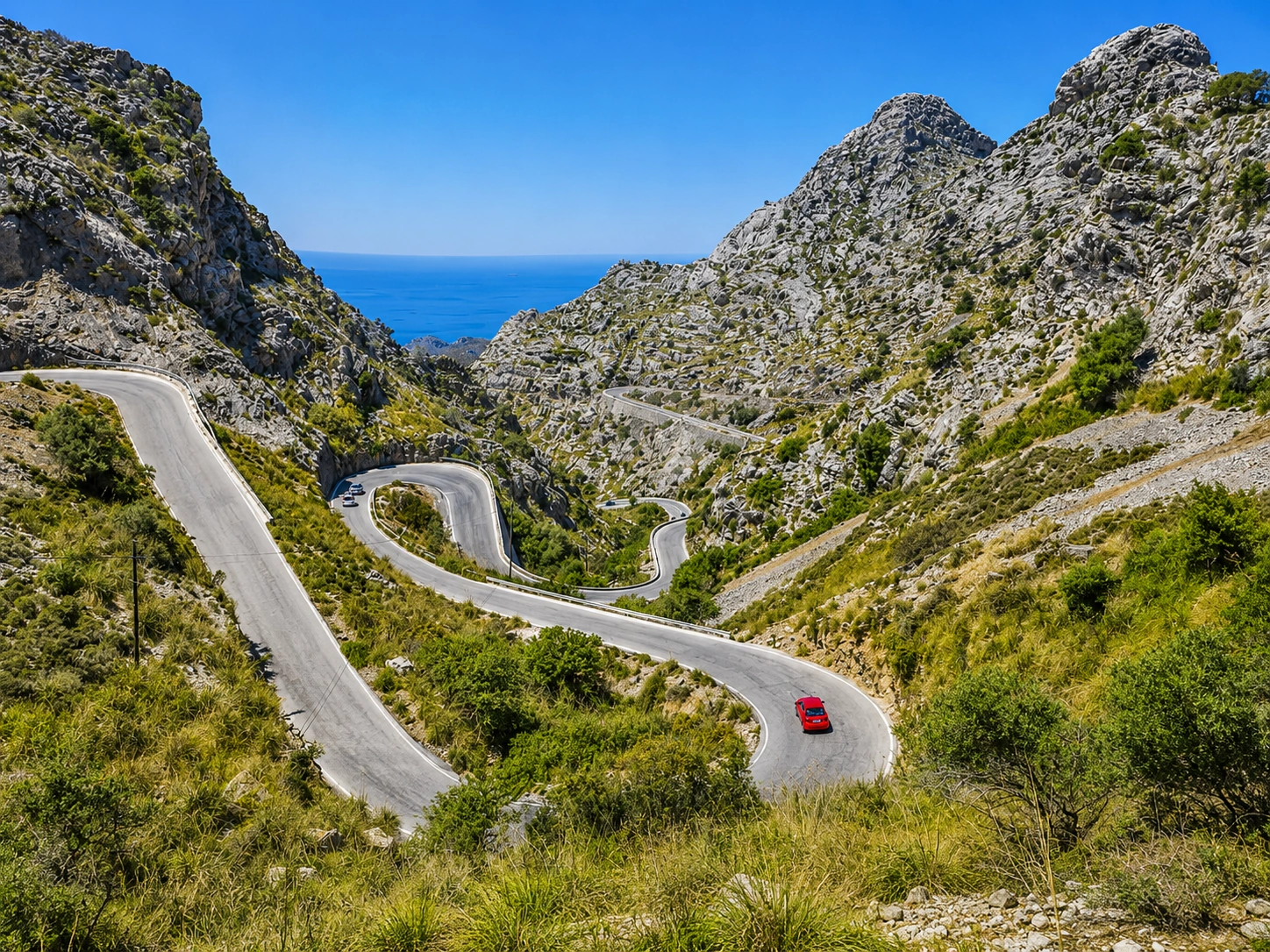
Day 3: Fornalutx, Biniaraix and Sa Calobra. This can be more of a mountain day. Fornalutx and Biniaraix have a quieter charm than other more famous places. Afterwards, if you enjoy driving and do not get carsick on bends, you can go to Sa Calobra and Torrent de Pareis. The landscape is impressive, but the road is demanding and in high season it can feel heavy going.
Day 4: Alcúdia, Pollença and Formentor. The north deserves a day of its own. Explore Alcúdia, go up to Pollença, walk around Port de Pollença and, if conditions allow, head towards Formentor. It is a beautiful area, but also one of the most affected by overcrowding.
Day 5: Northern beaches or the Bay of Alcúdia. After several days on the road, it is time to slow down. You can stay around Playa de Muro, the Bay of Alcúdia or a quieter area in the north.
Day 6: Santanyí, Mondragó and the southeastern coves. The southeast is the Mallorca of clear coves, pine trees and white rocks. Cala Mondragó is a good option because it combines natural beauty with relatively easy access. Cala Llombards and S’Almunia are more photogenic, but they can also be inconvenient if you arrive late or visit in midsummer.
Day 7: Manacor, Artà or caves. For the last day, you can choose between the inland area, caves or a quieter route through the east. Artà has character, good views and an atmosphere that is less obvious than in other more famous villages. Manacor may be interesting if you want to see a more everyday side of Mallorca. The Caves of Drach are very popular and striking, although also touristy.
The best Mallorca route for a first trip
For a first visit, the most balanced route would be: Palma, Serra de Tramuntana, Sóller, northern Mallorca, the beaches of the southeast and one day for rest or the interior.
This order makes sense because it starts with the urban and monumental side of the island, continues through the mountains, then moves towards the open landscapes of the north and ends with coves and more relaxed villages. It avoids constantly changing accommodation and reduces unnecessary travel.
If you are going for just a few days, staying in Palma or nearby can be practical. If you are going for a week, you can split your stay between Palma or the surrounding area and the north or southeast, depending on whether you prefer routes or beach time.
What can be combined in the same day
Palma combines well with Bellver Castle, Santa Catalina, Cala Major, Illetes or Portals Nous.
Valldemossa combines well with Deià, Sóller, Port de Sóller and Fornalutx.
Alcúdia combines well with Pollença, Port de Pollença, Playa de Muro and Formentor.
Santanyí combines well with Cala Mondragó, Cala Llombards, S’Almunia and Cala Figuera.
Artà combines well with Capdepera, Cala Ratjada or some of the northeastern beaches.
What is not advisable, unless you have a lot of energy, is combining Palma, the Tramuntana and the southeastern coves in the same day. It is also not a good idea to fit Formentor and Sa Calobra into one day: on the map they may look like two mountain-and-coast spots, but in practice they are demanding routes.
What order makes the most sense
The ideal order depends on where you are staying, but as a general rule it is best to group places by area. Mallorca is not huge, but its roads, summer traffic and parking make jumping from one end of the island to the other more tiring than it may seem.
For 3 days: Palma, Tramuntana and either the north or the coves.
For 5 days: Palma, Tramuntana, Sóller-Sa Calobra, the north and the southeast.
For 7 days: Palma, Tramuntana, Sóller-Sa Calobra, the north, a quiet beach day, the southeast and the east/interior.
The key is not to turn Mallorca into a race. The island does have very famous places, of course, but it is often at its best in the slower moments: a coffee in a village square, a road winding through olive trees, a cove at sunrise, a simple meal overlooking the sea or an unplanned afternoon under the warm light of Mallorcan stone. That is when the trip truly starts to feel worthwhile.