

Book a 3-day Merzouga desert safari from Marrakech with the High Atlas, Ait Ben Haddou, Todra Gorges, camel rides and a Berber desert camp.
View experienceThe Real Safety Situation in Marrakech: Between Fascination and Vigilance
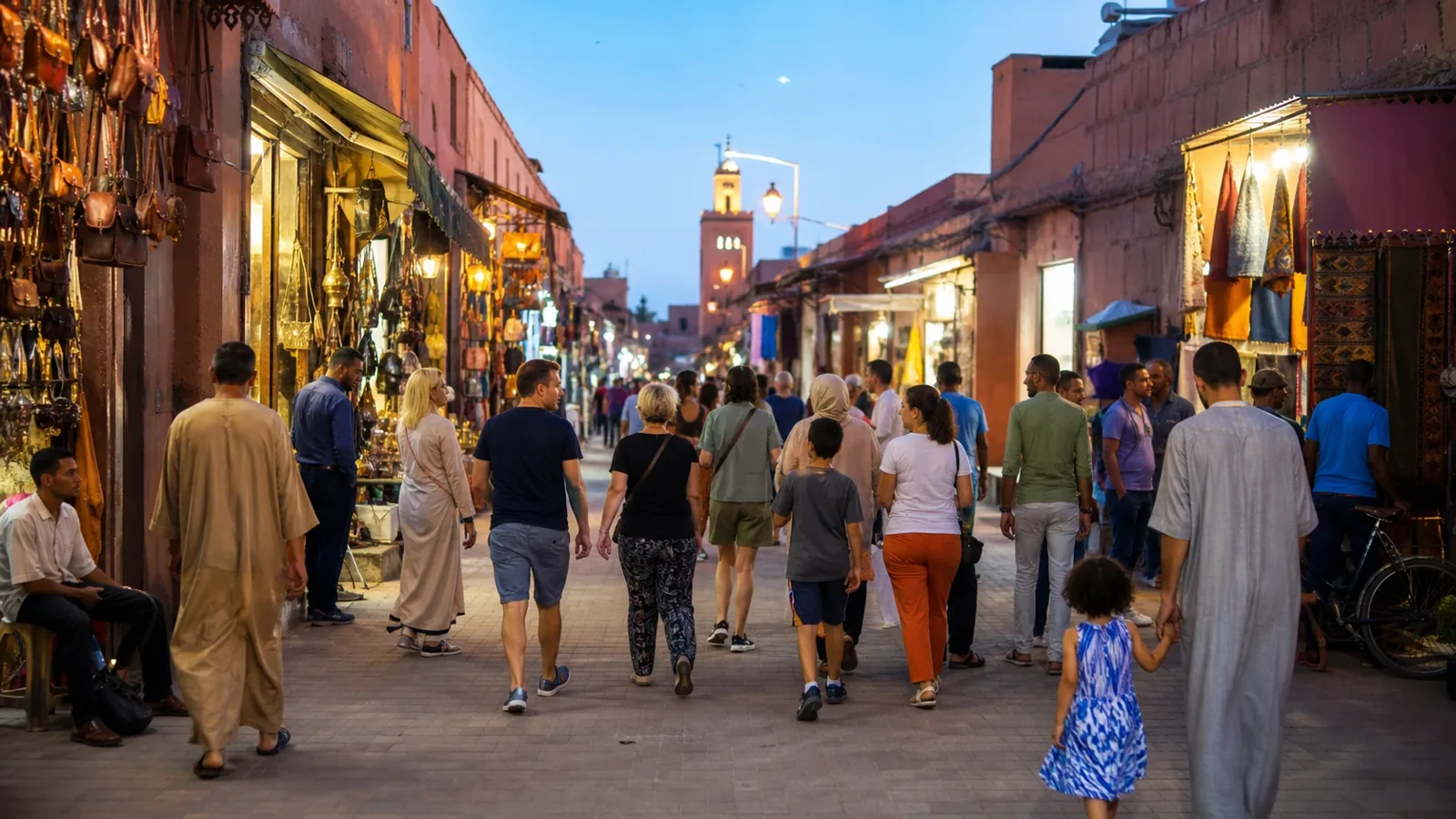
Marrakech has an energy that is hard to tame. In the medina, light falls across reddish walls, the smell of leather and spices mingles with smoke from grills, and vendors’ voices create a rough, intense, sometimes exhausting kind of music. For many travellers, that density is precisely the charm. For others, it can feel intrusive.
In practical terms, Marrakech’s tourist areas are usually busy and well watched, especially around Jemaa el-Fna, the Koutoubia, the main souks, Gueliz, Hivernage, and the areas around well-known hotels and riads. The most common problem is not usually violence, but opportunism: open bags, phones left on tables, fake guides, inflated prices, “wrong” routes leading to shops, or people offering to help and then asking for money.
The most common problem is not usually violence, but opportunism.
Areas Where You Should Stay More Alert in Marrakech
Jemaa el-Fna square is hypnotic at sunset, when the food stalls light up and the city seems to breathe smoke, orange light, and drums. It is also one of the places where you should keep the closest eye on your belongings. There is no need to walk around afraid, but in crowds it is wise to keep your backpack in front of you and hold your phone securely.
In the souks, the main risk is getting disoriented. Some alleyways seem to repeat themselves like a mirror of carpets, lamps, and carved doors. Getting a little lost can be part of the experience; losing your patience should not be. If someone insists too much on “showing you the way,” it is best to refuse firmly and keep walking.
At night, the main avenues and tourist areas are usually manageable, but it is not a good idea to wander alone into empty medina alleyways if you do not know the route. To get back to your riad after dinner, especially if it is hidden down a narrow derb, an authorised taxi or an escort arranged by your accommodation can spare you unnecessary nerves.
In crowds it is wise to keep your backpack in front of you and hold your phone securely.
Women Travelling Alone in Marrakech
A woman can travel alone to Marrakech, but she should know that she may receive stares, comments, or persistent attempts at conversation, especially in tourist areas. This does not necessarily mean danger, but it can be tiring. The experience improves greatly with a confident attitude, clothing that respects the local context, and avoiding over-explaining when turning something down.
The most useful approach is to walk with purpose, avoid long arguments, not accept improvised companions, and choose well-located accommodation. A beautiful riad lost down a dark alley may look romantic in photos and feel impractical when coming back at night.
The experience improves greatly with a confident attitude and well-located accommodation.
Families, Couples, and Older Travellers
For families, Marrakech can be stimulating, but it is not always easy. The traffic, the motorbikes inside the medina, the noise, and the intensity of commercial interactions can overwhelm small children. It works better with short visits, long breaks, and accommodation with a courtyard or pool where you can recover some silence.
Couples often enjoy the city a great deal if they balance the medina with moments of calm: gardens, hammams, sunset terraces, and quiet dinners. Older travellers should choose accessible hotels or riads, because many streets have uneven surfaces and not all traditional accommodation has a lift.
Scams in Marrakech and Common Mistakes to Avoid
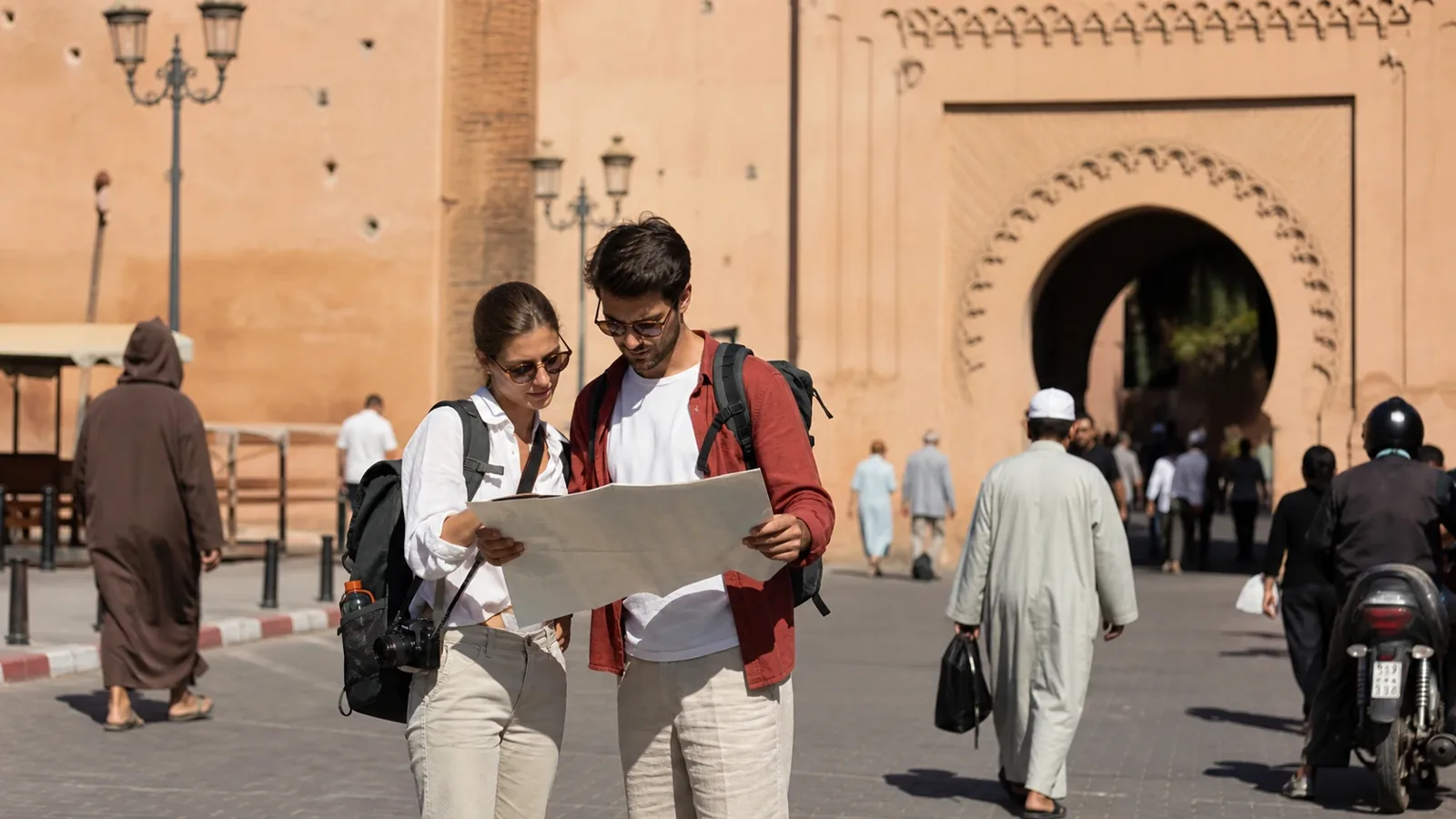
The classic mistake in Marrakech is looking lost and accepting help without agreeing on anything first. Another common mistake is getting into a taxi without agreeing on the price or confirming that the meter will be used where applicable. It is also best to avoid photographing people, snake charmers, or street performers without asking first; in many cases, they will ask for money afterwards.
In the souks, bargaining is part of the game, but buying is not compulsory. The important thing is to keep a friendly tone and walk away if the negotiation stops feeling comfortable. Marrakech rewards firm courtesy: a smile, a clear “no, thank you,” and continuing on your way usually work better than irritation.
Accept help only when what is being offered and whether payment is expected are clear.
Terrorism Risk and General Safety
As in several international tourist destinations, official advisories mention a risk of terrorism in Morocco and recommend particular vigilance in crowded places, transport, markets, and spaces frequented by foreigners. This does not mean that travellers should automatically cancel their trip, but it does mean avoiding tense gatherings, following the instructions of the authorities, and staying informed before heading out.
It is also worth remembering that some official recommendations for Morocco refer to areas far from the usual Marrakech circuit, such as border areas or regions of Western Sahara. For a trip focused on Marrakech, Essaouira, the Atlas Mountains, or standard tourist routes, the kind of caution required is different: more urban, more connected to crowds, transport, unofficial guides, and petty theft.
For Marrakech, the kind of caution required is more urban and linked to crowds, transport, unofficial guides, and petty theft.
Is It Safe to Eat in Marrakech?
Eating in Marrakech can be one of the great pleasures of the trip: slow-cooked tagines, warm bread, glossy olives, mint tea poured from high above. But a traveller’s stomach does not always adapt as quickly as the imagination.
Basic caution helps: choose places with good turnover, avoid non-bottled water, be careful with ice of uncertain origin, and do not try everything on the first day. The stalls of Jemaa el-Fna are part of the scene, but they do not all offer the same level of hygiene or peace of mind. If you have a sensitive stomach, start with more controlled restaurants and leave the culinary adventure for when you have already got a feel for the city.
If you have a sensitive stomach, start with more controlled restaurants.
How Safety Changes Depending on the Time of Year
In spring and autumn, Marrakech usually feels more forgiving: there is life in the streets, but the heat is not as oppressive. In summer, tiredness can lead to more mistakes: walking becomes harder, bargaining requires less patience, and any scrap of shade becomes irresistible. Extreme heat is not insecurity in the strict sense, but it can turn a poorly planned visit into an exhausting experience.
During major holidays, long weekends, and peak seasons, the city gets much busier. The bigger the crowds, the more attention you should pay to bags, cameras, and phones. During Ramadan, the rhythm changes: some routines slow down during the day, and the city wakes up forcefully after sunset. It is not necessarily a bad time to visit, but it does require greater cultural sensitivity.
Extreme heat is not insecurity in the strict sense, but it can make a poorly planned visit exhausting.
Who Marrakech Is Worth It For
Marrakech is worth it for travellers who come with curiosity, patience, and a willingness to accept a certain amount of chaos. It is a city of hidden courtyards, humble doors opening onto inner palaces, calls to prayer floating over terraces, cats sleeping beside mosaics, street-food smoke, and sunsets that turn the stone copper.
It is a good choice for travellers who enjoy walking, observing, bargaining, smelling spices, entering gardens, and being surprised by contrasts. It is also for those who understand that a city does not have to be comfortable every minute in order to be memorable.
Who Marrakech May Not Be Worth It For
Marrakech may disappoint anyone looking for a peaceful, orderly, predictable break. If persistent sales pressure makes you very uncomfortable, if crowds overwhelm you, or if you are expecting a clean, quiet city that is easy to explore without surprises, it may be better to stay in calmer areas, visit with an official guide, or combine just a few days in Marrakech with Essaouira, the Atlas Mountains, or the desert.
Nor is it the best destination for improvising absolutely everything. The city is more enjoyable when you leave room for chance, yes, but with certain decisions already well made: well-located accommodation, clear transfers, key visits planned, and time set aside to rest.
Final Tips for Travelling With More Peace of Mind
Choose accommodation with good reviews for location and arrival, especially if it is inside the medina. Carry little cash and keep cards and documents separate. Use closed bags. Do not show expensive items unnecessarily. Ask at your riad which taxis are recommended and how much a ride should usually cost. If you hire a guide, it is better to choose an official one or someone recommended by your accommodation.
Marrakech does not call for fear, but it does call for attention. Its beauty is not soft: it enters through the eyes, the skin, and the ear. It can tire you out, it can amaze you, and sometimes it can do both in the same afternoon. Travelling safely there is not about insulating yourself from the city, but about learning to walk through it with respect, calm, and discreet caution.
Marrakech does not call for fear, but it does call for attention.