 Activity on TourBookGo
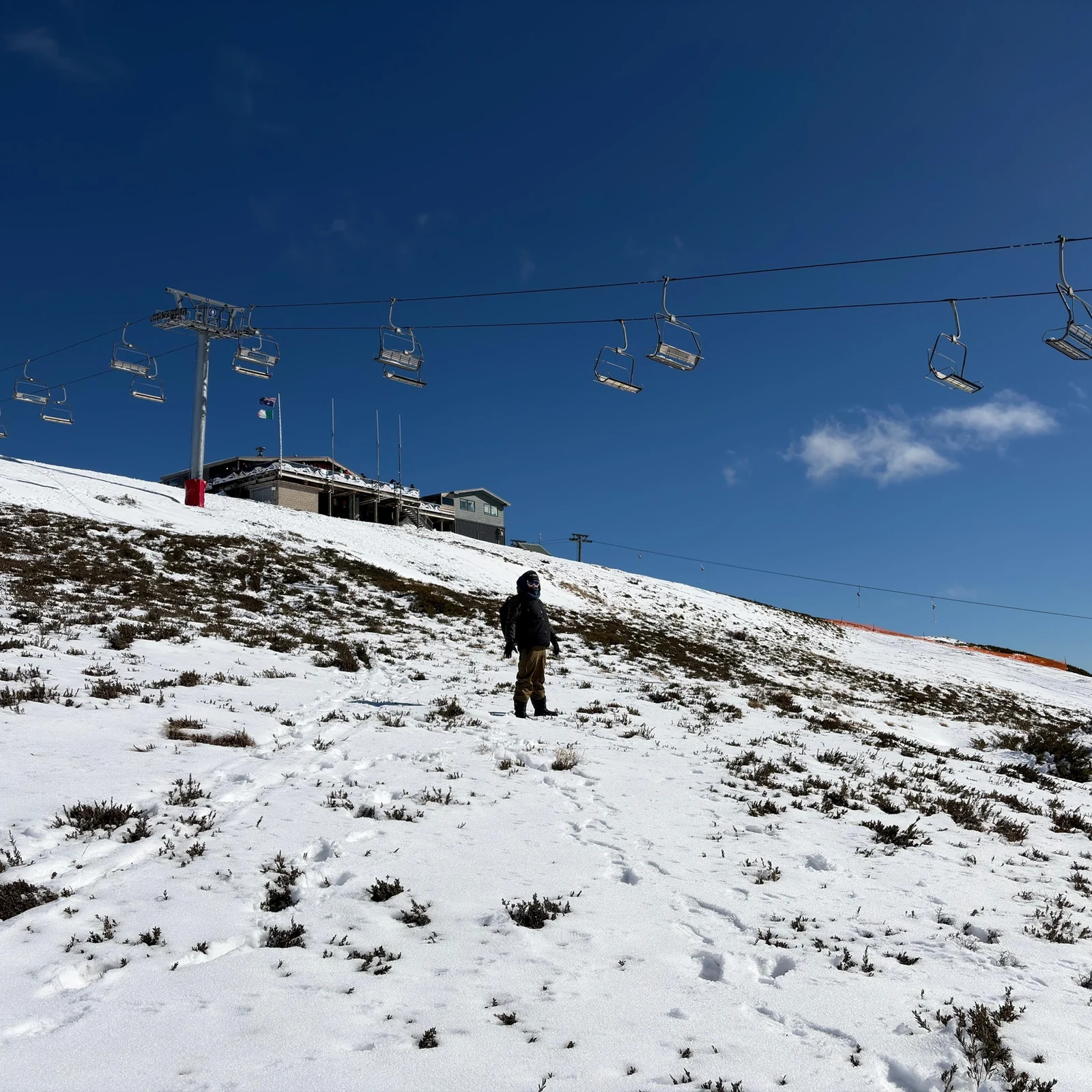
Mount Buller Snow Adventure from Melbourne: snow and resort entry
Around 15 hours from Melbourne to Mount Buller with return transport, resort entry and approximately 5 hours of free time on the mountain. From €58 per person.
The best time to visit Melbourne is usually March and April, when the weather is more comfortable for exploring the city. October and November are an excellent alternative, with longer days, blooming gardens and more outdoor life.
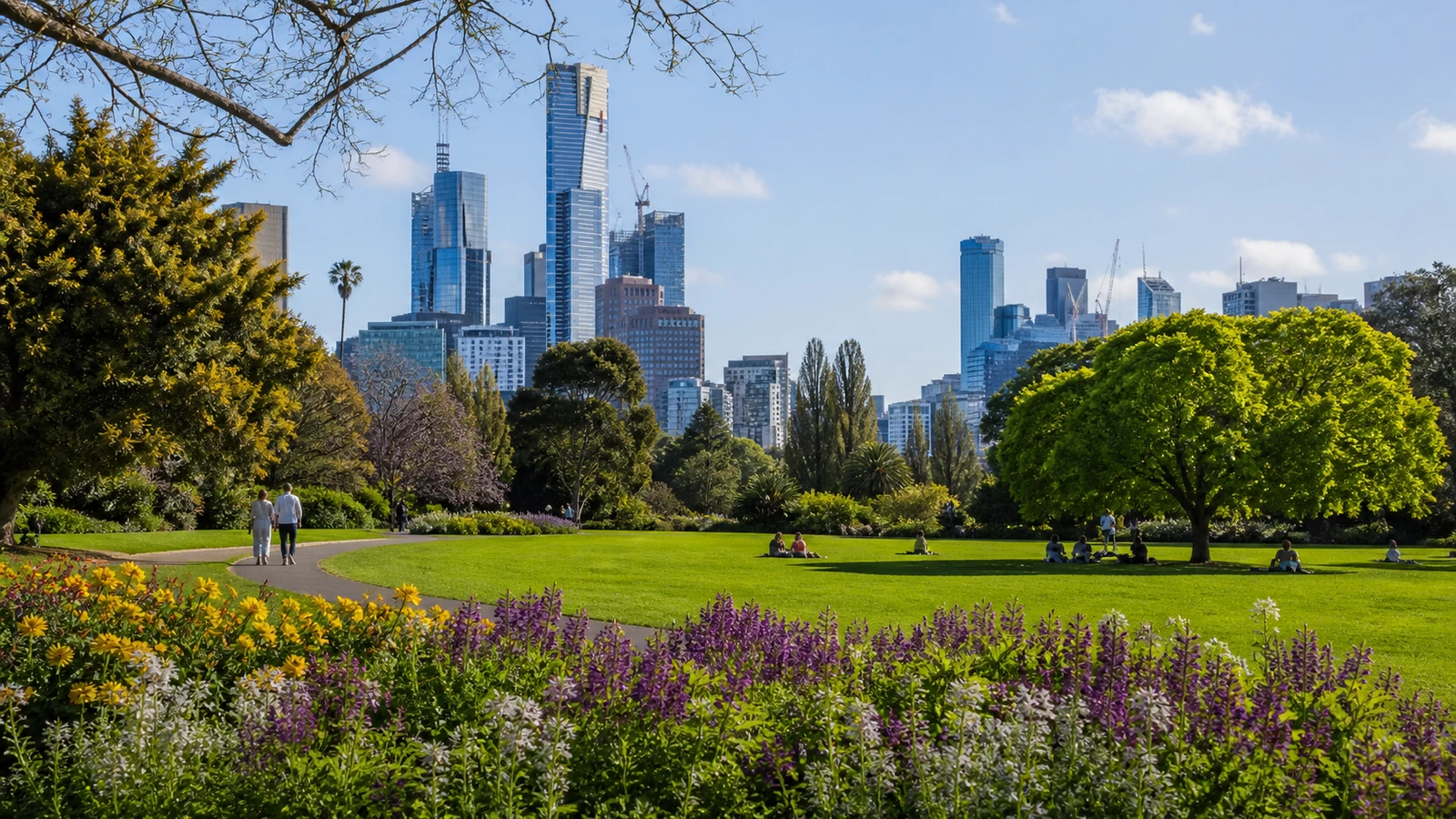
Choosing the best time to visit Melbourne means accepting that changeable weather is part of the city’s character. In summer, a bright morning can turn into a very hot afternoon; in autumn, parks take on copper tones while café terraces remain lively; in winter, rain and cooler temperatures draw people into cafés, galleries and pubs; and in spring, Melbourne gradually moves outdoors again even though the weather can still change quickly. For most travellers, March and April offer the most appealing balance of comfortable temperatures, cultural life and walkability. October and November are a strong second choice, with longer daylight hours and gardens in bloom. Ultimately, deciding when to visit Melbourne depends as much on the weather and major events as on the kind of city experience you want.
Compare locations and options to find a base that suits your trip. Booking.com confirms current availability and pricing.
Find accommodation on BookingThe beginning of the Australian autumn brings together many of Melbourne’s strengths without concentrating so many extremes. Average daytime highs fall from around 24°C in March to 21°C in April at Melbourne Olympic Park, while the nights begin to cool down. (Bureau of Meteorology)
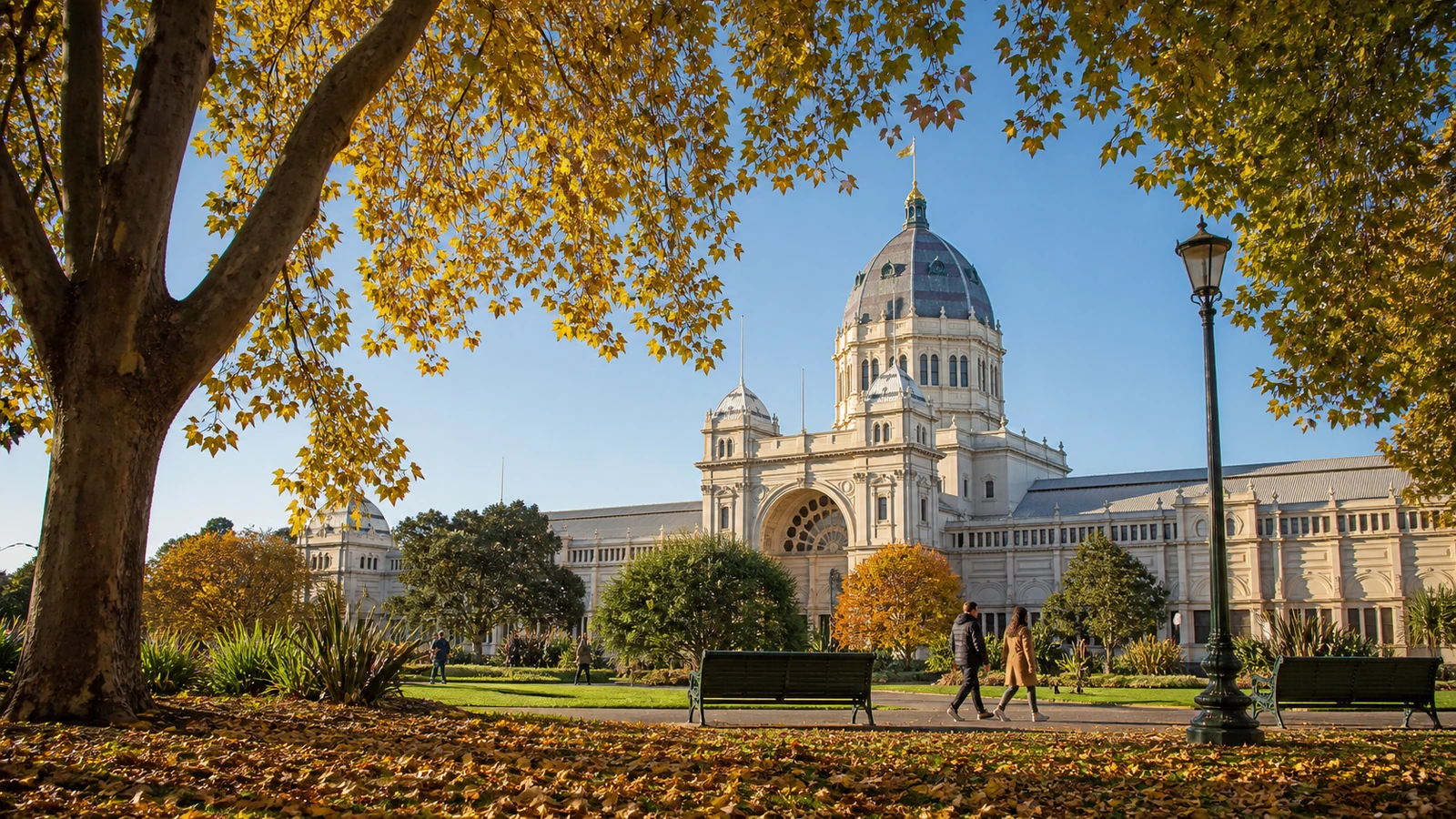
Visiting Melbourne in March or April is especially enjoyable if you want to explore on foot. Flinders Lane, Fitzroy, Carlton and South Yarra can be discovered without the exhaustion of an excessively hot day, while the parks gradually turn golden. The light loses some of summer’s harshness and the city feels a little more relaxed without losing its energy.
Melbourne in autumn also coincides with some of the city’s biggest events. The Formula 1 Australian Grand Prix takes place at Albert Park between March and April, while the Melbourne International Comedy Festival fills theatres, bars and venues across the city from late March through much of April. (Visit Victoria)
That appeal comes with a trade-off: a major event can transform both the atmosphere and the cost of a trip. On certain dates, it is wise to book accommodation further in advance and expect some areas to be considerably busier. If the event taking place during your stay does not interest you, shifting your trip by a few days can make for a much quieter experience.
Melbourne in spring has a less predictable kind of beauty. Gardens come back to life, daylight hours increase and temperatures gradually rise. Average highs are around 18°C in September, 20–21°C in October and just over 22°C in November. (Bureau of Meteorology)
For anyone who enjoys walking, sitting outside at cafés and combining the city with day trips around Victoria, it is an excellent season. Melbourne feels green, light and energetic, especially as November approaches.
One misconception is worth clearing up: spring does not necessarily mean settled weather. Weather variability is part of Melbourne’s character, and October ranks among its wetter months according to official tourism statistics. (Visit Victoria) A lightweight waterproof jacket may prove much more useful than trying to read the sky from your hotel window.
Late October and early November also bring the Melbourne Cup Carnival, one of the city’s major social and sporting events; the Melbourne Cup is traditionally held on the first Tuesday in November. (Visit Victoria) Travellers who want to experience that atmosphere may find the city especially lively. Those looking for a quieter stay should check the dates before booking.
From December to February, Melbourne enters its warmest period. January and February usually record the highest average daytime temperatures of the year, at around 26°C, although averages tell only part of the story: much hotter spells can occur. (Visit Victoria)
Melbourne in summer has obvious advantages. Long evenings are ideal for strolling beside the Yarra, heading to St Kilda, discovering rooftop bars and enjoying an urban life that seems to carry on well after sunset.
It is also the season of major events. The Australian Open turns January into one of Melbourne’s most intense sporting periods; the 2027 edition, for example, is scheduled for 11–31 January. (Visit Victoria)
For tennis fans, that may be the very reason to go. For anyone who simply wants to explore Melbourne at a relaxed pace, being there during the tournament can mean more visitors and greater pressure on accommodation.
The other consideration is the heat. Melbourne does not have a consistently tropical summer, but rather a highly variable climate. You may get pleasant days and others when spending hours walking through unshaded streets is far less appealing. If you are sensitive to high temperatures, Melbourne in March is usually a more comfortable choice.
June, July and August are the cold months. In July, average temperatures in central Melbourne are around 14–15°C during the day and 7°C at night. (Bureau of Meteorology) It is not the brutal winter experienced by some of the world’s major cities, but wind, damp conditions and short days can make it feel considerably colder.
Does that mean Melbourne should be avoided in winter? Not necessarily.
Few Australian cities handle a grey day quite so well. Cafés become refuges, museums and galleries feel even more inviting, and pubs seem made for the season. Victoria’s own tourism authority presents winter as a season for shows, sport, shopping, pubs and cultural activities. (Visit Victoria)
Melbourne in winter is a good choice for travellers who prioritise food, neighbourhoods, art and city atmosphere over beaches and long days outdoors. It may also appeal to those who prefer to avoid some of the demand of major holiday periods, although the cultural and sporting calendar still creates very busy weekends.
What can disappoint is expecting the postcard image of permanently sunny Australia. Melbourne in July can mean coats, umbrellas and low grey skies. If that picture does not appeal to you, winter is probably not your season.
In Melbourne, visitor numbers do not depend on the seasons alone. Major events have a huge impact. The Australian Open in January, Formula 1 in March, the Comedy Festival from March into April and the Melbourne Cup in spring can significantly alter demand for days or even weeks at a time. (Visit Victoria)
That is why simply looking for “high season” and “low season” can lead to the wrong conclusions. Two weeks within the same month can behave very differently.
If budget is your main concern, it usually makes more sense to compare dates away from major events, school holidays and public holidays than to chase a particular season. And if a festival or tournament is part of your trip, it is worth accepting a busier city: at those times, that shared energy is part of the experience.
March is the most balanced choice for many travellers. It retains some of summer’s light and outdoor character, but usually with more moderate temperatures. April is even more appealing if you enjoy walking for hours, do not mind cool mornings and evenings, and want to experience Melbourne in autumn.
October and November are excellent for gardens, terraces and increasingly long days. They are particularly attractive months for Melbourne in spring, although the weather can still be unpredictable.
January is worth considering if you want to experience the Australian Open and the energy of summer, provided you are comfortable with the heat and a busier city.
July and August make sense for urban travellers who enjoy museums, food, cafés and evenings in pubs, and who do not need blue skies to consider a trip worthwhile.
The key when deciding when to visit Melbourne is not to look for guaranteed weather. The city’s reputation for seeming to experience several seasons within a short space of time is better treated as practical advice: wear layers, leave some flexibility in your itinerary and do not plan every day solely around good weather.
For a first visit, late March or April probably offers the most appealing combination of climate, cultural life and walkability. Melbourne has something especially convincing at that time of year: dry leaves beneath the trees, trams passing between Victorian façades, busy tables in small cafés and slanting light that makes even a cool afternoon feel elegant.
Discover selected experiences in Melbourne, from city tours and food experiences to nature, wildlife and day trips across Victoria.
Activity on TourBookGoAround 15 hours from Melbourne to Mount Buller with return transport, resort entry and approximately 5 hours of free time on the mountain. From €58 per person.
 Activity on TourBookGo
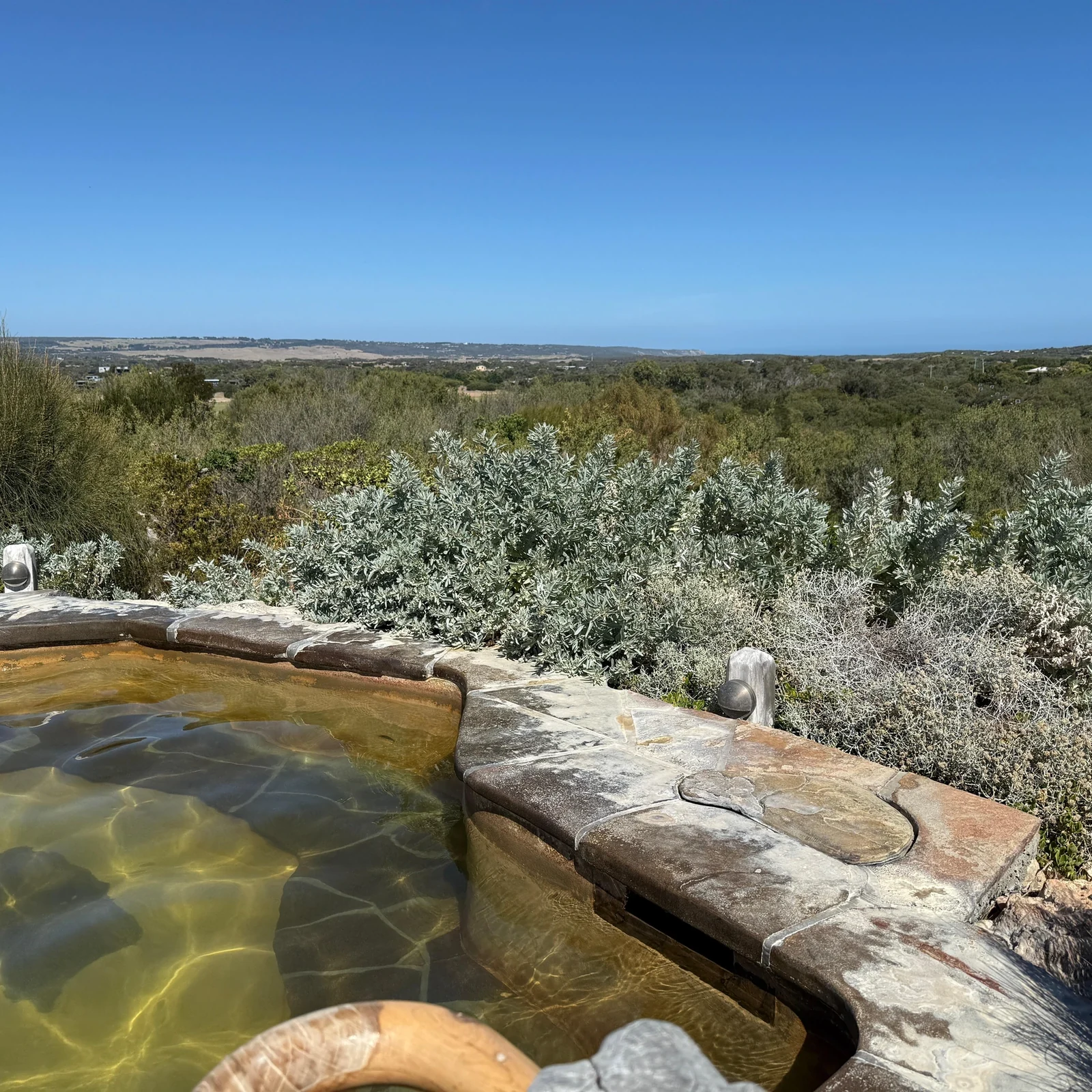
Book Peninsula Hot Springs in Fingal and enjoy up to 5 hours in the Bath House with more than 50 mineral hot spring bathing and wellness experiences.
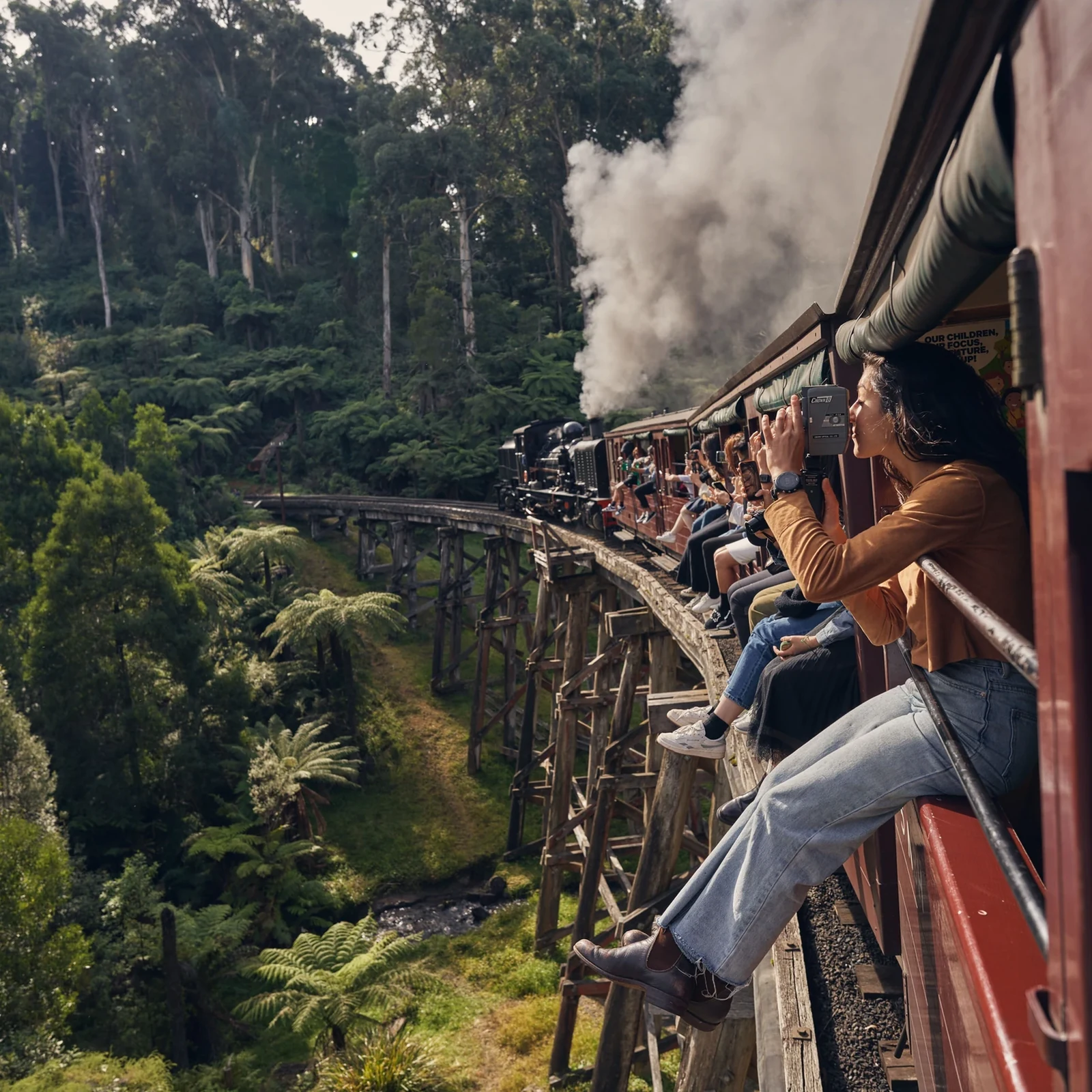 Activity on TourBookGo
Around 8 hours from Melbourne with Puffing Billy Railway, the Dandenong Ranges and Healesville Sanctuary. Check price, times and availability.