Getting Around Melbourne: Trams, Trains and the Best Option for Every Journey
Getting around Melbourne becomes much easier once you understand how the city fits together. The centre is ideal for walking, inner neighbourhoods stretch along tram routes and, when distances grow, Melbourne's train network makes crossing the city far more efficient.
For most travellers, there is no need to rent a car. Walking, trams and trains work extremely well for a first visit and let you experience Melbourne without worrying about traffic or parking. A car becomes more useful when your itinerary takes you beyond the urban area and into regional Victoria.
Getting around Melbourne: what is the best combination?
The easiest way of getting around Melbourne is usually to combine several options: walk through the CBD, use Melbourne trams for nearby neighbourhoods and take the train when the journey is longer.
Public transport in Melbourne includes an extensive network of trams, trains and buses, making it easy to choose the most practical option for each part of your day.
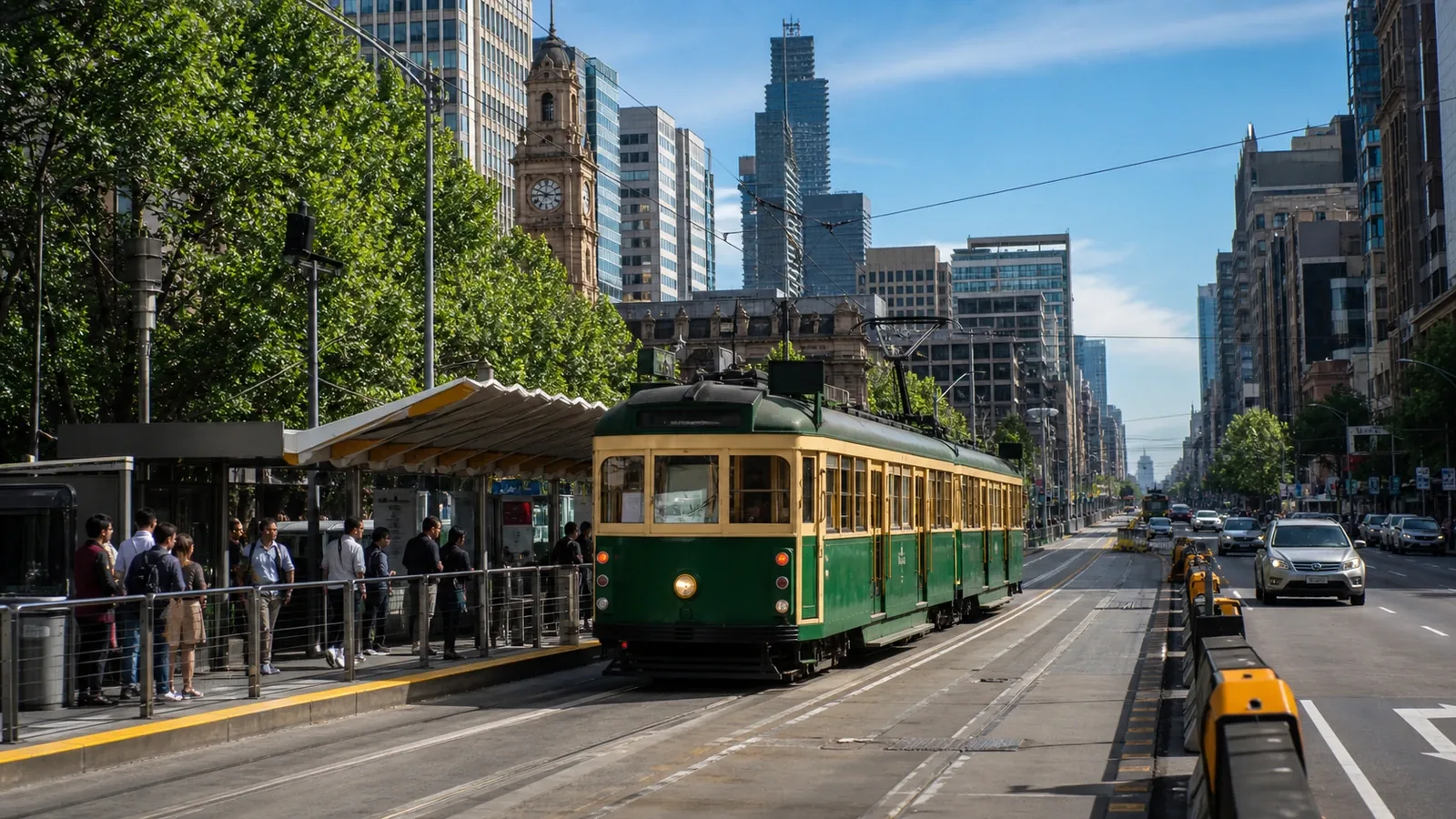
Transport is also part of Melbourne's character. Trams glide past Victorian buildings, cafés and shopping streets, so even an ordinary journey can become a pleasant way to watch the city unfold through the window.
Explore the CBD on foot and use Melbourne trams for nearby neighbourhoods.
Take the train when you need to cover longer distances efficiently.
Save the car for road trips and journeys beyond metropolitan Melbourne.
Booking.com
Accommodation in Melbourne
Compare locations and options to find a base that suits your trip. Booking.com confirms current availability and pricing.
Walking around Melbourne: the best choice for the CBD
Melbourne's CBD is made for walking. Federation Square, Flinders Street, the city's laneways, Chinatown, the Yarra River, Southbank and many of the main shopping streets can easily be combined in one route without constantly relying on public transport.
Walking also reveals a side of Melbourne that no transport map can quite capture: a café hidden at the end of a laneway, a mural between buildings, a tiny bookshop or a façade you might never notice from a tram.
Metropolitan Melbourne, however, is enormous. Applying the same walking logic to Fitzroy, Richmond, South Yarra or St Kilda can turn a relaxed day into one spent simply covering kilometres. For those distances, public transport in Melbourne makes far more sense.
Melbourne trams and the Free Tram Zone: what visitors need to know
For visitors, Melbourne trams are often the most useful way to get around and one of the most enjoyable ways to experience the city.
In the heart of Melbourne there is a Free Tram Zone, where you can travel at no cost without using myki. It covers much of the CBD and Docklands, including Queen Victoria Market, Flinders Street Station and Federation Square.
The common mistake is assuming that every major attraction described as being in central Melbourne falls inside the free zone.
It does not.
St Kilda, Fitzroy, Carlton, Richmond and South Yarra are all outside the Free Tram Zone Melbourne. Once you travel beyond its boundaries, you need a valid fare or payment method. Knowing this before your first journey avoids one of the most frequent mistakes made by first-time visitors.
Myki or bank card: paying for public transport in Melbourne
The payment system is changing. At present, full-fare passengers can use contactless payments with Visa or Mastercard, as well as a smartphone or smartwatch, on trains, trams and buses within the myki area. Passengers travelling on concession fares continue to use myki.
When paying contactless, use the same card or device every time you touch on and off, as the system treats different cards and devices as separate payment methods.
For international visitors, this makes public transport in Melbourne more straightforward and removes much of the confusion that used to come with buying and topping up a dedicated transport card.
Melbourne trains: the faster option for longer journeys
Trams may define Melbourne visually, but Melbourne trains are usually far more efficient when you need to cover longer distances.
They have also become particularly useful since the opening of the Metro Tunnel, which added five stations: Arden, Parkville, State Library, Town Hall and Anzac. Town Hall puts travellers close to the cultural and dining heart of the city centre; State Library makes the northern CBD easier to reach; Parkville serves the university district, while Anzac brings rail access closer to St Kilda Road, the gardens and the Shrine of Remembrance area.
Trains may not have quite the same romance as a tram ride, but they offer one major practical advantage: you can cross large parts of Melbourne without losing as much time in road traffic.
Melbourne buses: when are they useful?
Buses are an important part of public transport in Melbourne, although they usually play a secondary role during a first visit.
They are particularly useful for completing journeys where trains and trams do not provide a direct connection. If you are staying in a residential neighbourhood or heading somewhere away from the main rail and tram corridors, a bus can save a significant detour.
For a stay focused on the CBD, Fitzroy, Carlton, Richmond, South Yarra or St Kilda, however, you will generally use trams and trains much more often.
Is renting a car in Melbourne worth it?
For exploring the city centre and inner neighbourhoods, renting a car in Melbourne is usually unnecessary.
Driving in central Melbourne adds complications that visitors can easily avoid: trams sharing the road, heavy traffic, parking and the famous hook turns, where drivers turn right from the left-hand lane at certain intersections.
Driving is perfectly possible; it is simply not the easiest option for most city-focused trips.
A car becomes much more appealing if Melbourne is the starting point for a broader journey through Victoria. If you want to explore regional areas, connect several landscapes in one day or travel freely beyond the main public transport corridors, having your own vehicle can transform the itinerary.
A convenient strategy is to explore Melbourne without a car first and rent one only on the day you leave the city.
Cycling in Melbourne: enjoyable for confident urban cyclists
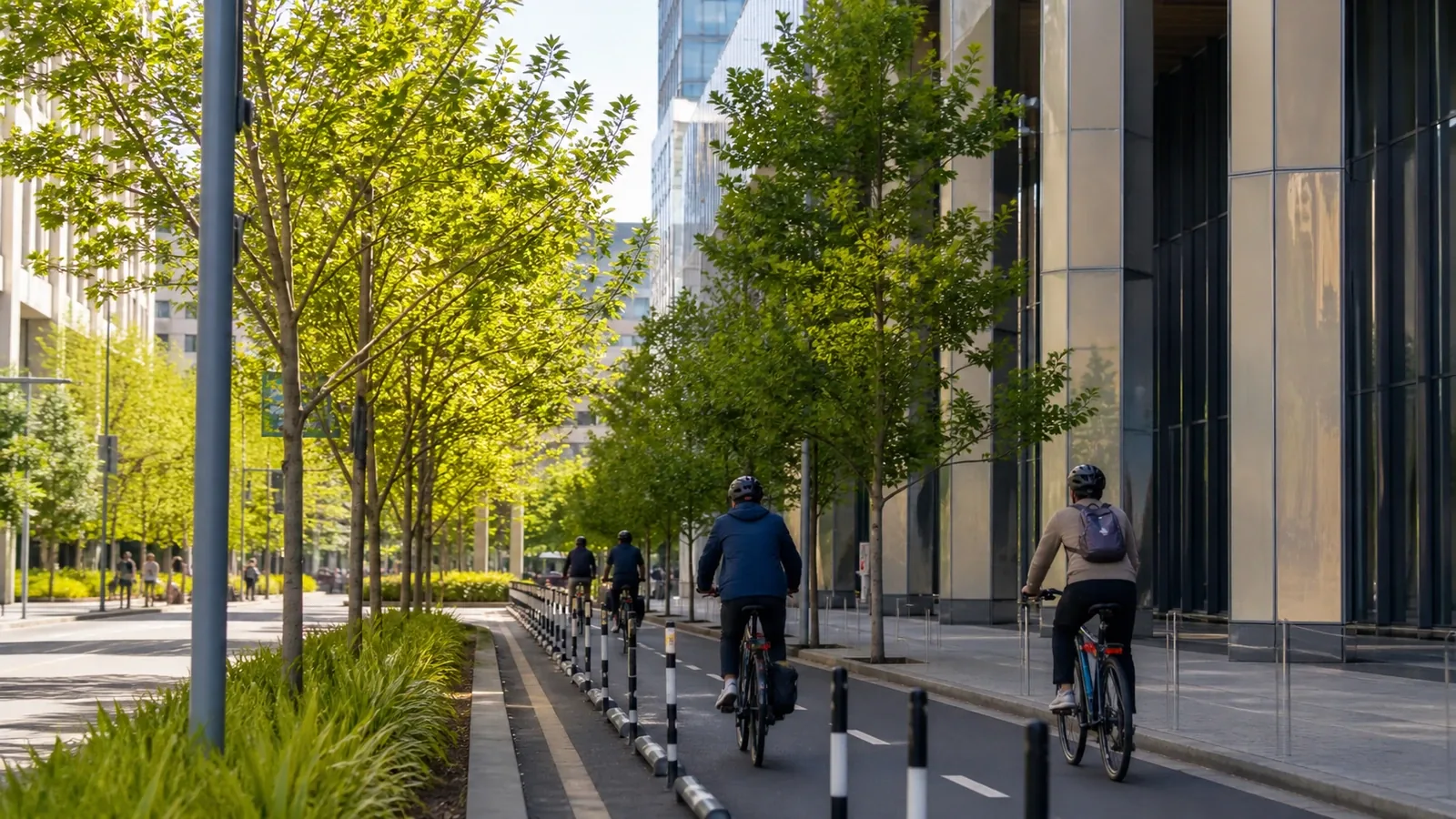
Melbourne has cycle routes and numerous bike lanes, making cycling an enjoyable way to explore riverside areas or move between inner neighbourhoods.
Not every street feels equally relaxed, however. Sharing the road with traffic and trams requires confidence, while tram tracks demand particular care, especially when wet. VicRoads specifically warns cyclists about the risk posed by rails.
For anyone comfortable with urban cycling, it can be a rewarding way to get around. If cars, tram tracks and large intersections make you uneasy, walking or public transport will probably provide a more relaxed experience.
How to get from Melbourne Airport to the city centre
If you are wondering how to get from Melbourne Airport to the city centre, remember that Melbourne Airport in Tullamarine still does not have a direct rail connection to central Melbourne. The rail link is under development, but it is not yet carrying passengers.
One of the most direct shared-transport choices is SkyBus Melbourne Airport, which connects the airport with Southern Cross Station and also operates services to other parts of Melbourne. Public buses are available from the transport hub at Terminal 4 as well.
Taxis and ride-hailing services can be more convenient when several people are travelling together, you have substantial luggage or your accommodation is a long way from Southern Cross.
Common mistakes when getting around Melbourne
Confusing the Free Tram Zone Melbourne with the entire tram network.
Renting a car when you are spending several days only in the CBD and inner neighbourhoods.
Judging distances across Melbourne solely by the relatively compact size of the city centre.
Relying exclusively on trams when a train could cover the same journey much faster.
Planning important connections without checking for service changes or disruptions first.
The best way to get around Melbourne without a car
The best way of getting around Melbourne is not to commit to one form of transport, but to choose the most convenient option for each journey.
You might spend the morning walking through the CBD's laneways, take a tram to a neighbourhood filled with cafés in the afternoon, return by train from another part of the city and finish the day with a walk beside the Yarra. That mix suits Melbourne perfectly: a sprawling city that is best enjoyed one neighbourhood at a time.
For most travellers, the ideal combination is walking + tram + train.
The car can wait until it is time to leave the city.
That means more time enjoying Melbourne and less time thinking about traffic and parking.
C
DiscoverCars
Car rental
Compare prices and book your rental car at the best price.
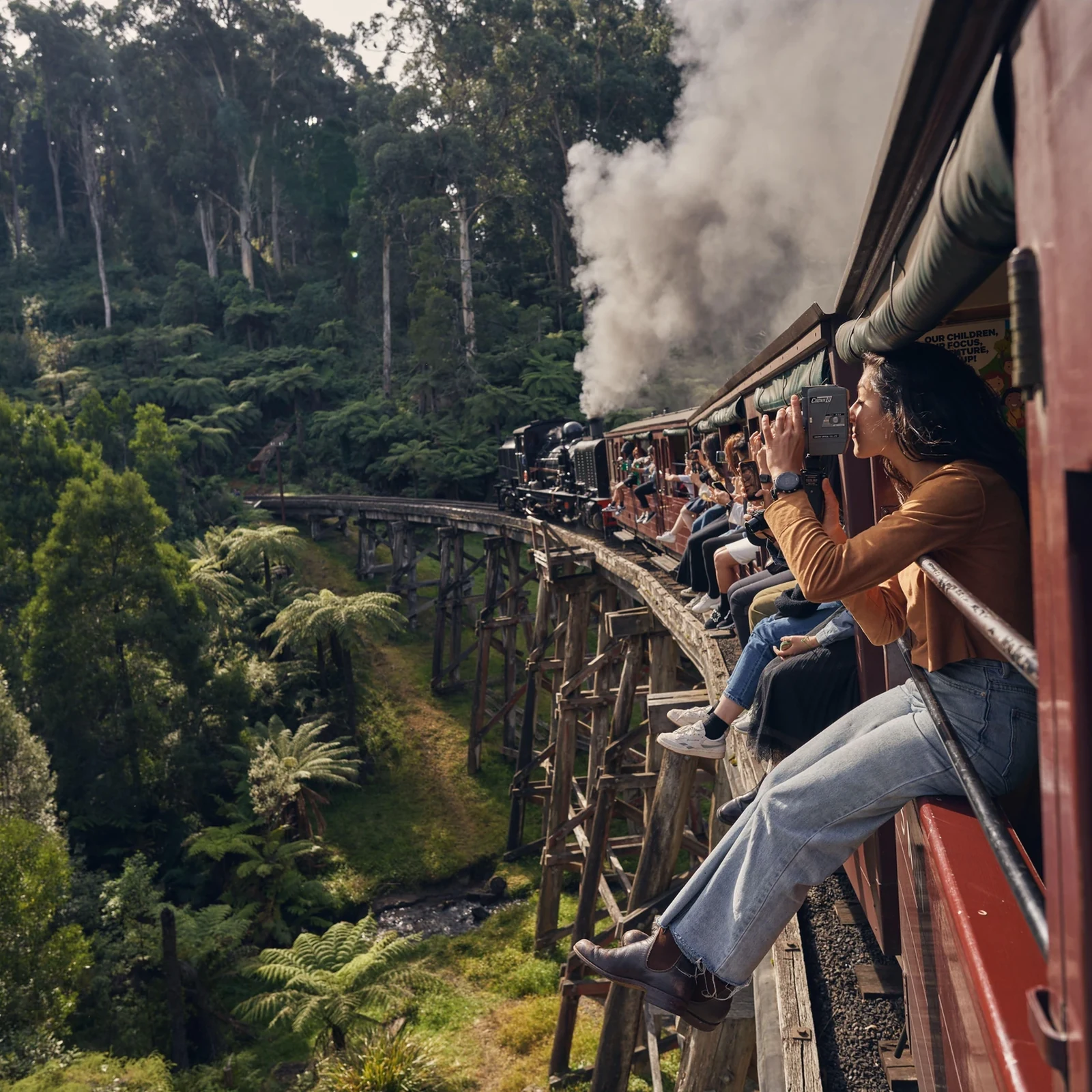
Ride the historic Puffing Billy from Belgrave to Lakeside, explore the Dandenong Ranges scenery and enjoy free time at Emerald Lake Park on an approximately 6-hour trip from Melbourne.
From €103Pick-up is generally between 7:00 and 8:00 am and return to Melbourne is expected at around 1:00 pm.
Around 6 hours from Melbourne with transport, the Dandenong Ranges and approximately one hour aboard Puffing Billy Railway. From €99 per person.
From €99 per personThe tour lasts around six hours; the Grants Picnic Ground stop is about 20 minutes and the Puffing Billy ride lasts approximately one hour.
Explore Sovereign Hill and Ballarat on an around 8-hour trip from Melbourne with return transport, guide, admission, gold panning and an underground mine tour.
From €103 per personThe total duration is around 8 hours. The coach journey from Melbourne takes about 90 minutes and around 4 hours 15 minutes are spent at Sovereign Hill.
 Activity on TourBookGo