 Activity on TourBookGo
Miami LED Night ATV Adventure: Is It Worth Booking?
Discover this nighttime ATV adventure through rural Miami: 1 hour, beginner-friendly, live guide, LED-equipped ATVs and a 4.8/5 rating.
Miami is easy on the eyes: palm trees leaning toward the Atlantic, Art Deco façades glowing under almost liquid light, cars gleaming along Biscayne Bay, and nights that seem to begin when other cities are already thinking about bed. Knowing the mistakes to avoid in Miami helps you enjoy that postcard image without letting distances, weather, or poor planning get in the way.
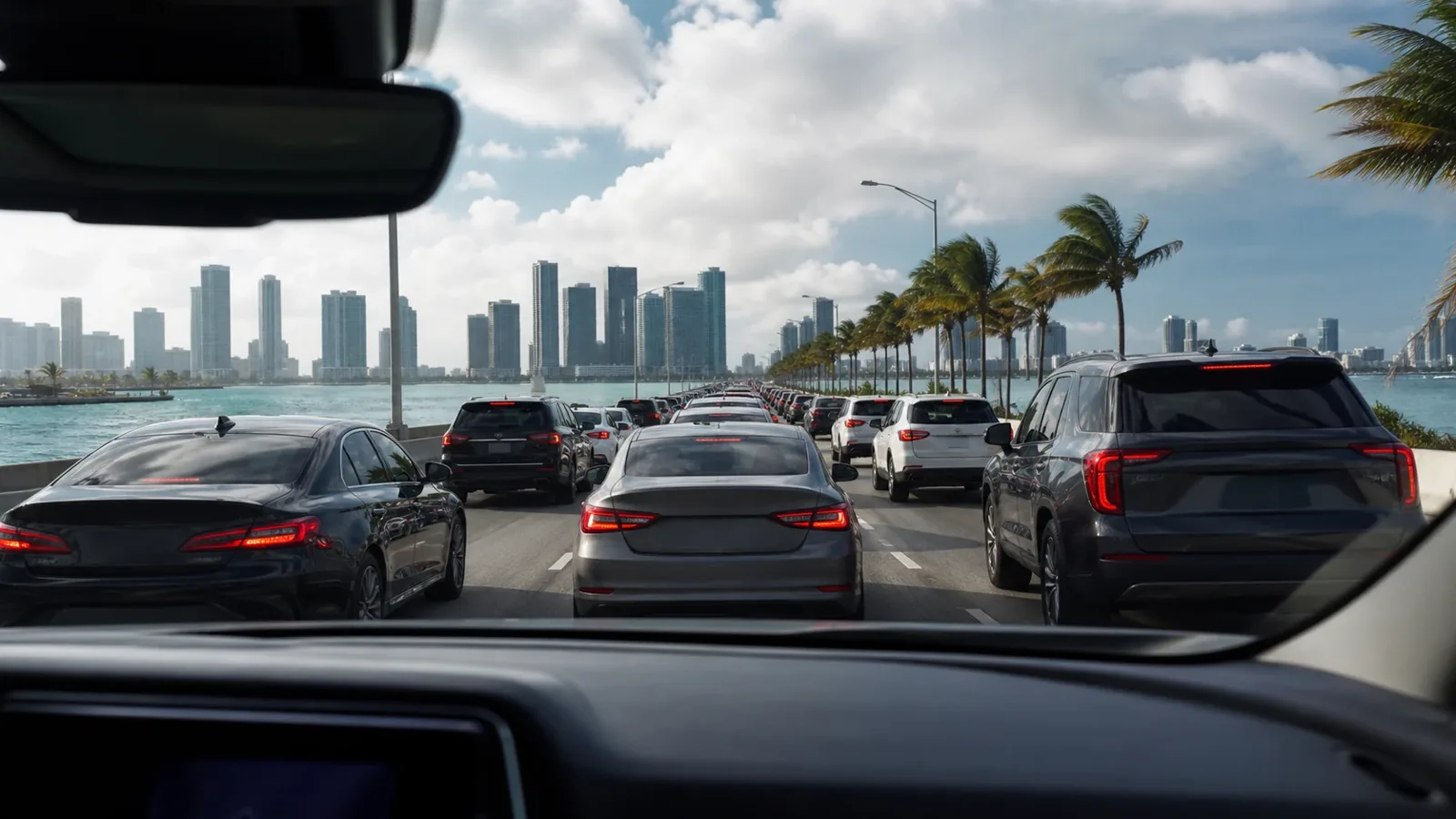
Some of the biggest mistakes to avoid in Miami are assuming the whole city is South Beach, renting a car automatically, and underestimating the distances or subtropical weather. To make the most of your trip to Miami, it helps to understand how the neighborhoods connect, when public transportation makes sense, and how to balance beach time, Latin culture, and the pace of a major American city.
Compare locations and options to find a base that suits your trip. Booking.com confirms current availability and pricing.
Find accommodation on BookingThis is one of the most common mistakes when visiting Miami for the first time.
Miami and Miami Beach are separate cities, divided by Biscayne Bay. South Beach, Ocean Drive, and many of the beaches you see in photographs are in Miami Beach; Brickell, Downtown, Little Havana, and Coconut Grove are on the mainland.
The distinction matters because it affects where you stay, how you get around, and how you organize each day. Going back and forth several times can turn a relaxing vacation into a succession of journeys.
The best strategy is usually to group your visits by area and avoid crossing the bay unnecessarily several times in the same day. It is a simple way to cut down on travel time and enjoy each neighborhood at a more relaxed pace.
South Beach is worth seeing. At sunrise, when Ocean Drive is still waking up and the shadows of the palm trees stretch across the pastel façades, its beauty is hard to deny.
But staying there and nowhere else means experiencing only a very limited version of Miami.
Little Havana reveals a different side of the city; Wynwood swaps the ocean for murals, galleries, and former industrial spaces; Coconut Grove offers a greener, more relaxed atmosphere; Downtown and Brickell show you Miami’s vertical landscape of glass towers, offices, and waterfront apartments.
The mistake is not visiting South Beach. It is spending your entire trip there and missing the neighborhoods that give Miami much of its character.
A car can be useful in Miami, but not every traveler needs one.
If you plan to focus on Downtown, Brickell, and some of the central neighborhoods, there are worthwhile alternatives. The Metromover is free and connects different parts of Downtown and Brickell, while Miami Beach has its own free trolley network.
A car makes more sense when your itinerary includes places that are spread farther apart or excursions outside the urban core. The downside is that it also brings parking, traffic, and possible tolls.
If you rent one, ask before leaving the rental office how the company handles electronic tolls. Policies vary, and administrative fees or specific conditions may apply.
Driving into a busy area and only then starting to look for somewhere to leave the car can be considerably less glamorous than any photograph of Miami.
Miami Beach has municipal parking facilities and app-based payment systems, but availability and rates can vary depending on the location, time of day, or events.
If your accommodation charges for parking and you are not going to use the car much, do the math before renting one. Sometimes a car gives you freedom; other times it spends most of your vacation standing still while continuing to cost you money.
Florida sunshine can make it easy to forget that you are entering a subtropical climate.
During the warmer season, South Florida combines high temperatures, humidity, and frequent rain and thunderstorms. A blue sky in the morning does not necessarily guarantee the same weather in the afternoon.
The mistake is planning rigid days where a single downpour ruins everything. It is better to leave some flexibility, keep indoor activities as a backup, and avoid packing too many stops into each day.
The Atlantic hurricane season also deserves attention. It officially runs from June 1 to November 30. In South Florida, September and October are historically among the more sensitive months.
That does not mean you should avoid Miami for half the year. It means traveling with some foresight, checking weather forecasts as your trip approaches, and considering reasonable cancellation policies.
Warm water and a calm-looking horizon can be deceptive.
Miami Beach uses a flag system to indicate ocean conditions, including heavy surf and dangerous currents. Rip currents can affect even strong swimmers.
Check the flags before entering the water, pay attention to lifeguards, and do not assume that a seemingly calm surface means there is no danger.
It is also worth remembering that beaches have their own rules. In Miami Beach, drinking alcohol and smoking on the beach are prohibited, among other things; additional controls or restrictions may also be introduced during particularly busy periods.
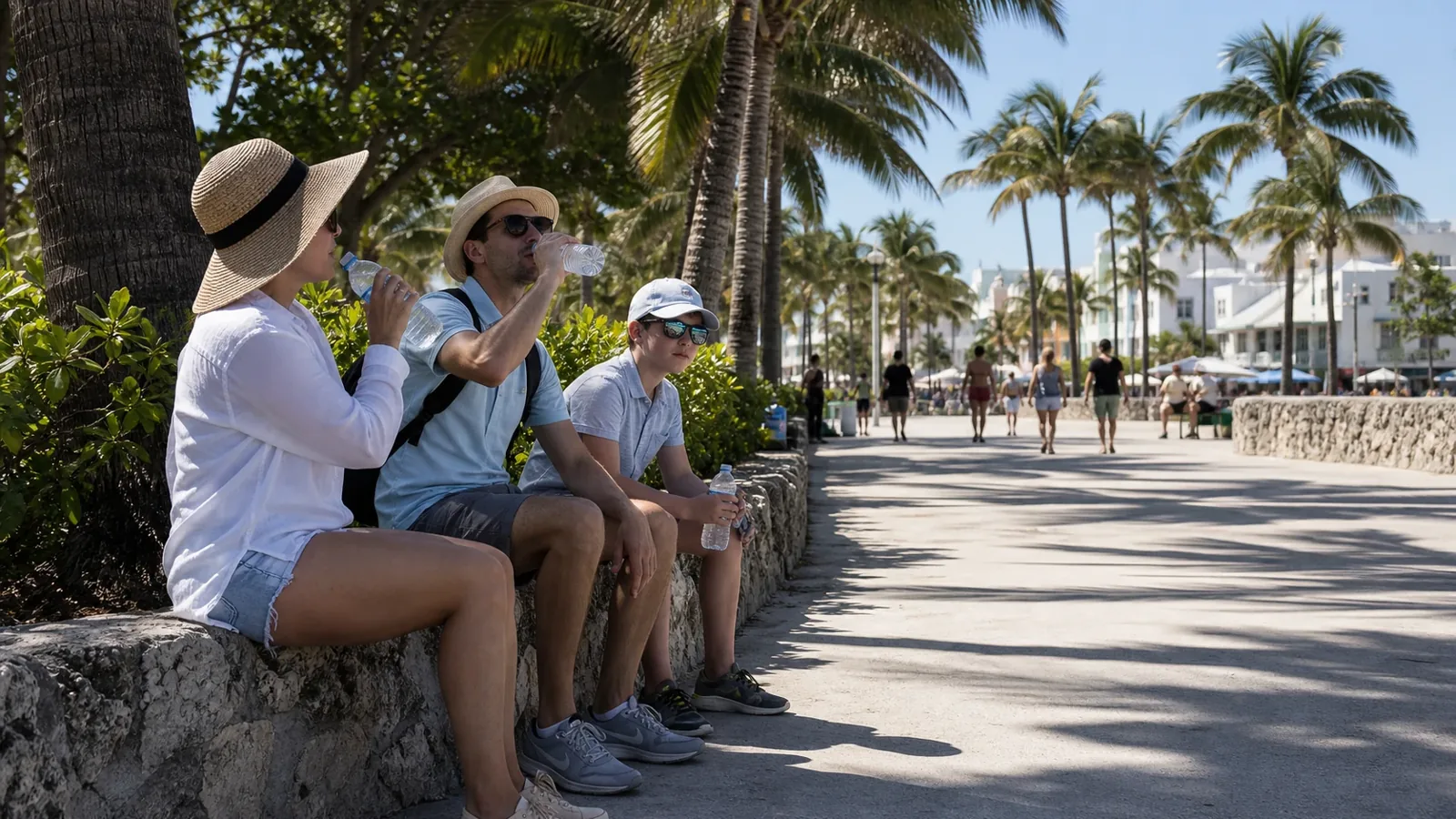
Miami looks deceptively manageable on a map because many areas seem relatively close together. In practice, travel times, traffic, and the sheer size of the metropolitan area can take up a considerable amount of your day.
Trying to have breakfast in South Beach, visit Wynwood, eat lunch in Little Havana, continue on to Coconut Grove, and then return to the ocean for sunset may be possible on paper and exhausting in reality.
Miami is better when you give it room to breathe.
A morning at the beach without watching the clock, a long Cuban lunch, or wandering through a neighborhood without constantly rushing toward the next attraction is part of the Miami experience too.
Miami can be an expensive city, especially in heavily touristed areas.
Some establishments may automatically add gratuities, service charges, or other fees. At regulated sidewalk cafés in Miami Beach, those charges must be disclosed and itemized on the bill when they apply.
So before automatically adding another tip, check the receipt.
And in areas with large concentrations of tourists, looking at the menu and its conditions before ordering can prevent plenty of disappointment later.
This is a less obvious mistake, and probably a more important one.
Miami has a deeply diverse identity. Its Latin American and Caribbean cultures are not decorations for photographs; they are part of the everyday lives of millions of people.
In Little Havana, for example, curiosity will take you further than a checklist of clichés. Be respectful when you speak to people, ask before photographing someone directly, and do not make assumptions about their nationality, language, or family background.
Spanish can open doors to conversations, but there is no need to turn it into a performance either. A natural greeting works better than trying to prove how much you know about the local culture.
And one simple rule: do not block the sidewalk to get a photograph, do not photograph strangers from inches away, and do not treat a family-run business like a stage set.
Miami is much more enjoyable when you observe before playing the role of the tourist.
There is a Miami of infinity pools, sports cars, and cocktails under pink neon lights. It exists.
But it is not the whole city.
There are also cafés where conversation matters more than the décor, quiet mornings by the bay, leafy residential neighborhoods, Latin supermarkets, fishermen watching the water, and tropical rainstorms that erase the blue from the sky for a few minutes.
Anyone who arrives obsessed with recreating other people’s photographs risks going home with plenty of pictures and very few memories of their own.
Trying to force it to be exactly the city you imagined.
Miami works best when you combine both of its faces: the glamorous one and the everyday one. You should see Ocean Drive lit up at night, yes, but you should also move away from it. Enjoy the beach, but respect the ocean. Take advantage of the nightlife, but save a quiet morning or two. And understand that behind the postcard lies a huge, multicultural, unequal, exuberant, and sometimes chaotic city.
It can be expensive, humid, congested, and excessive. It can also offer extraordinarily bright days and a cultural mix that few other American cities can replicate in quite the same way.
Avoiding mistakes is not about controlling every detail of your trip. It is about arriving with enough information to let Miami surprise you for reasons other than the wrong ones.
Discover Miami through selected experiences combining city tours, Biscayne Bay, the Everglades, day trips and outdoor activities to suit the pace of your journey.
Activity on TourBookGoDiscover this nighttime ATV adventure through rural Miami: 1 hour, beginner-friendly, live guide, LED-equipped ATVs and a 4.8/5 rating.
 Activity on TourBookGo
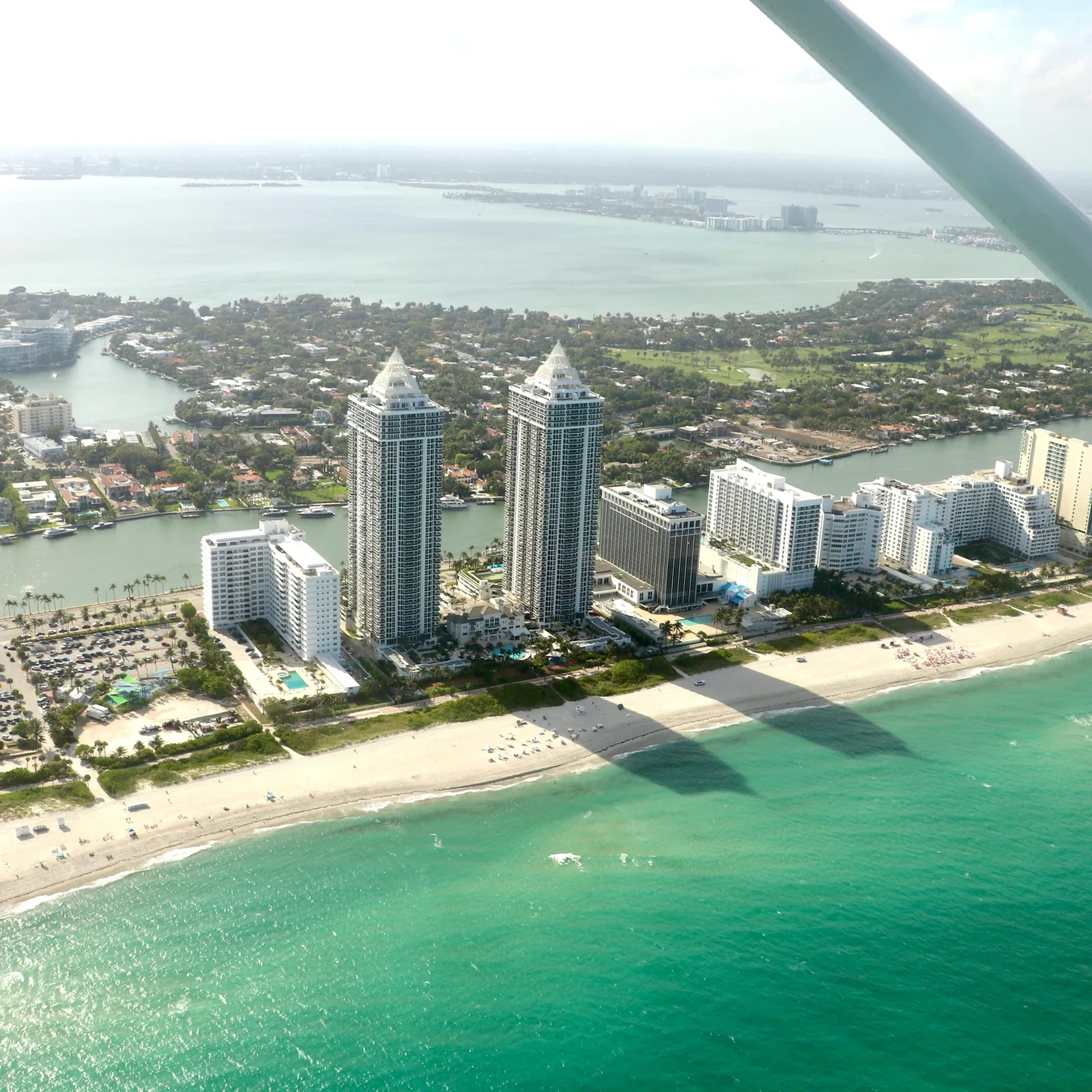
Fly over South Beach and the Miami skyline on a private flight lasting around 40 minutes with pilot, English and Spanish audio guide, and soft drinks.
 Activity on TourBookGo
Explore the Miami River after dark on a 2.5-hour guided LED kayak tour with equipment, safety gear and drinks included. From €77 per person.