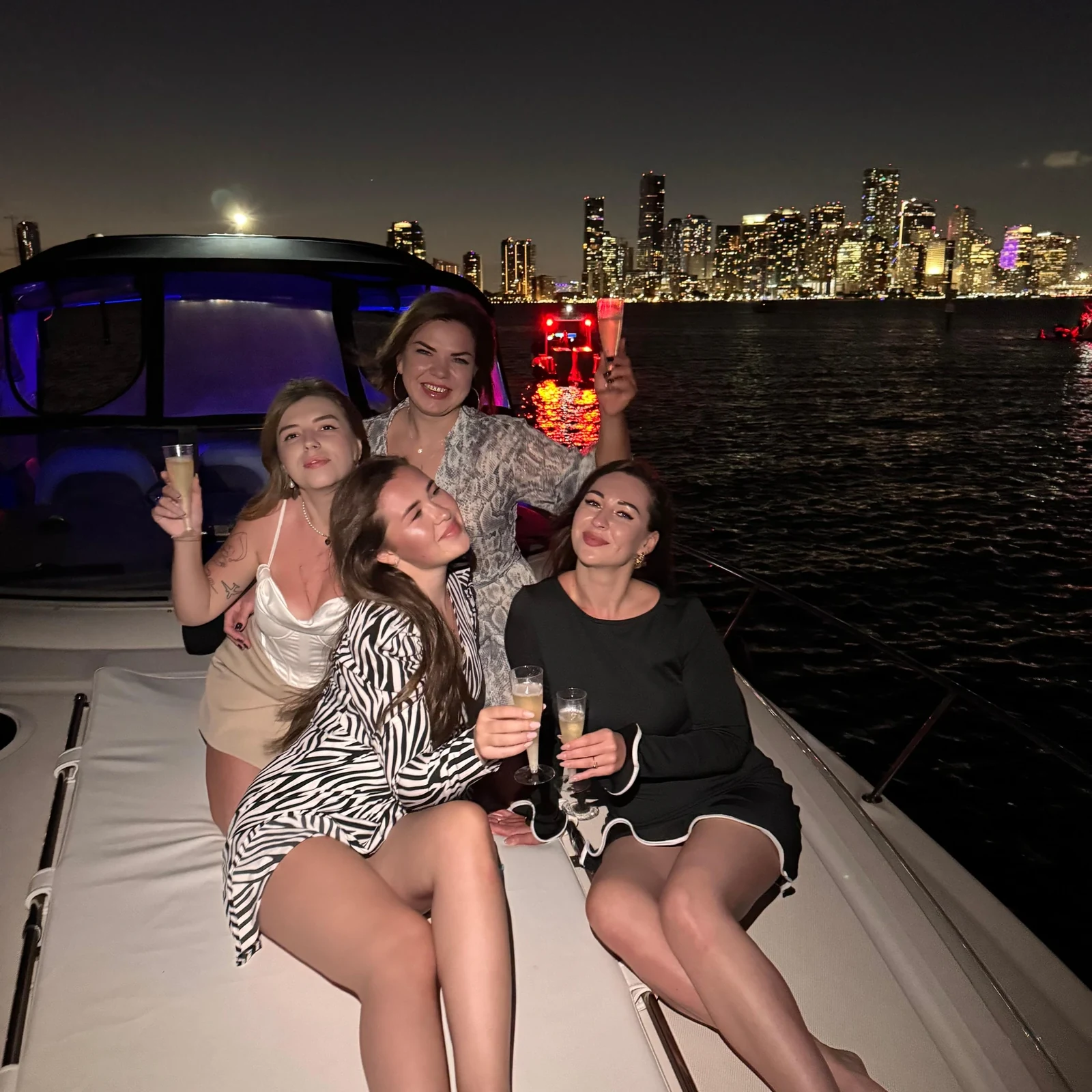
 Activity on TourBookGo
Private Miami Yacht Cruise with BYOB and Your Own Music
Cruise Miami for 2 hours on a private yacht with BYOB and Bluetooth music. Check price, fuel, captain fees, conditions and availability.
If you are deciding where to eat in Miami, look beyond the terraces of South Beach. The city makes more sense around a table: freshly brewed Cuban coffee, buttered toast, South Florida fish, citrus, fried plantains, and Caribbean spices.
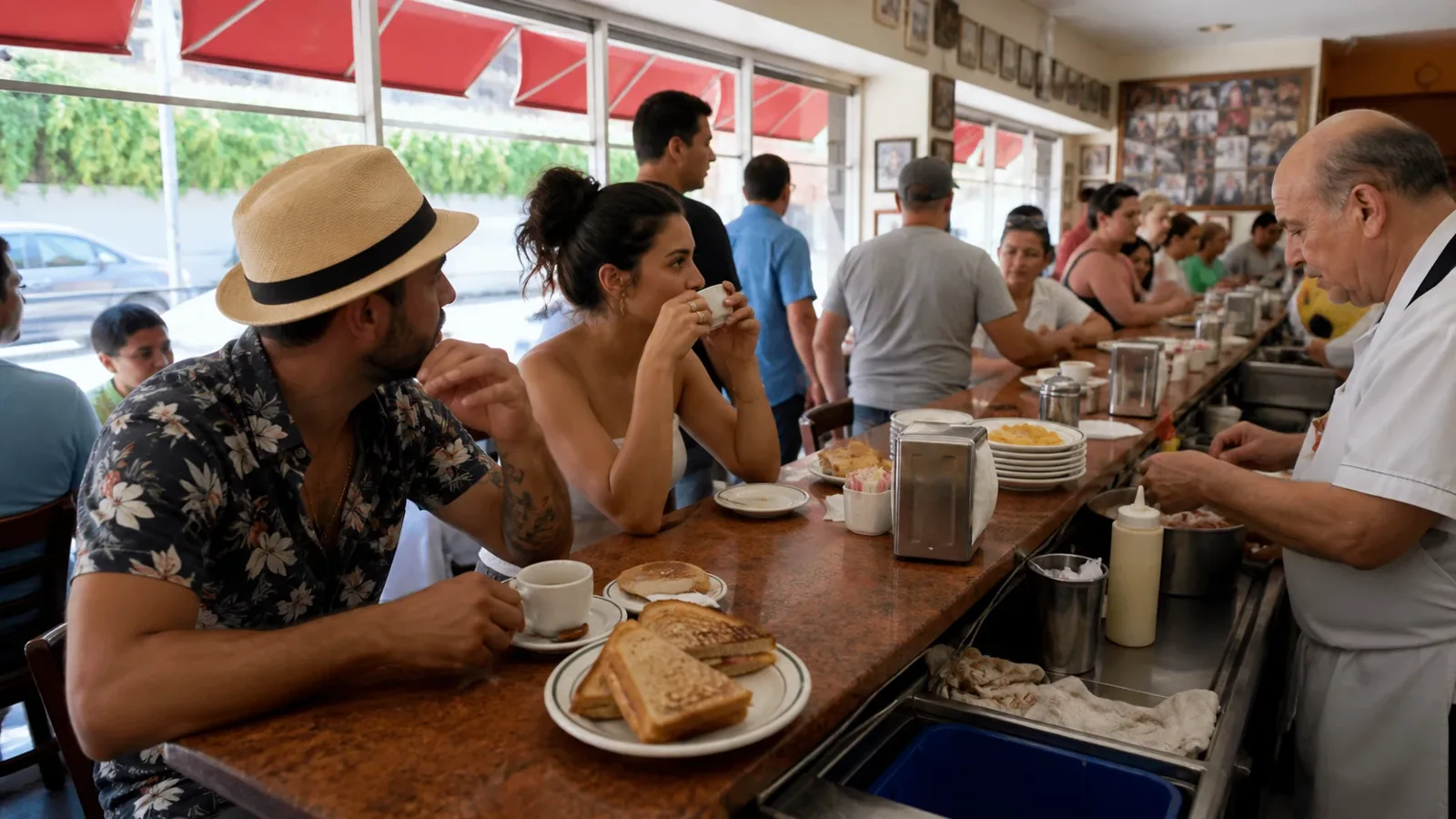
Knowing where to eat in Miami starts with understanding that its cuisine belongs to no single tradition. Decades of Cuban, Haitian, Latin American, and Caribbean migration meet an ambitious contemporary dining scene. There is a less appealing side too: eating out can be expensive, especially in areas where you are paying as much for the location as for the food. A palm-fringed oceanfront terrace can be wonderful, but it is no guarantee of a memorable meal. For some of Miami's most interesting flavors, it is worth leaving the most photographed avenues behind and heading to Little Havana, Coconut Grove, Little Haiti, the Miami River, or residential neighborhoods where food remains part of everyday life.
Compare locations and options to find a base that suits your trip. Booking.com confirms current availability and pricing.
Find accommodation on BookingIf this is your first visit, I would start in Little Havana. Not because it is the only neighborhood with great food, but because the connection between food, migration, and identity is especially visible here.
Versailles Restaurant Cuban Cuisine is probably the city’s best-known Cuban restaurant. It has been operating since 1971 and remains far more than a tourist stop: it is a restaurant, café, bakery, and gathering place for Miami’s Cuban community. It can be lively and busy, so do not come expecting intimacy; come for the experience and for classics such as vaca frita, followed by a cafecito or a pastelito from the ventanita.
For something more focused on the Cuban sandwich, Sanguich is a particularly interesting alternative. The Michelin Guide still lists it in its Bib Gourmand category in 2026, recognizing good-quality cooking at particularly good value.
And if you are looking for a Cuban frita—more modest, more casual, and quintessentially Miami—El Mago De Las Fritas captures that everyday side of the city better than many restaurants designed expressly for visitors.
There is no need to order them all at the same meal. Cuban food in Miami is more enjoyable when you discover these classics gradually throughout your trip:
Cuban sandwich: pork, ham, cheese, pickles, and mustard pressed together in Cuban bread.
Vaca frita: shredded beef browned until crisp, usually served with onions and citrus notes.
Ropa vieja: slow-cooked shredded beef, one of the great Cuban classics.
Croquetas: especially ham croquetas, perfect for a quick stop.
Cuban frita: Miami’s take on a hamburger, traditionally topped with thin, crispy shoestring potatoes.
Cafecito, cortadito, and pastelitos: perhaps the simplest and most affordable way to experience Cuban food culture.
Miami is not an especially forgiving city for travelers on a tight budget. Even so, some of its best inexpensive food tends to appear precisely where elaborate table settings and carefully curated décor disappear.
Cuban ventanitas, bakeries, small family-run restaurants, and sandwich specialists let you eat far more reasonably than many oceanfront restaurants. Current roundups of affordable food in the city specifically feature the frita at El Mago de las Fritas and other small specialist spots—a good sign that finding cheap eats in Miami does not necessarily mean resorting to chains.
Another option is Chug's Diner in Coconut Grove, where Cuban tradition meets the American diner. In 2026, it retains its Michelin Bib Gourmand distinction. It is more polished than a traditional Cuban café, but still an appealing choice for anyone looking for quality without stepping into Miami’s fine-dining world just yet.
Being surrounded by the Atlantic and Biscayne Bay ought to have culinary consequences, and it does.
One of the city’s most characterful places for Miami River seafood is García's Seafood Grille & Fish Market. It began as a fish market in 1966 and still retains that unpretentious blend of fishmonger, family restaurant, and waterside tables. Here, it makes more sense to ask what the day’s catch is than to arrive fixated on a particular dish.
For something even less formal, La Camaronera in Little Havana is historically connected to the same family and is known for fried fish and pan con minuta, a fish sandwich that reveals another side of Miami’s food culture: simple, crisp, and with no need to turn every meal into an event.
Reducing Miami’s food scene to Cuban cuisine alone would mean experiencing only half the story.
Little Haiti adds an entirely different layer. Here you will find dishes such as griot, fried pork served with pikliz, or diri ak djon djon, rice prepared with Haitian black mushrooms. The Caribbean Marketplace and other neighborhood businesses also offer an introduction to Afro-Caribbean flavors that rarely take center stage on Miami’s more conventional tourist itineraries.
Peruvian, Venezuelan, Colombian, Argentine, and Central American influences are equally visible across different neighborhoods. It is worth setting aside at least one meal for this contemporary Latin American side of Miami rather than spending an entire week eating exclusively at Cuban restaurants.
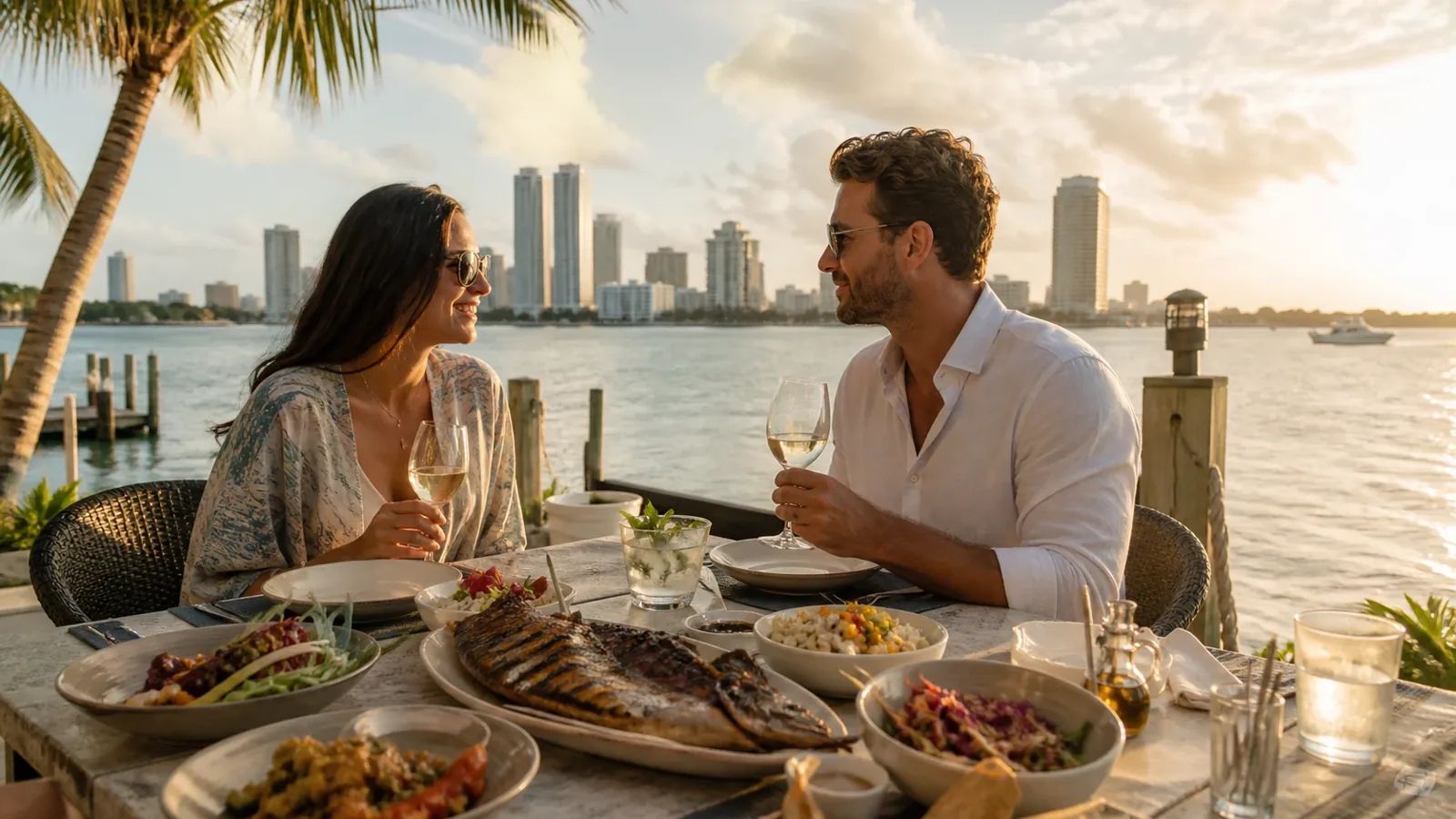
Miami also knows how to dress up for dinner. Brickell, the Miami Design District, and Miami Beach are home to many upscale restaurants, while Coconut Grove combines elegant dining with a slightly more relaxed atmosphere. The Michelin Guide currently maintains an extensive selection of Miami restaurants, ranging from high-end French cuisine to Mediterranean, Korean, Cuban, and contemporary cooking.
For an evening with music and cocktails, Cafe La Trova offers a more sophisticated interpretation of Little Havana’s Cuban culture, combining food, cocktails, and live music. It is a much more polished experience than a ventanita or family restaurant, and also a more expensive one; that is precisely why it works better as a special dinner than as an example of how Miami residents eat every day.
Miami food markets are especially appealing if you want to sample several things without sitting down for a long meal. Redland Market Village in South Dade combines farm produce, fruit, spices, prepared food, and a fish market. The Coconut Grove Organic Farmers Market, held on Saturdays according to its current schedule, focuses more on organic produce, tropical fruit, and vegetarian and vegan offerings.
For a more urban experience, The Citadel in Little River is a food hall and culinary space where you can sample a variety of concepts under one roof.
The most common mistake is assuming that an ocean view automatically means good food. Ocean Drive is worth strolling along and has legitimate restaurants, but it is also one of the easiest places to end up paying mainly for the location and the spectacle. The area itself is packed with restaurants, brunch spots, dinner shows, and concepts heavily geared toward visitors.
Before sitting down at a touristy terrace, read the full menu, check which charges will be added to the bill, and decide whether that is really the experience you want. Of course Miami lets you dine by the ocean; just do not make it the deciding factor for every meal.
Another mistake is chasing only fashionable restaurants. Some of the city’s most revealing food is eaten standing beside a ventanita, in a café with decades of history, or over a plate of fish that makes no effort whatsoever to be photogenic.
There is one particular advantage: Miami Spice Restaurant Months runs from August 1 to September 30, 2026, bringing together more than 300 restaurants offering special multi-course menus. For anyone hoping to try places that are normally more expensive, it can be a sensible way to explore the city’s more sophisticated dining scene without ordering completely blind.
I would have one classic Cuban meal in Little Havana, another devoted to a great sandwich or frita, a seafood meal by the Miami River, and at least one venture into Little Haiti or another Latin American cuisine. I would save one evening for a more ambitious restaurant and avoid spending the entire food budget in South Beach.
Because Miami’s food becomes truly interesting when it stops looking like a postcard. Yes, there is a glamorous, polished city beside the water, but there is another Miami too: cafés filled with conversations in Spanish, fish laid out on ice, coffee handed through a window, and recipes that crossed the Caribbean in the memories of several generations.
That last Miami is probably the one most worth getting to know over a meal.
Discover Miami through selected experiences combining city tours, Biscayne Bay, the Everglades, day trips and outdoor activities to suit the pace of your journey.
Activity on TourBookGoCruise Miami for 2 hours on a private yacht with BYOB and Bluetooth music. Check price, fuel, captain fees, conditions and availability.
 Activity on TourBookGo
Explore Miami on a private yacht for up to 12 people, with skyline, Downtown and Star Island views. Cruises last 2 to 4 hours from €226 per group, with captain and fuel fees paid separately.
 Activity on TourBookGo
Book a private Miami boat charter for up to 10 passengers. Choose 2 to 5 hours of skyline views, swimming, sunset cruising, Haulover Sandbar or Raccoon Island.