 Activity on TourBookGo
Fontainebleau Miami Beach Day Pass: Spa, Pools, Beach & Fitness — Is It Worth It?
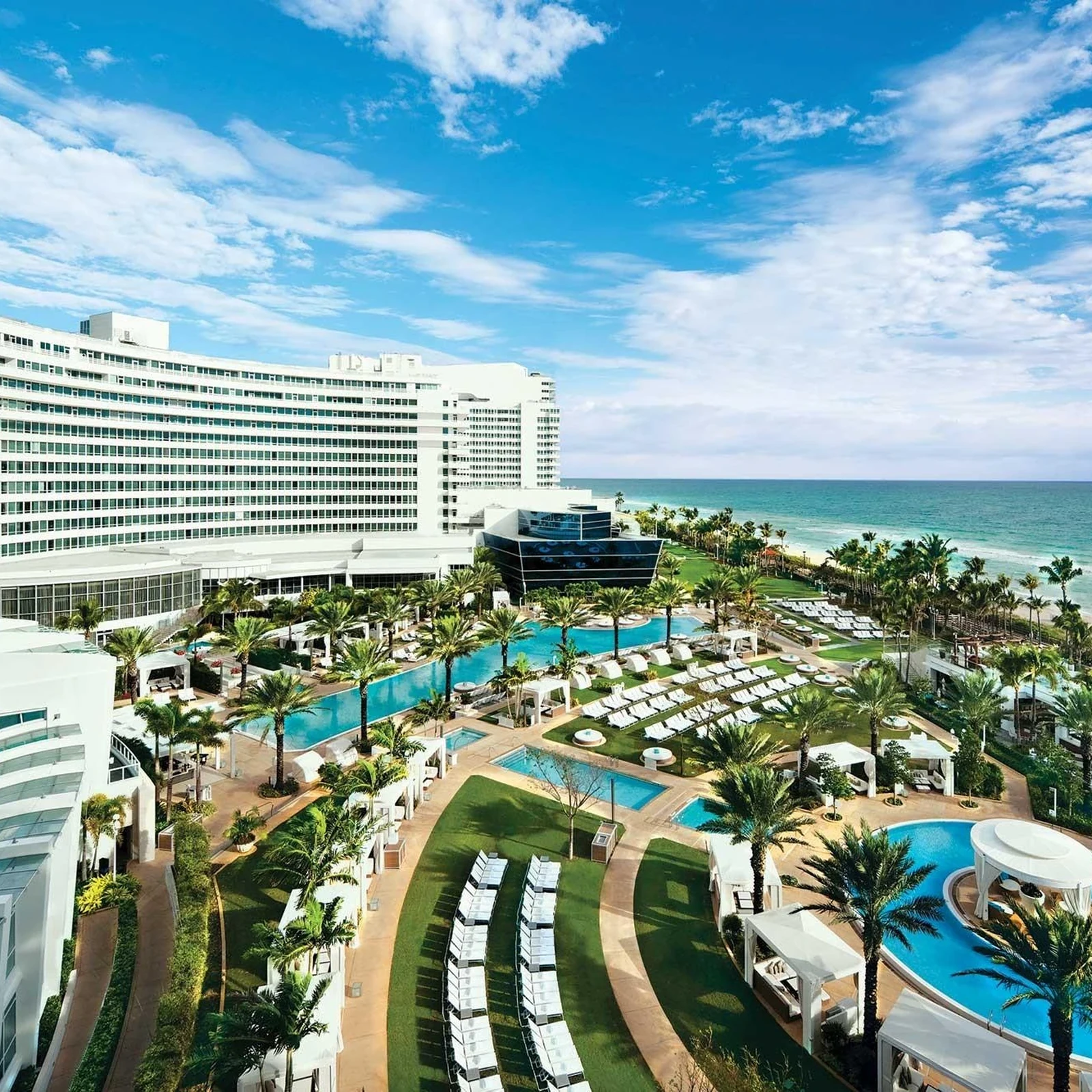
Spend a day at Fontainebleau Miami Beach with Lapis Spa, pools, hot tubs, beach and fitness access. Adults-only pass from €208.
Where to stay in Miami can shape your trip far more than you might expect. Here, just a few miles can separate a morning walk to the beach from a day built around traffic, bridges and long journeys between neighborhoods.
Before deciding where to stay in Miami, there is one important distinction to understand: Miami Beach and the city of Miami offer very different experiences. South Beach, Mid-Beach and North Beach face the Atlantic; Brickell, Downtown, Coconut Grove and Coral Gables are on the mainland. Choosing which side of Biscayne Bay to stay on is almost like choosing between two different versions of Miami.
Compare locations and options to find a base that suits your trip. Booking.com confirms current availability and pricing.
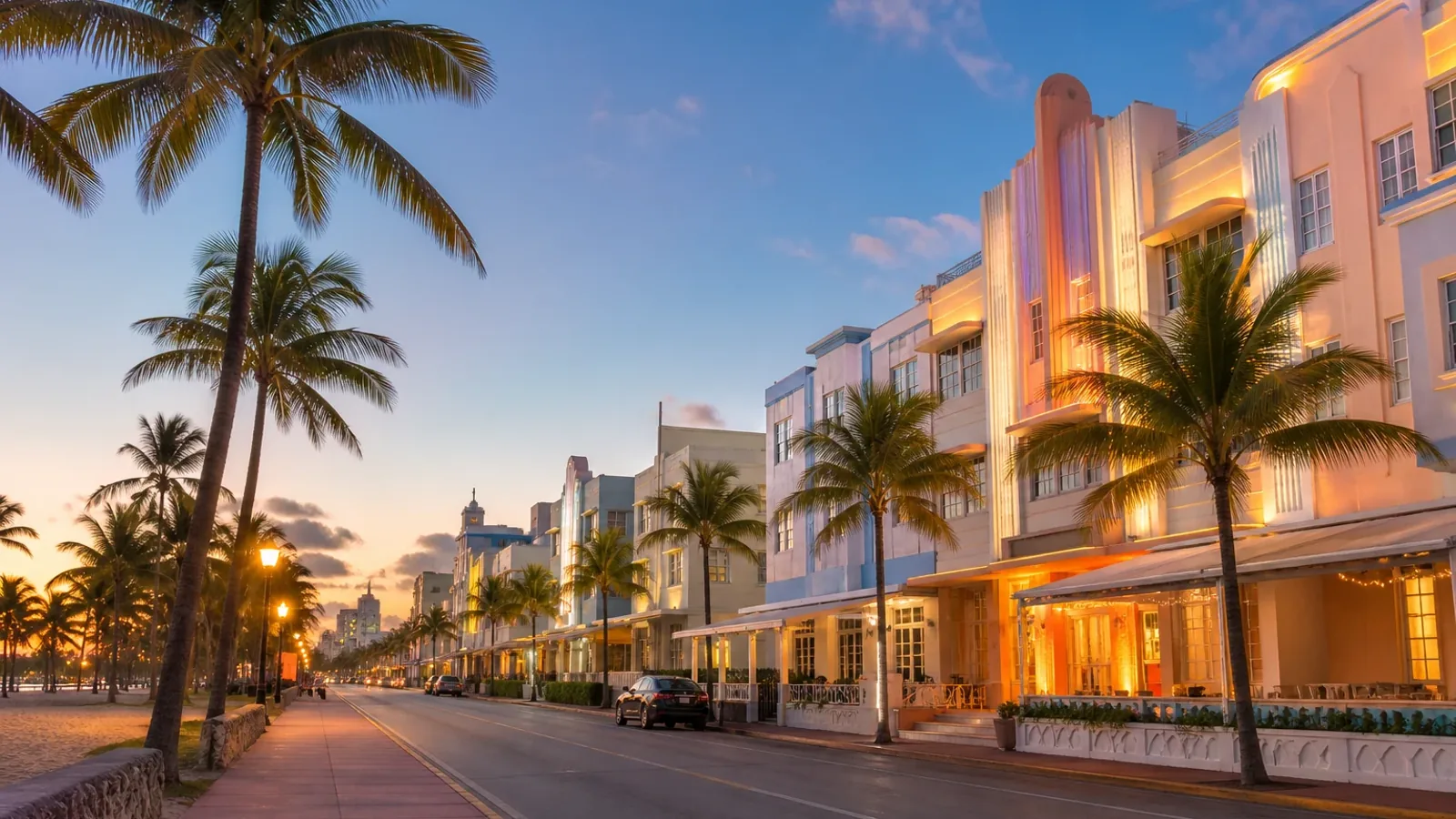
Find accommodation on BookingFor a first trip, especially if your idea of Miami includes palm trees, Art Deco buildings, white sand and lively nights, staying in South Beach is usually the easiest choice. It stretches from South Pointe to roughly 23rd Street and brings together the beach, restaurants, shops and much of Miami Beach’s visitor scene.
Its biggest advantage is freedom. You can have breakfast, go to the beach, stroll along Ocean Drive, head over to Lincoln Road and go out for dinner without constantly relying on a car.
Its drawback is precisely its popularity. Some streets can be noisy, intensely touristy and anything but relaxing, and staying opposite the busiest nightlife spots is not always ideal if you prefer an early night.
South Beach is particularly well suited to couples, groups of friends, first-time visitors and short stays. If you want more peace, extra space or a residential feel, other Miami neighborhoods may suit you better.
At the southern tip of Miami Beach, around South Pointe, the atmosphere becomes noticeably calmer. You are still close to the heart of South Beach, but your stay feels less dominated by Ocean Drive and its nightlife.
It is an especially appealing choice for couples and travelers who want the beach and entertainment nearby without sleeping right in the middle of the action. The trade-off is that many accommodation options sit at the higher end of the price range.
Mid-Beach covers roughly the stretch between 24th and 60th Streets and combines some of South Beach’s style with a more relaxed atmosphere. You will find large oceanfront hotels, sophisticated restaurants and direct access to a long stretch of beach.
In the morning, it feels very different from the south: runners beside the ocean, still-quiet pools, bright light across the hotels and far less pressure to take part in South Beach’s constant spectacle.
It is one of the best areas to stay in Miami for couples, honeymooners, families or travelers who value the beach and a good hotel more than nightlife.
The trade-off is that not everything is within easy walking distance. Depending on exactly where your hotel is located, you may have fewer restaurants and entertainment options nearby than in South Beach.
Farther north, a different side of Miami Beach begins to emerge. North Beach is predominantly residential, features MiMo architecture, has a long oceanfront promenade and feels considerably more relaxed than the south. Its laid-back, family-friendly character is one of its main attractions.
Miami starts the day more slowly here. Families gather beneath the trees, people stroll beside the ocean and the beach can feel noticeably less crowded.
North Beach is a good choice for families, longer stays and travelers who prioritize rest while still wanting to be close to the ocean.
I would not choose it, however, for someone visiting for three nights who wants to move easily between the nightlife of South Beach, Wynwood and Brickell. On that kind of trip, the distances start to matter.
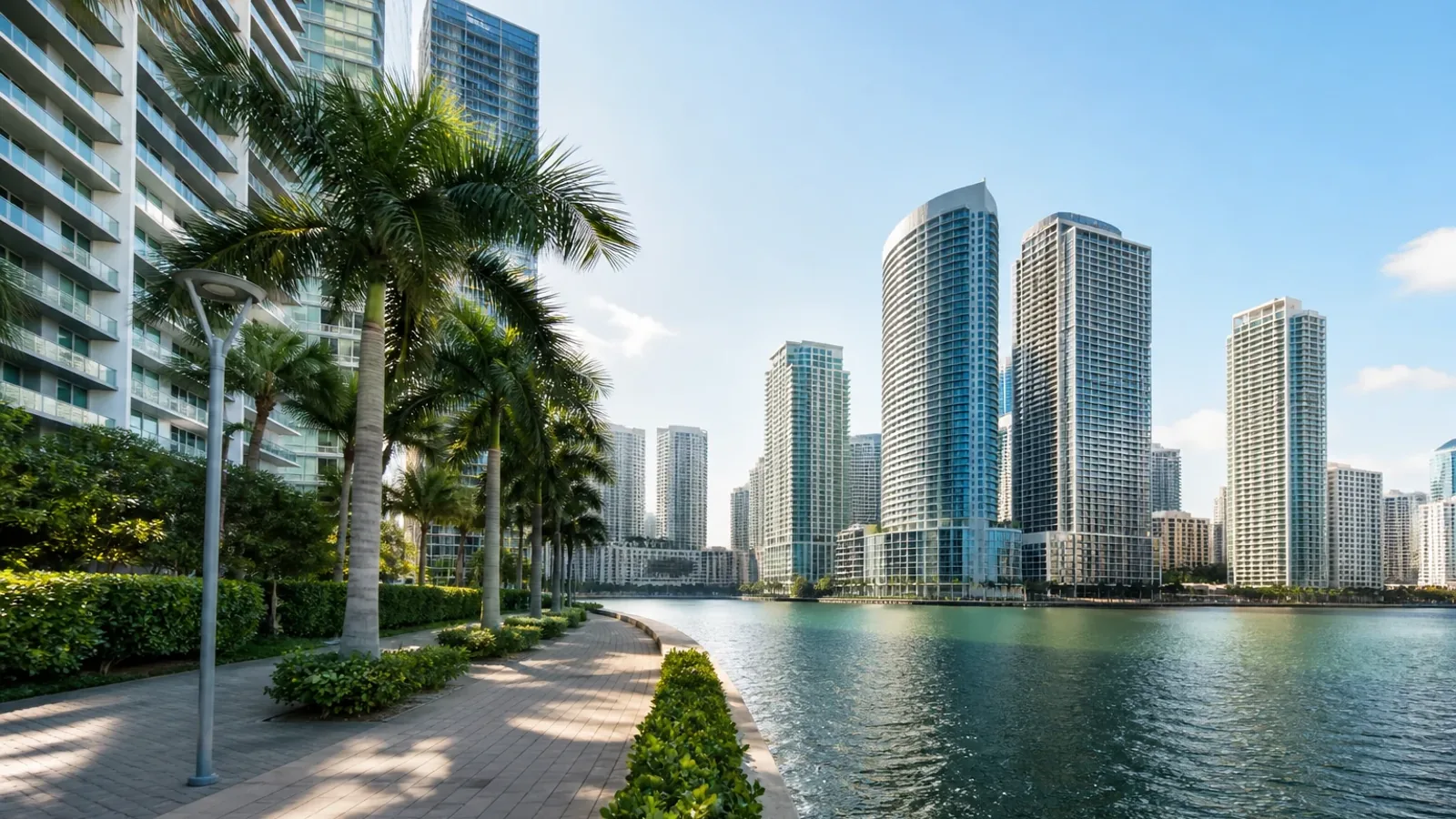
Brickell replaces sand with glass towers, terraces, restaurants and skyscrapers reflected in Biscayne Bay. Staying in Brickell is one of the best choices if you prefer an urban, contemporary Miami, with hotels, shopping, dining and a lively city atmosphere all around you.
Its main practical advantage is getting around central Miami. The Metromover connects Brickell with Downtown and other central areas without requiring a car.
It works particularly well for business trips, couples, food lovers and travelers who want to combine several different neighborhoods during one stay.
The main compromise is obvious: you are not staying on the beach. You will see the water and Biscayne Bay, but the Atlantic will not be waiting outside your hotel.
Downtown shares many of Brickell’s advantages: it is a convenient base for exploring central Miami, has useful transport connections and offers easy access to museums, entertainment venues and PortMiami.
Downtown Miami accommodation can make good sense for a stopover, a cruise, an event or a culture-focused trip.
For a classic sun-and-sea vacation, however, it is less appealing. Miami Beach makes it much easier to wake up with that unmistakable feeling that the ocean is only a few blocks away.
Coconut Grove seems to move at a different pace. Mature trees, residential streets, tropical greenery, cafés and the proximity of Biscayne Bay create an atmosphere that feels less vertical than Brickell and far less touristy than South Beach.
Staying in Coconut Grove is particularly appealing for couples, families and travelers who have already seen Miami’s most obvious sights and want to discover a calmer, greener and more local side of the city.
I would not choose it, however, if you want to walk to an Atlantic beach every morning. Coconut Grove faces the bay, not the ocean.
Coral Gables changes the scenery once again: tree-lined avenues, Mediterranean-inspired architecture, gardens and a much more pronounced residential feel. Miracle Mile is home to much of the neighborhood’s shopping and dining activity.
Staying in Coral Gables makes sense for couples looking for a quieter stay, families, business travelers or anyone who values a pleasant neighborhood more than proximity to South Beach.
For a short first visit focused on Miami’s biggest icons, however, it may feel too far removed. Having a car — or being prepared for longer travel times — becomes considerably more useful here.
Rather than talking about neighborhoods to avoid, I would think in terms of locations that are inconvenient for the kind of trip you are planning.
I would not choose an airport hotel simply because it is cheaper if you intend to spend your days between South Beach, Wynwood and Brickell. Nor would I stay in a far-flung residential area to the west without a car. And if sleeping well is a priority, I would avoid booking somewhere solely because it has a famous address on the busiest stretch of South Beach.
In Miami, saving money on accommodation can quickly stop being a saving when every breakfast, beach visit or dinner requires another journey across town.
It is entirely possible to plan part of a Miami trip without a car.
If you stay in South Beach and your trip is mainly focused on Miami Beach, you can walk quite a lot and use public transportation or ride services for specific journeys. Miami Beach also has a free trolley service connecting different parts of the island.
In Brickell and Downtown, it is also possible to manage without a car thanks to the Metromover and other transit connections.
A car starts to make more sense when you want to combine Coral Gables, Coconut Grove, Key Biscayne, outlying areas and longer day trips over several days.
There is another reason not to rent one automatically: parking in Miami Beach takes some planning. It is worth checking the parking options and exactly what your accommodation includes before you arrive.
For a first visit, I would choose South Beach if the ocean is an essential part of the trip.
For a combination of beach and a little more peace and quiet, Mid-Beach strikes me as one of the most balanced choices.
For families or travelers looking for a quieter stay beside the ocean, North Beach makes more sense.
If you prefer restaurants, contemporary architecture and urban life, I would choose Brickell.
And if you already know Miami’s classic postcard image and want somewhere greener, more elegant and more local, I would look toward Coconut Grove or Coral Gables.
There is no single answer to where to stay in Miami. The city offers several distinct experiences: one wakes up facing the Atlantic, another glows among skyscrapers and another hides beneath tropical trees. The best area is not necessarily the most famous one, but the neighborhood that lets you spend more of your trip enjoying Miami and less of it traveling across town.
Discover Miami through selected experiences combining city tours, Biscayne Bay, the Everglades, day trips and outdoor activities to suit the pace of your journey.
Activity on TourBookGoSpend a day at Fontainebleau Miami Beach with Lapis Spa, pools, hot tubs, beach and fitness access. Adults-only pass from €208.
 Activity on TourBookGo
Explore Miami Beach, Wynwood, Little Havana, Coconut Grove, Key Biscayne and Downtown Miami on a 3.5-hour guided tour for up to 14 people.
 Activity on TourBookGo
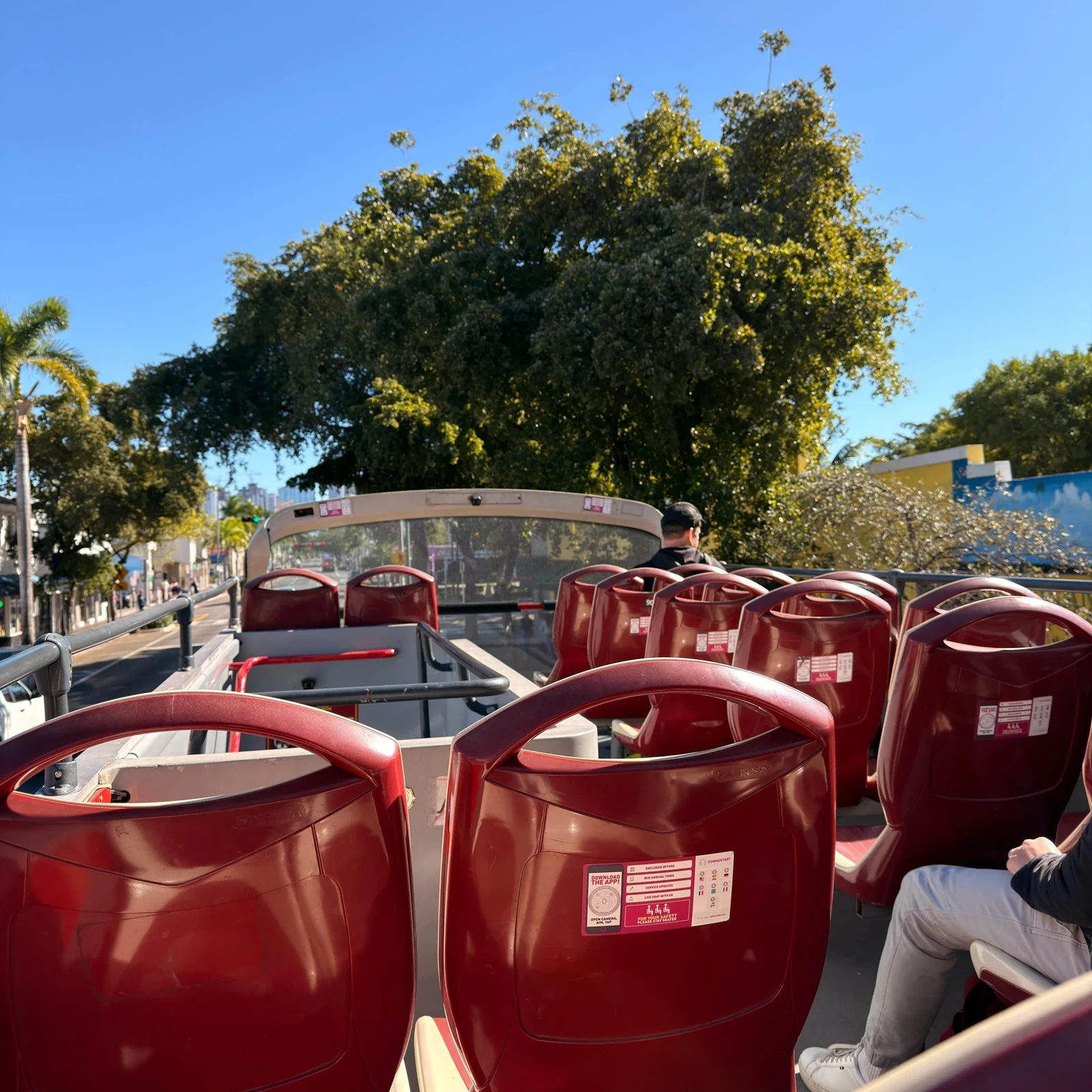
Explore Miami for 2 days with unlimited hop-on hop-off access at 9 stops. Selected options add a Millionaire’s Row cruise or night tour.