 Activity on TourBookGo
Private Nara Tour from Osaka or Kyoto
Take a private Nara tour from Osaka or Kyoto with hotel pickup, a driver-guide and 10 hours to explore Tōdai-ji, Nara Park, Naramachi and more.
Avoiding the most common mistakes in Nara helps you experience its deer, temples and historic neighborhoods with more respect, calm and attention.
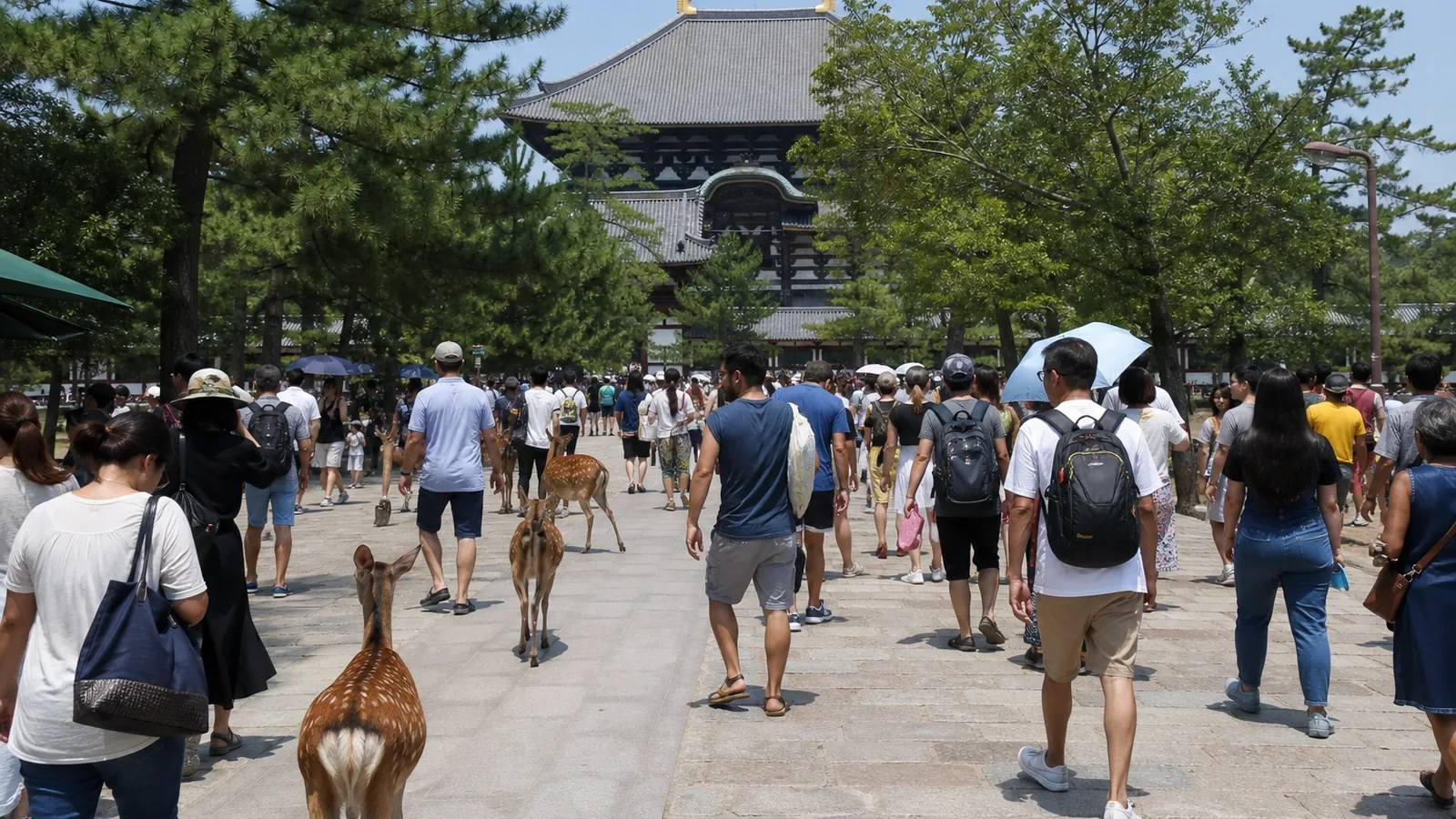
Knowing the mistakes to avoid in Nara can completely change your experience. This ancient capital is more than a park filled with deer: it is a city of active temples, historic neighborhoods and shared spaces where respectful behavior matters. Tōdai-ji, moss-covered lanterns, forest paths and the streets of Naramachi are far more rewarding when you know what not to do. Nara rewards a slower, more attentive and quieter kind of travel. The deer are not pets, the temples remain religious sites, and beyond the most photographed avenues lies a city that continues with everyday life after the day-trippers return to Kyoto or Osaka.
Compare locations and options to find a base that suits your trip. Booking.com confirms current availability and pricing.
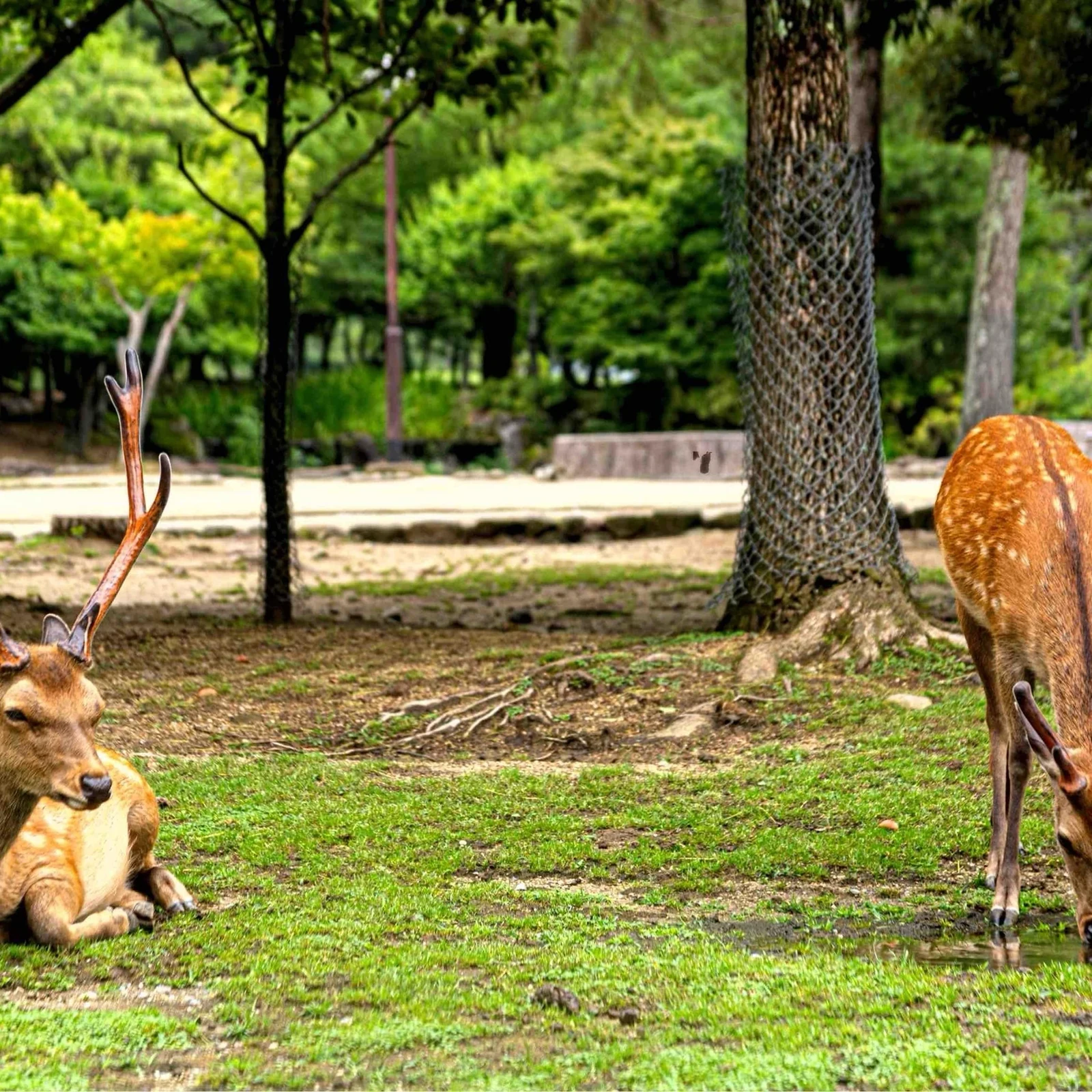
Find accommodation on BookingOne of the biggest mistakes to avoid in Nara is reducing the entire visit to its deer. They are an extraordinary part of the city's cultural landscape, but spending the whole day chasing photographs with them means missing much of what makes Nara special.
Tōdai-ji, Kasuga Taisha, Kōfuku-ji, Gangō-ji, the primeval Kasugayama Forest and other historic sites belong to a much broader heritage. Nara's official tourism resources also highlight areas such as Naramachi and Nishinokyo for historic neighborhoods, ancient temples and a quieter atmosphere away from the park's busiest routes.
Visit Nara
+1
The mistake is not taking a picture of a deer. The mistake is leaving believing that was all Nara had to offer.
Their closeness can be misleading. Nara's deer roam freely and, despite being accustomed to people, they are still wild animals.
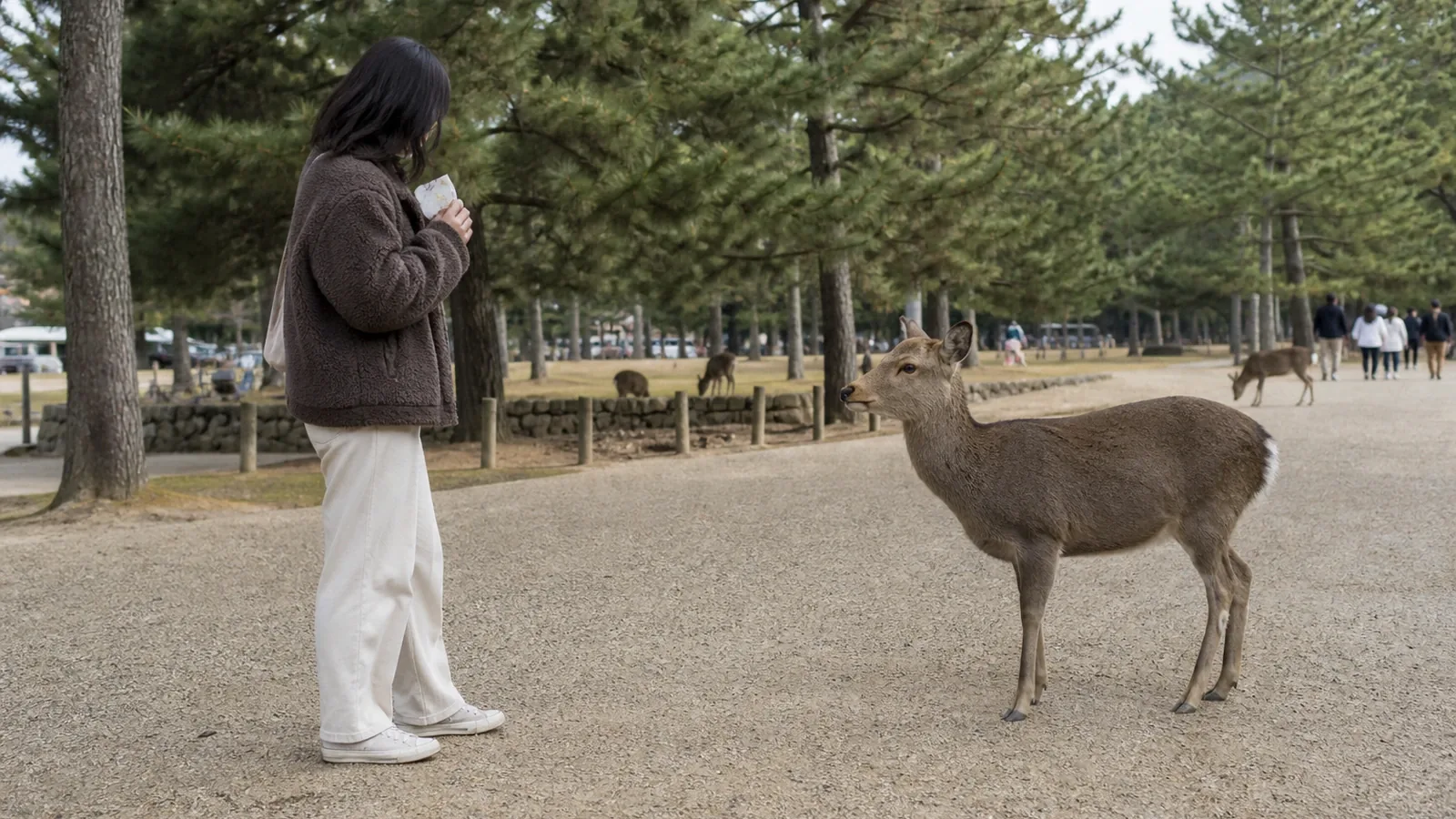
Do not hug them, chase them, hold them in place for a photograph or tease them by hiding food. Official guidance recommends feeding them only shika senbei, the crackers made specifically for them, and never giving them human food, paper, plastic or other objects. If you have run out of crackers, simply showing them your empty hands is usually enough to signal that there is no more food.
Visit Nara
+1
Extra care is needed with young children. Some deer can approach quite insistently when they detect food, and males may become more aggressive during the autumn mating season.
Visit Nara
+1
The most memorable photo you take in Nara will probably be one you did not have to force.
It can seem funny until several deer immediately work out who is carrying the food. Taking out the entire pack of shika senbei at once is one of those small mistakes that can quickly turn a calm encounter into an uncomfortable one.
Keep the crackers tucked away and offer them one at a time. This helps you maintain some distance and prevents a pleasant few seconds from becoming a small crowd of deer around your backpack.
Do not provoke them just to get the famous bow, either. Some deer make that movement when expecting food, but there is no reason to prolong the interaction just to capture the perfect video. The experience is better when the animal is free to walk away whenever it wants.
Another common mistake when visiting Nara is turning the day into a series of boxes to tick: park, deer, Great Buddha, shrine, station.
On a map, many attractions seem close together. In reality, much of Nara's appeal lies in walking between them: listening to cicadas in the trees, following a lantern-lined path toward Kasuga Taisha, stopping at a small altar or wandering down a quiet street in Naramachi.
Nara receives a huge number of day visitors, but its official guide emphasizes that a slower pace allows you to discover another side of the city and enjoy moments with fewer crowds.
Visit Nara
If you have the time, leave some empty spaces in your itinerary. In Nara, those unplanned gaps often become some of the best memories of the trip.
Between the station, Nara Park and Tōdai-ji, there is a very obvious tourist flow. Following it makes sense because it leads to remarkable places, but the experience changes when you step away from it for a while.
Naramachi preserves old merchant houses, small shops and streets where the pace becomes noticeably calmer. The local tourism office recommends this historic district as an ideal area for walking and discovering a different side of Nara.
Visit Nara
+1
It is also worth moving just a few minutes away from organized groups within the park itself. Sometimes choosing a side path is enough to change the entire soundscape: fewer conversations, more gravel beneath your shoes, distant bells and forest.
Tōdai-ji and Kasuga Taisha appear in thousands of photographs, but they are not tourist backdrops. They are active religious spaces, and respectful behavior is part of visiting them properly.
Keep your voice down, respect restricted areas and always check whether photography is allowed. In some buildings, you may be required to remove your shoes. It is also worth remembering that rituals at Shinto shrines and Buddhist temples are not exactly the same: clapping, for example, is part of certain forms of Shinto prayer, not the usual way of praying at a Buddhist temple.
japan.travel
+1
You do not need to learn every Japanese ritual before traveling. Observing, reading the signs and quietly following local behavior is usually enough.
Nara is irresistible to anyone carrying a camera. Mist among the trees, deer beneath torii gates, the stone lanterns of Kasuga Taisha and wooden façades invite you to stop constantly.
But not everything needs to be photographed.
Respect signs inside temples and shrines, and ask permission before taking a close-up photograph of someone. A traditional street is still a shared public space: blocking an entrance, standing in the roadway or entering private property for the perfect composition turns a good photograph into poor travel behavior. Official Japanese guidance stresses the importance of respecting both people and property when taking pictures.
japan.travel
How to Interact With People in Nara
You do not need to speak Japanese to visit Nara respectfully.
A sumimasen when asking to pass or apologizing, and an arigatō gozaimasu when saying thank you, already convey consideration. Speaking at a moderate volume, respecting queues, not blocking streets with luggage and following instructions in shops and on public transport prevent many everyday sources of friction. JNTO notes that many Japanese social norms revolve around a simple idea: trying not to inconvenience others.
japan.travel
Do not mistake reserve for coldness. In small shops or family-run establishments, a calm and respectful interaction often feels much more natural than trying to force instant familiarity.
And if you are unsure what to do, observe. In Japan, watching how the people around you behave for a few seconds can answer many questions.
Nara changes significantly throughout the year, and adjusting your pace and schedule to the season can make the visit much more comfortable.
Summer can be hot and humid, with periods of heavy rain, so spending hours walking through the park in the middle of the day can become exhausting. Winter is cold, especially for visitors expecting temperatures similar to milder cities, although it has traditionally also been a quieter time to visit the area.
奈良市観光協会
+2
Visit Nara
+2
Spring and autumn bring spectacular blossoms and colors, but that beauty can also attract more visitors.
The mistake is planning Nara the same way in August as you would in January. In summer, prioritize early mornings and late afternoons, build in breaks and do not underestimate the humidity. In winter, proper clothing makes it easier to enjoy a quieter city comfortably.
The final mistake is also one of the easiest to make when you only have a few hours.
Nara does not reveal itself only in front of the Great Buddha. It appears in an elderly man sweeping the entrance to his home, in incense smoke drifting beneath a dark roof, in a tiny shop in Naramachi, in a deer resting far from the tourists or in the sound of your footsteps as the forest begins to empty.
Those who come only to collect attractions may find a beautiful city.
Those who slow down begin to understand why Nara feels different.
That may be the best rule for visiting Nara: do less, look more and remember that you are entering a place that is lived in, historic and sacred, not a Japanese theme park.
Discover selected experiences in Nara to complete this guide with historic temples, deer, Japanese culture, nature and well-organised tours.
Activity on TourBookGoTake a private Nara tour from Osaka or Kyoto with hotel pickup, a driver-guide and 10 hours to explore Tōdai-ji, Nara Park, Naramachi and more.
 Activity on TourBookGo
Book a private Nara day trip from Osaka or Kyoto with 10 hours by premium car, hotel pickup and a flexible itinerary tailored to your group.
 Activity on TourBookGo
Book a private Kyoto and Nara tour with hotel pickup, a private vehicle, flexible 10-hour itinerary, Arashiyama, temples and Nara Park.