 Activity on TourBookGo
Private Nara Tour from Osaka with a Guide, Deer and the Great Buddha
Book a private Nara tour from Osaka with a licensed guide, train tickets and Tōdai-ji admission included. See Nara Park and the Great Buddha in 6 hours.
This Nara itinerary explores a city that makes an impression without asking you to rush. Its appeal unfolds along forest paths, moss-covered stone lanterns, ancient wooden temples and deer wandering between the trees as though they had always belonged to the landscape.
Most travelers plan their Nara itinerary as a day trip from Kyoto or Osaka. That is enough to see the main highlights, but not quite enough to understand the city. When evening falls and the tour groups head back to the stations, Nara changes: the paths empty out, silence returns to the park, and the temples stop feeling like a checklist of sights. That is why the best Nara itinerary depends less on how many landmarks you want to tick off and more on the pace at which you want to travel. One day covers the essentials, while two or three days give you time for quieter temples, historic neighborhoods and places elsewhere in Nara Prefecture such as Asuka or Yoshino.
Compare locations and options to find a base that suits your trip. Booking.com confirms current availability and pricing.
Find accommodation on BookingIf you only have one day, this Nara itinerary focuses on the eastern part of the city, linking the main sights on foot while avoiding unnecessary transfers.
Start early around Kōfuku-ji, one of Nara’s major historic temple complexes. From here, you can walk straight into Nara Park and begin one of the easiest walking routes through the city.
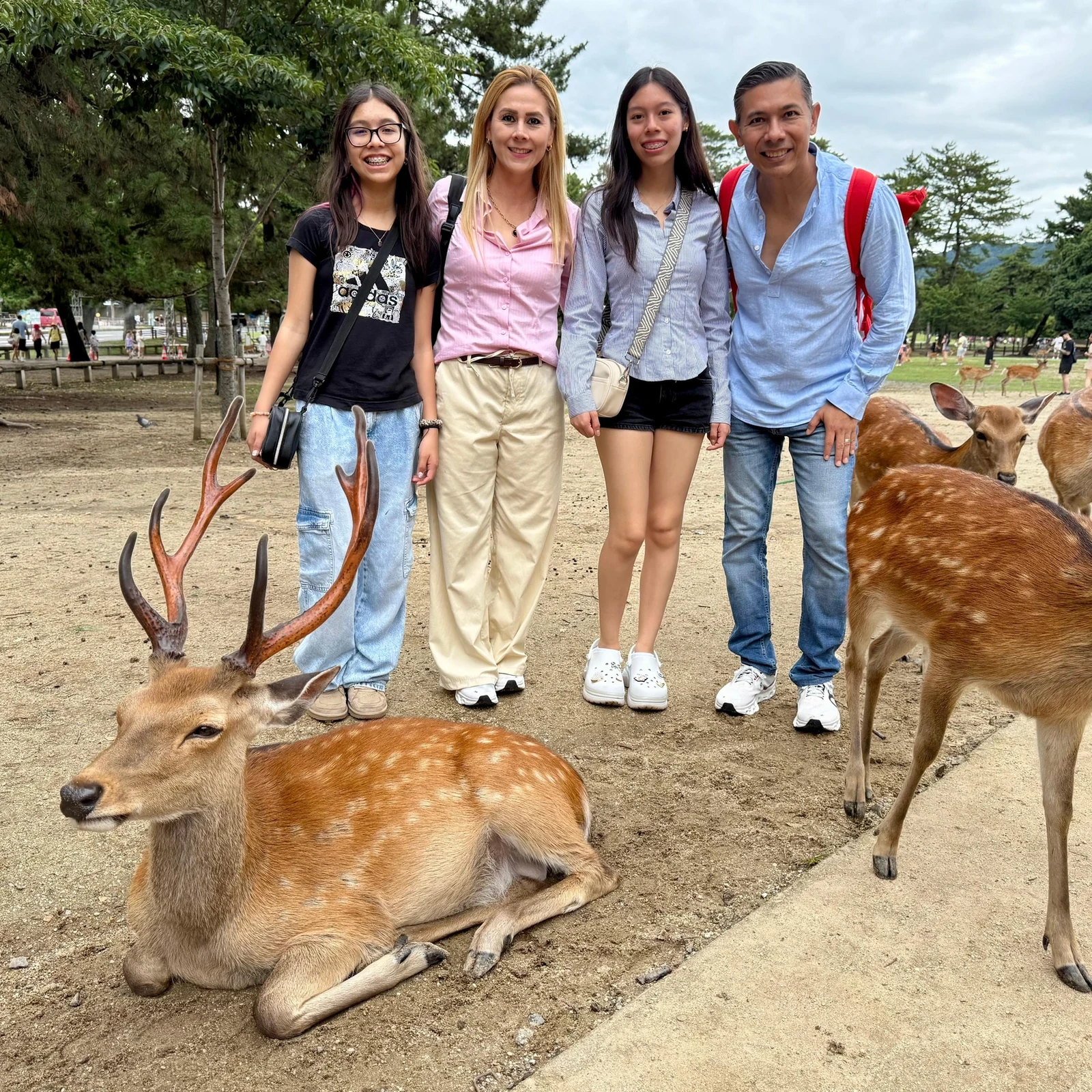
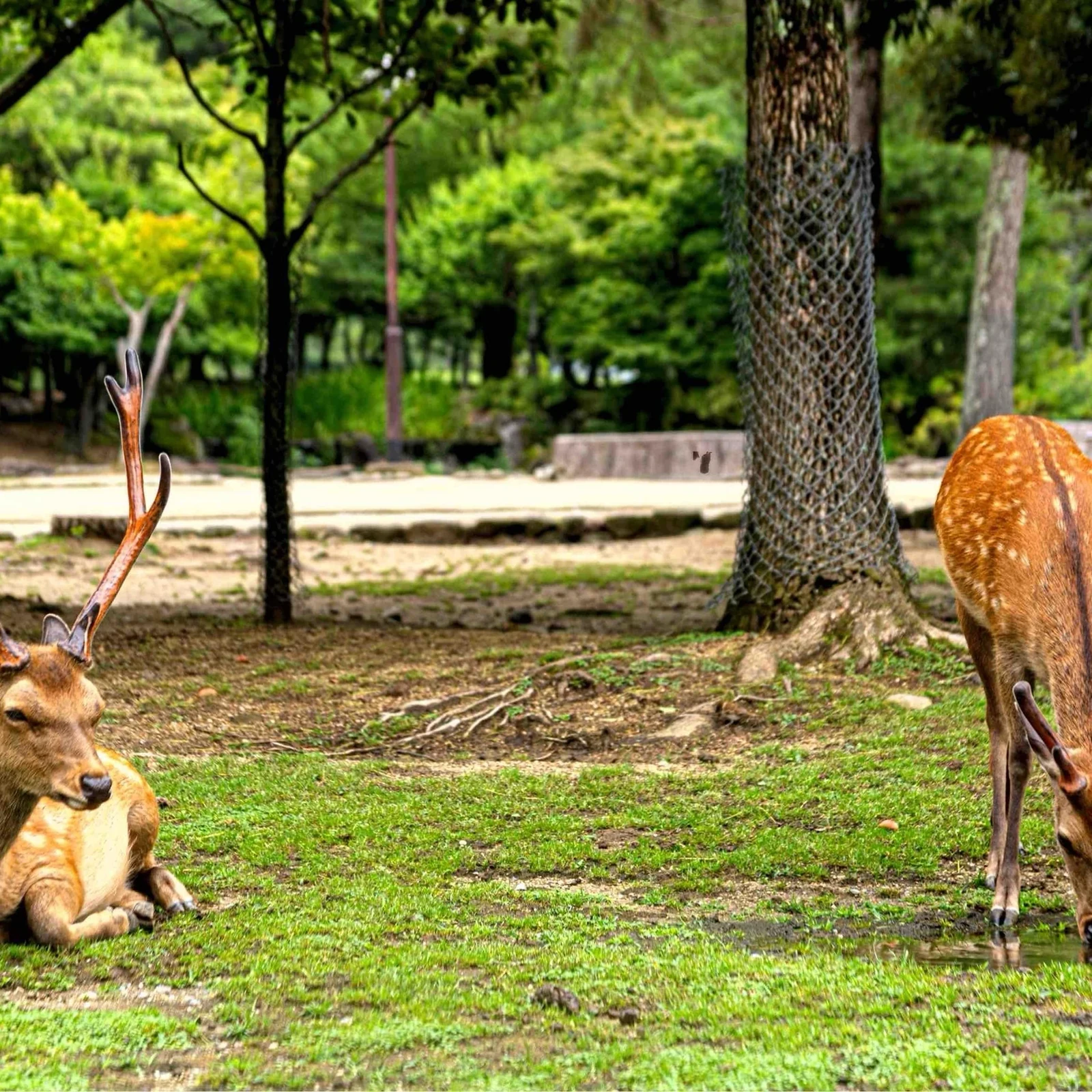
The famous deer appear almost immediately. They are inseparable from the image of the city, but it is worth remembering that they are still wild animals. Some can become persistent if you are carrying food, so keep maps, bags, and anything else they might try to bite safely out of reach.
Then continue toward the main highlight of the day.
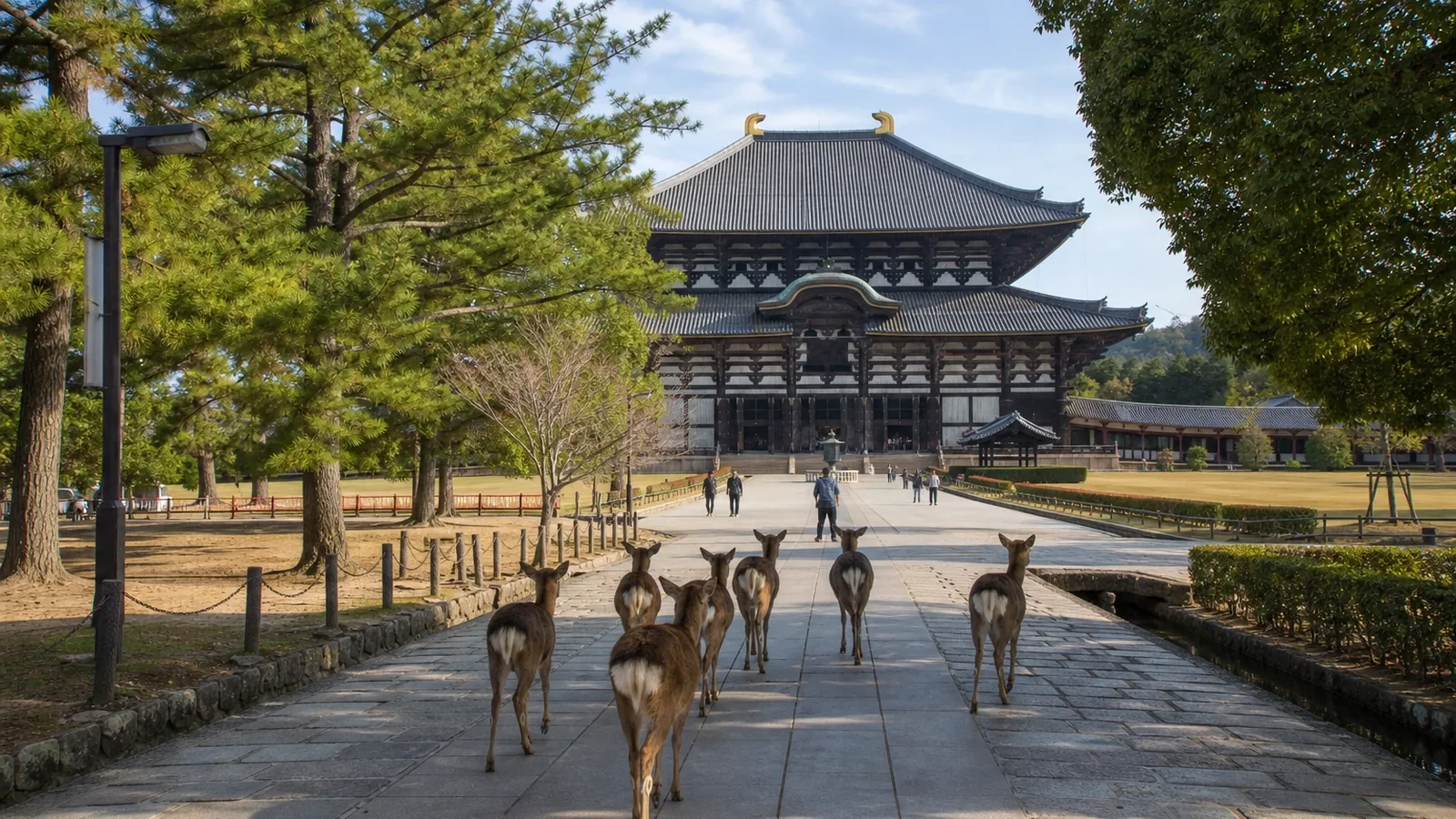
Tōdai-ji alone accounts for much of Nara’s fame. The sheer scale of its architecture and the presence of the Great Buddha create one of those moments that photographs simply cannot fully convey.
Do not rush the visit. Leave time to explore the area surrounding the temple and the paths connecting it with the rest of Nara Park.
From Tōdai-ji, continue toward Nigatsu-dō. The walk is especially pleasant because it gradually takes you away from the busiest areas.
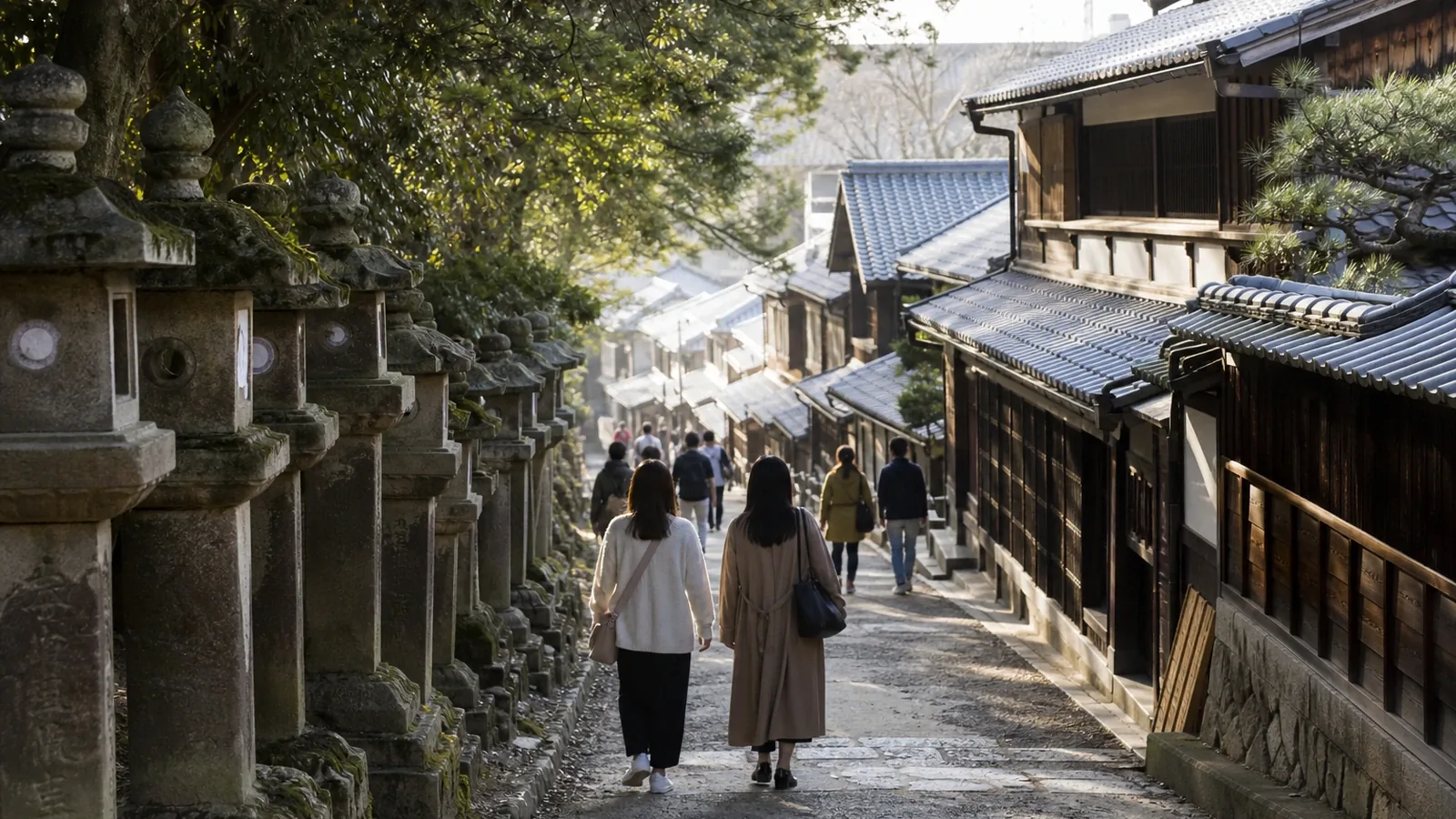
Then make your way through the forest toward Kasuga Taisha. Rows of stone lanterns, tall trees, and filtered light breaking through the branches reveal a far more atmospheric side of Nara.
If you still have some energy left, finish your Nara walking route with a stroll through Naramachi, the city’s old merchant district.
Yes, if Nara is part of your first trip to Japan and your priority is to see its most iconic sights.
No, if you are especially interested in temples, Japanese history, photography, or slow, quiet walks. The main drawback of a Nara day trip from Kyoto or Osaka is having to leave just as the city begins to fall silent.
Nara in 2 days lets you follow the entire route above without turning it into a race, while leaving enough time to explore the western side of the city.
Spend your first day following the classic route:
Kōfuku-ji → Nara Park → Tōdai-ji → Nigatsu-dō → Kasuga Taisha → Naramachi
Take your time and explore some of the quieter side paths through the park.
Staying overnight in Nara comes with a simple reward: at dawn and toward the end of the afternoon, much of the tourist pressure disappears and the city feels noticeably calmer.
The second day reveals a different side of Nara.
Head west to visit Yakushi-ji and Tōshōdai-ji, two religious complexes that generally offer a much calmer experience than the main sights in the center.
Round out the day with the historic Heijō Palace area, connected to Nara’s past as Japan’s imperial capital.
This day may not deliver the same immediate impact as standing before the Great Buddha at Tōdai-ji, but it does far more to explain what Nara represented in Japanese history.
With three days, your Nara itinerary can move beyond the city center and combine its temples with a day in the rural landscapes of Nara Prefecture.
Follow the classic route through Nara Park, Tōdai-ji, Nigatsu-dō and Kasuga Taisha, leaving time to enjoy the wooded paths between the major sights.
Spend your second day visiting the historic temples outside the park area and exploring the remains of the ancient capital.
Here, you have two very different options for extending your Nara Prefecture itinerary.
Yoshino is better suited to travelers interested in nature, mountains, shrines, and scenery. It is especially famous for its cherry blossoms, although outside blossom season it still offers hiking trails and a much more rural atmosphere.
Asuka, by contrast, is fascinating for anyone interested in exploring the earliest chapters of Japanese history: fields, ancient burial mounds, temples, and archaeological remains scattered across a farming landscape.
Asuka requires a stronger interest in history. Travelers looking for spectacular, monumental sights may find the experience too understated.
A full week in Nara city alone would be too much for most travelers. A one-week Nara Prefecture itinerary, however, can combine major temples, historic settlements, mountains and rural landscapes for a trip that feels very different from the usual Japan route.
A first encounter with the city, its deer, and some of the essential sights to see in Nara.
Return to the park early, then spend several hours exploring the traditional streets of Naramachi.
Explore Yakushi-ji, Tōshōdai-ji, and the remains of the ancient capital for a quieter side of Nara.
Dedicate a day to the Hōryū-ji area, one of the region’s great historic temple complexes. It is an especially rewarding visit for travelers who enjoy religious architecture and ancient heritage.
Rent a bicycle if conditions are suitable, or simply take your time exploring the rural landscape between temples, ancient tombs, and fields.
Change the scenery completely and head into the mountains of Yoshino.
Spring can transform Yoshino entirely, while also bringing a significant increase in visitor numbers. Outside the most famous seasonal periods, the experience is usually much more peaceful.
Use the final day as a buffer. You can revisit the places you enjoyed most, spend more time in the city, or take an additional trip into the mountainous areas of the prefecture.
For a first visit, the most logical Nara walking route is:
Kōfuku-ji → Nara Park → Tōdai-ji → Nigatsu-dō → Kasuga Taisha → Naramachi
The main advantage is that much of the route can be covered on foot, with the sights following one another naturally.
I would avoid trying to combine the major park landmarks with temples farther from the center in a single day. Technically, it can be done, but it turns a city that invites slow walking into a succession of transfers and timetables.
Nara pairs especially well with both Kyoto and Osaka and fits naturally into a wider Kansai itinerary.
It shares Kyoto’s historical depth, but the experience is different: Nara is smaller, greener, and generally easier to explore.
The contrast with Osaka is even greater. Going from Osaka’s movement, lights, and urban intensity to Nara’s tree-lined paths can become one of the most enjoyable transitions on a trip through Kansai.
For a broader regional itinerary, a sensible route would be:
Osaka → Nara → Kyoto
or:
Kyoto → Nara → Osaka
There is no real need to change accommodation just to visit Nara for a single day. Once you stay for two nights or more, however, basing yourself in the city starts to make much more sense.
For most travelers, Nara in 1 day is enough to see the essentials.
Nara in 2 days is probably the best-balanced option if you want to travel without rushing.
Nara in 3 days makes sense if you want to explore beyond Nara Park and add Yoshino or Asuka.
I would only recommend a full week if your trip includes the wider Nara Prefecture, historic villages, rural areas, and mountains.
Nara may disappoint travelers expecting a city packed with lively neighborhoods, shopping, or nightlife. Not everyone enjoys the immense popularity of the deer, either, or the busiest sections of the park.
But for those who take pleasure in walking beneath ancient trees, hearing temple bells, and leaving space between one visit and the next, Nara offers something that is becoming increasingly difficult to find on Japan’s major tourist routes: enough silence to truly look around.
Discover selected experiences in Nara to complete this guide with historic temples, deer, Japanese culture, nature and well-organised tours.
Activity on TourBookGoBook a private Nara tour from Osaka with a licensed guide, train tickets and Tōdai-ji admission included. See Nara Park and the Great Buddha in 6 hours.
 Activity on TourBookGo
Take a private Nara tour from Osaka or Kyoto with hotel pickup, a driver-guide and 10 hours to explore Tōdai-ji, Nara Park, Naramachi and more.
 Activity on TourBookGo
Book a private Nara day trip from Osaka or Kyoto with 10 hours by premium car, hotel pickup and a flexible itinerary tailored to your group.