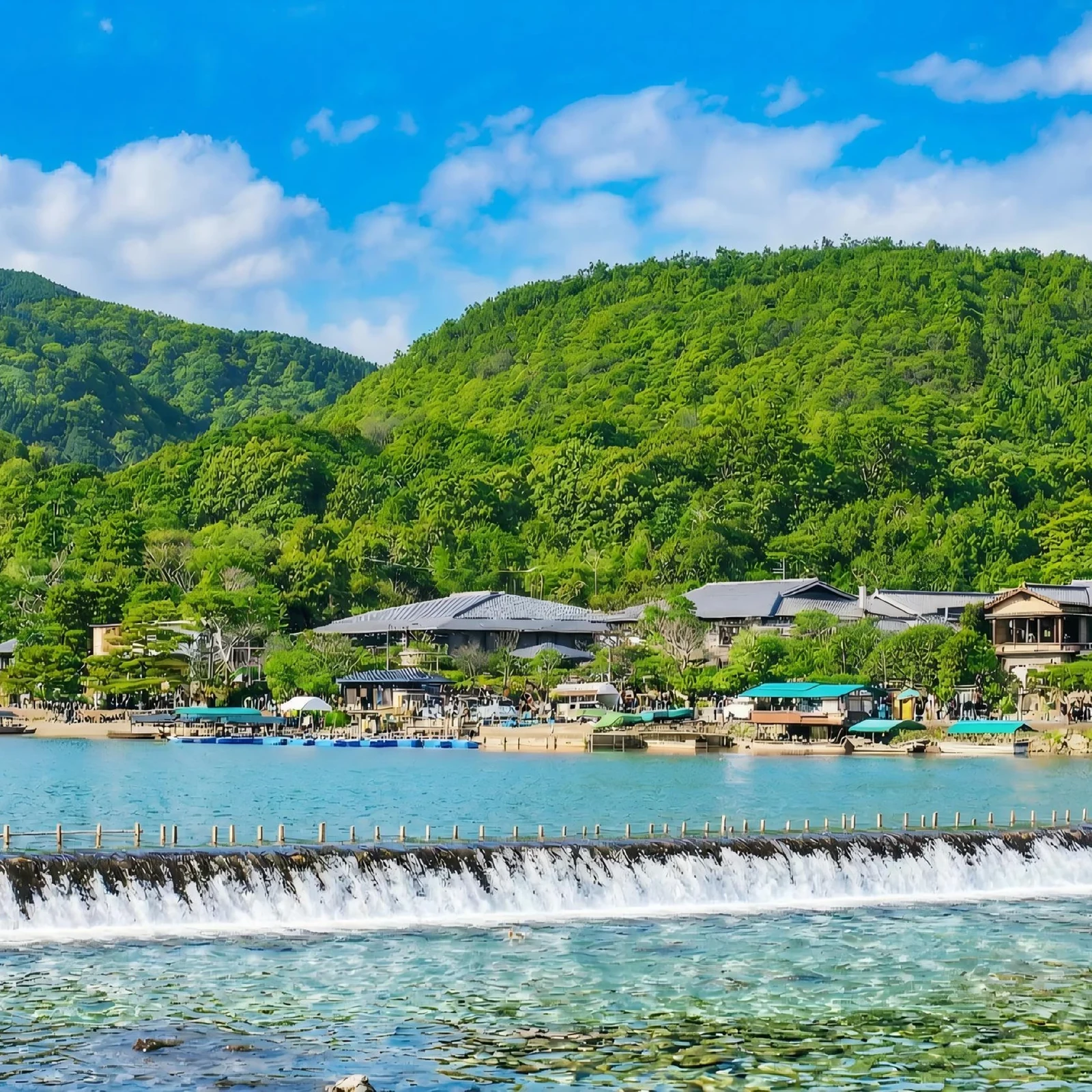
 Activity on TourBookGo
Nara, Fushimi Inari and Arashiyama Bus Tour from Kyoto or Osaka
Take a Nara, Fushimi Inari and Arashiyama bus tour from Kyoto or Osaka, with a guide and air-conditioned transport on a 9-10 hour Kansai day trip.
Nara safety is one reason this ancient city feels so easy to explore. Early in the morning, before the day-trippers arrive from Kyoto and Osaka, there are paths where you can hear little more than leaves rustling, temple bells ringing, and deer hooves padding across the ground.
Overall, Nara safety is reassuring for most visitors, and the city is generally a very safe place to explore. Japan is currently at Level 1 — exercise normal precautions — in the U.S. travel advisory, and the official guidance reviewed does not identify Nara as an area of particular concern. U.S. State Department +1 Still, it is worth staying aware: some of the most likely problems when visiting Nara come not from other people, but from the deer, the weather, and travelers becoming a little too confident.
Compare locations and options to find a base that suits your trip. Booking.com confirms current availability and pricing.
Find accommodation on BookingYes. The areas where most visitors spend their time — Nara Park, Tōdai-ji, Kasuga Taisha, Kōfuku-ji, Naramachi, and the areas around JR Nara and Kintetsu-Nara stations — can all be explored with the usual precautions you would take on any trip.
There is no general reason to avoid the main tourist districts because of crime. Nara Prefectural Police even provides public maps with information on crime, suspicious persons, traffic accidents, and fraud, reflecting a fairly well-structured local prevention system.
Nara Prefectural Police
That does not mean you should stop paying attention altogether. Official travel advice for Japan still recommends keeping an eye on your belongings and taking normal precautions.
GOV.UK
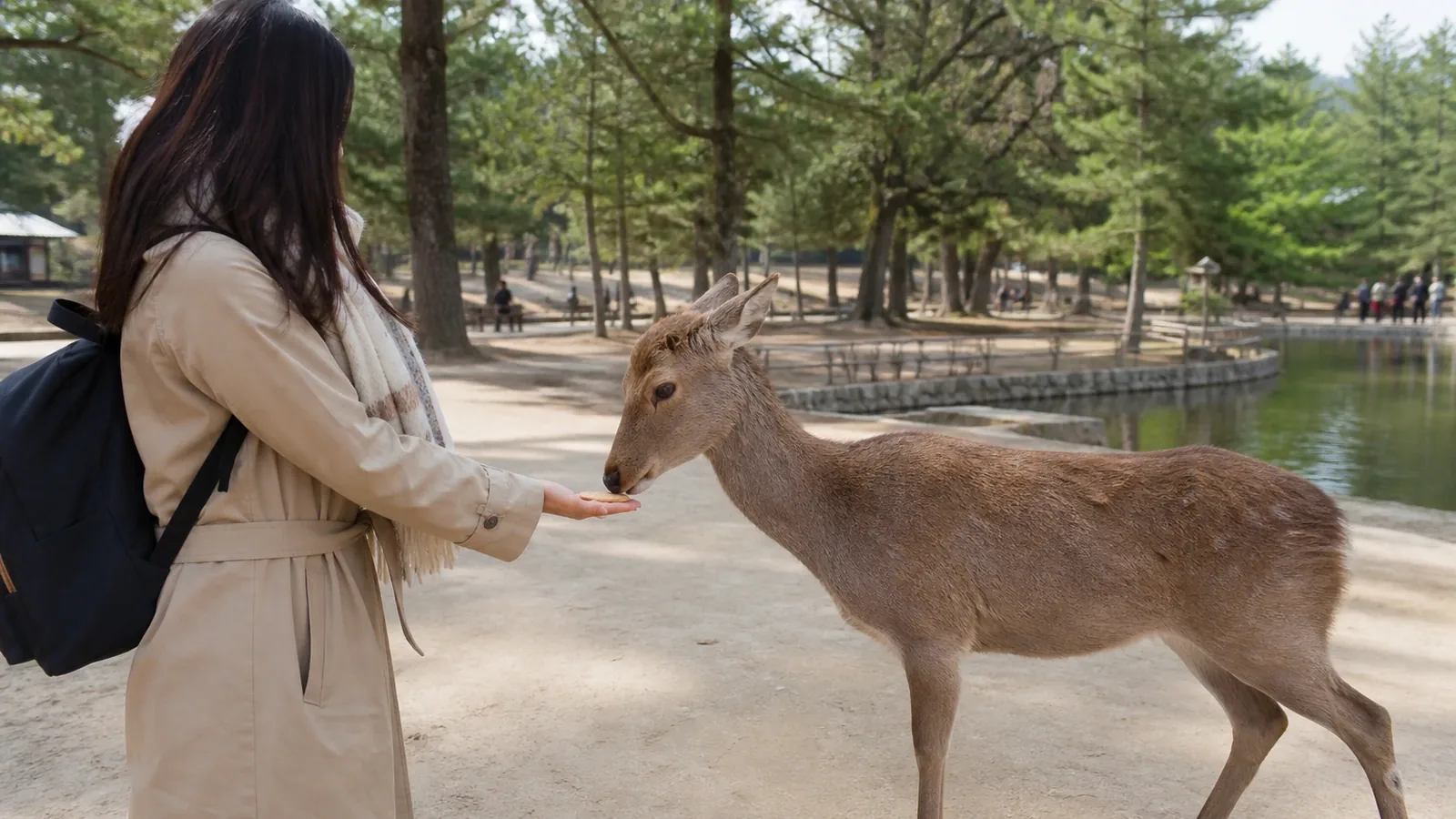
The scene looks harmless: a deer bows its head, someone holds out a cracker, and the perfect photo appears.
But Nara deer safety deserves real attention: these are wild animals, not pets. Local tourism authorities make this very clear. They can push, bite, strike, or chase people when they are expecting food, especially if they are teased or shown a cracker without being given it.
Nara City Tourism Association
+1
The sensible approach is to buy only shika senbei, the crackers made specifically for the deer, and never offer them bread, sweets, fruit, or leftover food. Once you are finished, showing them your empty hands will usually make them lose interest. Nara’s official visitor guidance recommends taking particular care with small children, who may feel intimidated when several animals approach at once.
You should also avoid petting them, grabbing them, or playing games by pulling food away at the last second.
The experience is much more enjoyable once you accept one simple truth: you are entering their space, not the other way around.
The deer’s behavior changes with the seasons.
During the autumn mating season, males can become considerably more aggressive. The organization responsible for protecting them specifically warns visitors about this period and identifies October as a particularly sensitive time. Even a male whose antlers have been cut still has enough strength to cause injury.
naradeer.com
+1
Something different happens in spring and early summer, when the fawns are born. In 2026, the deer protection organization once again asked visitors not to approach the young in order to avoid conflicts with their mothers.
naradeer.com
That is no reason to avoid Nara during these seasons. It simply means watching the animals with a little less excitement and a little more respect.
For the average visitor, there is no tourist district in Nara that official travel advice says should be avoided.
The level of caution depends more on the surroundings than on the neighborhood.
Nara Park is enormous and extends toward natural areas such as Kasugayama Primeval Forest and Mount Wakakusa. The farther you move away from the major temples and busy paths, the quieter and more isolated the landscape becomes.
That is part of its beauty during the day. At night, however, it may feel less comfortable for solo travelers, especially on rarely used paths. Not because there is any particular crime warning, but because there are fewer people, fewer businesses open, and a much more natural setting.
Generally speaking, yes.
The city center around the stations and shopping streets is easy to navigate. On the other hand, there is little reason to venture into wooded paths or remote parts of the park after dark simply because Nara feels extremely safe.
The city loses much of its tourist activity once the temples and museums close. And the very stillness that feels wonderful at dawn can feel very different when you are walking alone along a dark path.
Walking back to your accommodation through the center after dinner is usually a relaxed experience. Exploring hills and forests after dark is better saved for daylight hours.
Nara is a very good choice for solo travel, including for women traveling alone. Its center is manageable, many of the main sights can be reached on foot, and the main tourist areas receive a steady flow of visitors.
Even so, a high level of safety does not mean zero risk. British travel advice for Japan notes that sexual assaults are rare, but they can occur. Taking the precautions you would use in any other destination remains sensible.
GOV.UK
For a woman traveling alone, the biggest difference will probably be after dark: it is better to choose well-lit, urban routes rather than unnecessarily crossing the more isolated parts of the park.
Yes, but the deer require genuine supervision.
A small child holding an entire pack of crackers can suddenly attract several animals. What seemed like an adorable moment can turn into tears, pushing, and panic within seconds.
Nara’s official tourist information recommends that adults accompany children when they feed the deer.
It is better to hand out only a few crackers at a time, keep bags and paper tucked away, and calmly move away from the animals if they start crowding around.
Scams specifically targeting tourists are not identified as one of Nara’s characteristic problems in the official travel guidance reviewed.
That does not make the city a bubble. It is still sensible to keep an eye on your wallet, phone, and luggage in stations and crowded places, but travelers should probably worry far more about losing something, crossing a road without paying attention, or mishandling an encounter with the deer than about elaborate tourist scams.
Japan lies in a major seismic zone, so earthquakes and related alerts are part of the reality of traveling there. Authorities recommend familiarizing yourself with your accommodation’s emergency instructions and following official guidance if an incident occurs.
GOV.UK
Summer brings another problem that is less dramatic but far more routine. Nara can be hot and humid, and a day of sightseeing often involves walking many kilometers between temples, parks, and slopes.
Japan’s typhoon season also runs roughly from June to December, with activity usually peaking between July and September.
GOV.UK
During those months, checking the forecast before setting off on a long walk is far more useful than simply improvising.
In Japan, 110 is the number for the police, while 119 connects you to the fire and ambulance services. JNTO also operates a 24-hour assistance hotline for international visitors.
japan.travel
Saving these numbers before your trip takes only a few seconds, and you will probably never need to use them.
Yes. Nara is a destination where most travelers can get around with a great deal of peace of mind, whether traveling alone or with family.
But it would be a mistake to interpret that safety as an invitation to stop paying attention altogether.
The deer here are still wild animals, even if they bow their heads for a cracker. There are quiet forests that are not the best place for an improvised nighttime walk. Summers are humid, typhoons are possible, and the same earthquake risk that exists elsewhere in Japan applies here too.
With normal precautions, Nara offers something increasingly rare in major Asian destinations: the chance to walk without too much tension, slow down, and let the ancient city reveal itself gradually among cedar trees, wooden rooftops, and paths where deer still wander across as though the centuries had passed without much hurry.
Discover selected experiences in Nara to complete this guide with historic temples, deer, Japanese culture, nature and well-organised tours.
Activity on TourBookGoTake a Nara, Fushimi Inari and Arashiyama bus tour from Kyoto or Osaka, with a guide and air-conditioned transport on a 9-10 hour Kansai day trip.
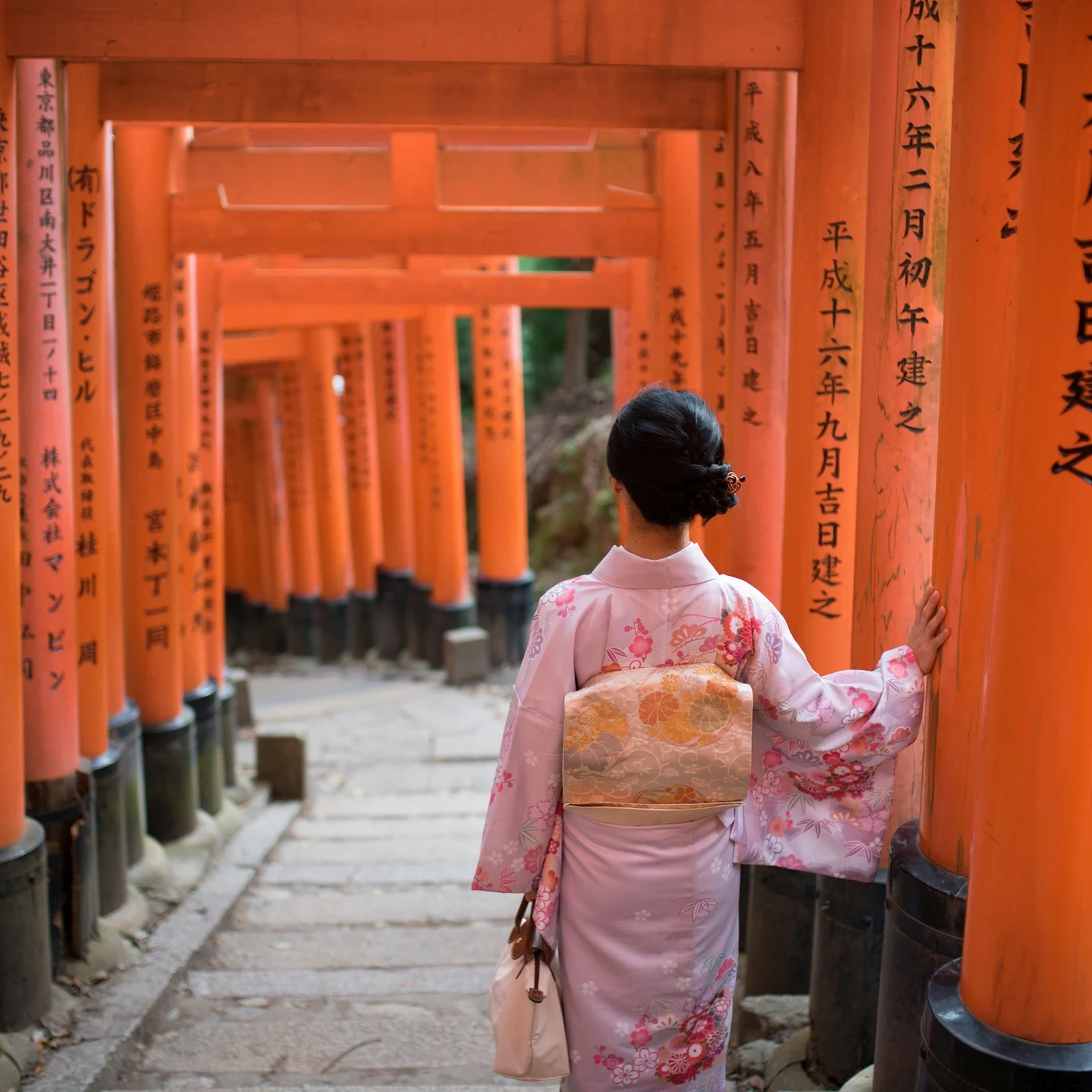 Activity on TourBookGo
Nara, Arashiyama and Fushimi Inari day trip from Kyoto or Osaka with transport. See Nara Park, the Bamboo Grove and red torii gates. From €43.
 Activity on TourBookGo
Book an Osaka to Nara and Uji day trip with transport, Nara Park deer, time to explore Uji's matcha culture and an optional Japanese onsen.