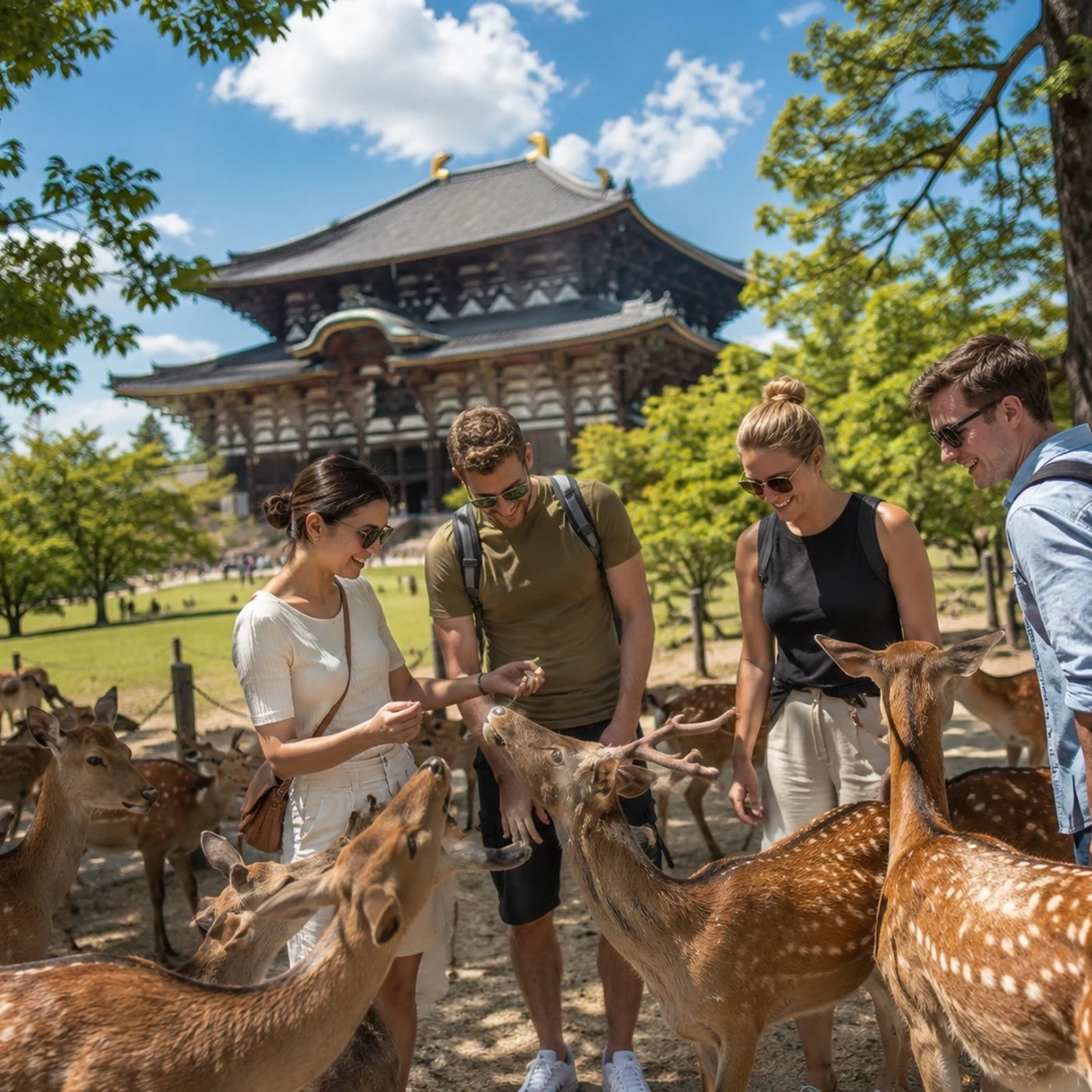
 Activity on TourBookGo
Nara Walking Tour: Nara Park, Todai-ji & Naramachi
Join a Nara walking tour through Nara Park, Todai-ji, Kasuga Taisha and Naramachi in around 2.5 hours, with a guide and Todai-ji admission included.
The best time to visit Nara depends on the experience you want: cherry blossoms in spring, atmospheric summer evenings, vivid autumn foliage or peaceful temples in winter.
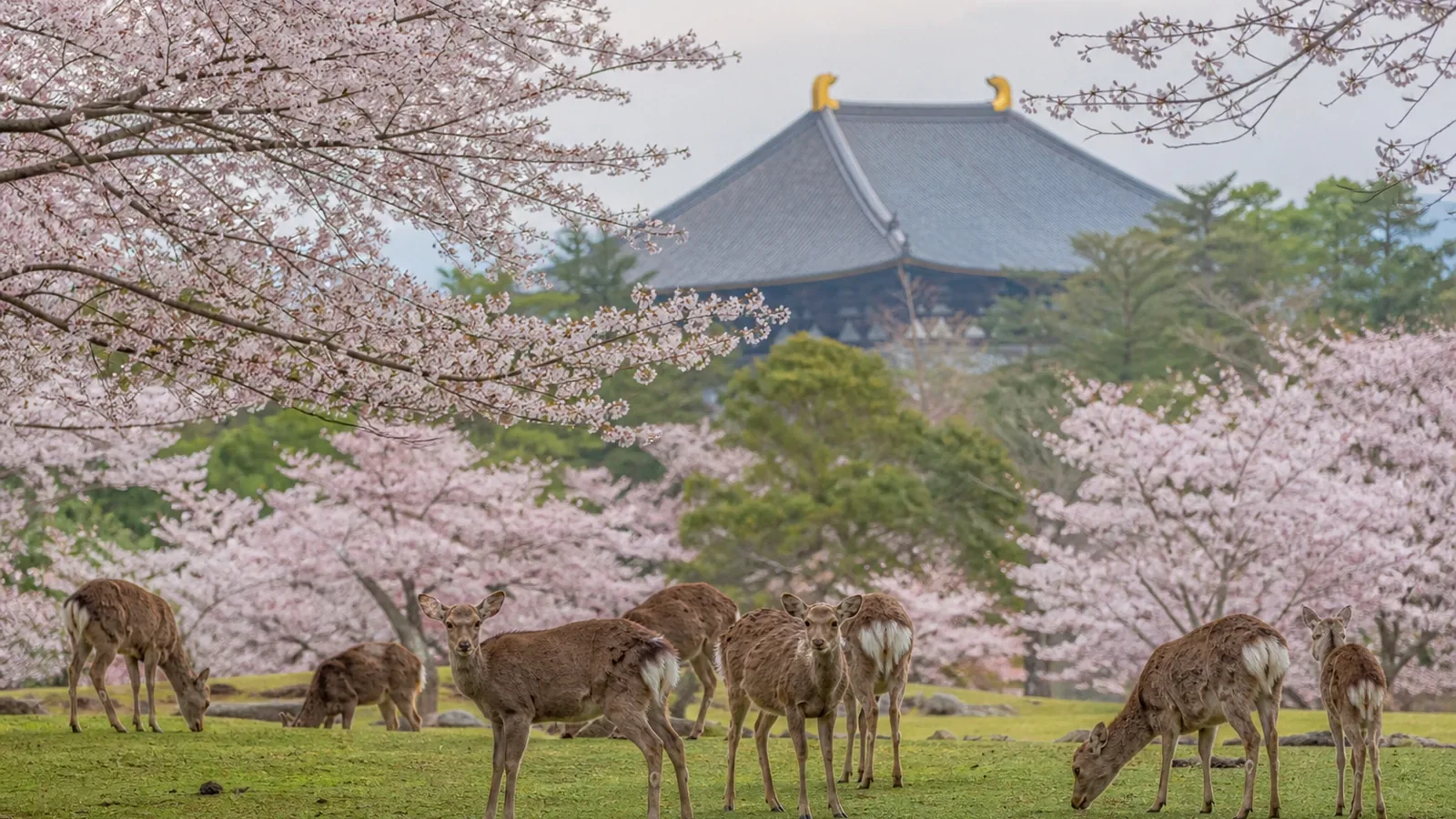
Choosing the best time to visit Nara can completely change your experience. The same path that is carpeted with cherry blossom petals in April turns lush and humid in summer, glows in shades of red and gold in November, and regains a winter silence that seems to transport its temples back to another era. Rather than asking whether there is a bad time to visit Nara, it is more useful to decide which version of the city you want to experience. For most travelers, spring and autumn are the most rewarding seasons, but they feel very different. If I had to choose just one, autumn would have a slight edge for its balance of scenery, weather and easy walking.
Compare locations and options to find a base that suits your trip. Booking.com confirms current availability and pricing.
Find accommodation on BookingMid to late November is probably the best-balanced time for a first visit to Nara City.
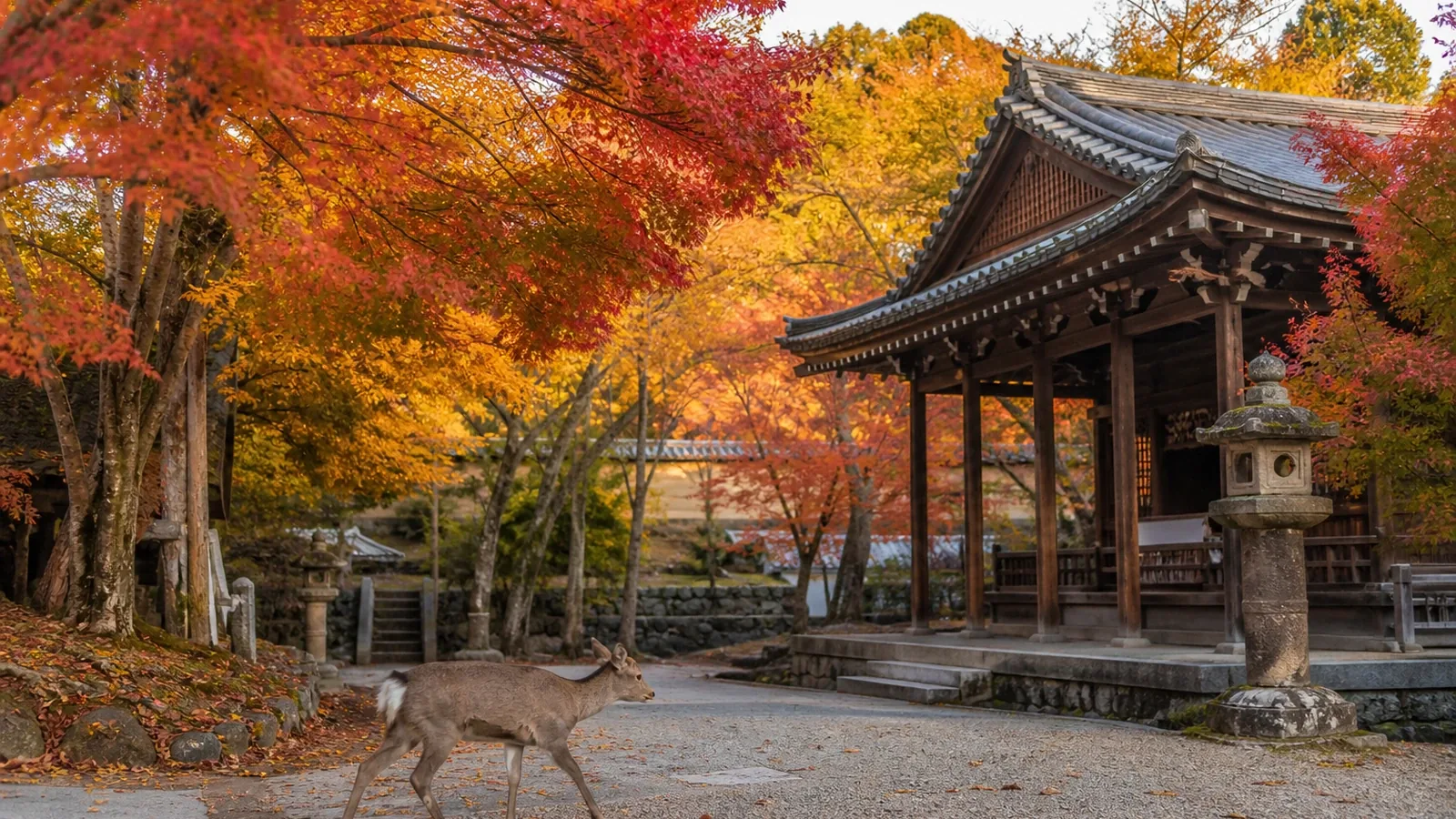
Maples, ginkgo trees, and other foliage change color around the temples, gardens, and paths of Nara Park, while temperatures are generally far more comfortable for walking than at the height of summer. Autumn foliage season runs roughly from mid-November into December in different parts of the prefecture, although peak colors vary depending on altitude and conditions each year.
There is something especially beautiful about watching deer cross a carpet of dry leaves in front of the dark roofs of ancient temples. Nara in autumn brings together nature and everything that truly sets the city apart: heritage, gardens, walks, and an atmosphere that feels far more unhurried than Japan’s major cities.
That said, the best-known places will not be empty. Autumn foliage also attracts plenty of visitors, especially on weekends.
From late March through April, Nara in spring enters one of its most photogenic periods. Cherry trees bloom both around Nara Park and in many other parts of the prefecture.
Walking toward Tōdaiji as petals drift through the air, spotting deer beneath the trees, or pausing beside a small shrine surrounded by flowers captures the delicate beauty many travelers hope to find during Nara cherry blossom season.
But it is worth knowing the other side of the picture-perfect scene: the blossom season is short, unpredictable, and extremely popular. Dates vary from year to year, and the most spectacular days usually coincide with large crowds.
If you also want to visit Mount Yoshino, spring becomes even more appealing. Sakura season there generally runs from late March through April, with the blossoms appearing gradually at different elevations on the mountain.
Yoshino can be extraordinary, but on the best blossom days it is certainly no hidden retreat. If you are looking for silence and contemplation, you may enjoy Nara more a few weeks later.
For a first visit, the choice can be summarized like this:
If you’re looking for… Best time Cherry blossoms — Late March and April Autumn colors — Mid-November to early December Pleasant temperatures for walking — Spring and autumn Fewer visitors — Winter Night festivals — Summer Yoshino covered in sakura — April An especially peaceful Nara — January and February
Spring is more emotionally striking; autumn is usually easier to enjoy.
Cherry blossoms have the appeal of something fleeting, but they also require you to accept crowds and a degree of uncertainty. Autumn lasts a little longer and allows for more flexibility when planning your trip.
Yes, but Nara in summer comes with a few challenges.
From July to September, the days are hot, and the humidity can make spending hours exploring Nara Park and its temples tiring. The official tourism guide itself recommends escaping to the mountainous areas at this time of year, where you can find activities such as hiking, rivers, rafting, and cooler nights.
In return, summer evenings have a character you will not experience in any other season.
One of the most atmospheric events is Nara Tokae, traditionally held in early August, when thousands of small lights transform different areas of Nara Park. For 2026, official information places the festival around August 5–14.
It is a different side of Nara: less about cherry blossoms or autumn foliage and more about darkness, lanterns, the sound of cicadas, and evening walks after sunset.
If you cope well with the heat, it can be worthwhile. If hot, humid weather drains your energy quickly, I would choose another season.
From December to mid-March comes the least crowded period of the year. It is cold, and some mountain routes may close, but Nara in winter takes on a serenity that is difficult to find during the major tourist seasons. Nara’s tourism office specifically presents winter as a good time for temples, museums, city walks, onsen, and sake, with far less tourist pressure.
For travelers more interested in heritage than flower photography, January and February can be surprisingly rewarding months.
There are also some very distinctive celebrations. In late January, the Wakakusa Yamayaki is traditionally held, when the grass on Mount Wakakusa is ceremonially set alight and the evening begins with fireworks.
And from March 1 to 14, Tōdaiji holds Shuni-e, whose fire ritual turns Nigatsudō into one of the most dramatic settings in Nara’s religious calendar.
You will not have cherry blossoms or long, mild afternoons, but you will have something else: space.
The busiest periods are the cherry blossom season in spring and the main weeks of autumn foliage. Yoshino also attracts especially large crowds during sakura season.
During these periods, it is worth starting early. Nara Park changes completely between the first hours of the morning and the middle of the day. Arriving early will not eliminate other visitors, but it gives you a chance to experience, for a while, that combination of forest, animals, and ancient architecture that best captures the character of the city.
High-demand seasons also leave less room for spontaneous accommodation plans, especially if you want to stay overnight in Nara rather than return to Kyoto or Osaka.
November would be my choice for most travelers.
Nara in November offers color, pleasant light, good walking conditions, and a beauty that depends less on getting a handful of precise flowering days exactly right.
I would choose April if seeing sakura is an essential part of your trip to Japan, especially if you want to combine Nara with Yoshino.
I would choose January or February if you value peace and quiet more than seasonal scenery.
And I would travel in August mainly if I were interested in evening festivals and comfortable with the heat.
Nara deserves time precisely because it does not need to be spectacular at every moment. Sometimes its best moments come early in the morning, before the large groups arrive, when a deer slowly crosses a stone path and the dark wood of a temple begins to emerge between the trees.
The season matters. But in Nara, the time of day matters almost as much.
Discover selected experiences in Nara to complete this guide with historic temples, deer, Japanese culture, nature and well-organised tours.
Activity on TourBookGoJoin a Nara walking tour through Nara Park, Todai-ji, Kasuga Taisha and Naramachi in around 2.5 hours, with a guide and Todai-ji admission included.
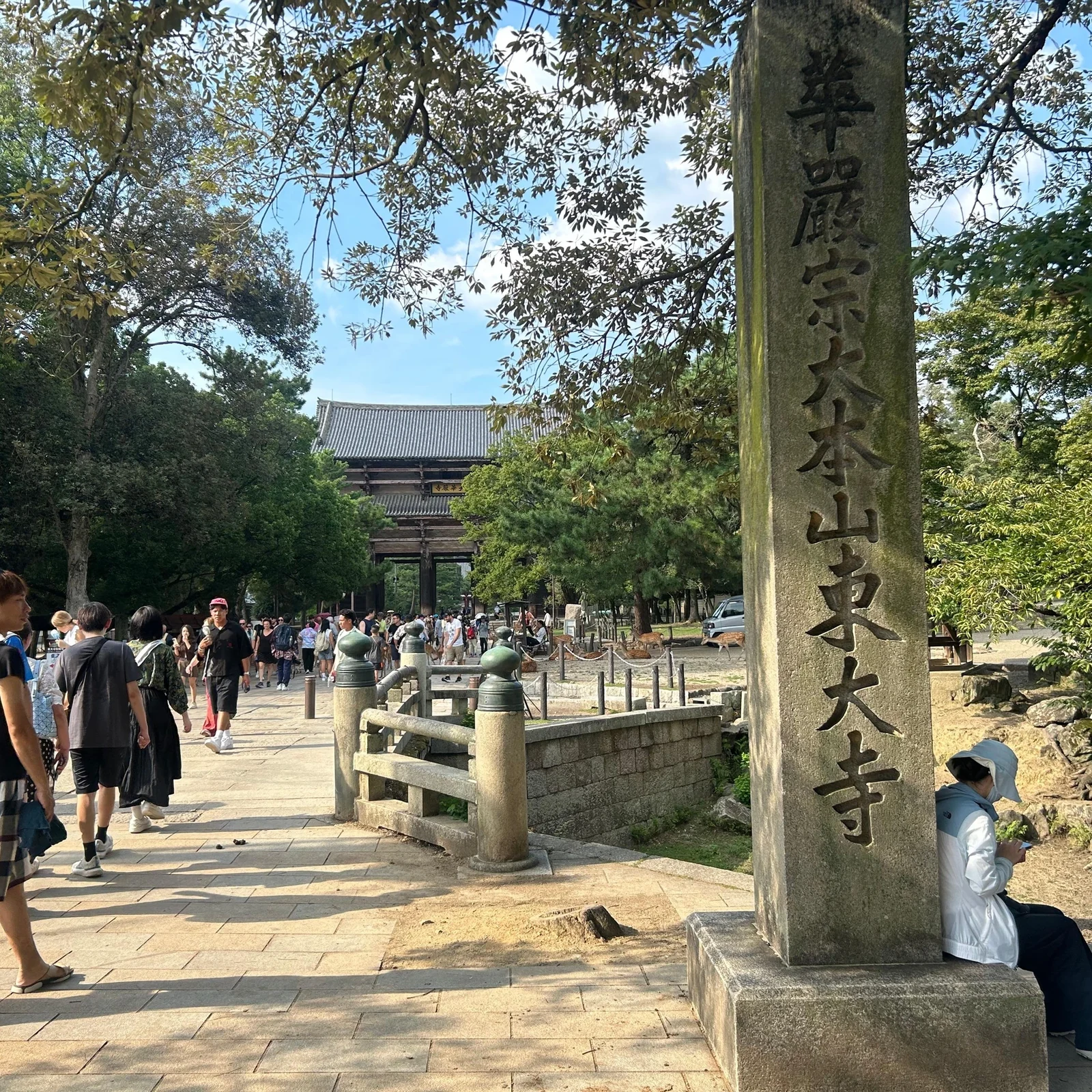 Activity on TourBookGo
Nara deer and Great Buddha tour lasting 4 hours, with Tōdai-ji, Nara Park, Kasuga Taisha, Naramachi and a planned mochi tasting. From €43.
 Activity on TourBookGo
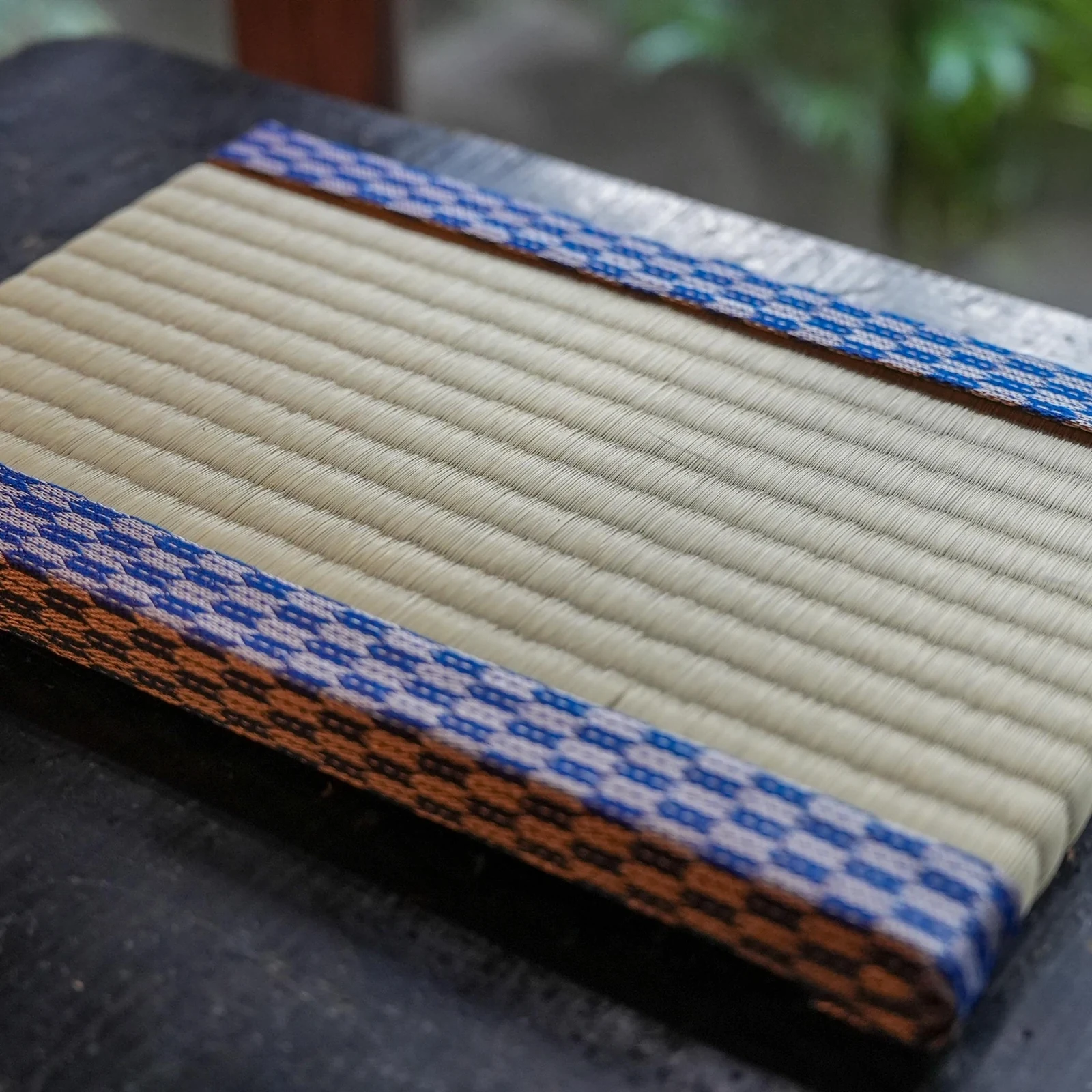
Book a tatami workshop in Nara inside a traditional machiya, make your own mini tatami with a craftsman, and enjoy Japanese tea and seasonal sweets.