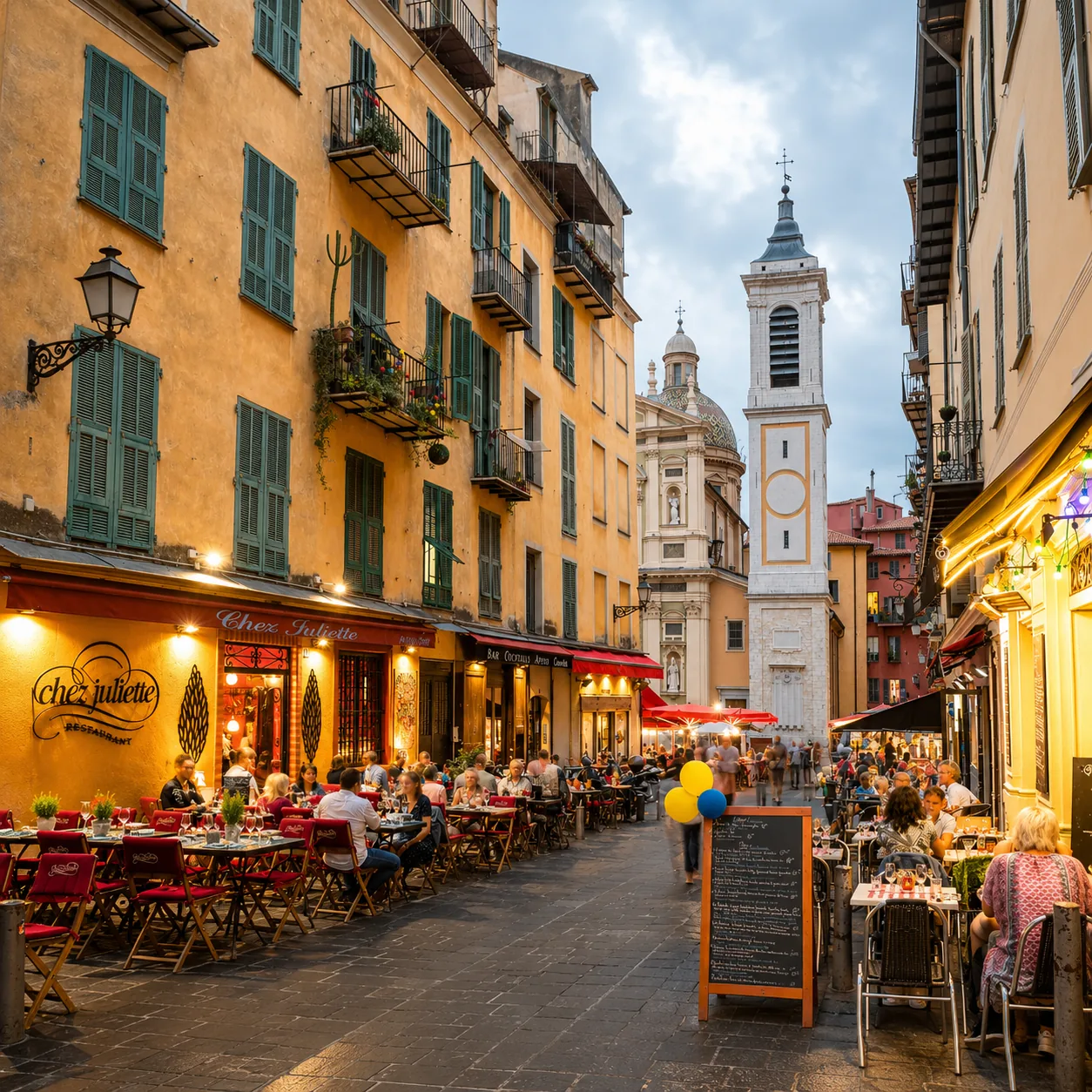


Book a Saint-Jean-Cap-Ferrat villas tour from Nice to visit Villa Ephrussi, Villa Kérylos and the Renoir Museum with private transport, tickets and lunch.
View experienceMistakes to avoid in Nice: thinking it is just a beach city
The first mistake is reducing Nice to a postcard of sun loungers and sea. Yes, the city faces the Mediterranean with one of the most recognisable seafronts in France, and the Promenade des Anglais remains its great urban stage, used by visitors and locals alike for walking, running or simply looking out at the water. But Nice is best understood by combining the coast with Vieux Nice, the Cours Saleya market, Cimiez, its museums and the neighbourhoods where the city stops performing for the camera.
Those who come only to “go to the beach” may leave with a strange feeling: the landscape is magnificent, but the experience is not always comfortable. Nice’s urban beach is pebbly, not sandy; getting in and out of the water can be awkward without suitable footwear, and in high season the seafront fills up quickly. Knowing this before you book avoids one of the most common mistakes when visiting Nice for the first time.
Nice is best enjoyed when it is not reduced to a beach postcard: the sea matters, but so do the market, the old town, Cimiez and its urban rhythms.
Not bringing water shoes for the pebble beaches
It seems like a minor detail until you first step onto the hot pebbles of the beach. In Nice, Mediterranean elegance has a hard texture. The water may be clean and beautifully blue, but walking barefoot to the shoreline is not always pleasant.
Light water shoes can make a big difference: they allow you to enter the sea less clumsily, avoid slipping and enjoy swimming without that small discomfort that spoils the scene. It is also worth bringing a thicker towel or a beach mat if you plan to spend time on the public beach. Nice rewards the prepared traveller; for the improvised one, it sometimes charges for its charm in discomfort.
On Nice’s pebble beaches, water shoes and a beach mat can turn an awkward visit into a much easier swim.
Visiting Vieux Nice only at midday
Vieux Nice is beautiful, but it does not always show its gentlest side at every hour. At midday, the narrow streets can be crowded, terraces compete to attract tourists and the light falls with a harshness that flattens the colours. Many people only see that version of it: pretty, yes, but also noisy and somewhat exhausting.
The old town is best enjoyed early, when the shutters are just opening and the smell of bread, coffee and socca begins to mingle with the dampness of the alleyways. Cours Saleya, especially known for its market of flowers, fruit, vegetables, crafts and local specialities, is at its most appealing when visited without rushing and before the tourist flow turns it into a corridor of photographs.
Early morning usually reveals a softer Vieux Nice, before heat, hard light and crowds change the atmosphere.
Eating at any “pretty” terrace
Nice has a local cuisine with real character: pissaladière, pan bagnat, petits farcis, ravioli, olive oil, herbs and sun-ripened vegetables. But it also has plenty of tables designed for passing visitors, with long menus, high prices and soulless dishes.
The mistake is not eating in tourist areas; sometimes it is pleasant to sit on a terrace and watch the city go by. The mistake is doing so without paying attention: menus in too many languages, photos of dishes, overly insistent waiters and huge menus are often signs that expectations should be lowered. In Nice, it is better to look for places with a shorter offering, clearly defined local dishes and opening hours that feel like those of a real restaurant, not a continuous-service factory.
A shorter menu, clear local dishes and normal opening hours are often better signs than a pretty terrace with an endless menu.
Thinking everything can be done on foot
Central Nice is very walkable, and that is part of its beauty: moving from the market to the sea, from the port to a square, from a baroque street to a bright avenue. But the city and its metropolitan area cannot be reduced to the visitor’s romantic map.
The tram, buses and train are very helpful for getting around Nice and the Côte d’Azur. Ignoring them usually means unnecessary fatigue, avoidable taxis and badly planned days, especially if you want to combine the city with day trips from Nice to Villefranche-sur-Mer, Èze, Antibes or Monaco.
Walking is part of the charm, but combining it with tram, bus and train usually makes the trip much easier.
Renting a car for everything
A car can be useful if you want to explore inland villages, less accessible coves or freer routes through the region. But within Nice, it is usually more of a problem than an advantage: traffic, expensive or limited parking, narrow streets and the inconvenience of moving around a city that works better on foot and by public transport.
For a first visit focused on Nice, Villefranche-sur-Mer, Monaco, Antibes or Cannes, combining train, tram and walking is often enough. A car is worthwhile when the itinerary moves beyond the railway axis or when you are looking for a more rural route. Renting one “just in case” can become one of the least rewarding expenses of the trip.
A car makes sense for rural or less connected routes, not necessarily for Nice and its classic nearby excursions.
Underestimating Nice in summer
July and August bring beautiful light, long days and Riviera atmosphere, but they also bring heat, high prices, crowded beaches and more pressure on restaurants, trains and accommodation. Nice in summer can be vibrant, but not necessarily restful.
Those dreaming of a gentler city should look favourably at May, June, September or even certain periods in spring and autumn. The sea may vary, the weather may be less stable and some plans may depend more on conditions, but the city breathes more easily. Nice is not the same when seen from a quiet street as when crossed among groups, suitcases and vertical sun.
May, June and September can offer a gentler Nice than peak summer, even if weather and sea conditions are less predictable.
Using Nice only as a base and not experiencing it
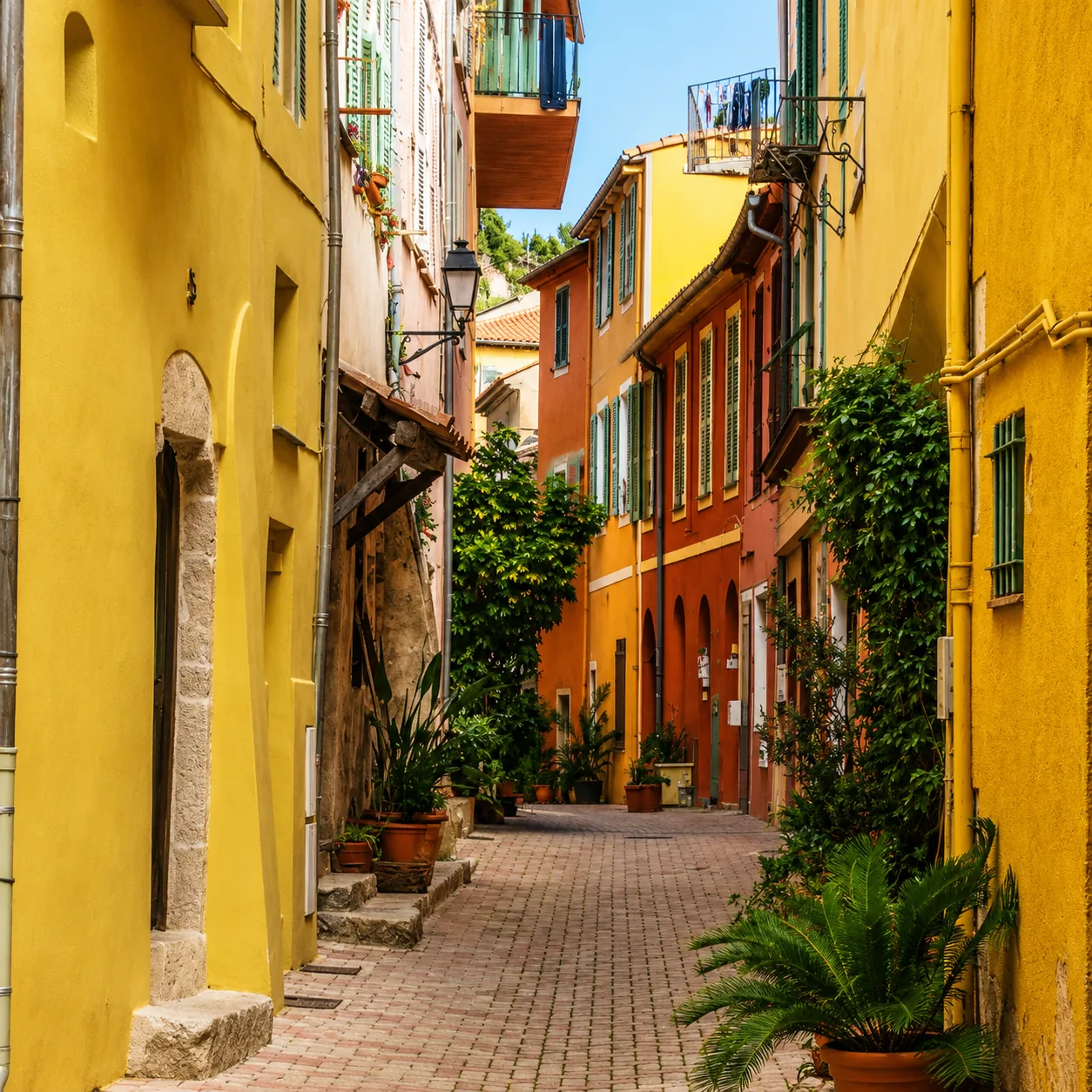
Many travellers sleep in Nice in order to visit Monaco, Èze, Cannes, Antibes or Saint-Paul-de-Vence. It makes sense: the city is well connected and works as a gateway to the Côte d’Azur. But there is a risk: turning Nice into a dormitory.
It deserves at least one afternoon without an excursion. An afternoon to climb towards the Colline du Château, walk down towards the port, listen to the cutlery on the old-town terraces, buy something simple at the market and sit facing the sea as the light begins to gild the façades. Nice does not reveal itself only through its monuments; it reveals itself through its rhythm.
Keeping at least one afternoon free of excursions helps you experience Nice as a city, not just as a base.
Neglecting interactions with locals
In Nice, as in many highly touristic French cities, the way you enter a place matters. Saying “bonjour” before ordering, leaving with a “merci, au revoir”, speaking in a moderate tone and not treating the city as a stage set are small gestures that change your relationship with the surroundings.
The typical mistake is arriving in a hurry, ordering directly in another language and expecting automatic hospitality. In the most visited areas, residents and workers live with intense tourist pressure; a minimum of courtesy does not guarantee endless smiles, but it avoids unnecessary friction. Nice does not require solemnity, but it does call for a certain delicacy.
A simple “bonjour” before ordering can change the tone of an interaction.
Letting your guard down with bags, phones and luggage
Nice should not be experienced with fear, but neither with naïvety. In crowded areas, on transport, beaches, markets and around stations, it is wise to apply the normal caution of any European tourist city: keep your bag closed, do not leave your phone exposed on the table, keep your wallet secure and always keep luggage in sight.
The most common mistake is relaxing too much because of the beauty of the surroundings. The Mediterranean shines, the street smells of food and flowers, the light distracts you; that is precisely why it is better not to leave belongings alone on the beach or hang a bag over the back of a chair.
The beauty of the setting does not replace basic caution: keep belongings visible, bags closed and phones protected.
Choosing the wrong area to stay in Nice
Staying near the old town or the centre makes a first visit much easier, but not every street offers the same level of rest. Some areas are lively, noisy or too focused on nightlife tourism. The Promenade des Anglais can be scenic, but also more expensive and exposed to traffic depending on the section.
The best area depends on the type of trip: near Vieux Nice for those who want atmosphere and lots of walking; the Jean-Médecin or Masséna area for urban convenience; the port for a pleasant balance; more residential areas for those who prioritise calm. Choosing accommodation only because of a pretty sea photo can work out well, but it does not always match what the traveller actually needs.
The best area to stay in Nice depends more on the rhythm of the trip than on a pretty photo of the sea.
Trying to see too much of the Côte d’Azur in too few days
The Côte d’Azur seduces with nearby names: Monaco, Èze, Cannes, Antibes, Menton, Villefranche-sur-Mer. On the map, everything looks easy. In practice, every excursion consumes energy, transfers and decisions. Filling three days with five destinations can leave you with plenty of photos and little real memory.
It is better to choose less and look more closely. One day for Nice, another for Villefranche-sur-Mer and Èze, another for Antibes or Monaco, for example, is usually more reasonable than a race between stations. The Riviera is more beautiful when there is room for a coffee, a slow climb, a pause facing the sea.
Fewer destinations and more calm usually leave a more real memory of the Côte d’Azur.
So, what kind of traveller enjoys Nice the most?
Nice is worth visiting for those seeking a mix of city, sea, art, simple gastronomy and easy excursions around the Côte d’Azur. It is also for those who enjoy walking, observing façades, markets and urban scenes in Mediterranean light.
It can disappoint those expecting a comfortable sandy beach, a cheap city, a silent Riviera in the middle of August or a completely local experience in the most photographed areas. Nice is beautiful, yes, but it is also touristic, urban, busy and sometimes expensive.
The key is not to ask it to be what it is not. Nice is not a hidden cove or a village suspended in time. It is a living city by the sea, with Italian and French layers, with shine and noise, with elegance and fatigue, with market mornings and afternoons of hot stone. If you travel with that truth in your suitcase, the city can leave a much deeper mark than a simple postcard of the Côte d’Azur.
Nice is best enjoyed when accepted as a living city by the sea, not as a perfect Riviera fantasy.