

Book an Èze Monaco and Monte Carlo tour from Nice: 5-hour French Riviera trip with pickup, multilingual driver-guide and free cancellation.
View experienceThe best way to structure your Nice itinerary
The most comfortable way to visit Nice is to move from west to east and from sea to hill: Promenade des Anglais, Castle Hill, Vieux-Nice, Cours Saleya, Place Rossetti, Place Garibaldi, Port Lympia and, in a separate block, Cimiez.
This structure avoids unnecessary backtracking and leaves time for what Nice truly asks of you: to sit, look, taste something local, and get a little lost without feeling you are failing the plan.
Nice in 1 day: the essential route without wearing yourself out
Start on the Promenade des Anglais, ideally early, when the sea still looks freshly painted and the city has not yet reached its midday noise. From there, walk towards Quai Rauba Capeu and climb up Castle Hill, either by the stairs or the lift, for the clearest view of Nice: ochre rooftops, the port, pebble beach and a bay that changes shades of blue depending on the hour.
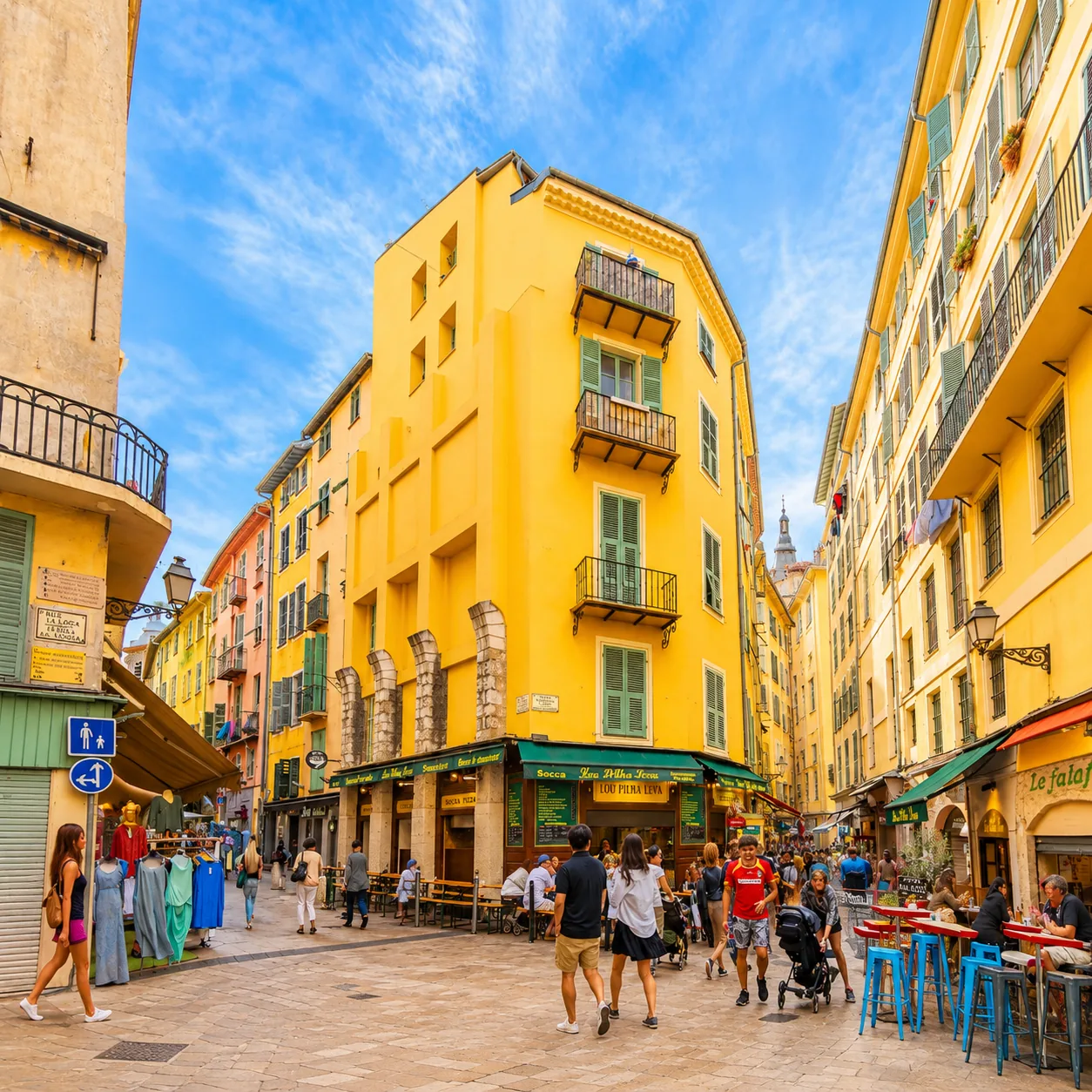
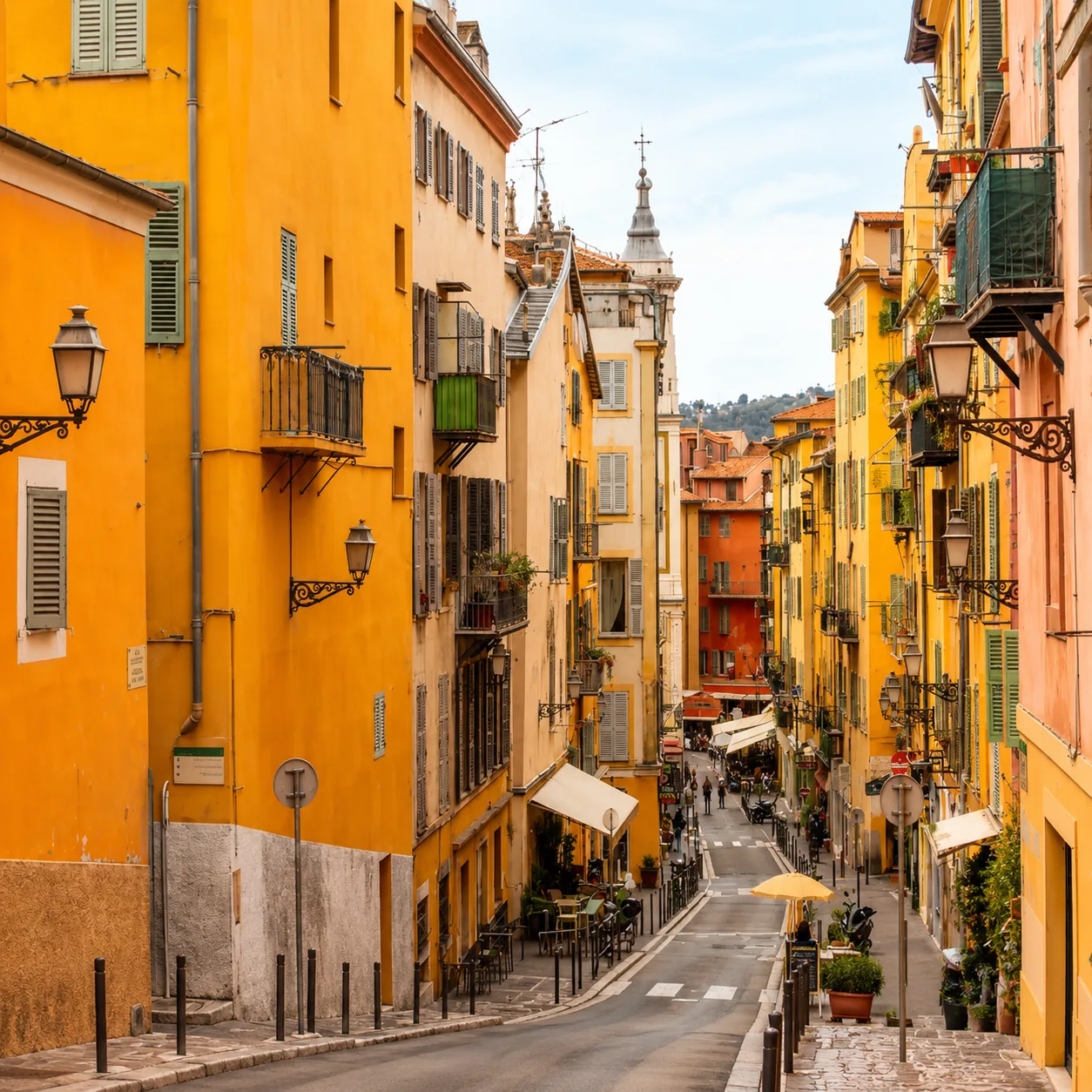
Then head down into Vieux-Nice. Here, it is best not to turn the walk into a rigid checklist: the yellow façades, green shutters, Baroque churches and narrow lanes are far better enjoyed when you simply let yourself wander. Cours Saleya is a good place to try socca, pissaladière or pan bagnat, though in high season it can feel more touristy than intimate.
In the afternoon, continue towards Place Garibaldi, Promenade du Paillon and Place Masséna. This part of the city reveals a more open, urban Nice, less maze-like than the old town. If you enjoy shopping, Avenue Jean-Médecin and the Carré d’Or are nearby; if not, it is better to return to the seafront and end the day watching the sunset over the pebbles.
Do not expect a fine sandy beach: Nice is beautiful, yes, but its shoreline can feel uncomfortable for anyone dreaming of lying down without water shoes.
Nice in 2 days: add the port, Belle Époque heritage and Cimiez
The second day should begin at Port Lympia. It is a more local, less monumental area, with traditional boats, colourful façades and an atmosphere that changes considerably depending on the time of day. From there, walk towards Rauba Capeu and return to the Promenade des Anglais to take a slower look at the city’s historic hotels and Belle Époque legacy.
In the afternoon, head up to Cimiez. This is another side of Nice: quieter, higher up, with gardens, Roman heritage and museums. There, you can choose between the Musée Matisse, the Musée Marc Chagall, Cimiez Monastery and the Archaeological Museum.
Do not try to see everything in a rush; one or two places visited properly are worth more than a hurried collection of admission tickets.
Nice in 3 days: the sea, Villefranche or the hills
With three days, Nice begins to breathe. Spend the morning walking the Sentier du Littoral towards Villefranche-sur-Mer if the weather is good and you have the energy. It is one of the most beautiful ways to experience the French Riviera without a car: rock, pine trees, clear water and houses that seem to rest on the bay.
In the afternoon, you have two options. If you want nature, head up towards Mont Boron for views over Nice and Villefranche. If you have a car, you can go to the Bellet hills for a quieter experience among vineyards. If you are travelling with children or prefer something easy, Parc Phoenix may be more practical than another hike.
You can also adapt this third day to your interests: Libération and Gare du Sud for a more local atmosphere, Mont Boron for nature, Palais Lascaris for culture or Phoenix Park for families.
Nice in one week: the best mix of city and French Riviera
Day 1: classic Nice. Promenade des Anglais, Castle Hill, Vieux-Nice, Cours Saleya, Place Rossetti, Place Garibaldi and Masséna. This is the day to fall a little in love with the city, but also to accept its limits: traffic, tourists, high prices in the most visible areas and pebble beaches.
Day 2: the port, Belle Époque heritage and Cimiez. Port Lympia in the morning; Musée Masséna or a stroll past the historic hotels around midday; Cimiez in the afternoon. This day balances maritime Nice with cultural Nice.
Day 3: Villefranche-sur-Mer and Saint-Jean-Cap-Ferrat. Set off early for Villefranche-sur-Mer and, if you feel like it, continue towards Saint-Jean-Cap-Ferrat. The Basse Corniche links Villefranche, Beaulieu-sur-Mer and Saint-Jean-Cap-Ferrat, areas known for their ports, villas and landscapes where the pine trees almost touch the sea.
Day 4: Èze and Beaulieu-sur-Mer. Èze is worth visiting for its elevated position and views, but it can disappoint anyone looking for absolute authenticity: in high season it is small, expensive and very busy. Combining it with Beaulieu-sur-Mer makes the day feel more balanced and avoids everything depending on a single village.
Day 5: Monaco or Antibes, depending on your style. Monaco is interesting if you want to see the more theatrical, luxurious and slightly unreal side of the Riviera. Antibes tends to appeal more to those looking for a Mediterranean town with real life, a market, ramparts and a better balance between beauty and authenticity.
Day 6: Libération market, Mont Boron or Bellet. Keep one day less touristy. Have breakfast in Libération, stroll around the old Gare du Sud, head up to Mont Boron or look for an experience in the Bellet hills if you have transport.
Day 7: a free day by the sea. The final day should not be too tightly scheduled. Return to your favourite spot, go back to the old town to buy something simple, have an ice cream in Place Rossetti or sit facing the sea.
In Nice, leaving an afternoon free is not a waste of time: it is how you understand the city.
Which itinerary to choose depending on your type of trip
One day in Nice is enough for a first impression, but it falls short. Two days allow you to see the city more fairly. Three days are the best option if you want to combine heritage, the sea and a nearby excursion.
A week is worthwhile if you plan to use Nice as a base for Villefranche, Èze, Beaulieu, Saint-Jean-Cap-Ferrat, Antibes or Monaco, taking advantage of trains, buses and trams instead of always relying on a car.
Mistakes to avoid in Nice
The first mistake is staying too far away and assuming everything will still be equally convenient: central Nice is walkable, but distances feel longer in the heat. The second is underestimating the pebbles on the beach. The third is eating at the first terrace in a crowded area without checking the menu or the atmosphere.
And the fourth is filling every day with excursions: the French Riviera may look small on the map, but in summer the heat, crowds and transport can make even the simplest plan slow.
Nice is worth visiting at a Mediterranean pace, not with checklist anxiety. Its beauty lies in the curve of the bay, the shade of its narrow streets, the yellow of the façades at dusk and that mixture of elegance and wear that lived-in cities have. It is not immaculate, cheap or always peaceful. But with a well-planned route, it can be one of France’s most evocative gateways to the Mediterranean.