 Activity on TourBookGo
Osaka Walking Tour: From the Castle to Dotonbori
Book an Osaka walking tour with a local guide, Osaka Castle admission and a four-hour route through Shinsekai, Namba and Dotonbori.
This Osaka itinerary reveals the city layer by layer: Dotonbori neon, lively markets, working-class neighbourhoods, riverside parks and a food culture inseparable from conversation.
An Osaka itinerary works best when the city is discovered layer by layer. First comes the glow of Dotonbori, with its oversized façades and the aroma rising from sizzling griddles. Then the merchant city reveals itself, along with riverside parks, working-class neighbourhoods and a way of eating that seems inseparable from conversation. The most common mistake is trying to explore Osaka as though it were a collection of monuments. The city is more rewarding when you group attractions by area and leave time to wander, step into a shopping arcade or sit down at a counter without knowing exactly what you are going to order. Its metro network connects the main neighbourhoods, but distances within them and transfers between stations can take longer than expected.
Compare locations and options to find a base that suits your trip. Booking.com confirms current availability and pricing.
Find accommodation on BookingStart at Kuromon Market. It is best to arrive in the morning, while it still retains some of its commercial energy and has not yet completely turned into a food corridor for visitors. It is a good place to sample small bites, although some stalls clearly set their prices with tourists in mind: look around, compare your options and avoid sitting down at the first flashy place you see.
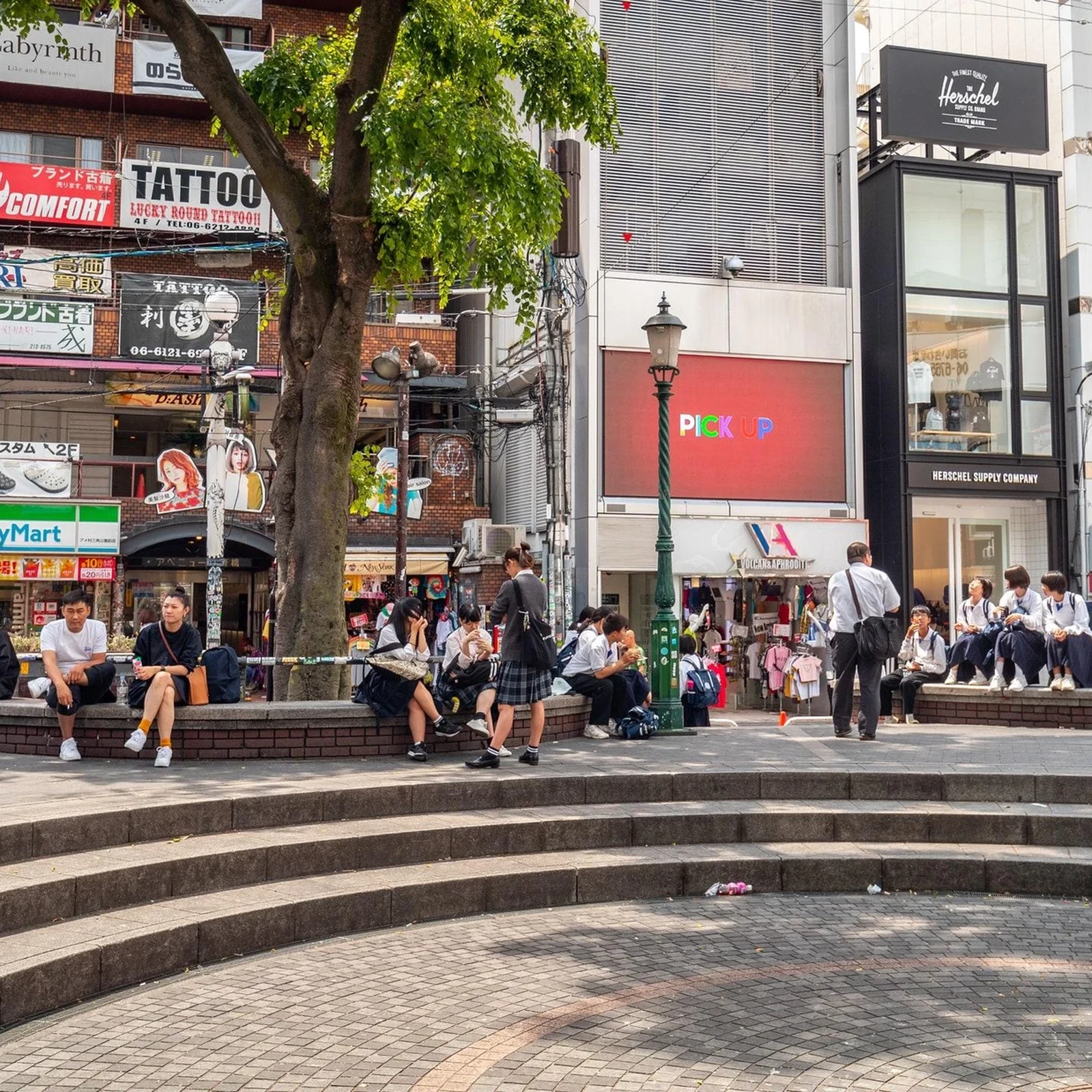
From there, continue on foot towards Namba. The transition is immediate: fish stalls, covered shopping arcades, amusement machines, tiny restaurants and avenues where the noise seems to be part of the scenery.
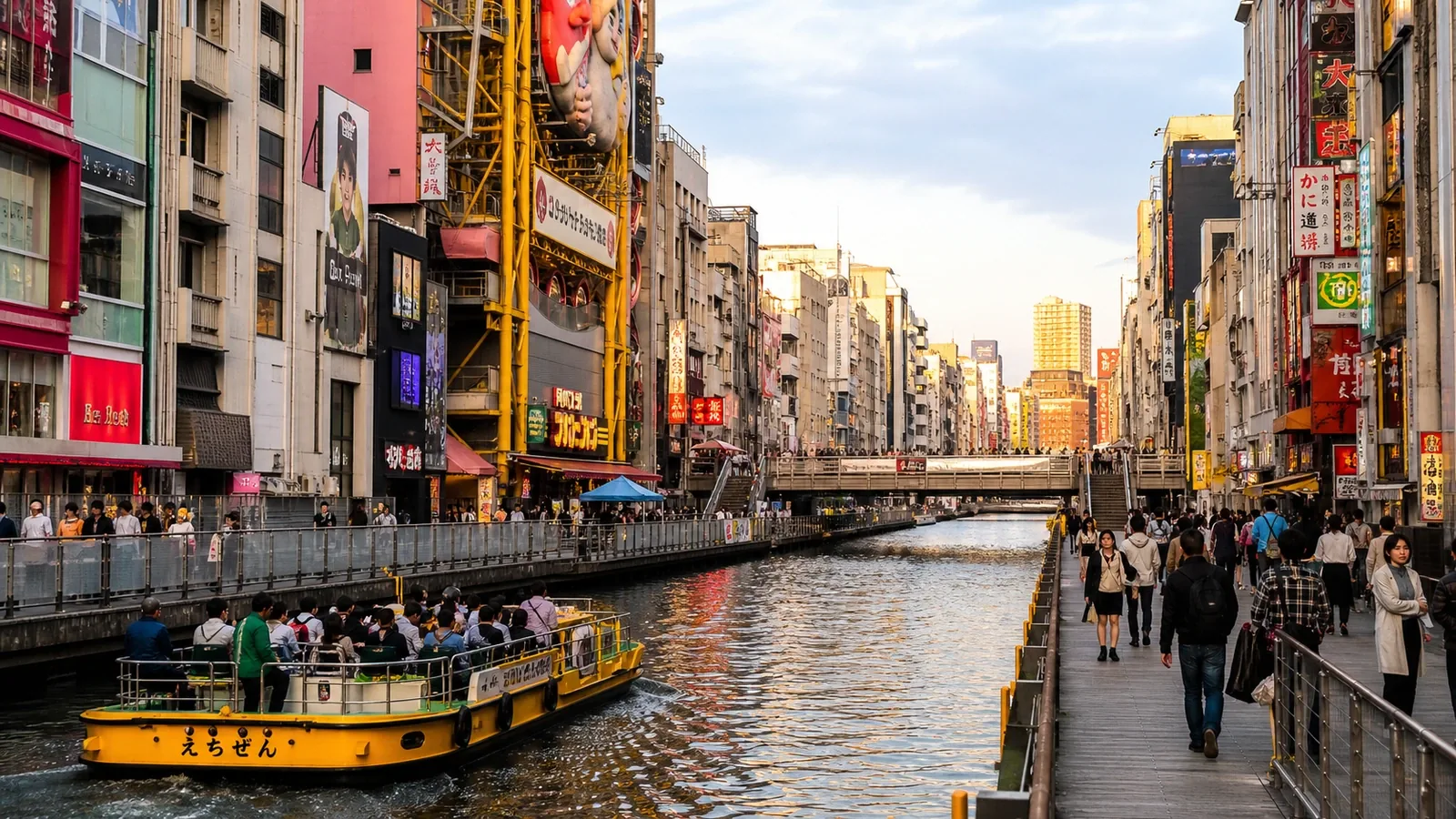
Dotonbori is the image many travellers associate with Osaka: illuminated billboards, theatrical restaurants, crowds lining the canal and an energy that could hardly be more different from Kyoto’s restrained elegance.
It is worth seeing, but not romanticising. In the middle of the day, it can feel overcrowded, noisy and excessively commercial. It is at its best in the late afternoon, when the lights begin to reflect on the water. Afterwards, you can walk towards Shinsaibashi, linking shopping streets with quieter corners. Dotonbori, Osaka Castle, Kaiyukan and the southern neighbourhoods are among the main things to see in Osaka.
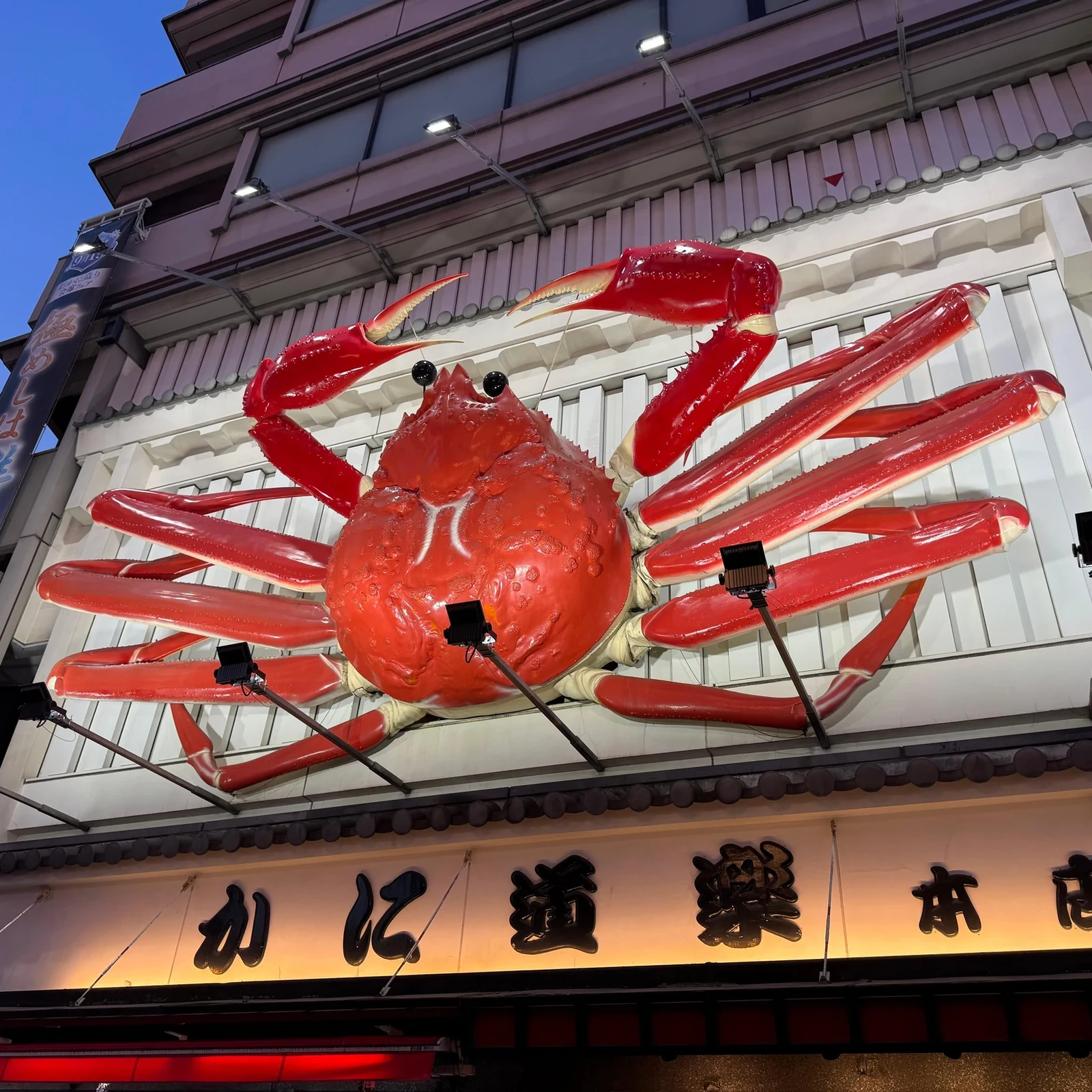
Osaka invites you to try takoyaki, okonomiyaki, kushikatsu and udon dishes, but attempting to eat them all in one evening usually leads to fatigue rather than discovery. Choose one or two, look for a busy place frequented by locals and do not be afraid to venture a few streets away from the canal.
This route is suitable for a short stopover, a first introduction or travellers who prioritise atmosphere and food.
It may disappoint those expecting quiet temples, traditional gardens or a visually harmonious city. Osaka has beauty, but it often appears among cables, railway stations, neon signs and unpretentious buildings.
Day 1: Namba, Kuromon and Dotonbori. Follow the route above, but take your time. You can spend longer exploring Namba’s side streets and save Dotonbori for the evening.
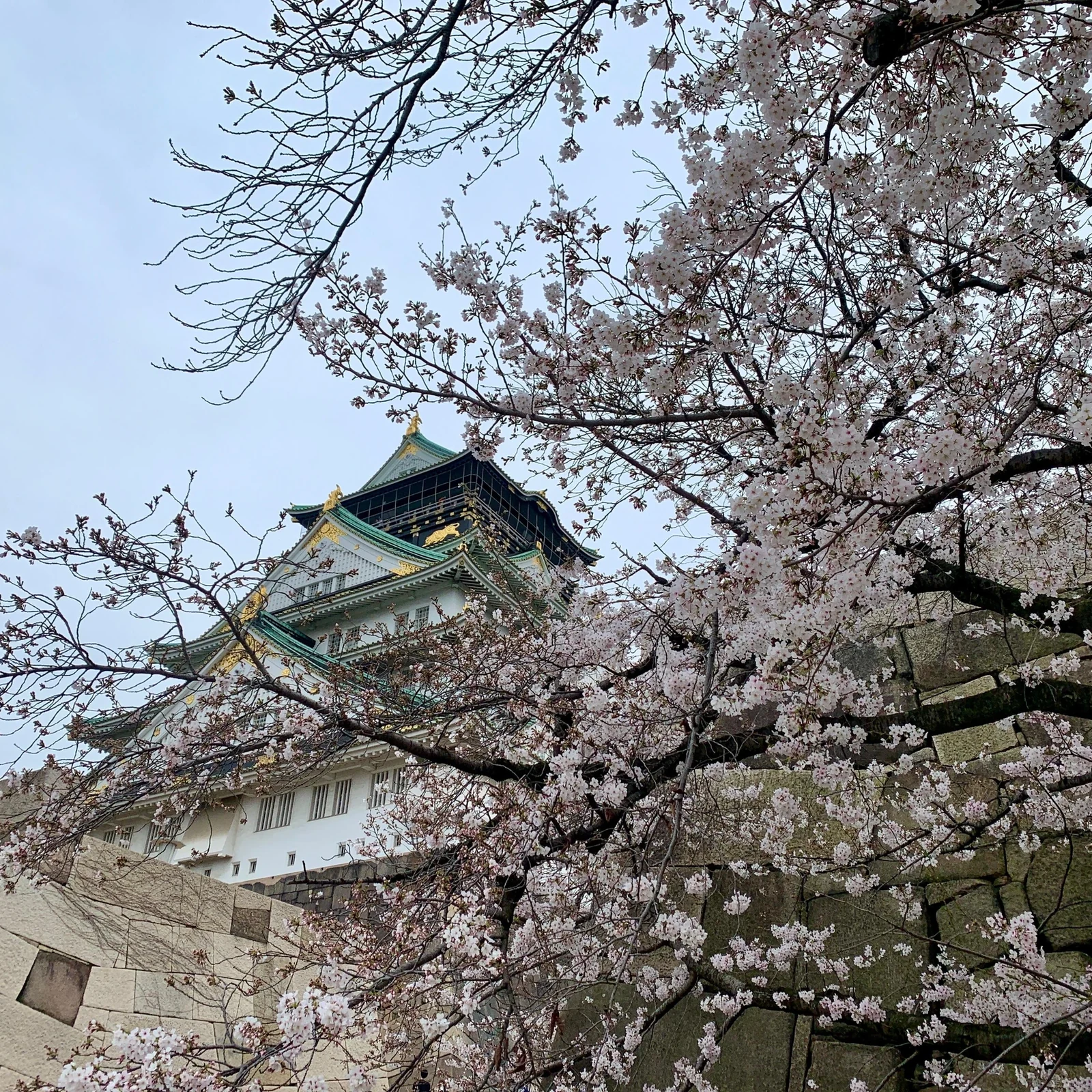
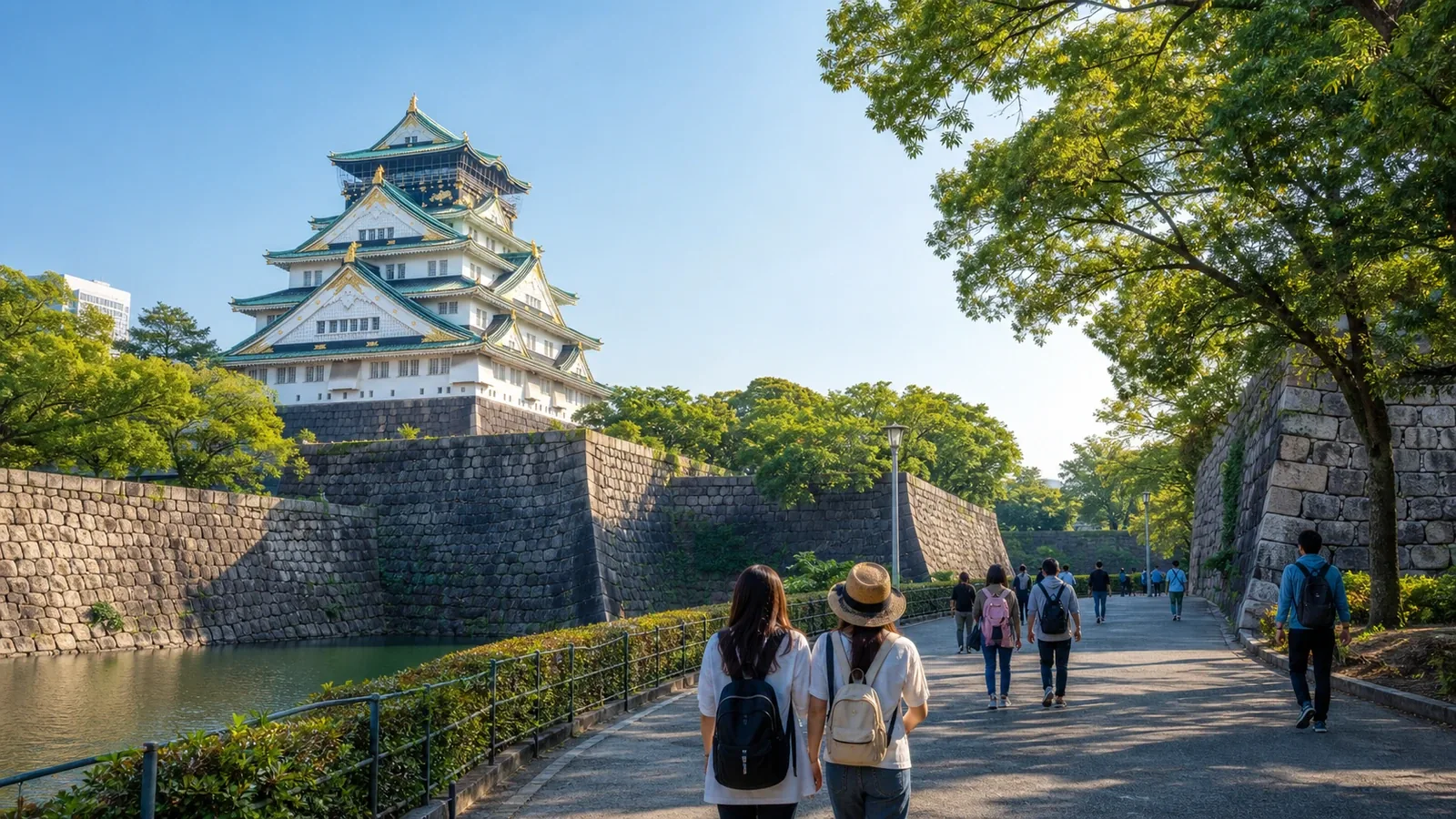
Day 2: Osaka Castle, Nakanoshima and Umeda. Begin in Osaka Castle Park. The exterior silhouette, walls and moats create one of the city’s most recognisable scenes. Expectations should be kept in check, however: the current tower was reconstructed in 1931 and now functions as a museum, so the interior does not preserve the atmosphere of an intact feudal fortress. The most enjoyable part of the experience is often the walk around the grounds, particularly when the surrounding vegetation is at its best.
Next, head to Nakanoshima, an urban island between the Dojima and Tosabori rivers. Here, Osaka changes its tone: brick buildings, modern architecture, museums, libraries and waterside promenades begin to appear. It is less spectacular than Dotonbori, but also calmer and more revealing of the city’s commercial past.
Finish in Umeda, the main hub of northern Osaka. Its stations, shopping centres and underground passageways form a small maze. Going up to an observation deck at dusk helps you grasp Osaka’s true scale—a city that seems fragmented from street level but becomes an almost endless expanse when seen from above.
With three days, you can discover a third side of Osaka rather than limiting yourself to its best-known images.
Option A: Shinsekai and the Southern Neighbourhoods. Start at Shitennoji and continue towards Shinsekai. Beneath Tsutenkaku Tower, the neighbourhood combines retro aesthetics, kushikatsu restaurants, gaming arcades and a certain kind of popular theatricality.
Shinsekai is photogenic, but some streets can feel designed for visitors. Explore it without expecting a perfectly preserved time capsule of old Osaka. It becomes more atmospheric towards dusk, although travellers seeking a sophisticated evening will probably prefer Umeda, Kitahama or less boisterous areas. Shitennoji and Tsutenkaku are among the city’s most representative tourist landmarks.
Option B: Kaiyukan and the Bay. Kaiyukan Aquarium is an especially good option for families, rainy days or travellers interested in marine life. It is located in the harbour area and can be combined with Tempozan, but it should not be added to an already packed day in Namba or Umeda: the journey and the visit itself take up a substantial part of the day. Buying a ticket in advance can save you from waiting at the ticket office.
Option C: Universal Studios Japan. Universal Studios Japan requires a full day. Adding another major attraction before or afterwards usually turns the day into a race. It is an excellent choice for theme-park enthusiasts and families, but it should not take up one of your only two days in Osaka unless it is a genuine priority for the trip.
Seven days spent exclusively in central Osaka may feel excessive on a first visit, unless your main interests are food, museums, everyday neighbourhoods and a deliberately slow pace. A more balanced alternative is to use the city as a base for exploring part of the Kansai region.
Recommended seven-day itinerary. Day 1: Kuromon, Namba, Dotonbori and Shinsaibashi. Day 2: Osaka Castle, Nakanoshima and Umeda. Day 3: Shitennoji, Shinsekai and the south of the city. Day 4: Universal Studios Japan, or Kaiyukan and the bay. Day 5: Day trip to Nara. Day 6: Day trip to Kyoto. Day 7: Kobe, Minoh or a relaxed day in Osaka.
Kyoto, Nara and Kobe are connected to Osaka by several railway networks, making it possible to organise day trips without constantly changing hotels. Even so, Kyoto deserves more than one day whenever the schedule allows: visiting it quickly from Osaka offers a first impression, but not a true sense of its depth.
Do not combine the bay with the castle in a single morning, and avoid repeatedly crossing between Umeda and Namba. The most efficient route follows a simple geography:
South: Kuromon, Namba, Dotonbori, Shinsaibashi and Shinsekai.
Central and eastern Osaka: Osaka Castle, the park and historic neighbourhoods.
Central and northern Osaka: Nakanoshima, Kitahama and Umeda.
West: Kaiyukan, Tempozan and Universal Studios Japan.
Grouping attractions this way reduces travel time and allows you to walk more—which is how Osaka reveals its best details.
In spring and autumn, parks and riverside walks become more prominent. Summers can be hot and humid, so it is worth alternating outdoor attractions with covered markets, museums, aquariums and shopping centres. In winter, the days are shorter, but Dotonbori and Umeda benefit from the earlier darkness.
At weekends, during Japanese holidays and in the flowering seasons, the best-known places can become extremely crowded. Booking attractions with limited admission and starting early can help, but filling every hour of the day does not necessarily improve the experience.
Two days provide a solid overview. Three allow you to understand the city’s contrasts. With four days, you can add a theme park or explore the bay without rushing. A week works best when Osaka is combined with other cities in Kansai.
The best Osaka itinerary is not the one that fits in the greatest number of places, but the one that leaves enough time to discover that the city lives as much through its major landmarks as it does through a six-seat counter, an endless shopping arcade or a conversation that begins over a steaming plate of food.
Discover selected experiences in Osaka to complete this guide with local culture, food, sightseeing and well-organised day trips.
Activity on TourBookGoBook an Osaka walking tour with a local guide, Osaka Castle admission and a four-hour route through Shinsekai, Namba and Dotonbori.
 Activity on TourBookGo
Book an Osaka walking tour with Dotonbori River cruise, an English-speaking guide, food and drinks, plus stops in Namba and Hozenji Yokocho.
 Activity on TourBookGo
Book a three-hour private Spanish-language tour of Osaka and explore Ame-Mura, Dotonbori, Hōzen-ji Temple and Kuromon Market with a local guide.